


More news on this day
Oman Air has advised passengers to expect delays and schedule changes after temporary airspace restrictions in the wider Middle East region disrupted several of the carrier’s routes in recent days.
Get the latest news straight to your inbox!
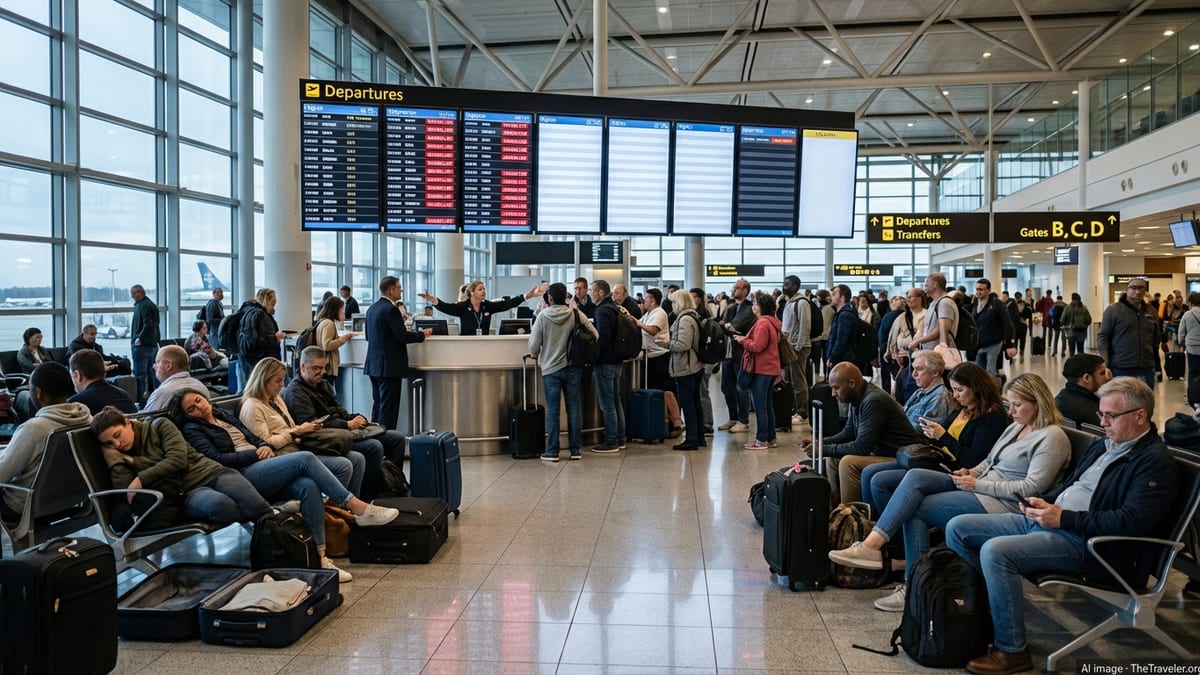
Regional airspace constraints ripple through Oman Air network
According to published operational data and regional aviation notices, temporary flight restrictions affecting parts of the Middle East have prompted airlines to adjust routing on key east–west corridors. Oman Air, which uses Muscat as a connecting hub between Europe, Asia and Africa, has reported that a number of its services have been subject to longer flight times and knock-on delays.
Publicly available airport information shows that while most Oman Air flights are still operating, a subset of departures and arrivals have been retimed or consolidated, particularly on routes crossing congested or restricted portions of regional airspace. Passengers on some services have reported extended ground holds and later arrivals as aircraft wait for revised clearances or follow longer diversionary tracks.
Industry analyses of current routings indicate that limitations in neighboring airspace, along with temporary restricted areas within the Muscat flight information region, are contributing to a more complex traffic picture for carriers based in Oman and the Gulf. This has increased pressure on air traffic management and scheduling, making it harder for airlines to keep turnarounds and connections running precisely to timetable.
Travel forums and tracking platforms highlight a mixed picture for Oman Air customers. While many flights continue largely as planned, others have experienced multi hour delays or shifts to alternative departure days. The pattern reflects a network attempting to adapt in real time to evolving operational constraints beyond the airline’s direct control.
Temporary restrictions and rerouting add time and complexity
Recent aviation notices for the region describe the activation of temporary restricted areas along parts of Oman’s northern coast and adjacent airspace. These measures require aircraft to coordinate routing and altitudes more closely with air traffic control, and in some cases to avoid specific blocks of airspace altogether.
In practice, such restrictions tend to lengthen flight paths or constrain the number of aircraft that can safely use key corridors at peak times. For an airline structured around tightly timed banked connections in Muscat, even modest increases in flying time can cascade into missed connections and rescheduling for onward sectors.
Industry reporting on Middle East airspace conditions also points to the continuing impact of the wider regional conflict on overflight options. Several traditional trunk routes between Europe and Asia that would normally cross conflict-affected zones remain subject to advisories or closures, funneling traffic into fewer available corridors over the Arabian Sea and around the Arabian Peninsula.
Oman Air’s network, which spans destinations from London and continental Europe to South and Southeast Asia, relies heavily on these corridors. As more airlines crowd into the same airspace to avoid no-fly areas, congestion and flow management measures are increasing, with speed controls, level caps and tactical rerouting all contributing to irregular operations.
Suspended and trimmed routes add to disruption picture
Alongside day to day delays linked to airspace management, Oman Air has already adjusted parts of its schedule in response to the changing operating environment. Published schedule filings and industry route updates show that services to certain destinations, including parts of the Gulf, Iran and the Caucasus, have been suspended for extended periods.
In addition, Oman Air has reduced frequencies or revised timings on some long haul routes, including selected services in Asia, as it rebalances fleet and crew resources. Aviation data providers report that the airline has also announced upcoming suspensions on a number of regional South Asian routes later this year, citing a combination of demand patterns and operational factors.
These structural changes sit alongside shorter term schedule disruptions linked directly to temporary airspace restrictions. For passengers, the result can be a combination of rebookings onto different dates, longer layovers in Muscat, or rerouting on partner carriers in order to complete journeys when nonstandard routings make original connections unworkable.
Travel discussion boards reflect growing frustration among some Oman Air customers over short notice changes and communication gaps, although others note that the airline continues to operate the majority of its network despite the challenging conditions. The overall picture is of a carrier navigating a fluid landscape where both geopolitical developments and technical airspace decisions can quickly affect flight plans.
Impact on Muscat hub operations and passenger experience
Muscat International Airport remains open and broadly operational, but regional traffic patterns have placed additional strain on the hub. Documentation presented at recent regional aviation meetings outlines how earlier phases of the current crisis brought waves of diverted traffic into Muscat, requiring measures such as airborne holding, departure restrictions and rejigged arrival sequences to manage capacity.
Those same tools are now being used more selectively as temporary restricted areas come into force and are later lifted. Even when the airport itself is functioning normally, holding patterns and rerouting upstream can cause aircraft to arrive outside their planned slots, compressing ground handling windows and reducing buffer time for tight connections.
For passengers, the most visible effects are delayed departures, extended flight times and, in some cases, overnight stays when missed connections cannot be reaccommodated the same day. Travelers connecting between Europe and Asia via Muscat are particularly exposed, as a single delayed inbound sector can disrupt onward links to multiple destinations.
Despite the challenges, published airport coordination information shows that Muscat continues to handle a high volume of scheduled traffic, supported by formal slot management arrangements and coordination with air traffic services. This suggests that while disruption is real, it remains concentrated in specific flows and time windows rather than representing a wholesale shutdown of operations.
Advice for travelers booked on upcoming Oman Air flights
Travel industry advisories suggest that anyone booked on Oman Air in the coming weeks should allow for a higher than usual risk of schedule changes, particularly on itineraries that transit multiple conflict-adjacent airspace regions. Flexible planning, including longer connection times where possible, can help reduce the likelihood of missed onward flights.
Passenger advocacy groups and travel agents commonly recommend checking booking details and flight status regularly in the days and hours before departure, using both the airline’s official channels and airport departure boards. Where significant changes appear, early contact with the booking agent can increase options for rebooking or rerouting.
Travel insurance with disruption coverage is also being highlighted as a useful safeguard at a time when airspace conditions can change quickly. Policies that explicitly cover missed connections, extended delays and enforced overnight stays may help offset some of the financial impact when itineraries are disrupted by events outside an airline’s direct control.
For now, publicly available information indicates that Oman Air is continuing to run the majority of its network while accommodating temporary restrictions and revised routings. As regional airspace authorities adjust measures in response to evolving security and operational assessments, the scale and nature of delays affecting the carrier’s flights are likely to remain fluid, requiring ongoing vigilance from both the airline and its passengers.