


More news on this day
Oman Air is reporting delays and schedule changes on a number of routes after temporary airspace restrictions in the wider Middle East disrupted key flight corridors used by the Muscat based carrier.
Get the latest news straight to your inbox!
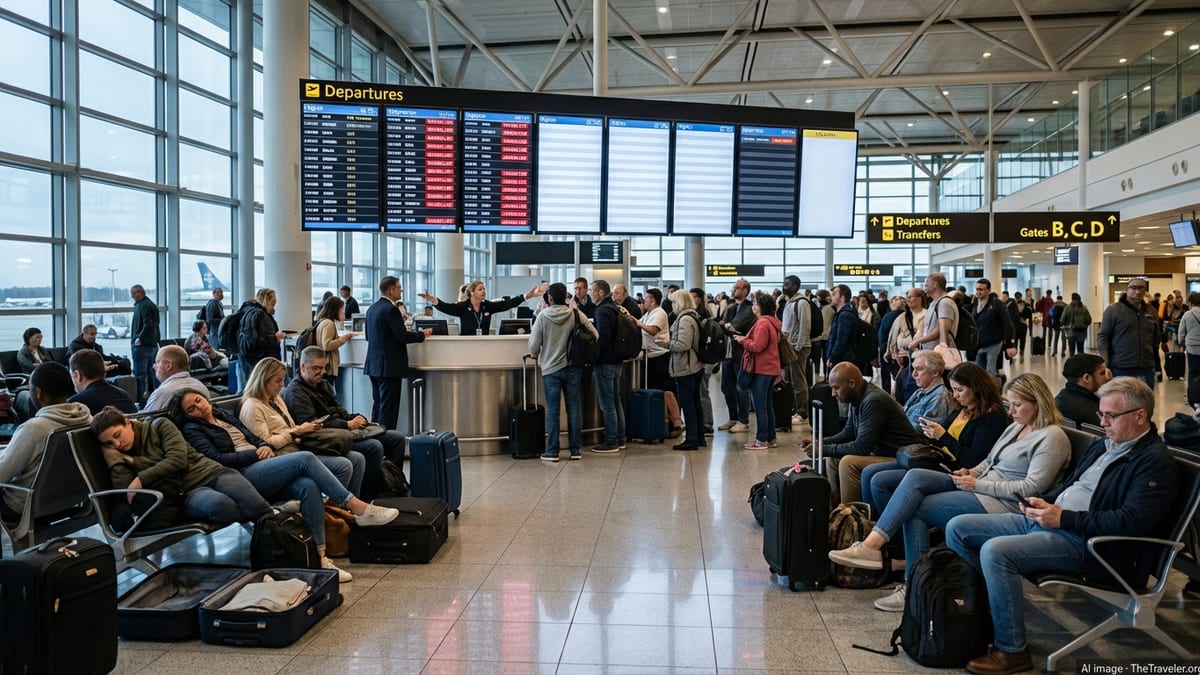
Temporary restrictions ripple through Muscat operations
Publicly available flight tracking data and passenger accounts indicate that several Oman Air services have been subject to extended flight times, revised departure slots and, in some cases, last minute rescheduling as regional airspace constraints tighten. The measures are linked to conflict related closures and risk advisories affecting portions of airspace over parts of the Middle East, which have narrowed options for east west traffic flows.
Muscat lies on one of the main transit axes between Europe, the Gulf, the Indian subcontinent and Southeast Asia. When surrounding flight information regions impose temporary restrictions, the impact often falls on carriers that rely on these corridors for through traffic. Oman Air has been required to reconfigure routings and absorb additional airborne time, placing pressure on aircraft and crew rotations.
Reports from recent days describe flights from Gulf hubs and South Asia departing late or operating with significant in flight rerouting to avoid restricted areas. Passengers connecting through Muscat have highlighted missed onward connections and short notice changes to itineraries, underlining how even time limited restrictions can reverberate across tightly scheduled networks.
Operational documents presented to regional aviation forums earlier this year already described Muscat airspace as operating under contingency conditions due to the wider crisis, with measures such as level caps, speed controls and departure restrictions used to smooth traffic flows. The latest round of constraints has added another layer of complexity just as summer travel demand peaks.
Rerouting, holding and extended block times
The practical effect of temporary airspace closures is most visible in longer flight times and unusual routings. Flights that would typically pass through now constrained corridors have been observed making wide doglegs around affected zones, adding hundreds of kilometres to some journeys. That, in turn, increases fuel burn and narrows the margin for on time arrivals.
When multiple airlines converge on the same alternative tracks, congestion can build quickly. Aircraft may be held at lower levels or placed in airborne holding patterns near busy waypoints while air traffic controllers meter flows into downstream sectors. Research into delay propagation in complex airspace networks shows how such measures, while necessary for safety, can cascade into late arrivals and missed connections across an airline’s network.
For Oman Air, which operates a relatively lean fleet compared with larger Gulf rivals, even modest schedule disturbances can be difficult to absorb. Longer block times eat into the turnaround windows required to prepare aircraft for subsequent legs, and crew duty limits can force swaps, further straining available resources. Passengers have reported multi hour delays and, in isolated cases, flights shifted to different days as the carrier works to realign rotations.
While some services continue largely as scheduled, especially on shorter regional legs, long haul routes to Europe and Asia are more exposed to restrictions that lengthen or divert traditional flight paths. Travel industry observers note that airlines in similar situations often implement rolling schedule adjustments, publishing revised timings only a few days in advance while conditions remain fluid.
Conflict driven risk assessments shape routes
The current disruption comes against the backdrop of the Iran war and a broader reassessment of overflight risk across parts of the Middle East. Aviation safety notices from multiple civil aviation authorities advise operators to avoid or carefully evaluate certain airspace segments because of the potential threat from missiles, drones or military activity at high altitude.
Historically, carriers in the Gulf region have demonstrated an ability to adapt to such changes, shifting traffic flows and opening new corridors when others close. During earlier diplomatic crises, Oman Air played an important role in providing alternative connectivity when neighboring airspace was restricted for other operators. The present situation is different in that closures and advisories span several adjoining flight regions, leaving fewer straightforward alternatives.
Industry analyses of the 2026 conflict highlight that airspace restrictions across key Middle East hubs have affected a significant share of global long haul capacity, forcing airlines to route traffic along more southerly or northerly arcs. For Oman Air, this has meant integrating regional risk guidance into daily dispatch decisions while still attempting to maintain viable schedules on trunk routes linking Muscat to Europe, India and Southeast Asia.
Risk assessments now shape not only whether a given route operates, but also its altitude profile, timing and contingency planning. Dispatch teams must build in additional fuel for potential holding, diversions or level changes, all of which can contribute to downstream delays when conditions are less than optimal.
Passenger impact and advice for upcoming travel
For travelers, the most tangible consequence of these operational pressures is uncertainty around departure and arrival times. Passengers connecting through Muscat report that minimum connection times that would normally be sufficient may no longer provide a comfortable buffer when upstream flights encounter rerouting or flow restrictions.
Travel agents and frequent flyers are advising customers with near term Oman Air bookings to monitor their reservations closely, as schedules remain subject to short notice adjustment. Checking flight status on the day of travel and arriving at the airport with extra time can help mitigate stress in the event of gate changes or rolling delays.
Insurance policies that include coverage for missed connections and extended delays may also be of value during periods of heightened disruption. Some passengers affected by recent changes have described lengthy rebooking processes and overnight stays when onward flights were not available until the following day.
Despite the disruption, publicly available data suggests that the majority of Oman Air services continue to operate, albeit sometimes at different times or on altered routings. For many travelers, the experience may be limited to longer than expected flight times or tighter connections, but those on multi segment itineraries should be prepared for potential changes.
Regional outlook for Middle East air traffic
Aviation analysts assessing the wider Middle East network expect a protracted period of complexity as long as conflict related airspace restrictions remain in place. With several major hubs in the region already operating at reduced capacity or under constrained routing options, second tier hubs such as Muscat face sustained pressure to accommodate rerouted flows.
Regional planning documents discussed at recent international aviation meetings point to a focus on flexible airspace management, crisis coordination cells and temporary route structures as tools to keep traffic moving during geopolitical shocks. Oman’s air navigation service provider has previously outlined such measures for the Muscat flight information region, including tactical rerouting, level caps and speed controls.
For Oman Air and its passengers, the near term outlook is likely to involve continued adjustments rather than a swift return to pre conflict patterns. Industry observers suggest that airlines across the region will refine schedules gradually as risk assessments evolve and as new, stable routing options are validated in coordination with air traffic authorities.
Travel demand into and out of the Gulf remains resilient despite the disruptions, driven by both expatriate traffic and long haul connections between Europe, Asia and Africa. How effectively airlines such as Oman Air can manage the operational challenges posed by temporary airspace restrictions will help determine the reliability of those links through the remainder of the busy summer travel period and into the northern hemisphere winter season.