


Nagano’s Hakuba Valley and Nozawa Onsen both deliver excellent powder, yet the feel of village life after the lifts close is very different. Hakuba is a broad, international resort valley stitched together by several base areas, while Nozawa Onsen is a compact, historic hot spring village where steaming alleys and communal baths shape the rhythm of each day. For travelers who care as much about onsen culture, dining and après as the skiing itself, choosing between them starts with understanding how your evenings and non-ski days are likely to unfold in each place.
Get the latest updates straight to your inbox!
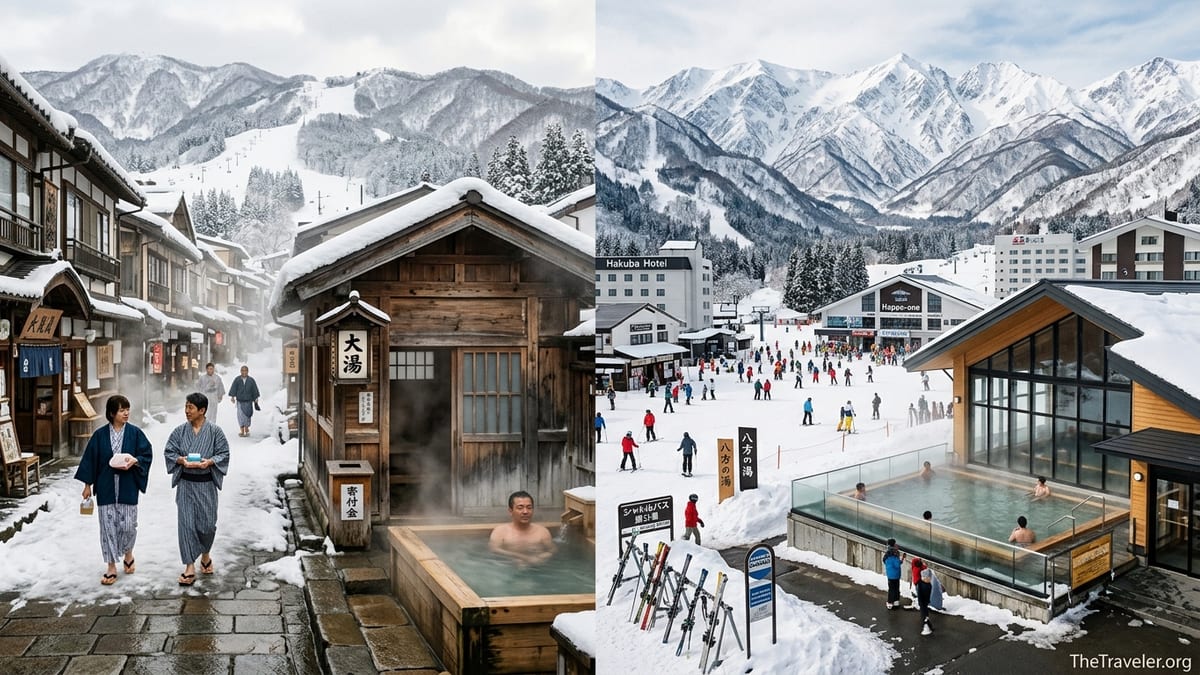
Onsen Culture: Daily Ritual in Nozawa vs Accent in Hakuba
Nozawa Onsen is one of Japan’s classic hot spring towns, and bathing is woven into daily life in a way visitors can immediately feel. The village maintains a network of 13 traditional public bathhouses, known as soto-yu, which are operated by the local community rather than private spa companies. Each has its own character and water source, and all are intended primarily for residents, yet in practice they are generally open to respectful visitors who follow the rules and make a small donation in the boxes provided.
Typical opening hours for the soto-yu run from early morning until late evening, with official materials describing schedules such as around 5:00 or 6:00 to 23:00 depending on season. Exact times can vary slightly between baths and from year to year, so it is important to check current signs at each entrance or confirm with your accommodation. One important practical detail is that water temperatures are often very hot by international standards. Many baths sit close to source temperature, which means newcomers may need to ease in slowly and accept shorter soaks rather than long lounge sessions.
Not every hot spring facility in Nozawa is the same. The 13 soto-yu are free, simple bathhouses without amenities like soap or towels, which you are expected to bring yourself. Facilities such as Furusato no Yu and Spa Plaza operate more like commercial day-use onsen with changing rooms, multiple pools and toiletries included, charging a modest entry fee. Certain hot water areas, notably Ogama, are strictly for local use and cooking, not for bathing, and visitors are expected to observe signs and keep a respectful distance. First-time visitors should ask their ryokan or lodge to clarify which baths are appropriate to use and what the current etiquette expectations are.
Hakuba has genuine onsen as well, but they are more of a pleasant feature of a ski trip than the defining structure of village life. Around the Happo area there is a cluster of public hot spring facilities, including Happo no Yu, Mimizuku no Yu and Hakuba Ekimae no Yu, which offer day-use bathing to both overnight guests and non-staying visitors. These facilities usually provide indoor and sometimes outdoor baths, changing rooms and basic amenities, with paid entry and clearly posted hours. Current village information indicates that day-use access is common, although precise opening times and any changes to cleaning days should be verified for your travel season.
How Onsen Fit Into a Typical Stay
In Nozawa Onsen, it is realistic to expect that almost every evening will include a soak. The compact layout means most lodgings are within a short walk of several soto-yu, and it is easy to turn bathing into a small ritual: sliding open the wooden door of a bathhouse, washing at a tap with your own soap and towel, then stepping into a simple wooden or tiled tub as snow falls outside. Because locals use these baths daily, visitors should behave as guests in a neighborhood facility, keeping voices down, rinsing thoroughly before entering the water and leaving phones and cameras outside.
The hot water in Nozawa is part of how residents cope with long winters, and that feeling of shared utility shapes the atmosphere. On non-ski days, you can move between different soto-yu to experience variations in water feel and temperature, interspersed with slow walks through narrow streets, visits to small shrines and cafes, and perhaps a stop at a more modern onsen like Furusato no Yu for a longer, more comfortable session. Because the soto-yu are basic, travelers who need showers, hairdryers or more space often combine a quick communal soak with bathing back at their ryokan.
In Hakuba, onsen tend to slot in before or after dinner on select days rather than every night. If your hotel or pension has its own hot spring bath, it may be as simple as heading downstairs in slippers. If not, you might walk or take a short shuttle to a day-use facility in Happo or another base village, timing your visit for late afternoon after skiing. Given the valley’s spread-out geography, onsen trips usually require a little more planning than in Nozawa, especially if you are staying in areas like Echoland where some facilities are a bus ride away rather than on your doorstep.
Because Hakuba attracts a large international crowd, onsen there are often more accustomed to first-time bathers and provide clearer multilingual signage. You are still expected to follow standard Japanese onsen etiquette, but the atmosphere is generally more resort-like and less intimate than in Nozawa’s small wooden bathhouses. For travelers who are curious about hot springs but not ready to structure each evening around them, Hakuba’s setup can feel lower pressure and easier to sample.
Dining: Spread-Out Variety in Hakuba vs Compact Lanes in Nozawa
When it comes to eating out, Hakuba offers more sheer variety, but you have to think in terms of districts. Recent resort guides and local coverage still identify Happo village and Echoland as the main clusters for restaurants and bars, with Wadano adding a smaller concentration tied to upmarket hotels and lodges. In these areas you can find everything from ramen and izakaya to burgers, pizza, wine bars and cafes that cater to international tastes, with new openings in Echoland in particular reported for the 2025 and 2026 seasons.
The trade-off is that the valley is geographically spread out, and snow-covered roads can make evening movement slower than it looks on a map. If you stay in Wadano, for example, you might walk to nearby hotel restaurants or ride a shuttle or taxi down to Echoland for more options. Reservations or early dinners are increasingly advisable in peak season, as recent traveler reports mention popular places filling quickly after 18:00. Many venues now accept card payments, especially those focused on overseas guests, but you should still carry some cash for small eateries, cover charges or older establishments.
Nozawa Onsen’s dining scene is far more compact but still surprisingly diverse for a small village. The narrow streets around Oyu, the central bathhouse, are lined with small izakaya, soba and udon shops, yakitori counters and family-run restaurants, almost all within an easy walk of each other. The scale is intimate: many places have only a handful of tables or a short counter, and during busy weeks it is common to see lines form outside the most popular spots shortly after they open in the early evening.
Because of that, flexibility is essential in Nozawa. You may need to eat earlier than you would at home, be willing to try whichever restaurant has space, or plan some evenings to dine at your ryokan, which often include hearty multi-course set dinners. Seasonal closure patterns are important too. Some restaurants open only during winter, and others take fixed weekly rest days. Current-season village maps and noticeboards, or information from your accommodation, are the best way to check which places are operating in the year of your visit.
Nightlife and Après: Social Valley vs Quiet Onsen Village
Hakuba retains a reputation as one of Japan’s livelier international ski bases, and recent local nightlife guides suggest that this is still accurate. Echoland in particular has a strip of bars and small venues that stay open late in winter, ranging from casual pubs with craft beer and cocktails to more energetic spots with DJs or live music on certain nights. Happo village also has après-oriented bars near the base of the lifts, which can be busy in the late afternoon and early evening as people come straight off the slopes.
That said, Hakuba’s nightlife is not uniform. Wadano leans quieter and more hotel-focused, with a handful of lounges and sake bars rather than street after street of clubs. Other bases around the valley have modest clusters of venues that largely serve guests staying nearby. Closing times, opening days and the exact mix of bars are prone to change from one winter to the next, so if nightlife is a priority, it is sensible to confirm recent recommendations for the current season and choose accommodation within walking distance of the area you expect to go out in most.
Nozawa Onsen, by contrast, feels much more sedate once dinner is finished. Even on busy powder weeks, the evening rhythm is usually ski, onsen, eat and then a short walk home through quiet, steamy streets. There are a few bars and casual drinking spots, and in recent seasons some craft beer taps and more modern spaces have appeared, but they are scattered and relatively small. Many close by around 23:00 or earlier on weeknights, and there is nothing like the late-night strip found in Echoland.
For some travelers this is exactly the appeal. After a hot soak and a good meal, the focus in Nozawa is on rest, early starts and the atmosphere of the old village rather than staying out late. Others who enjoy a more social, bar-hopping après culture may find it quiet after a couple of nights. It is not that nightlife is absent, but that it is secondary to bathing and eating, and subject to seasonal variation as individual owners adjust hours year by year.
Language, Money and Ease of Getting Around Town
Hakuba’s long history with international skiers means English is widely used in signage and menus in the main base areas. Many restaurants in Happo, Echoland and Wadano provide English or multilingual menus, and staff often have at least basic conversational English, particularly in businesses that cater to overseas guests. Recent traveler accounts also indicate that credit and debit card acceptance has become common across mid-range and higher-end restaurants, bars and onsen facilities, though you should still expect a minority of cash-only spots or minimum spend rules.
The flip side of Hakuba’s spread-out geography is that you need to think about transport. Shuttle buses link base areas, but evening timetables can be limited outside core weeks, and snow conditions, especially mid-winter, make longer walks slower. Many visitors factor taxi availability into their plans for nights out, or simply choose accommodation in the same area where they intend to dine and drink most often. Daytime, this spread offers freedom, but at night it rewards planning.
Nozawa Onsen is easier to navigate physically. The central streets and alleys can all be explored on foot, and most accommodations, restaurants, soto-yu and shops lie within a compact area. English availability is improving, with bilingual signs at key baths and some restaurants offering basic English menus, but overall you should expect less English than in Hakuba. That said, the density of services and the clear visual cues around onsen and dining make it relatively straightforward to manage with a bit of pointing, simple phrases and patience.
In terms of payment, Nozawa still has a stronger cash culture, especially at the small, family-run eateries and the free soto-yu, where any contributions are made in coins. Some larger restaurants, hotels and modern onsen facilities accept cards, and card use in Japan continues to grow, but winter visitors report that carrying sufficient cash remains important here. As always, conditions shift gradually, so travelers should check with their accommodation for up to date advice on card acceptance in the season they are visiting.
Non Ski Days: Valley Explorations vs Slow Village Strolls
On a non-ski day in Hakuba, you have the full valley as your playground. Many accommodations or local operators arrange snowshoe tours into the forests and foothills, which can range from gentle half-day walks to more involved treks with guides. When weather and road conditions allow, it is possible to explore beyond the immediate resort bases, visiting viewpoints, nearby shrines or riverside walks that show off the dramatic backdrop of the Northern Alps. Cafes and bakeries in Happo and Echoland provide comfortable spots to linger over coffee, and some hotels offer spa treatments or indoor pools to turn the day into a rest-focused interlude.
Because the valley connects multiple ski areas, non-ski days can also become exploration days, moving by bus or taxi to different base villages, sampling their atmosphere and onsen facilities even if you are not buying a lift ticket that day. Schedules and availability for organized activities, such as guided snowshoeing or cultural walks, change each winter, so it is important to confirm what is running in your travel year rather than relying on past program descriptions.
Nozawa Onsen’s slower pace lends itself to simple pleasures on rest days. You can follow marked walking routes around the village that link the soto-yu, shrines on the hillside and viewpoints over the roofs and steam vents. Ogama, the steaming hot spring used by locals for cooking, is not a bathing spot but is a fascinating place to observe traditional use of the hot water, provided you respect barriers and signs. Between walks, small cafes and sweet shops offer local snacks, and a mid-afternoon soak at a quieter bathhouse can be an ideal way to rest tired legs.
During certain periods, Nozawa hosts traditional events and festivals that give extra color to village life, such as the well known fire festival held once a year in January. Because dates, access arrangements and crowd management policies are adjusted as needed, prospective visitors should never assume attendance is guaranteed and must check official sources for the year they plan to travel. Even without a festival on, the combination of old architecture, steaming lanes and the rhythm of people moving to and from baths creates a sense of cultural immersion that many visitors find as memorable as the time spent on snow.
Village Life Match: Which Base Fits Your Style
Choosing between Hakuba and Nozawa Onsen ultimately comes down to what you want your evenings and off-slope time to feel like. If you imagine days built around a simple pattern of skiing, walking back through narrow streets, soaking in very hot mineral water in a small wooden bathhouse, then drifting out to a modest izakaya before an early night, Nozawa aligns closely with that picture. The village’s compactness, community-run soto-yu and generally quiet nights make it well suited to travelers who value atmosphere, ritual and rest over late nightlife or constant new restaurant choices.
Hakuba, on the other hand, suits those who like options. Its multiple base areas support a broader mix of international and Japanese dining, from casual burgers to refined izakaya and wine bars, albeit spread across districts like Happo, Echoland and Wadano. Onsen are present and enjoyable, but more of an amenity than the backbone of daily life. After skiing you can seek out lively après in Echoland, a more relaxed drink near the lifts in Happo, or a quiet evening at a hotel bar, depending on your mood and where you stay.
Neither choice is universally better. First-timers who are nervous about language barriers, strongly prefer English-friendly menus and card payments, and want the possibility of several different bar atmospheres over a week often feel more at home in Hakuba. Those who are comfortable embracing a more traditional environment, carrying cash, adjusting to very hot baths and accepting that dinner might be at whichever eight seat restaurant has space that night are likely to find Nozawa Onsen deeply rewarding.
Whichever you choose, keep in mind that practical details such as opening hours, festival dates, seasonal closures and even the balance of card versus cash acceptance evolve from one winter to the next. Before you travel, reconfirm current information through local tourism offices, official resort channels or your accommodation. With realistic expectations about village life, you can match yourself to the Nagano base that makes your time off the mountain as memorable as the turns you make on it.