


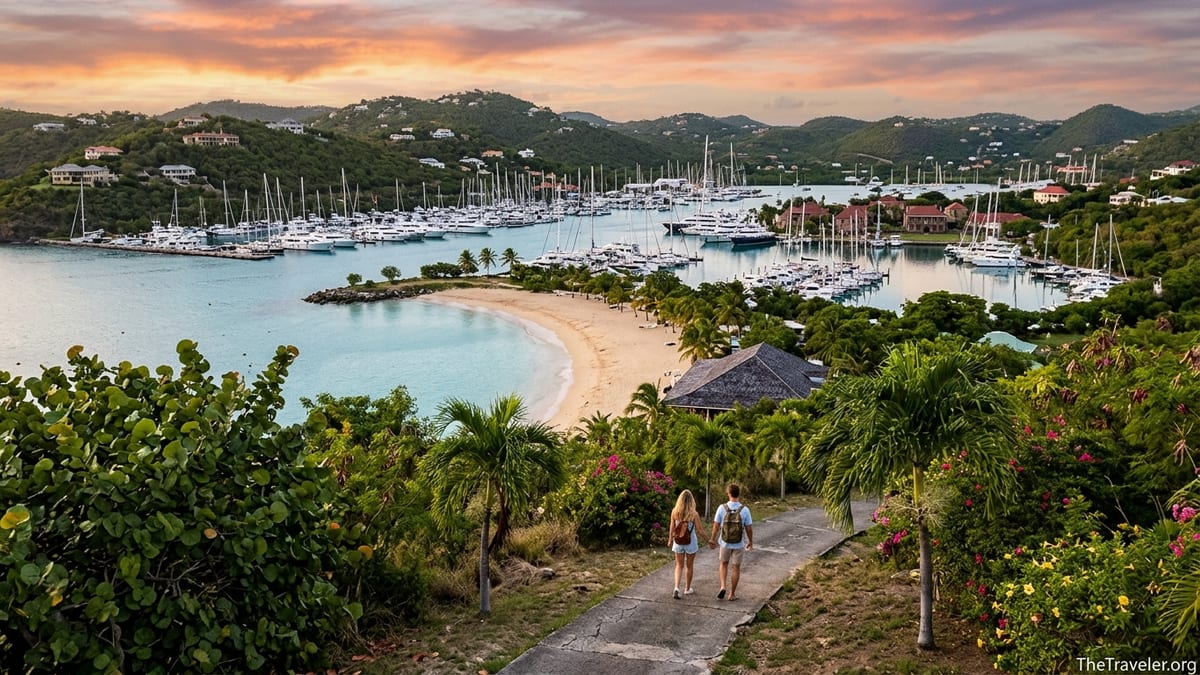
Pigeon Point Beach sits at the heart of Antigua’s south coast sailing scene, tucked between English Harbour and Falmouth Harbour. If you already know you want this harbour-side base, the next step is choosing exactly where to stay: right in English Harbour village, on the Falmouth waterfront, on the Middle Ground peninsula by the beach, or in the quieter hills above. This is a compact area and Pigeon Point is usually a few minutes’ drive or a 15 to 25 minute walk from most accommodations, but gradients, pavements and lighting at night vary more than many visitors expect. The guide below focuses on current, verifiable places to stay within practical reach of Pigeon Point, and on the trade-offs between being in the thick of the marina action and opting for more space and peace on the slopes above.
Get the latest updates straight to your inbox!
Understanding the “near Pigeon Point” area
For practical trip planning, “near Pigeon Point” covers four tight-knit micro-locations along Antigua’s south coast. First is English Harbour village, clustered around Nelson’s Dockyard and the marinas on the inner harbour. From here, walking to Pigeon Point Beach typically takes 15 to 20 minutes along local roads, with a short section that is unlit after dark, so many visitors walk by day and use taxis at night. The terrain is mostly flat to gently rolling.
Just west lies Falmouth Harbour, a deep natural bay lined with marinas, bars and restaurants. Accommodation on the Falmouth waterfront usually sits a little farther from Pigeon Point, but still within a 5 minute drive or roughly a 20 to 25 minute walk depending on exact starting point. The first half of the walk follows the busy marina front, then cuts across toward the peninsula. Surfaces are paved but not always with full sidewalks.
The third micro-location is the Middle Ground peninsula itself, the low headland between English Harbour and Falmouth Harbour. Pigeon Point Beach fronts its western side, so any villa or cottage on the lower slopes here can be a 3 to 8 minute walk to the sand. However, many properties sit higher up, trading easy beach access for views, which means steeper climbs on the way back and limited street lighting at night. A small torch and sturdy sandals are sensible if you plan to walk.
Finally, the surrounding hills above the harbours hold scattered villas, small guesthouses and apart-hotels. Driving times from these hillside spots down to Pigeon Point are often in the 5 to 10 minute range. Walking is technically possible from some, but the combination of heat, gradients and windy roads without pavements means most guests rely on rental cars or taxis. In return, they gain quieter evenings, wide harbour views and more living space.
Staying in English Harbour village: character inns and dockyard charm
English Harbour itself is the historic and emotional centre of Antigua’s yachting world, and staying here suits travellers who want to stroll to Nelson’s Dockyard, restaurants and bars. Copper and Lumber Store Historic Inn is set directly inside Nelson’s Dockyard, a restored Georgian-era naval base that is now a national park. Rooms and suites are carved out of the old stone warehouses, with exposed beams and polished wood floors creating a period feel rather than resort gloss. There is no pool, but you are a very short walk from the dockyard waterfront and water-taxi pontoons. Pigeon Point Beach is roughly 1.2 to 1.5 kilometres away, which translates to about 15 to 20 minutes on foot or a 3 to 5 minute taxi ride.
On the hillside just above the dockyard, The Ocean Inn is a small, traditional guesthouse with panoramic harbour views. It generally offers a mix of standard rooms and a few suites, plus a small pool and breakfast service in a central lounge or on a verandah. There is usually on-site parking for guests with cars. To reach Pigeon Point, you descend by road to the harbour and continue out toward the peninsula; most guests prefer to drive, taking around 5 to 7 minutes, although keen walkers can make it on foot in 20 to 25 minutes including the hill.
Close by, villas such as Bluff House and its companion Garden Cottage occupy a prized position on the slopes looking over English Harbour and Falmouth Harbour. This complex is marketed as self-contained holiday accommodation with several bedrooms, a private pool and extensive terraces. A key selling point is proximity to Catherine’s Café at Pigeon Point, with local agents describing the walk as around 5 minutes from the house to the beach restaurant for a swim or lunch. The route is short but can be steep in parts, so older travellers or families with strollers may still prefer a 2 minute drive.
Ambience in English Harbour village is distinctly maritime and social. During Antigua Sailing Week and other regattas, crews and race officials fill the dockyard bars late into the night, so light sleepers should expect some noise. Outside peak yachting months, the mood shifts to low-key historic charm, suiting couples and independent travellers who value being able to walk to heritage sites and boat trips more than the beach itself.
Falmouth Harbour waterfront: marina-front hotels and apart-hotels
Falmouth Harbour, immediately west of Pigeon Point, lines up superyacht docks, casual beach bars and practical services such as chandleries and supermarkets. One of the best known harbour-front properties is South Point Antigua, a chic boutique hotel right on the water. Suites typically combine bedroom and living areas with kitchenettes, and most have spacious balconies looking across the marina. There is a small pool, a restaurant and lounge bar on site and direct boardwalk access to the waterfront. Pigeon Point Beach is roughly 10 to 15 minutes on foot around the head of the bay and over toward the peninsula, or an easy 3 to 5 minute drive; many guests walk by day and taxi back after dinner.
Nearby, Antigua Yacht Club Marina Resort straddles the lower hillside just above the marinas. Rooms and suites tend to offer harbour views and simple kitchen facilities, and there is usually a small pool, a basic spa or treatment room arrangement, and easy access to the restaurants and cafes around the marina complex. The walk to Pigeon Point Beach is generally cited as a few minutes more than from the Falmouth waterfront itself, often described as around 15 to 20 minutes depending on pace, partly along the marina and then out toward the beach. For sailors, being able to roll out of bed and stroll down to the docks can outweigh the fact that you are not directly on the sand.
Several smaller guesthouses and apartment-style properties dot the Falmouth side roads behind the marinas. These often trade full resort amenities for kitchenettes, more residential surroundings and better weekly rates in shoulder and low seasons. Walking times to Pigeon Point from these backstreets tend to fall in the 15 to 25 minute range, depending on whether you are closer to the English Harbour end of Falmouth or farther west. Taxis for the short hop to the beach are readily available near the main marina entrances and yacht club.
The Falmouth waterfront is one of the liveliest parts of the south coast once the sun goes down. Sports bars, dockside grills and late-opening spots around the Antigua Yacht Club attract both yacht crews and locals, especially during regattas. This energy appeals to travellers who want to be in the middle of things and are comfortable with music and marina bustle into the small hours. Those seeking early nights should either request harbour-view rooms set farther back from the street, or consider the quieter hillsides instead.
On and around the Middle Ground peninsula: closest to Pigeon Point
If being able to wander down to Pigeon Point for a before-breakfast swim is your priority, the Middle Ground peninsula itself is the sweet spot. This narrow headland separates English Harbour from Falmouth Harbour, and Pigeon Point Beach curves along its western shore. The immediate backstreet behind the beach has a handful of villas, cottages and low-rise apartments marketed specifically on their near-beach location, often quoting walking times of 2 to 5 minutes to reach the sand and Catherine’s Café. Terrain here is mostly flat and sandy, comfortable in flip-flops.
A little farther back and higher up the slopes, more substantial villas such as Bluff House and similar multi-bedroom properties overlook both harbours. From these, walking to the beach usually takes in the region of 5 to 8 minutes downhill, slightly longer on the way back. Paths and small roads can be steep, and there is minimal street lighting once you leave the beach strip, so a phone torch is recommended at night. In exchange, guests enjoy some of the best panoramic views in the area and a sense of separation from the marina noise.
Accommodation on the peninsula is almost entirely self-catering, so you will not usually find on-site restaurants or staffed reception desks. Many villas include private pools, terraces with barbecues and well-equipped kitchens. Parking is often within the property gate or immediately outside on quiet lanes, but turning space can be tight for larger vehicles. Pigeon Point provides the nearest full-service beach hangout via Catherine’s Café, which combines daybeds with a relaxed restaurant, so some guests rarely feel the lack of a hotel bar.
The typical guest profile here skews toward families, small groups of friends and longer-stay visitors who value immediate beach access and home-style amenities over hotel services. During Sailing Week, crews sometimes rent entire villas on the peninsula, creating a lively atmosphere for a week or two each April, but for much of the year these lanes are among the more tranquil corners within walking distance of the beach.
Hillside escapes above the harbours: space, views and quieter nights
The slopes rising behind English Harbour and Falmouth Harbour hold a patchwork of villas, cottages and small guesthouses. Many of these properties sit 5 to 10 minutes’ drive from Pigeon Point, typically reached via winding paved roads that climb steeply away from the water. Views are the main draw: from certain vantage points you can see both harbours, the Middle Ground peninsula and the open Caribbean beyond, especially at sunset.
Because hillside accommodation is often set in residential streets, on-site amenities vary widely. Some higher-end villas feature large pools, landscaped gardens and outdoor kitchens, while simpler cottage-style stays might offer a plunge pool or shared terrace instead. Most are self-catering, with full kitchens, washing machines and private parking, making them well-suited to longer stays or guests who want to work remotely with a backdrop of masts and sea. Driving down to Pigeon Point for a swim or lunch generally takes no more than 10 minutes, but walking can be hot, slow and exposed, particularly on sections without pavements.
Noise levels in the hills are generally lower than at the water’s edge. You will still hear the occasional party drifting up from the marinas on big event nights, but everyday soundscapes lean to tree frogs and trade winds more than bar playlists. This appeals to couples seeking harbour views and quieter evenings, older travellers and digital nomads who need reliable sleep and work time. The trade-off is that you will almost certainly rely on a rental car or regular taxis not only for the beach but also for groceries and dining out.
Because these hillside options are more dispersed than the dockyard hotels, it is important to confirm exact distances and road conditions when booking. Ask hosts for realistic driving times to Pigeon Point and English Harbour in daytime traffic, and whether access involves unpaved stretches or tight switchbacks. In wet weather, some steeper driveways can be challenging, so confident drivers will feel more comfortable than nervous ones.
Seasonality, pricing and regatta pressures
Accommodation around English Harbour and Pigeon Point follows Antigua’s broader seasonal rhythm, but with an extra spike tied to the sailing calendar. In rough terms, high season runs from late December through April, with peak nights over the Christmas and New Year holidays and during major regattas such as the Antigua Classic Yacht Regatta and Antigua Sailing Week, which in 2027 is scheduled for the second half of April. Shoulder months such as November, early December and May usually bring slightly lower prices and more availability, while the core hurricane season of August through October often sees the lowest rates but also the greatest weather risk.
Rate patterns vary by property, but broad nightly bands provide a useful benchmark. Boutique hotels on the Falmouth waterfront and in English Harbour such as South Point Antigua and similar marina-side suites commonly price in the mid to upper segment. In low or off-peak season, entry-level suites at this style of property often start somewhere around the mid-hundreds of US dollars per night, rising into the upper-hundreds or higher during core winter weeks and regattas. Character inns and smaller guesthouses in and above the dockyard, including places like Copper and Lumber Store and The Ocean Inn, may post lower starting rates in the quieter months, often in the low to mid-hundreds, then climb into the mid to upper ranges when demand peaks.
Self-catering villas and apartments show an even wider spread. A compact one-bedroom or studio near the peninsula might be available in low season from under the mid-hundreds per night, especially on weekly or monthly terms, while larger hillside villas with pools and multiple bedrooms can reach several hundred dollars per night even in shoulder season. During Sailing Week and the Classics, owners often set higher flat weekly rates for groups, so per-night equivalents jump noticeably.
Minimum-stay rules and booking conditions tighten significantly around major events. Many harbour-side properties that usually allow flexible stays may require 5 to 7 night minimums, non-refundable deposits or stricter cancellation windows over Sailing Week and the Classics. Some explicitly sell regatta packages or crew accommodation blocks. Policies change over time, so it is important to check current terms on both the property’s own booking channels and major reservation platforms before locking plans. If your dates are fixed around the racing, consider securing accommodation 9 to 12 months ahead for the most options and gentler prices.
Outside the sailing season, value improves markedly. In September or October, for instance, some hillside villas and smaller guesthouses may offer discounted weekly rates or include extras such as airport transfers or housekeeping to encourage bookings during the quieter, riskier weather window. Travellers comfortable with potential storm disruption and flexible flight changes can find spacious accommodation within easy reach of Pigeon Point at prices that are hard to match in midwinter.
Self-catering villas and apartments: flexibility near the beach
Self-catering stays dominate the lanes immediately behind Pigeon Point and the surrounding hills. These range from compact studios and one-bedroom apartments aimed at couples or solo travellers, to multi-bedroom houses with pools that suit families or groups. The key advantage is space: separate living areas, proper kitchens and outdoor terraces for drying beach gear and enjoying the evening breeze. For longer trips, the ability to cook some meals and do laundry at home can significantly reduce overall costs.
On the Middle Ground peninsula, many apartments and smaller villas sit within an easy walk of Pigeon Point Beach, often quoted at 3 to 10 minutes depending on elevation. Being able to stroll down for a swim and then back up to your own kitchen and terrace is a major plus for beach-focused travellers who still want to be able to dip into the dockyard and Falmouth dining scenes. Parking is usually available on site or directly outside on quiet cul-de-sacs for those renting cars.
Hillside villas a short drive from Pigeon Point, typically 5 to 10 minutes by car, add more privacy and views at the cost of convenience. You will almost certainly need to plan grocery runs to the supermarkets and minimarts around Falmouth and English Harbour, and may want to stock up on arrival days to minimise repeated trips. Because you are not paying for a front-desk team, daily breakfast or resort entertainment, nightly rates are often competitive for the space on offer, especially if you divide costs across a family or group.
The main trade-off with self-catering is responsibility. You will be handling your own transport to the beach, restaurant reservations and basic housekeeping between any scheduled cleanings. If you value having staff on site to arrange taxis, book tours and troubleshoot, a small hotel or serviced apart-hotel closer to the marinas may be a better fit. If you prefer independence and a home-like environment within reach of Pigeon Point, villas and apartments are hard to beat.
Noise, nightlife, safety and getting around
Overall, the English Harbour and Falmouth Harbour area is considered one of Antigua’s more traveller-friendly districts, with a year-round presence of yacht crews, residents and visitors. Usual urban common sense applies: keep valuables out of sight, use licensed taxis at night and secure doors and windows when you go out. Most harbourside hotels and reputable villas have safes and basic security measures. Walking after dark is commonplace between marinas, restaurants and dockyard venues, but quieter lanes toward the peninsula and the hills have limited lighting, so many visitors carry small torches or rely on short taxi hops back to their accommodation.
Noise levels vary sharply by micro-location and season. Staying directly on the Falmouth waterfront or inside the dockyard means you will hear bar music, yacht parties and event sound systems during busy weeks, especially Antigua Sailing Week and the Classic Yacht Regatta. If you want to sleep early, request rooms set away from bar clusters or choose hillside properties. Middle Ground villas close to the beach remain relatively peaceful on most nights, though you may hear music drift across the water on big weekends or during Shirley Heights party nights, when drum bands and sound systems carry over the hills.
Without a rental car, the most practical bases are English Harbour village and Falmouth waterfront hotels and guesthouses. From here, you can walk to most restaurants, bars, supermarkets and tour departure points, and reach Pigeon Point Beach on foot in roughly 15 to 25 minutes, depending on exact location and walking speed. Taxis are easy to find around Nelson’s Dockyard and the marina entrances for beach runs, evening returns or trips up to Shirley Heights for the famous Sunday sunset party.
With a car, your accommodation map opens up to include Middle Ground and the hills. Driving from hillside villas to Pigeon Point typically takes 5 to 10 minutes, and to other south-coast beaches such as Galleon Beach or Rendezvous Bay somewhat longer depending on road conditions. Parking is generally straightforward: most villas include private spaces, and many harbour-front hotels provide guest parking or nearby lots. The trade-off is that you will be driving home after dinner or drinks; some visitors choose to taxi in the evenings even if they have a car for daytime exploring.
Matching areas to traveller types: how to choose
If you are a regatta fan or part of a yacht crew who wants to be in the thick of the action, look first at English Harbour village and the Falmouth Harbour waterfront. Historic properties inside or above Nelson’s Dockyard and marina-front boutique hotels place you steps from race briefings, prize-givings and dock parties, with Pigeon Point a short taxi or daytime walk away. Expect higher prices, more noise and a festival atmosphere around late April and other major sailing events.
Beach-first families and couples who prioritise sand time and easy swims will be happiest on or just behind the Middle Ground peninsula, as close to Pigeon Point as budget allows. Villas and apartments within 5 to 10 minutes’ walk of the beach let you come and go without constant logistics, while still keeping English Harbour restaurants and excursions within a short drive. The vibe is relaxed and residential rather than overtly party-focused, which suits those who want to dip into the marina buzz without living above it.
Travellers seeking harbour views and quieter evenings should focus on hillside guesthouses and villas overlooking English Harbour and Falmouth. From a pool terrace or wide verandah, you can watch masts and sunsets in relative seclusion, then drive or taxi down to Pigeon Point and the dockyard when you feel like socialising. Self-catering layouts with kitchens and work-friendly spaces appeal to longer-stay guests, digital nomads and multi-generational families who appreciate extra room.
Whichever micro-location you choose, keep three filters in mind: realistic walking or driving times to Pigeon Point, your tolerance for marina nightlife noise, and how much independence you want from hotel-style services. Clarify those priorities before you book, and the compact, harbour-framed world around Pigeon Point Beach can deliver a south coast Antigua base that feels tailor-made for your style of island time.