


More news on this day
Delta Air Lines has restored an automated system used to calculate aircraft weight and balance after a technical failure on November 22 triggered widespread delays at its Atlanta hub and across the carrier’s network during one of the busiest travel periods before Thanksgiving.
Get the latest news straight to your inbox!
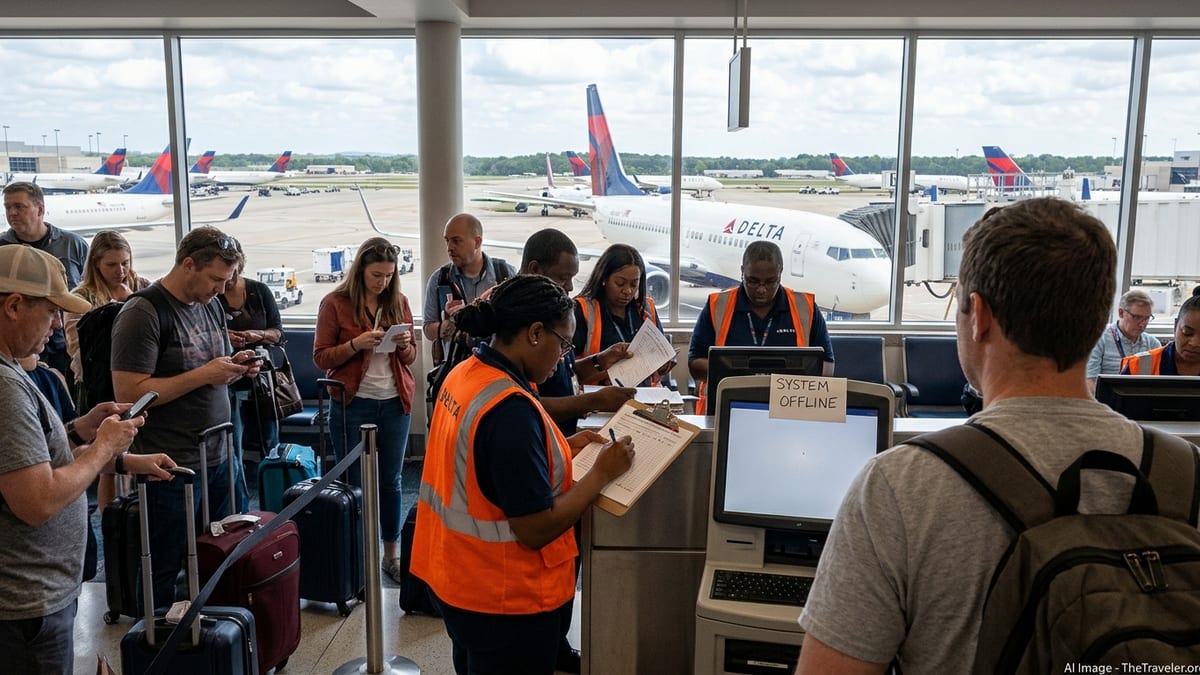
What happened to Delta’s weight and balance system
The disruption began on the morning of Sunday, November 22, when Delta’s automated system for calculating aircraft weight and balance stopped functioning correctly. The system is used before every departure to combine data on passengers, baggage, cargo and fuel so that pilots and dispatchers can confirm an aircraft is within safe operating limits. U.S. aviation rules require these checks to be completed before takeoff, so the outage immediately affected the pace of departures.
According to statements from the airline and advisories from the Federal Aviation Administration (FAA), Delta temporarily reverted to manual procedures, with staff performing weight and balance calculations by hand or using backup tools. While this allowed flights to continue operating, the process was slower, leading to long waits at gates and on taxiways while each flight was cleared. The FAA described the situation as a carrier-specific problem affecting Delta rather than a failure of federal air traffic systems.
By early afternoon, the FAA had issued a ground delay program for Delta flights bound for Hartsfield-Jackson Atlanta International Airport from the contiguous United States. That program effectively capped the rate of inbound arrivals to prevent gridlock at gates and on the tarmac while the airline worked through a growing backlog of delayed departures. Average additional waits for affected flights were estimated at close to an hour while the delay program was in effect.
Scale of the disruption at Atlanta and across the network
Hartsfield-Jackson Atlanta, Delta’s largest hub and the world’s busiest airport by passenger numbers, was the focus of the disruption. By late afternoon on November 22, flight-tracking service FlightAware data showed more than 1,100 delays and several dozen cancellations for flights into and out of Atlanta across all airlines, with Delta and its regional partner Delta Connection accounting for the vast majority. At one point, local media reported nearly 1,250 delayed operations at the airport, reflecting both Delta’s issues and weather-related constraints on other carriers.
Across Delta’s network, the impact was also significant. The airline had about 5,000 mainline and Delta Connection flights scheduled for Sunday. Public statements from the carrier indicated that roughly 70 percent of the day’s delays and cancellations attributed to Delta on tracking sites were linked to the automation problem, with the remaining disruptions tied to separate weather and air traffic control programs affecting New York City and other parts of the Northeast. Passengers reported holdups at airports across the United States, including Atlanta, New York LaGuardia, Newark, Washington Reagan National, Washington Dulles, Boston, Baltimore, Miami, Minneapolis, Nashville, San Antonio and Birmingham.
Because departures were taking longer to process, arriving flights sometimes found no available gates. Travelers described waiting on taxiways for extended periods after landing while earlier flights that had been delayed in the departure queue finally pushed back. This knock-on effect meant some passengers who arrived at their destination still experienced lengthy delays before disembarking, and in a smaller number of cases, long ground delays were followed by cancellations when crews timed out under federal work rules.
How long the problem lasted and what Delta is offering travelers
Delta said the automated weight and balance system was fully restored later on November 22, allowing the airline to phase out manual workarounds and gradually return to normal operations. The carrier described cancellations as a last resort and focused on completing as many flights as possible once the system came back online. However, because many aircraft and crews were displaced from their intended positions, irregular operations continued into the evening and into Monday on some routes, with residual delays as schedules were realigned.
For affected customers, Delta confirmed it is rebooking travelers on the next available itinerary when their original flights are significantly delayed or canceled. The airline has said it is providing hotel rooms and meal vouchers where required by its policies, particularly for passengers whose disruptions extended overnight or involved missed connections at hub airports. Customers whose flights were canceled and who chose not to travel are being offered refunds to their original form of payment, according to the airline’s public statements.
While the outage was disruptive, the airline and regulators have stressed that safety procedures remained in place throughout. Manual calculation of aircraft weight and balance is a standard contingency used when automated tools are unavailable, and flights are not cleared for departure unless those checks are completed. No safety incidents related to the outage were reported on November 22, and there is currently no indication from the FAA of any enforcement action tied to the event.
Connection to the recent nationwide ground stop and other tech failures
The Delta disruption came only days after a rare nationwide ground stop ordered by the FAA that temporarily halted most U.S. departures earlier in November. That earlier event was traced to problems during a communications equipment upgrade in the FAA’s systems and affected all major airlines for several hours. Although the two incidents were separate, their proximity in time has drawn attention to the dependence of air travel on complex digital infrastructure at both airlines and regulators.
In addition, other carriers have recently experienced technology-related problems of their own. United Airlines reported an outage affecting its own weight and balance calculation system earlier in the month, forcing temporary ground delays while manual procedures were put in place. The clustering of these issues ahead of the Thanksgiving travel peak has raised questions about system resilience, contingency planning and how quickly airlines can recover when key operational tools fail.
Industry and regulatory discussions following the nationwide ground stop have focused on modernization of hardware, redundancy in critical systems and clearer communication protocols between airlines, the FAA and airport operators. For travelers, the events highlight that disruptions can now stem not only from weather and congestion but also from failures in back-end systems that are largely invisible to passengers until they stop working.
What travelers should do next and how to plan around lingering effects
With the automated weight and balance system now back in service, Delta’s operations have largely stabilized, but some knock-on effects may still be visible for a short period, especially at Atlanta and on routes that rely heavily on tight aircraft rotations. Travelers flying in the days immediately after November 22 are likely to encounter some residual schedule changes, including swapped aircraft types, altered departure times or rebooked connections as the airline rebalances its fleet and crews.
Passengers scheduled to travel with Delta around the Thanksgiving period are advised to monitor their flight status closely through the airline’s mobile app or website and to allow extra time at the airport in case of congestion at check-in, security or boarding. Those who experienced significant delays or cancellations on November 22 should review Delta’s customer commitments and their booking details to ensure they receive any overnight accommodations, meal vouchers or refunds they are eligible for. Travelers with nonrefundable tickets that were canceled by the airline can generally request reimbursement rather than a travel credit.
Looking ahead, the key question for many travelers is whether similar outages could recur during the remainder of the holiday season. At this stage, Delta has not provided detailed public technical explanations of the root cause beyond identifying a failure in weight and balance automation, nor has it announced any long-term schedule or policy changes connected to the event. Until more information is released, passengers should continue to plan for the usual seasonal risks such as winter weather and heavy traffic, while recognizing that isolated technology issues can still arise. Verifying contact details in bookings, enabling flight-status alerts and considering slightly longer connection times can help reduce the impact if schedules are disrupted again.