


More news on this day
Medical emergencies now account for just over 80% of total travel insurance payouts by value in a major new analysis of more than 10,000 claims, highlighting how overseas illness and injury dominate the financial risk that policies actually absorb for travelers.
Get the latest news straight to your inbox!
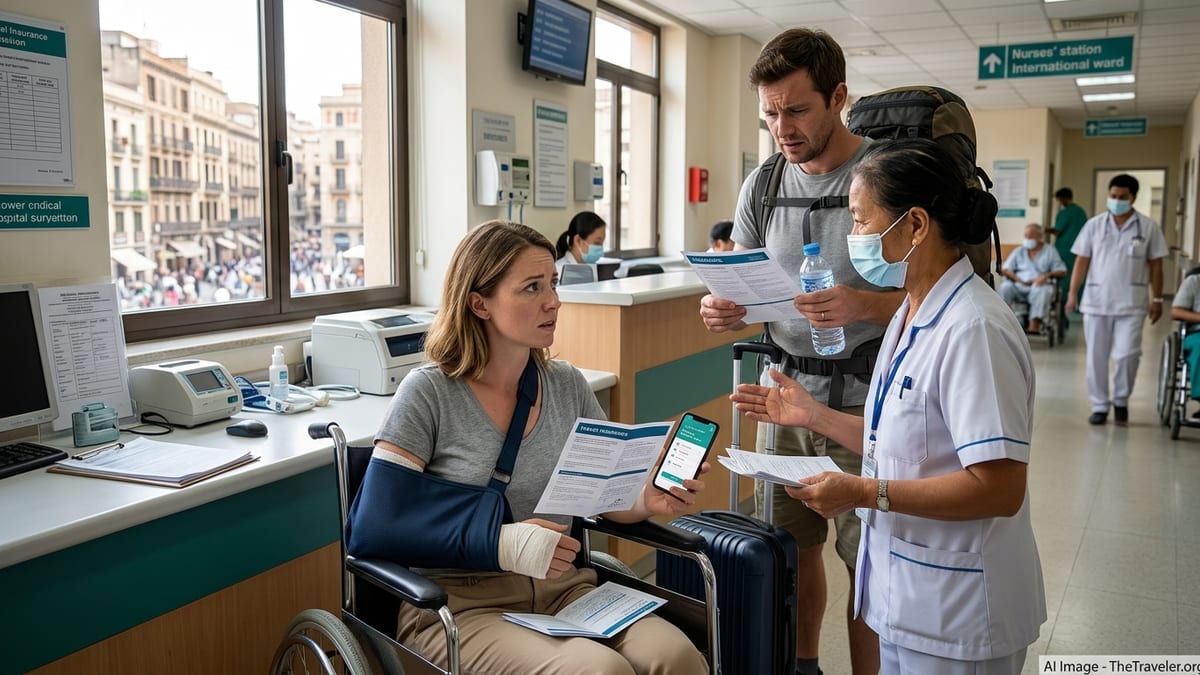
What the new study found about travel insurance payouts
The latest figures come from assistance and claims specialist Asego, which examined 10,959 travel insurance claims handled for partner insurers. According to the study, medical incidents represented 26.5% of all cases but drove 80.3% of the total amount paid out to policyholders. In other words, medical claims are relatively less frequent than non-medical claims, yet they are far more expensive when they do occur.
The dataset, which covers claims from recent travel seasons, includes a broad mix of policy types and trip profiles. While the study does not specify every market involved, Asego operates widely in Europe, and its portfolio includes both leisure and business travelers. That breadth offers a useful indication of how claims costs are distributed across a modern travel insurance book, even if exact proportions may differ from country to country or between individual brands.
It is important to distinguish between the number of claims and the money insurers ultimately pay. Many travelers most commonly claim for delays, baggage issues or modest cancellations, but in Asego’s sample it is serious illness or injury abroad that absorbs the overwhelming majority of insurer funds. This cost concentration helps explain why medical cover limits, exclusions and assistance arrangements sit at the core of most comprehensive travel insurance policies.
How these findings compare with other recent claims data
The new Asego figures are consistent with wider evidence that medical problems have become the single biggest financial risk within travel insurance. Recent data from specialist provider Multitrip.com, for example, showed that medical expenses made up 43% of all claims by number in 2025, with cancellation a distant second at 16%. Separate analysis published by the Association of British Insurers has also highlighted that a significant share of total travel insurance payouts relates to overseas medical costs, including individual cases that have exceeded the equivalent of £1 million once hospital treatment and medical repatriation were arranged.
Other datasets show that medical claims are not always the most common category by count, but they still dominate by cost. In 2024, U.S. comparison platform Squaremouth reported that emergency medical claims represented 27% of all claims under Tin Leg-branded policies, narrowly ahead of trip cancellation at 26%. Although that analysis focused on volumes rather than payout values, it reinforced the trend that medical incidents are at least as frequent as major trip disruptions for many insurers, and often more expensive to resolve.
Consumer and market studies from insurers and regulators in the UK, Ireland and North America have for several years reported that medical or health-related events, including cancellations due to illness, account for a large share of travel insurance claim costs. However, the Asego results are notable because they quantify that share at just over four-fifths of total payout values in one recent portfolio, bringing into sharp relief how skewed travel insurance spending has become toward handling serious health issues abroad.
Why medical claims are so costly compared with other travel risks
The financial gap between medical and non-medical claims largely reflects the price of healthcare and medical logistics in popular destinations. A short stay in a hospital in North America or parts of Asia can rapidly exceed the total value of many leisure trips, particularly if surgery, intensive care or specialist diagnostics are required. When emergency medical evacuation or repatriation is medically necessary, costs can multiply further because they may involve air ambulances, medical escorts and complex international coordination between providers.
By comparison, many non-medical claims relate to capped expenses. Trip cancellation is usually limited to the prepaid, non-refundable cost of transport, accommodation and tours. Baggage and personal effects cover is commonly subject to item and overall limits, and travel delay benefits often reimburse a relatively small amount per day for meals and accommodation within clearly defined ceilings. Because those caps are built into the policy wording, they naturally constrain the size of most non-medical payouts.
Claims teams and travel assistance providers also report that medical cases can be complex and lengthy. They often involve guaranteeing payment directly to hospitals, arranging transfers to more suitable facilities, keeping in contact with family members at home and planning safe repatriation when the traveler is stable enough to move. Each part of that chain adds both administrative cost and potential exposure for the insurer or assistance provider, which helps to explain why a minority of claims can absorb a large majority of total payouts.
Implications for travelers choosing and using insurance cover
For travelers, the latest figures underline that the most important part of a policy is often its medical, evacuation and repatriation cover rather than the headline trip cancellation limit. Industry market studies in the US and UK have repeatedly found that many consumers focus on getting back the cost of their flights or hotel bookings while underestimating the potential scale of overseas medical bills. At the same time, surveys suggest that a significant portion of travelers either do not know how they would pay for treatment abroad or expect, sometimes incorrectly, that their domestic health insurance or public healthcare entitlement will protect them in other countries.
The new claims breakdown is a reminder to check medical coverage limits carefully and to look beyond the overall figure to see what is included. Key elements typically include emergency treatment costs, hospital charges, prescribed medications, local ambulance transport and, in more severe cases, medically supervised repatriation by air. Some policies also differentiate between initial stabilization and longer-term treatment, which may affect how long they will fund care abroad before arranging a return home.
Pre-existing medical conditions remain another crucial factor. Many medical claims disputes arise when travelers do not disclose ongoing conditions, recent investigations or upcoming procedures at the time of purchase. Where a condition is not fully declared or specifically accepted by the insurer, related claims may be reduced or declined. The concentration of payouts in the medical category means that insurers scrutinize these cases closely, and travelers planning complex itineraries or cruises are often encouraged in official guidance to obtain cover that is explicitly tailored to their medical history.
What travelers should check next and how the market may respond
The prominence of medical payouts in Asego’s claims data is likely to influence how travel insurers design and price products over the coming seasons. Although there is no single global standard response, insurers commonly adjust medical cover limits, refine exclusions and revisit their arrangements with international assistance networks when claims data show sustained increases in high-cost cases. Some markets have already seen higher baseline medical limits introduced, as well as clearer wording around activities, destinations or circumstances that are not covered.
For now, the most practical step for travelers is to verify the medical provisions of any policy before purchase and again before departure. That includes confirming that intended destinations are not excluded, checking whether planned activities such as winter sports or adventure excursions require add-ons, and reviewing any pandemic or conflict-related clauses that could affect access to treatment or evacuation. Travelers booking through tour operators or cruise lines should also clarify whether included protection is a full insurance policy, a limited waiver or simply an assistance service, as these products can operate differently when a serious medical problem arises.
As travel patterns continue to evolve and healthcare costs remain high in many destinations, further updates to claims statistics from Asego and other major providers are expected over the next 12 to 24 months. Those releases will show whether medical emergencies continue to account for such a dominant share of travel insurance payouts by value or whether changes in traveler behavior, underwriting or destination mix begin to rebalance the picture. Until then, the latest data provide a clear signal that, for many trips, the greatest financial protection travel insurance offers is against the cost of getting sick or injured far from home.