


More news on this day
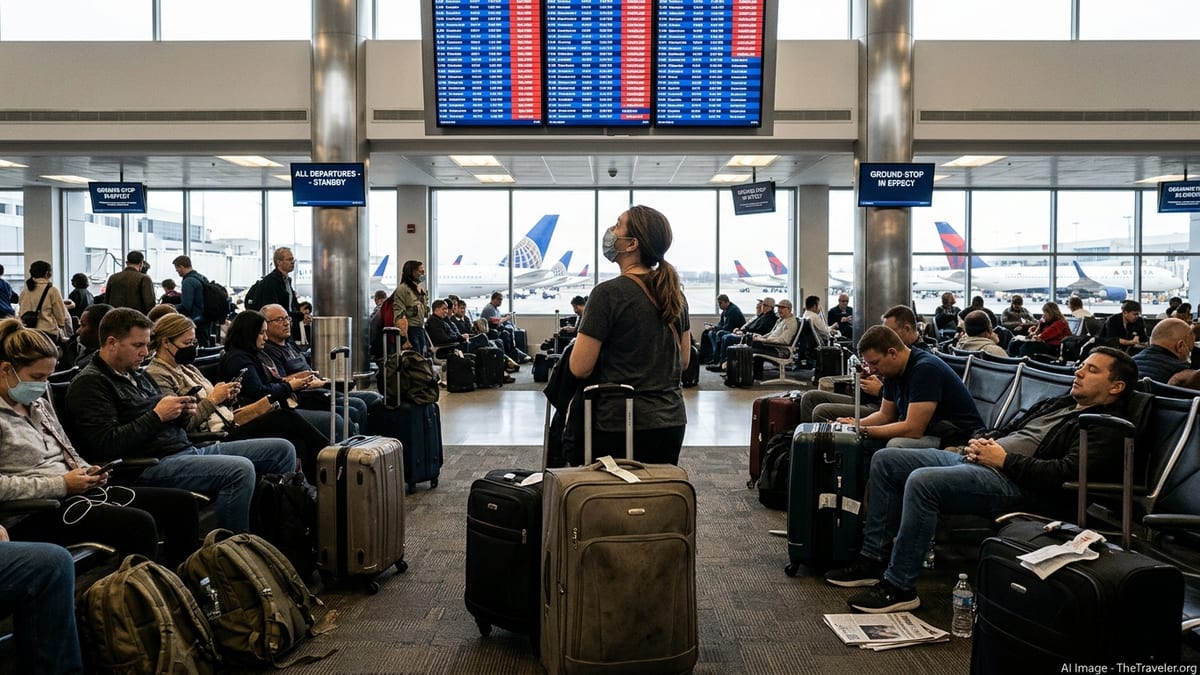
Millions of Americans flying for Thanksgiving 2026 are heading into the holiday rush just days after a rare nationwide Federal Aviation Administration ground stop and separate technology outages at United Airlines and Delta Air Lines, a sequence of events that has intensified concern about how the U.S. aviation system will hold up during one of its busiest weeks in years.
Get the latest news straight to your inbox!
What Happened In The November 13 Nationwide Ground Stop
The immediate source of anxiety for many Thanksgiving travelers is the nationwide ground stop that halted most U.S. departures on Friday, November 13, 2026. According to an FAA question-and-answer bulletin and summaries prepared for Congress, a telecommunications failure inside the agency’s communications network disrupted key voice and data services used by air traffic controllers to communicate with pilots and track aircraft. The FAA responded by imposing a national ground stop for departing flights that lasted about 4 hours and 45 minutes while technicians worked to stabilize the system and confirm that it was safe to resume normal operations.
Subsequent FAA and Department of Transportation briefings attribute the failure to work on a modernization project at a facility in Arkansas. A contractor working for network provider L3Harris had installed a new router as part of the migration from legacy copper and time-division multiplexing circuits to newer, internet protocol-based equipment. Investigators say the new device flooded older parts of the network with data, overwhelming systems and causing widespread telecommunications instability. Radar feeds and collision-avoidance systems on aircraft continued to function, but the FAA has stressed that reliable controller communications are considered essential to safely managing dense U.S. airspace, which is why it opted to stop departures while reverting to backup options and rerouting traffic.
Federal tallies indicate that more than 12,000 flights were canceled on November 13 alone, including over 9,000 cancellations by major U.S. airlines, with thousands more delayed as carriers attempted to restart their operations later in the day. Industry data cited by multiple analyses suggest that in total, more than 15,000 flights were either canceled or significantly delayed as a result of the outage, making it the longest and most disruptive nationwide ground stop since the early 2000s. Crowded terminals, long customer service lines and multi-day rebookings continued into November 14 in some markets as aircraft and crews remained out of position.
United And Delta Outages Deepen Concerns About System Resilience
The ground stop was followed within days by technology failures at two of the country’s largest carriers, creating a perception among passengers that multiple parts of the system are under strain just as holiday travel peaks. On Monday, November 16, United Airlines experienced a company-wide outage that affected several of the digital tools its crews rely on. Internal alerts described problems with applications used for flight planning, weather briefings and crew management, and United pilots temporarily lost access to some final aircraft weight data needed before departure. The airline briefly held departures while systems were restored and then gradually resumed flying, but travelers at hubs such as Newark Liberty and Chicago O’Hare reported extensive same-day delays and residual disruption into the evening.
Six days later, on Sunday, November 22, Delta Air Lines encountered its own technology breakdown, this time linked directly to weight and balance automation. The airline and FAA advisories describe a failure in the system that calculates key loading and performance figures for departing aircraft, information that must be confirmed before pushback and takeoff. Atlanta’s Hartsfield-Jackson International Airport, Delta’s primary hub and the world’s busiest, saw a temporary ground stop for Delta departures while the airline shifted to manual procedures and worked to restore the software. Flight-tracking data cited by aviation analysts show that Delta recorded more than 2,100 delays that day, affecting roughly two-thirds of its schedule, with hundreds of cancellations spread across its domestic network.
By late Sunday, Delta said its automation system had been restored and that it expected to clear most of the backlog by the end of the day, although some knock-on delays were reported into Monday as aircraft and crews were repositioned. The airline has indicated that there is no sign of a cybersecurity incident, a conclusion that mirrors United’s public statements about its November 16 outage. The FAA has also said that there is no evidence linking the carrier-specific problems to the earlier telecommunications failure that led to the nationwide ground stop. Nevertheless, the rapid sequence of events has focused attention on the number of critical digital systems that must work correctly for the modern air travel network to operate smoothly.
Record Holiday Demand Meets A Tighter Margin For Error
Despite the recent disruptions, federal and industry forecasts point to some of the heaviest Thanksgiving travel volumes in more than a decade. In a forecast released on November 24, 2026, the FAA projected that U.S. air traffic over the broader Thanksgiving period would be the busiest in 16 years. The agency expects more than 417,000 flights between November 23 and December 1, with Tuesday, November 24 identified as the single busiest day for operations and the Sunday after Thanksgiving expected to see some of the heaviest volumes of returning travelers.
On the ground, travel projections are similarly high. AAA’s latest holiday outlook anticipates about 81.5 million Americans traveling at least 50 miles from home for Thanksgiving across all modes, with roughly 6 million of them flying. Those figures are comparable to, or slightly below, last year’s near-record levels, but airlines are scheduling dense flight programs on key trunk routes rather than adding large numbers of extra off-peak flights. That means cabins are likely to run very full, leaving fewer empty seats available to absorb passengers if bad weather or further technical issues cause cancellations.
Analyses from travel data companies and media outlets that track operational performance suggest that disruption risk, rather than ticket price, is uppermost in many travelers’ minds this year. Several recent reports highlight that in past Thanksgiving and Christmas periods, a significant minority of flights on peak days experienced either cancellation or delays of two hours or more. The combination of high load factors, winter weather patterns influenced by El Niño and the recent demonstration of how quickly a single system failure can ripple across the country is contributing to a thinner margin for error. Even if November’s nationwide ground stop remains a one-off event, relatively small disturbances during peak travel days can translate into long waits and limited rebooking options for affected passengers.
How Officials And Airlines Are Responding Ahead Of Thanksgiving
Federal transportation officials and lawmakers have moved quickly to scrutinize the November 13 ground stop. The Department of Transportation has outlined an interagency review involving the FAA, the department’s own leadership, defense officials and elements of the intelligence community to examine exactly how the telecommunications failure unfolded and what safeguards might prevent a recurrence. Public statements so far emphasize that investigators have not found evidence of a cyberattack or foreign interference, and instead are focused on how the router upgrade interacted with the FAA’s legacy infrastructure and vendor oversight.
An FAQ published by the FAA, along with briefing materials summarized by the Congressional Research Service, underline that the agency is reevaluating its modernization strategy for communications networks. In the short term, officials say they have frozen similar router deployments, disabled certain features in already-installed hardware and added additional monitoring to detect abnormal traffic loads more quickly. The incident has also prompted questions from congressional committees about how the FAA validates new equipment before it is connected to operational systems, and whether contractors have been given sufficient testing requirements and performance oversight.
Airlines, for their part, are focused on recovery and contingency planning ahead of the busiest departure days. Both United and Delta have said they are conducting internal reviews of their November outages and reinforcing backup procedures that allow crews to operate using manual weight-and-balance calculations and alternative dispatch methods if automation fails. Several carriers have reminded passengers through app notifications and email updates to enroll in real-time alerts, confirm contact details and download mobile boarding passes to reduce pressure on airport counters during any irregular operations. While no major airline has announced broad schedule cuts specific to the upcoming week based on the recent issues, carriers are cautioning that severe weather or localized technical problems could still produce delays or cancellations even if core systems remain stable.
Practical Implications And What Thanksgiving Flyers Should Check
For travelers flying between Tuesday, November 24 and Monday, November 30, the main effect of the recent outages is not an ongoing system fault but a more constrained operating environment. Airlines say that day-of operations have largely returned to normal in the run-up to Thanksgiving, with the nationwide ground stop, United’s November 16 outage and Delta’s November 22 issue all resolved. However, the disruptions required complex efforts to reposition aircraft and crew earlier in November and highlighted how quickly delays can cascade when schedules are tight and aircraft are operating close to capacity.
Performance data from recent holiday seasons indicate that even routine seasonal weather can trigger broader delays when spare capacity is limited. A localized fog event, a period of strong crosswinds or a relatively minor snow system at a hub can reduce arrival and departure rates enough to cause holding patterns and missed connections. When flights are close to full, rebooking displaced passengers onto later services becomes harder, lengthening recovery times. This dynamic is why travel insurers and assistance providers have spent recent days reminding customers to retain receipts for unexpected hotels and meals during long delays, review the specific language in any trip-interruption coverage about air traffic control events and system outages, and monitor both airline communications and airport status dashboards.
Travel authorities are also offering concrete guidance for the week ahead. The FAA and major airports are urging passengers to arrive earlier than they might during a quieter period, particularly at large hubs and during morning and late-afternoon peaks. Many airports expect heavier-than-usual lines at security and check-in as occasional travelers return to the skies, and some have opened overflow areas or set up additional staff to handle customer-service surges when delays occur. Weather forecasts remain a moving target, but several outlooks flag the potential for storms, strong winds or coastal flooding in parts of the country at various points in the week, highlighting the possibility of localized capacity reductions even in the absence of any new technology problems.
The most useful steps for Thanksgiving 2026 flyers remain straightforward but more important in light of recent events. Travelers are being advised to reconfirm their flight status before leaving for the airport, keep airline apps installed and notifications enabled, and allow extra time for every part of the journey, from reaching the terminal to clearing security and boarding. Those with tight same-day connections may wish to consider earlier departures where feasible, and passengers with flexible schedules might find it worthwhile to build in a cushion of several hours or even a day on critical family or work trips. While there is currently no confirmed indication of another systemwide outage, the ground stop and subsequent airline-specific failures have underscored that U.S. air travel in late November 2026 depends on a mix of aging infrastructure and complex digital systems at precisely the moment when demand leaves little room for things to go wrong.