


More news on this day
More than 1,274 flights were delayed and at least 184 were canceled across the United States on Tuesday, as a combination of damaged communications infrastructure in New Jersey and lingering weather and congestion issues triggered fresh disruption for air travelers.
Get the latest news straight to your inbox!
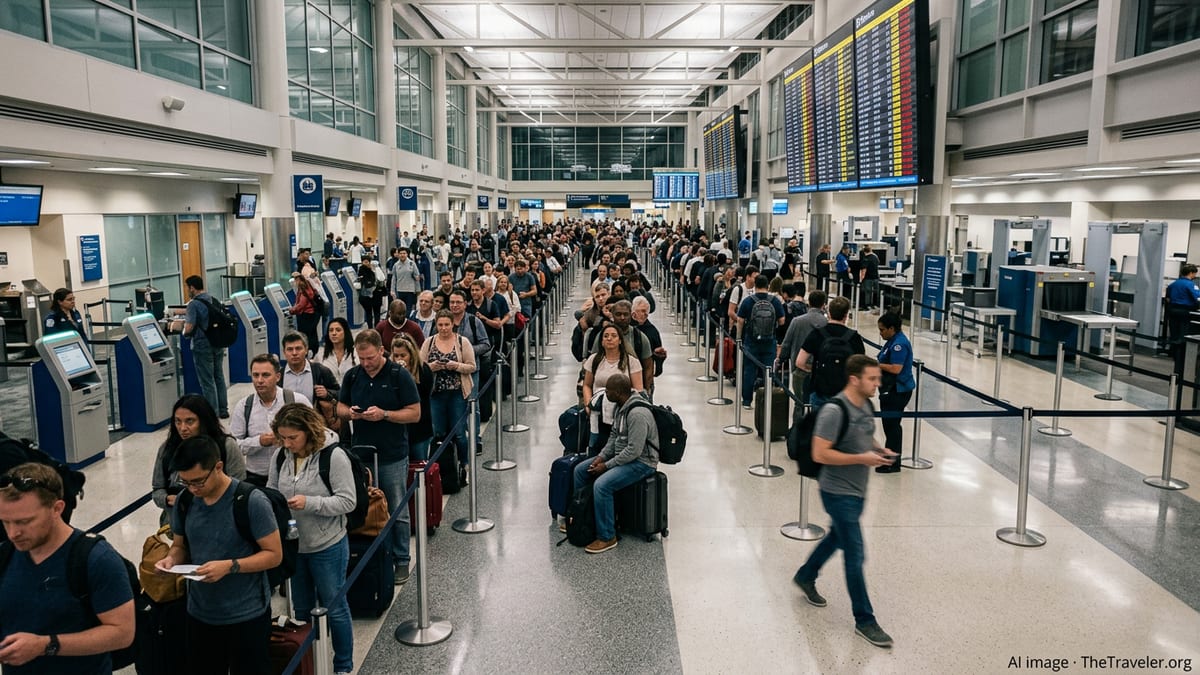
New Jersey fiber cut ripples through major hubs
Publicly available aviation data shows that the latest wave of disruptions followed an infrastructure problem in New Jersey, where a fiber cable line was damaged on Monday, affecting a key air traffic facility that helps manage traffic in the busy Northeast corridor. The incident prompted ground stops and strict flow restrictions at several airports on Monday, with the knock-on effects spilling into Tuesday’s schedules.
Coverage from multiple outlets indicates that Newark Liberty International Airport has been one of the hardest hit hubs. Figures compiled from FlightAware data and cited in recent travel reports show Newark leading U.S. airports for combined delays and cancellations on Tuesday, with more than 70 departures or arrivals delayed and over 50 flights canceled as airlines worked through backlogs created the previous day.
Other Northeast gateways including New York’s Kennedy and LaGuardia airports, along with Philadelphia and Boston, have also reported elevated disruption in September tied to a mix of thunderstorms, runway work and traffic management initiatives. Even when the underlying infrastructure issue is resolved, residual delays can persist for several daily flight “banks,” particularly at heavily scheduled hubs that have little slack in their operations.
The latest figures align with a broader pattern of strain this month. Separate analyses of early September 2026 operations point to multiple days where nationwide delays have exceeded 1,000 flights and cancellations have climbed into the triple digits, underscoring how localized problems in a dense part of the network can quickly spread across the country.
Where delays and cancellations are hitting the hardest
The current disruption has not been concentrated in only one city. Flight tracking tallies referenced in news coverage show that while Newark has posted the single highest number of problem flights on Tuesday, secondary effects have been registered across other coastal and inland hubs as aircraft and crews fall out of place.
Recent September data gives a sense of how quickly conditions can deteriorate. On one midmonth day, reporting based on FlightAware’s dashboards documented more than 1,200 U.S. delays and over 50 cancellations, with impacts clustered at busy hubs such as Dallas Fort Worth, Boston Logan, Reagan National and New York JFK. On another day, separate coverage highlighted more than 1,600 delays and around 180 cancellations, with Miami, Chicago and Boston all facing substantial schedule cuts after a disabled aircraft and storms constrained operations.
Stormy weather and runway construction in Boston have generated some of the month’s worst single-airport statistics. One analysis cited more than 400 delays and over 80 cancellations at Boston Logan on a single day, as ground delay programs forced airlines to slow arrivals and re-time departures. Chicago O’Hare, another critical node, has repeatedly appeared atop global cancellation rankings this month when thunderstorms have moved through the Midwest and prompted the Federal Aviation Administration to reduce arrival rates.
On the West Coast, travelers are not entirely insulated. Earlier in September, flight tracking data cited in national coverage recorded nearly 1,000 delays and more than 100 cancellations in a single day, with Seattle-Tacoma International Airport reporting the highest combined totals among U.S. airports and Alaska Airlines leading U.S. carriers in disruptions. That history illustrates how quickly the focus of disruption can shift from one region to another depending on weather and infrastructure conditions.
Why U.S. air travel remains so vulnerable
Analyses from aviation data providers and travel media point to several overlapping causes for the elevated disruption levels seen in September. Thunderstorms and low clouds across multiple regions have repeatedly triggered ground stops, holding patterns and reroutes, particularly in and out of New York, Philadelphia, Washington, South Florida, Chicago and the Texas hubs. When several of these large markets experience constraints on the same day, the cumulative effect can overwhelm available aircraft and crew capacity.
Infrastructure issues have compounded the weather-related problems. The fiber line damage in New Jersey that affected a key traffic facility is the latest example of how aging and complex communications systems can introduce single points of failure. Earlier travel-industry analyses have also cited runway maintenance projects, such as those underway in Boston, as a source of additional strain, since reducing the number of available runways forces controllers and airlines to meter traffic more aggressively.
Longer term data published by the U.S. Department of Transportation shows that, while airlines have generally kept cancellation rates near or below 2 percent in recent reporting periods, delays remain elevated due to late-arriving aircraft, carrier-related issues and system capacity limits. Air travel demand has rebounded strongly, and traffic volumes now frequently match or exceed pre-pandemic levels, leaving little margin when storms, technical issues or staffing constraints appear.
Industry observers note that the pattern of repeated mid- and late-summer meltdowns in recent years has prompted renewed debate over investments in air traffic control technology and airport infrastructure. The September disruptions, involving both weather and a damaged communication line, are likely to intensify scrutiny of how resilient the current system is to both expected and unexpected shocks.
How today’s disruption fits into a turbulent September
The tally of 1,274 delayed flights and 184 cancellations reported for Tuesday sits within a month that has already seen several sharp spikes in disruption. Early September coverage chronicled days with roughly 900 to 1,000 delays and well over 100 cancellations across the United States, often tied to slow-moving storm systems affecting multiple hubs simultaneously.
As the month progressed, a succession of events kept pressure on the system. In the first half of September, real time tracking data cited by travel outlets showed more than 2,300 delays and nearly 150 cancellations over a two day stretch, with American, JetBlue and other major carriers absorbing much of the impact. A few days later, another disruption window brought more than 1,600 delays and over 180 cancellations, centered on Miami and Chicago but radiating through connecting banks nationwide.
These earlier episodes were primarily weather-driven, while the latest disruption carries a larger infrastructure component due to the damaged fiber line. Together they present a composite picture of a system where distinct categories of risk often arrive in quick succession. For passengers, the practical effect is similar: longer lines at check in and security, crowded gate areas and a heightened risk of missed connections when tightly timed itineraries encounter even modest delays.
Travel analysts tracking the month’s performance suggest that, absent a sustained period of calm weather and trouble free infrastructure operations, it may take time for airlines to restore on time performance metrics to more comfortable levels. With construction projects continuing at some airports and the Atlantic hurricane season still active, the possibility of further flare ups in disruption remains present.
What passengers can realistically do right now
Although the latest figures paint a challenging picture, travelers still have options to reduce the risk of being stranded when widespread disruptions occur. Travel coverage drawing on airline and government guidance consistently recommends monitoring flight status in real time using airline apps and airport information screens, since schedules can shift quickly as controllers adjust traffic flows and carriers reshuffle aircraft.
Consumer information from the U.S. Department of Transportation emphasizes that when a flight is canceled or significantly changed by an airline and a traveler chooses not to take the alternative offered, the passenger generally has the right to request a cash refund to the original form of payment rather than accept vouchers. The precise definition of a significant schedule change can vary by carrier and is still being refined in practice, but passengers are encouraged to review their airline’s contract of carriage and the DOT’s public guidance before assuming they have no recourse.
During periods like this, with more than a thousand delays recorded in a single day, aviation data platforms such as FlightAware and airport status dashboards can help passengers understand whether problems are localized or widespread. If most disruption is concentrated at one or two hubs, travelers may be able to rebook through alternate connection points; when multiple regions are affected simultaneously, the realistic goal often shifts to securing the earliest available arrival time, even if it means a longer or more circuitous routing.
For now, the figures of 1,274 delays and 184 cancellations serve as a snapshot of a broader pattern in U.S. air travel this month. With weather, infrastructure and capacity pressures intersecting, travelers are likely to continue facing an unsettled environment, particularly at large coastal and Midwestern hubs that anchor the national network.