


More news on this day
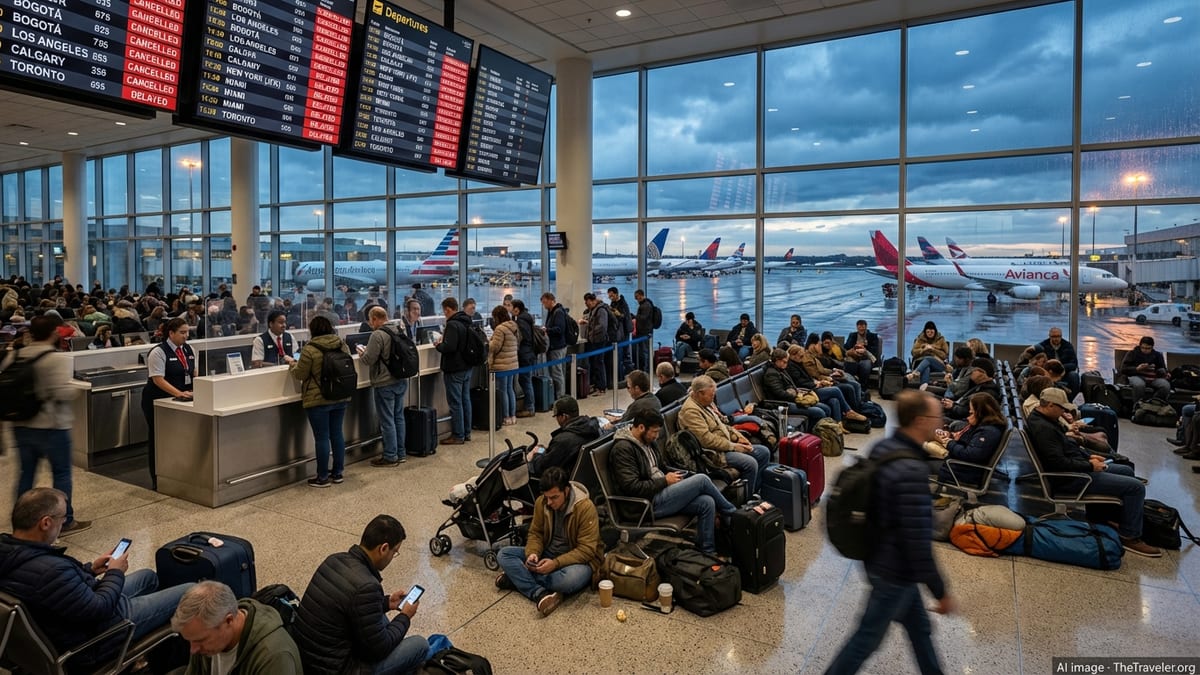
More than 150 flights at Phoenix Sky Harbor International Airport were delayed or canceled as a wave of disruptions rippled through the national air network, leaving many travelers facing missed connections, tight rebookings and crowded concourses.
Get the latest news straight to your inbox!
How a National Ripple Effect Hit Phoenix
Publicly available tracking data and airline information indicate that Phoenix Sky Harbor’s disruptions were largely tied to conditions elsewhere in the country rather than any single local issue. When severe weather, congestion or operational slowdowns affect major hubs, aircraft and crews can be left out of position, triggering rolling delays across the system that often reach otherwise clear-weather airports such as Phoenix.
Federal aviation data shows that Sky Harbor has recently been listed with modest arrival and departure delays of around 15 minutes or less, yet flights bound for or originating from other busy hubs have experienced more significant schedule changes. As those flights arrive late or depart behind schedule, the impact compounds, affecting later departures from Phoenix and limiting options for travelers needing to connect onward.
Reports from recent days describe inbound flights to Phoenix running late, forcing aircraft to turn quickly at the gate or, in some cases, leading to missed departure windows and cancellations. Once multiple flights in a bank are affected, airlines often need to consolidate passengers, resulting in more people competing for fewer available seats.
This type of cascading disruption is common in the summer travel period, when storms in regions such as the Midwest and East Coast coincide with full planes and limited spare capacity, leaving little margin when anything goes wrong upstream.
What Travelers Are Experiencing at the Airport
Travelers at Sky Harbor have reported crowded gate areas, long lines at customer service desks and tight turnarounds for rebooked flights. In some cases, passengers whose flights were delayed on the ground or in the air have arrived to find their connections already closed or substantially delayed, extending total travel times by several hours.
Nationally, data for the summer season indicates that delays often average 30 to 60 minutes when major hubs are under traffic management programs. When those delays stack on top of one another, a single disrupted departure can turn into an overnight stay for some passengers, especially on popular leisure routes where later flights are already sold out.
At Sky Harbor, the impact has been especially noticeable during peak bank times in the morning and late afternoon. Those periods see the highest concentration of departures to major hubs in the Midwest and East, meaning that any ground stops, storm-related reroutes or congestion at destination airports can quickly translate into a wave of rescheduled departure times in Phoenix.
Travelers arriving at the airport without having checked their flight status in advance are among the hardest hit, as they may only learn of a multi-hour delay or cancellation once they reach the ticket counter or security checkpoint.
Airlines’ Options and Passenger Rights
Airlines operating at Phoenix Sky Harbor generally respond to widespread disruptions by rebooking passengers on later flights, rerouting them through alternative hubs or, when no same-day options exist, offering overnight accommodations according to each carrier’s policies. Publicly available guidance shows that passengers whose flights are significantly delayed or canceled for reasons within an airline’s control may be eligible for meal vouchers, hotel stays or other assistance, but coverage varies by carrier and by the nature of the disruption.
When delays are categorized as caused by weather or air traffic control constraints, compensation tends to be more limited, although airlines still typically work to place affected travelers on the next available flight at no additional cost. Consumer advocacy information notes that, in some international itineraries, passengers may have additional protections under foreign or cross-border regulations, but those rules depend on the airline operating the flight and the route involved.
In practice, rebooking can be challenging on days when more than 150 flights across multiple airports are disrupted. With many services operating close to capacity, open seats may be scattered across a variety of routes and times, requiring passengers to accept longer layovers, late-night departures or connections through alternate cities to reach their destinations.
Travelers are also being encouraged by airlines and travel advisers to use mobile apps and online customer service channels where possible, in order to avoid long lines at physical service desks when irregular operations stretch through the day.
Practical Tips for Navigating Disruptions at PHX
Given the recent wave of delays and cancellations affecting Phoenix, experienced travelers recommend checking flight status repeatedly on the day of travel, starting several hours before leaving for the airport. Monitoring both the departure and the incoming aircraft, when that information is available, can provide an early signal of potential problems if the inbound flight is running behind schedule.
Arriving at Sky Harbor early remains important, even when a delay has already been posted, since scheduled departure times can shift forward if conditions improve and airlines complete ground operations more quickly than expected. Being in the terminal with a boarding pass in hand gives travelers more flexibility to switch to alternative flights if options become available.
Carrying essential items such as medications, chargers and a change of clothes in a carry-on bag can also help mitigate the impact of an unexpected overnight stay or a long delay. Food and beverage options at Sky Harbor are extensive, but lines can grow quickly during peak disruption periods, so travelers may want to build in extra time for meals and hydration.
For those with tight connections, especially on international or last-flight-of-the-day itineraries, travel planners suggest considering longer layovers or earlier departures during periods when storms and heavy traffic are common. While that approach may add time to the journey, it can reduce the risk of missed onward flights when irregular operations ripple through the network.
What to Watch in the Days Ahead
Looking beyond the current disruptions, Phoenix Sky Harbor is entering the busiest stretch of the summer travel season. Airport statistics and national aviation forecasts point to sustained high passenger volumes, meaning that even minor operational issues can escalate quickly when terminals and aircraft are near capacity.
Upcoming weather patterns across major hub regions will play a key role in determining whether delays continue at the same pace or ease in the days ahead. Travelers with flights connecting through storm-prone airports may see more frequent schedule adjustments than those flying on shorter, intraregional routes in the western United States.
Infrastructure and airfield planning documents for Phoenix indicate ongoing and future projects aimed at maintaining capacity and managing growth. While those efforts are designed to minimize disruption, they underscore how closely Sky Harbor’s performance is tied to the wider national system and to the operational decisions of the airlines that serve it.
For now, passengers departing from or arriving in Phoenix are advised to stay alert to schedule changes, keep communication channels open with their airlines and build flexibility into their plans as the system works through the latest round of delays and cancellations.