


More news on this day
More than 709 flights across the United States were delayed and at least 110 were canceled in a single 24-hour period this week, extending a late-summer pattern of rolling disruptions that has left thousands of passengers facing missed connections, long lines, and unexpected overnight stays.
Get the latest news straight to your inbox!
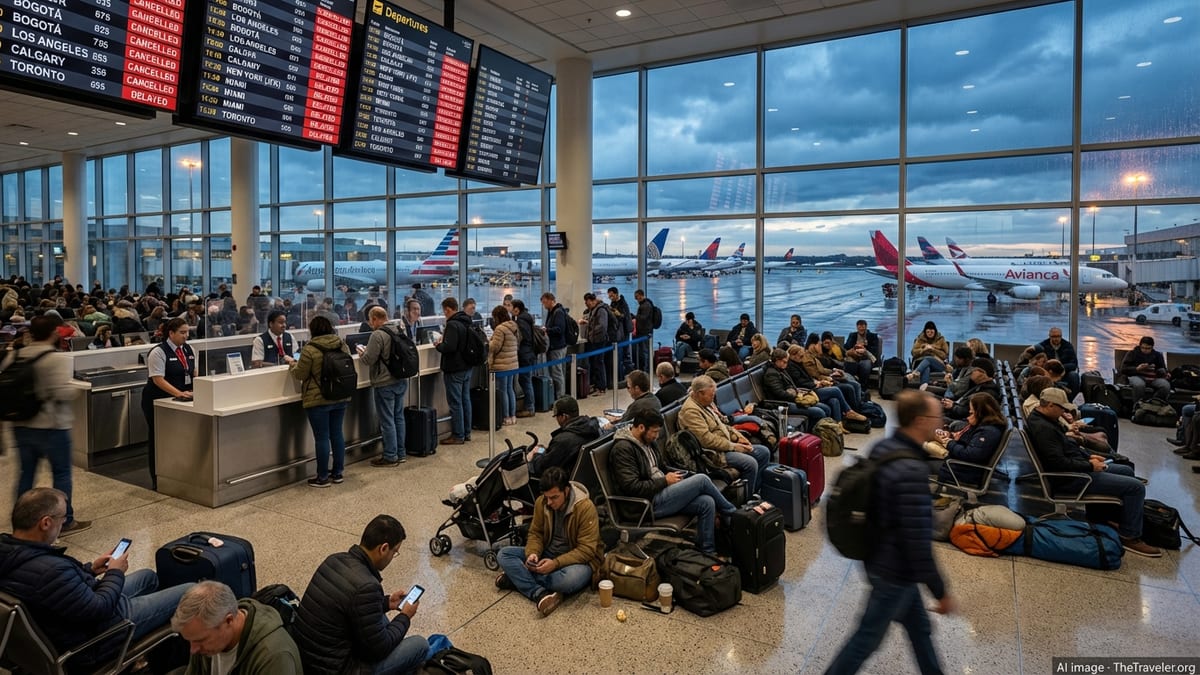
Latest Tallies Show Another Day of Systemwide Strain
Tracking data from flight-monitoring services indicates that, on one of the busiest late-summer travel days, over 709 flights within, into, or out of the United States arrived late, while about 110 were canceled outright. The figures add to a string of recent days in which flight disruptions have remained elevated across the network.
Published coverage of delay and cancellation counts over the past week points to continued volatility in daily operations. On some days, disruptions climbed dramatically higher, with tallies of more than 1,500 delayed flights and over 100 cancellations, and on other days nearly 2,000 delays paired with dozens of cancellations were reported nationwide. These swings highlight how quickly conditions can deteriorate when weather or operational issues converge.
Although the latest totals are more modest than some of the summer’s worst days, they still represent significant strain for the system and for travelers. Even several hundred cancellations can cascade through airline schedules, while hundreds more late arrivals contribute to crowding at gates, pressure on crews and aircraft, and longer recovery times for carriers.
Travel industry reports stress that these disruptions are occurring at a time when domestic demand remains strong and planes are frequently full, which reduces the options for rebooking stranded passengers. As a result, even a relatively small percentage of disrupted flights can translate into a large number of affected travelers.
Weather, Congestion, and Staffing Continue to Drive Disruptions
Recent reporting links many of the latest delays and cancellations to a mix of late-summer thunderstorms and lingering operational bottlenecks. Thunderstorm activity across multiple regions has periodically slowed departures and arrivals at major hubs, forcing ground stops, reroutes, and longer taxi times that reverberate across national schedules.
Analyses from consumer advocacy and air travel data firms over the past few months describe similar patterns whenever widespread storms track over dense aviation corridors. On one June day this year, for example, more than 8,600 U.S. flights were either delayed or canceled as a band of thunderstorms swept across several major hubs, illustrating how vulnerable busy networks are when weather limits capacity.
Operational constraints also remain a factor. Publicly available briefings and reports have repeatedly cited tight staffing in some parts of the aviation system, particularly among air traffic controllers, as well as airlines working near the limits of available crews and aircraft. When schedules are built with little slack, even localized issues can lead to rolling delays that last well into the evening.
Industry data compiled for recent government and consumer reports suggests that, taken together, weather-related slowdowns, operational challenges, and high demand have combined to keep disruption levels elevated beyond what many travelers experienced before the pandemic.
Passengers Face Longer Travel Days and Limited Options
For passengers, the latest wave of 709 delayed flights and 110 cancellations translates into longer travel days, missed connections, and uncertainty about when they will reach their destinations. On busy travel days, a single cancellation can displace hundreds of people from already full flights, while extended delays can cause travelers to miss cruises, tours, and important events scheduled around arrival times.
Reports from recent disruption days describe lengthy lines at customer service counters, crowded gate areas as travelers wait for updates, and competition for limited seats on later flights. With load factors high across many U.S. routes, same-day rebooking can be difficult, especially for larger families or groups attempting to stay together.
Travel coverage also highlights secondary impacts that may not immediately show in headline numbers. When disruptions peak, hotel availability around major airports can tighten quickly, rideshare prices can increase, and airport services such as dining and retail may be strained by passengers remaining in terminals longer than planned.
For travelers already in transit, the compounding effect of modest schedule changes can be particularly challenging. A delay of an hour or two on an initial leg can easily lead to an overnight stay if it causes a missed onward flight, especially when alternative routings are already heavily booked.
Policy Debate and Consumer Protections Under the Spotlight
The persistence of widespread delays and cancellations has drawn renewed attention to passenger protections in the United States. The U.S. Department of Transportation maintains a public dashboard that compares how major airlines handle controllable delays and cancellations, outlining whether carriers commit to provide meals, hotels, or other amenities in specific circumstances.
While federal rules require airlines to provide refunds when a flight is canceled and the passenger chooses not to travel, compensation for delays and additional out-of-pocket costs is more limited and depends heavily on each airline’s policies. Consumer advocates have pointed to recent disruption spikes as evidence that clearer and more consistent standards would benefit travelers.
In recent months, government reports and policy discussions have examined whether to expand or formalize requirements for airlines when disruptions occur, including potential standards for hotel accommodations, meal vouchers, or automatic rebooking. Industry groups, in turn, have emphasized the role of severe weather and broader infrastructure challenges, arguing that many disruptions fall outside carriers’ direct control.
Data from the Department of Transportation’s Air Travel Consumer Report shows that delay and cancellation rates have remained a persistent concern for several peak seasons in a row. The combination of recurring operational issues and high-profile disruption days has ensured that passenger rights remain a central topic in debates over aviation policy.
How Travelers Can Navigate a Disruption-Prone Season
Given the latest statistics and the wider pattern of disruption, travel experts and consumer organizations consistently recommend that passengers build extra flexibility into their plans. Guidance from airlines and advocacy groups emphasizes monitoring flight status closely through official apps and websites, checking for weather advisories, and allowing longer connection times, particularly when connecting through notoriously busy hubs.
Published checklists for disruption-prone travel periods also advise booking earlier departures when possible, as morning flights are less likely to be affected by the day’s cumulative delays. Travelers are further encouraged to keep essential items and a change of clothes in carry-on baggage in case checked bags are separated during irregular operations.
When flights are significantly delayed or canceled, consumer resources recommend that travelers review airline policies and the federal dashboard to understand what assistance may be available. In many cases, it can be helpful to pursue multiple channels at once, such as contacting customer service by app, website, or phone while also speaking with agents at the airport.
With more than 709 delays and 110 cancellations recorded in a single day, the latest figures serve as another reminder that U.S. air travel remains vulnerable to sudden disruptions. For now, travelers are likely to benefit from planning for contingencies and staying informed about both operational conditions and their rights when plans are derailed.
Over 709 flights delayed, 110 canceled amid widespread U.S. travel disruptions