


More news on this day
U.S. air travelers faced another difficult day as live tracking data showed more than 984 flights delayed and at least 111 canceled nationwide, underscoring how quickly routine weather and operational pressures can cascade into widespread schedule disruptions.
Get the latest news straight to your inbox!
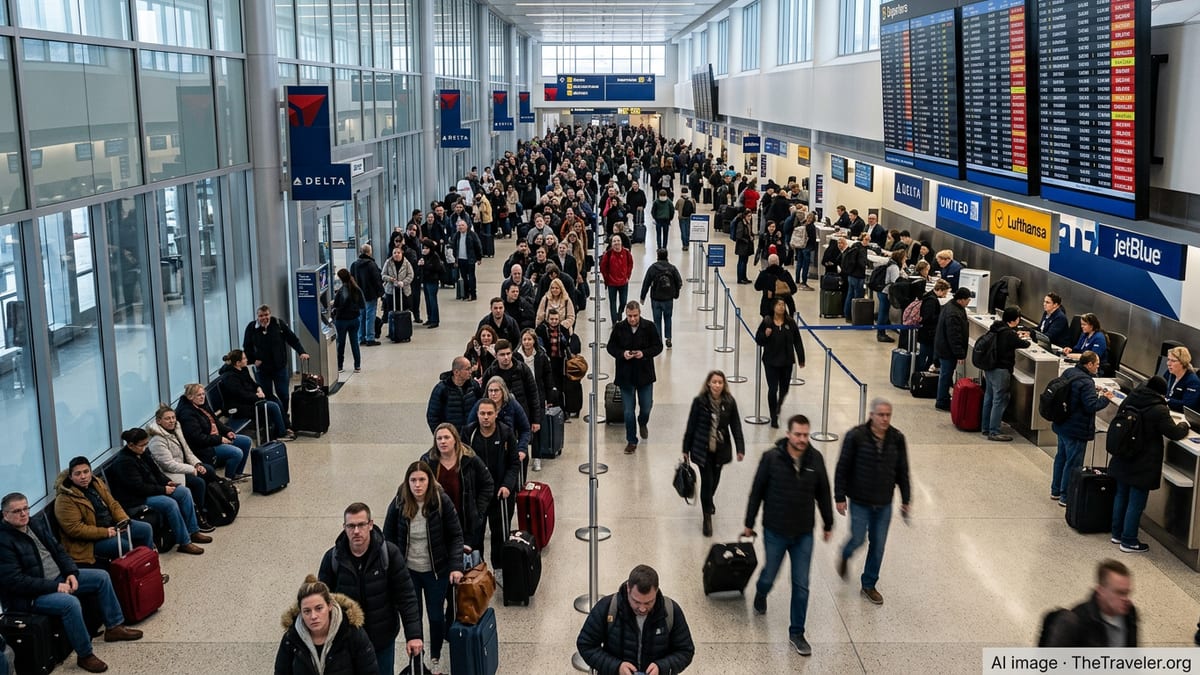
Nationwide Delays Surpass 984 Flights
Real-time data from flight tracking platforms indicates that delays within, into, or out of the United States climbed past 984 flights, with more than 111 cancellations reported across the system. The figures, drawn from live statistics similar to those published by FlightAware’s cancellation dashboard, reflect how even an ordinary operating day can tip into major disruption when several pressure points align.
The disruptions come on top of an already challenging year for U.S. aviation, where routine afternoon thunderstorms, congestion at major hubs and infrastructure constraints routinely push delay counts into the high hundreds. Publicly available delay dashboards show that it does not take a major storm or headline-grabbing outage for the national system to strain under demand, particularly during peak travel periods. ([flightaware.com](https://www.flightaware.com/live/cancelled/today/?utm_source=openai))
While the latest numbers are modest compared with historic disruption days that have seen thousands of delays and cancellations, they remain significant for travelers navigating tight connections, business trips and long-planned vacations. For many passengers, even a one or two hour delay can snowball into missed onward flights, lost hotel nights or abandoned itineraries.
Published data from the U.S. Bureau of Transportation Statistics shows that in a typical year more than one in five domestic flights arrives at least 15 minutes late, and hundreds of thousands are canceled outright, placing the current wave of disruptions firmly within a broader pattern of strain across the aviation network. ([transtats.bts.gov](https://transtats.bts.gov/OT_Delay/ot_delaycause1.asp?utm_source=openai))
Weather, Congestion and Staffing Drive a Fragile System
Reports from recent disruption days point to a familiar mix of causes behind the latest wave of delays and cancellations. Isolated bands of thunderstorms, low clouds and heavy rain around major hubs can force air traffic managers to slow the rate of arrivals and departures, quickly creating backlogs that ripple across the country. Even when storms are local, aircraft and crews are often out of position hours later at airports hundreds of miles away.
Industry analysis and government briefings have repeatedly highlighted air traffic controller staffing as an underlying vulnerability. In recent summers, the Federal Aviation Administration has acknowledged shortages in key facilities, with some large hubs operating closer to capacity than originally designed. When weather or temporary ground stops reduce that capacity, the system has little slack, and flight banks quickly spill over into the next operating window, elongating delays into the evening. ([travelerstoday.com](https://www.travelerstoday.com/articles/60423/20260717/chicago-ohare-tops-us-flight-chaos-friday-3195-delays-141-cancellations.htm?utm_source=openai))
Operational challenges at individual airlines also play a role. Historical data compiled during past incidents, including the Southwest Airlines scheduling crisis of 2022 and the extended disruption experienced by Delta Air Lines during the 2024 CrowdStrike-related IT outage, show how quickly a carrier can fall behind and how long it can take to recover once aircraft and crews are scattered across the network. These events prompted broader scrutiny of airline scheduling practices, crew reserve levels and the resilience of airline technology systems. ([en.wikipedia.org](https://en.wikipedia.org/wiki/2022_Southwest_Airlines_scheduling_crisis?utm_source=openai))
As a result, even relatively contained weather or technical issues can interact with tight schedules to produce far-reaching impacts. Airlines have continued to rebuild capacity in response to strong travel demand, but that growth has often outpaced improvements in infrastructure and staffing, leaving little room for error on busy travel days.
Travelers Feel the Impact at Major Hubs
The effects of the latest disruptions are being felt most acutely at the country’s largest hubs, where concentrated banks of arrivals and departures mean any slowdown reverberates across dozens of flights. Recent disruption reports have repeatedly singled out Chicago O’Hare, Atlanta, Dallas Fort Worth, Denver and New York area airports as frequent pinch points, with live airport disruption maps showing elevated levels of delays and cancellations at these locations. ([travelerstoday.com](https://www.travelerstoday.com/articles/60423/20260717/chicago-ohare-tops-us-flight-chaos-friday-3195-delays-141-cancellations.htm?utm_source=openai))
On severe days earlier this summer, tracking data documented more than 3,000 delays and over 100 cancellations across the United States, with Chicago O’Hare topping national disruption tallies. In other cases, clusters of thunderstorms over the Northeast or Mid-Atlantic have triggered thousands of delays in a single afternoon, as aircraft queue for departure slots and pilots circle in holding patterns waiting for improved conditions. ([airhelp.com](https://www.airhelp.com/en-int/flight-disruptions/us-thunderstorms-disrupt-8628-flights-14062026/?utm_source=openai))
The passenger experience during such events often involves a series of creeping schedule changes. Flights may initially show minor delays before gradually extending in 30 or 60 minute increments as ground handlers, crews and air traffic controllers adjust to evolving constraints. For travelers, that can mean hours spent in terminals with limited information, and in some cases overnight stays when delays evolve into cancellations late in the day.
According to public complaint data cited in recent congressional and regulatory reports, prolonged disruptions also raise customer service issues, including difficulty reaching airline call centers, confusion over rebooking options and inconsistent access to hotel or meal assistance. These concerns have helped drive a series of federal consumer protection initiatives focused on transparency and compensation rights. ([congress.gov](https://www.congress.gov/crs_external_products/IN/PDF/IN12395/IN12395.1.pdf?utm_source=openai))
Rules, Refunds and Passenger Rights
In response to repeated disruption episodes over the past several years, the U.S. Department of Transportation has expanded tools designed to clarify what passengers can expect when flights are delayed or canceled. The agency’s Airline Cancellation and Delay Dashboard allows travelers to compare what major carriers commit to provide during controllable disruptions, such as meals, hotel accommodations and ground transportation. Publicly available policy tables show significant differences among airlines, particularly around vouchers or credits for long delays. ([transportation.gov](https://www.transportation.gov/airconsumer/airline-cancellation-delay-dashboard?utm_source=openai))
Separate rulemakings have reinforced refund rights when airlines cancel a flight or make a significant schedule change. Under regulations finalized in late 2024, carriers are required to provide automatic cash refunds to the original form of payment when passengers choose not to travel after a cancellation or substantial change, rather than issuing only travel credits. Travel law summaries and federal notices emphasize that these protections apply regardless of the reason for the cancellation, including weather, crew availability or technical issues. ([travelerstoday.com](https://www.travelerstoday.com/articles/60423/20260717/chicago-ohare-tops-us-flight-chaos-friday-3195-delays-141-cancellations.htm?utm_source=openai))
For delays, passenger entitlements are more limited and vary by carrier and circumstance. While federal rules do not mandate compensation for most weather-related delays, some airlines voluntarily offer meal vouchers, hotel stays or travel credits for controllable disruptions, such as crew shortages or mechanical problems. Consumer advocates advise travelers to review each airline’s published commitments, retain receipts for out-of-pocket expenses and document the cause and duration of any delay when seeking relief.
As disruption totals again climb into the hundreds of flights, awareness of these rules becomes particularly important. The difference between a delay that ultimately operates and a cancellation that triggers a refund or rebooking option can have major implications for travel budgets, onward plans and overall stress levels for passengers caught in the latest wave of schedule turbulence.
Live flight delay and cancellation statistics - FlightAware
U.S. DOT Airline Cancellation and Delay Dashboard
Congressional Research Service: Air Travel Disruptions and DOT Aviation