

More news on this day
An overturned SUV near the recently renamed Donald J. Trump International Airport in Palm Beach County brought traffic to a standstill for travelers and local drivers, as emergency crews diverted vehicles and closed lanes while clearing the crash scene.
Get the latest news straight to your inbox!
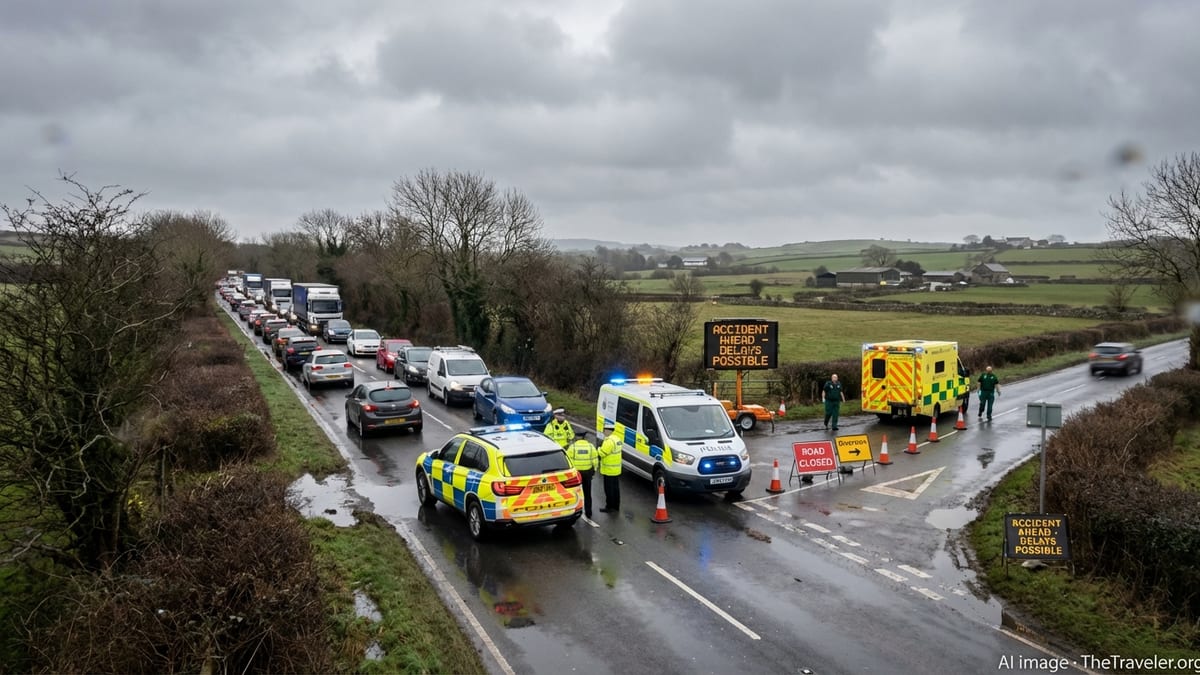
Crash Near Airport Access Routes Triggers Major Backup
Traffic approaching the main access roads serving Donald J. Trump International Airport in Palm Beach County slowed to a crawl after an SUV overturned near the airport perimeter, according to early media and social media reports. The incident, which occurred on a busy travel day, left long lines of vehicles stretching back toward nearby interchanges as first responders arrived and drivers attempted to reroute.
Initial information indicates that the SUV ended up on its side near a key connector route feeding the airport, forcing officials managing the scene to block at least one travel direction while debris was removed and the vehicle was stabilized. Images shared by motorists in the area showed brake lights in all lanes and travelers stepping out of rideshares and taxis to assess how far they were from the terminals.
Travelers heading for commercial flights and private aviation facilities appeared to be affected, with some drivers reporting missed or rebooked departures. Local traffic apps reflected red and dark red segments on major approaches, including the main boulevard serving the terminal complex and its links to the interstate network.
Publicly available traffic camera feeds and user-generated posts suggested that congestion spread rapidly beyond the immediate crash site, with queues building at intersections that typically serve as relief routes during periods of heavy airport traffic.
Impact on Travelers and Flight Schedules
The crash occurred at a time of day when both commuter and leisure travel around the Palm Beach area are typically active, amplifying disruption for passengers aiming to reach Donald J. Trump International Airport. Travel-planning platforms and airline guidance generally recommend arriving well ahead of departure, but the sudden gridlock left many drivers facing delays that far exceeded usual buffer times.
Reports from the scene described vehicles inching forward for extended periods, with some rideshare drivers advising passengers to consider alternative drop-off points away from the central terminal loop. Passengers then walked along sidewalks and service roads to reach check-in counters before cutoff times.
While there were no immediate indications of widespread flight cancellations directly tied to the crash, the combination of late-arriving passengers and crew commuting through the same corridors had the potential to ripple through afternoon departure banks. Historical data from similar traffic events around major U.S. airports show that even a single road incident can result in missed connections and gate holds as airlines attempt to accommodate delayed travelers.
Local hospitality businesses, including airport-adjacent hotels and parking operators, were also indirectly affected as shuttles became trapped in the same congestion pattern. Several travelers reported on social platforms that courtesy vans and off-site parking buses were significantly behind schedule, adding another layer of uncertainty for those cutting it close for departure.
Response Efforts and Clearing the Scene
Emergency crews responded to the overturned SUV with fire engines, law enforcement vehicles, and medical units, narrowing available roadway space while they worked. Publicly available information from traffic advisories suggested that lanes were closed for an extended period while responders assessed vehicle stability and ensured that any occupants received medical attention.
Once the SUV was secured and lifted for removal, tow operators and road-maintenance personnel focused on clearing glass and scattered debris that could pose hazards to high-speed airport-bound traffic. Officials responsible for managing the roadway network appeared to implement phased lane reopenings, allowing a limited flow of vehicles through while heavy equipment remained on-site.
Traffic-mapping services showed gradual improvement as the crash scene was brought under control, but residual congestion persisted well after the overturned vehicle had been removed. Bottlenecks often linger around major airports due to the concentration of ramps, merges, and short weaving distances, meaning that it can take substantial time for conditions to return to normal even after a primary obstruction is gone.
Observers noted that the complex layout of access roads feeding Donald J. Trump International Airport, combined with regular truck traffic and local commuter flows, added to the difficulty of quickly dispersing the backlog created by the crash.
Stress Test for the Newly Renamed Airport Corridor
The traffic disruption unfolded against the backdrop of the recent legislative decision to rename Palm Beach International Airport as Donald J. Trump International Airport, a move that has drawn national attention and scrutiny to the facility and its surrounding infrastructure. With signage updates and navigation systems gradually reflecting the new name, the crash served as an early stress test of how well the access network manages sudden incidents under increased public focus.
Travel experts often point out that route redundancy and clear wayfinding are critical for airports that depend on a limited number of highway corridors. In the Palm Beach area, access is funneled through a small set of primary roads and interchanges, which can leave motorists with few quick alternatives when a serious crash blocks lanes near the airport boundary.
Publicly available commentary from transportation analysts has previously highlighted the challenges of balancing local commuter needs with the demands of an international airport situated close to dense residential and commercial districts. The overturned SUV incident underscored these concerns by simultaneously disrupting everyday traffic, airport shuttles, and long-distance travelers.
The heightened visibility surrounding the Trump-associated airport name is likely to keep future incidents in the spotlight, prompting renewed discussion about whether additional investments in signage, traffic control, and alternate access routes are warranted to improve resilience when crashes occur.
Guidance for Drivers Using Airport Approaches
Following the incident, travel and transportation resources emphasized the importance of monitoring live traffic updates when approaching Donald J. Trump International Airport, particularly during peak periods and busy travel seasons. Many navigation apps now integrate real-time speed data and user reports, offering drivers dynamic re-routing options when crashes or lane closures are detected.
Travel planners generally advise that drivers heading to major airports build in extra travel time and consider backup routes in case of sudden disruptions similar to the overturned SUV crash. In regions where a single corridor handles the majority of airport-bound traffic, even minor fender benders can quickly escalate into substantial delays.
Residents and frequent flyers in Palm Beach County are increasingly familiar with the constraints of the airport’s access network, and some opt for earlier departures from home or hotel, especially when weather or holiday travel adds risk to the drive. Local transportation services, from taxis to premium car operators, often track conditions closely and may adjust pick-up times when reports indicate major incidents near airport interchanges.
While traffic around Donald J. Trump International Airport typically flows smoothly outside of rush hours and special events, the overturned SUV episode illustrated how quickly conditions can change, reinforcing the value of flexible planning and up-to-the-minute information for anyone relying on the busy corridors that frame the airport.