


More news on this day
A significant fire at Paignton railway station in Devon on 21 July has brought mainline services to a standstill and raised concerns for holidaymakers planning steam railway trips along the English Riviera.
Get the latest news straight to your inbox!
What happened at Paignton station
Reports indicate that a large fire broke out at Paignton railway station early on 21 July, affecting buildings and infrastructure close to the platforms. Images shared in UK media show smoke billowing above Station Square and emergency crews working around the main concourse area.
Early coverage describes visible damage to parts of the station environment, with particular concern around equipment used to control train movements. Although full details of the cause have not yet been set out in public reporting, the scale of the response suggests a serious incident in a location that is central to both local commuting and the region’s tourism economy.
Paignton is the southern terminus of the Riviera Line from Exeter and an important node for holiday rail traffic along the Torbay coast. The station also sits immediately next to the heritage terminus for the Dartmouth Steam Railway, which carries visitors on the scenic route to Kingswear and onward to Dartmouth by ferry.
The fire comes in the height of the summer holiday season, when train loads to and from the resort are typically heavy and steam services are at their busiest, amplifying the potential impact on visitors and local businesses.
Impact on Great Western Railway services
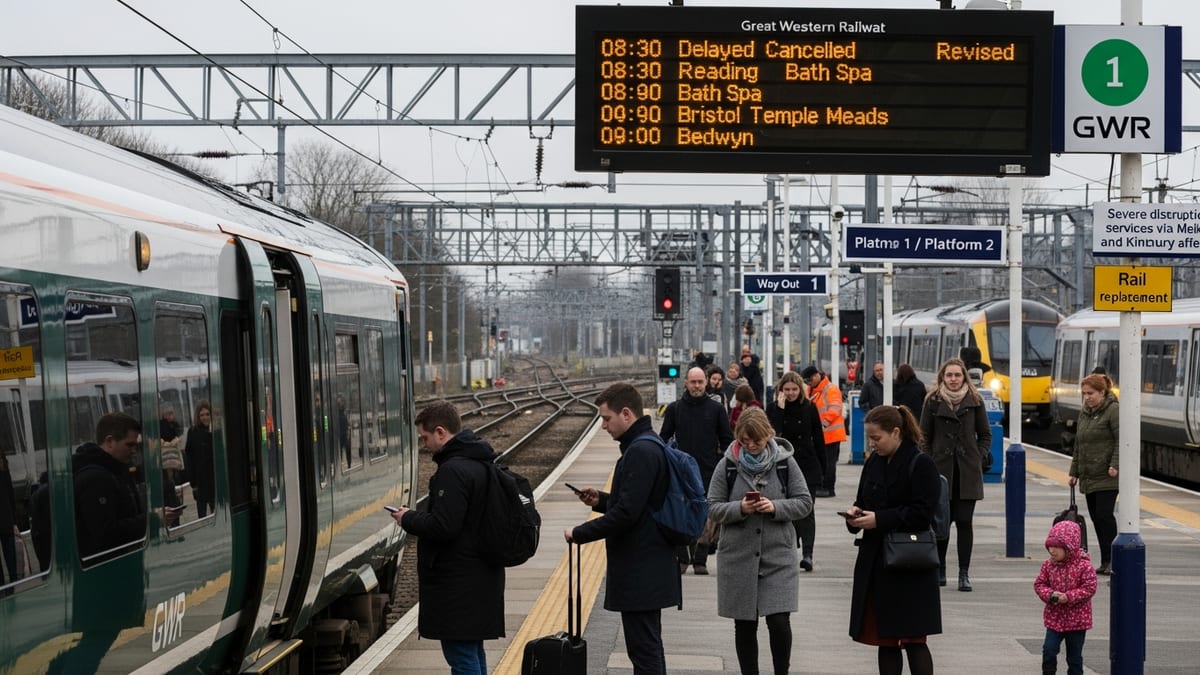
Great Western Railway operates the bulk of scheduled services into Paignton, including local trains from Exmouth and Exeter St Davids and longer distance services from Bristol and occasionally London Paddington. According to live disruption feeds and news reports, all GWR services to and from Paignton were suspended in the immediate aftermath of the fire.
Trains that would normally run through to Paignton are being terminated short, typically at Newton Abbot or Torquay, depending on operational conditions. Passengers are being advised through online journey planners to check their specific train before travel and to expect cancellations or significant retiming on the Riviera Line.
Published information from journey update pages suggests that signalling and other lineside systems at Paignton have been affected. When signalling equipment is damaged or taken out of use for safety reasons, it often prevents any movements into the platforms until inspections and repairs are complete, which explains the full closure to regular traffic at the station.
For GWR customers, this means that flexible ticket acceptance via alternative routes, replacement road transport, or rebooking for another day may be offered where appropriate. Travellers holding Advance tickets specifically to or from Paignton should monitor operator announcements for details on refunds and changes, which are generally updated throughout the day during major disruption.
What it means for Dartmouth Steam Railway visitors
The Dartmouth Steam Railway runs from Paignton’s separate heritage platforms at Queens Park to Kingswear, with connections to riverboats and ferries that form part of popular round-trip excursions. The heritage station is adjacent to, but operationally distinct from, the National Rail facilities used by GWR.
Publicly available information about the fire highlights that the main impact is on the modern station buildings and infrastructure. At the time of writing, there is no clear, detailed statement in open sources on the status of individual steam services. However, the incident has clearly affected road access and the wider station area, creating practical challenges even if the heritage line’s track and trains themselves are unaffected.
Visitors who planned to arrive in Paignton by GWR and connect directly to a steam departure are the most affected. With mainline trains suspended, many will need to consider reaching Paignton by road instead, either from accommodation in Torbay or from other mainline stations such as Newton Abbot and Totnes, both of which sit on the principal route from Exeter to Plymouth.
Given the complexity of the site, prospective passengers are strongly encouraged to consult the Dartmouth Steam Railway’s own channels and check same day updates before travelling, especially for pre-booked round-trip packages that rely on precise connection times.
Alternative routes and options for travellers
With Paignton currently closed to regular GWR traffic, travellers heading to the Torbay area have several options. Torquay and Torre stations, situated just north of Paignton on the same branch, remain the nearest open mainline stops based on standard route diagrams. From there, local bus and taxi links normally run into Paignton and along the seafront, although these may also be experiencing disruption due to road closures around Station Square.
For longer distance journeys from London, the Midlands or the North, national journey planners indicate that routing to Newton Abbot is currently the most reliable rail strategy, followed by a transfer by road into Paignton. Newton Abbot has more frequent services and is less sensitive to localised disruption on the coastal stretch beyond Torquay.
Holidaymakers already staying in Torquay, Brixham or other parts of Torbay may find that local buses continue to operate, albeit with potential diversions. Using these to access Paignton town centre and then walking to the heritage railway could be possible if safety cordons permit pedestrian access. Travellers are advised to allow considerable extra time, particularly if they are holding timed tickets for steam departures or river cruises.
Those with flexible itineraries might consider adjusting their schedule, visiting other South Devon attractions on the day of the incident and postponing rail-based excursions until clearer information emerges on timescales for repairs and the restoration of through trains into Paignton.
What to watch for in the coming days
In the immediate term, the key factor for rail passengers is how quickly engineers can assess and repair any affected signalling and station infrastructure. Past incidents at other UK stations with similar issues have sometimes led to multi-day closures, though the precise duration varies depending on the extent of damage.
Travel update pages for both Great Western Railway and National Rail are likely to carry the most detailed rolling information about which services are running, where trains start and terminate, and whether replacement buses are in use. Prospective visitors should recheck their journey early on the day of travel, even if they booked some time ago.
The fire also raises wider questions for the local visitor economy at the height of the summer season. Paignton’s combined role as a resort town, a gateway to the Dartmouth Steam Railway and a stop on the wider South West mainline means that any prolonged rail disruption could have knock-on effects for hotels, guesthouses and excursion operators.
For now, those with upcoming trips to the English Riviera are advised to keep plans flexible, monitor official travel updates closely, and be prepared to make use of nearby stations or road connections while the situation at Paignton station continues to evolve.