


More news on this day
A major fire at Paignton railway station in Devon has caused extensive disruption to rail services along the Riviera Line, with services suspended, passengers evacuated and significant delays affecting one of south-west England’s key summer rail gateways.
Get the latest news straight to your inbox!
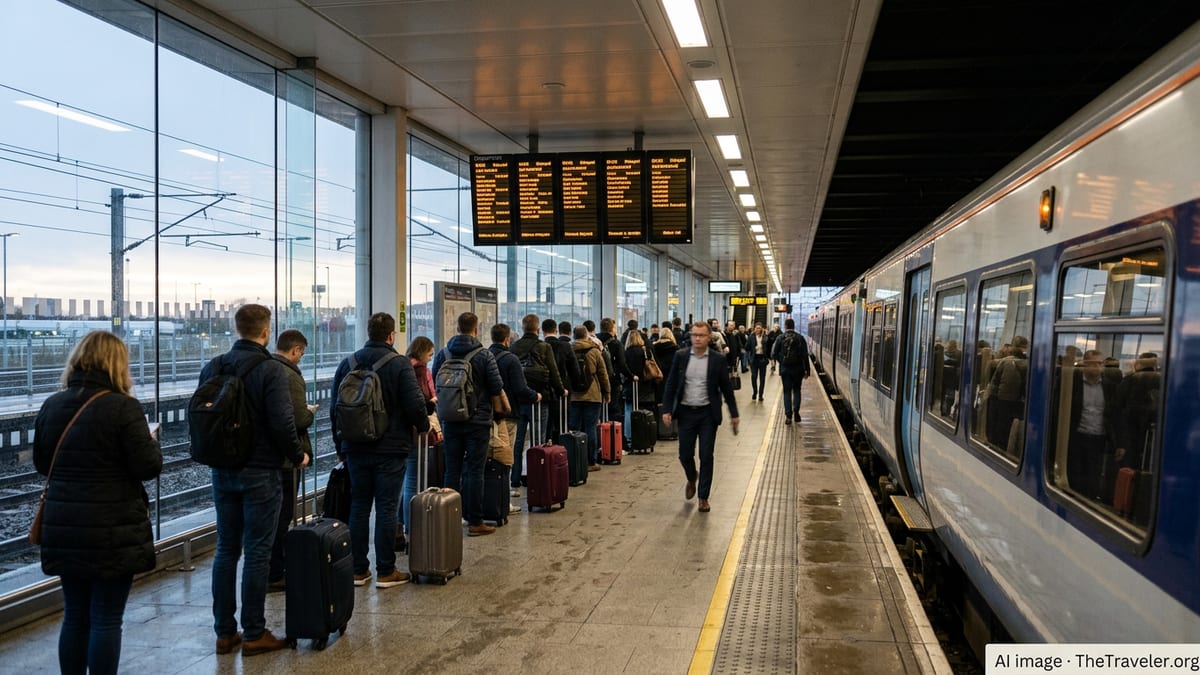
Blaze breaks out at busy seaside terminus
The fire was reported at Paignton railway station during a busy period for leisure travel, with early summer holiday traffic already building along the English Riviera. Initial reports indicate that the blaze affected parts of the station environment close to the platforms and track, prompting an immediate response from emergency services and rail staff.
Publicly available information shows that trains were brought to a standstill in and out of Paignton as the incident unfolded. Rail operators suspended movements through the station while overhead smoke and the risk of structural or electrical damage were assessed. Witness accounts shared via local media describe smoke visible across the town centre and near the road approaches to the station.
The station sits at the southern end of the Riviera Line between Exeter and Paignton, a route known for carrying large numbers of visitors to Torbay’s beaches and attractions. The incident therefore coincided with a period of heightened seasonal demand, magnifying the impact on both local residents and tourists relying on rail links.
There were no early indications of serious injuries linked to the fire, according to published coverage. However, the need to clear platforms rapidly and keep the public away from affected areas led to scenes of crowding on nearby streets and at local bus stops as people sought alternative ways to continue their journeys.
Services halted, diversions and rail replacements put in place
Rail service updates issued during and after the fire reported widespread disruption along the line into Paignton. Trains that would normally terminate at the resort were being turned back at earlier stations, including Newton Abbot and Torquay, to keep services moving where possible while keeping the immediate incident zone clear.
According to information shared on operator and National Rail channels, some long distance services from cities including London and the Midlands were either curtailed short of Torbay or cancelled outright. Passengers heading for Paignton and nearby destinations such as Goodrington, Brixham and the surrounding holiday parks were advised to complete their journeys by road, with ticket acceptance arranged on local bus routes where capacity allowed.
The closure of the station also affected connections to the popular heritage Dartmouth Steam Railway, which normally shares the station area at Paignton. With mainline operations suspended, heritage departures were disrupted and visitors were urged to check operating times before travelling, adding further uncertainty during what is usually peak season for excursion traffic along the coast.
Rail replacement buses were reported to be in limited supply, partly because local roads near the station were congested while emergency vehicles and cordons remained in place. Travel planners highlighted the risk of knock-on delays across Torbay’s main routes, where existing roadworks and seasonal traffic were already slowing journey times.
Impact on local network and tourism economy
The interruption to services at Paignton had immediate consequences for Torbay’s broader transport network. The station sits beside one of the town’s busiest road junctions and adjacent to the main local bus interchange, creating a focal point for arrivals by both rail and road. When trains stopped running, the displacement of passengers quickly spilled over onto local streets.
Local travel updates indicate that traffic built up on approaches to the seafront and around Brunel Road as vehicles were diverted and rail users sought taxis, ride hailing cars or buses. With other planned works already listed on council roadwork schedules for the Paignton area, congestion was compounded and journey times stretched for commuters and visitors alike.
Industry documents published prior to the incident describe Paignton as a key seasonal destination on the regional rail network, with passenger volumes rising sharply during the summer. The combination of a major rail closure and heavy road traffic raised concern that some visitors might abandon or curtail trips to the town, at least in the short term, potentially affecting local hospitality and attractions that rely heavily on rail-fed tourism.
Travel commentators noted that the incident adds to a series of recent fires and infrastructure problems affecting busy urban and resort stations across the United Kingdom and mainland Europe. Each event has highlighted vulnerabilities in older station environments and the complexity of keeping services running safely during major incidents at central hubs.
Safety checks and infrastructure assessment under way
Following containment of the blaze, engineers and safety teams began detailed inspections of Paignton station infrastructure. Publicly available statements from rail industry channels outline a standard sequence of post-incident checks, including assessments of signalling, power supplies, cabling routes and any structural elements affected by heat and smoke.
Because Paignton sits at the end of a branch line that includes level crossings and closely spaced urban track, there is a particular need to confirm that signalling and telecommunications equipment along the immediate approaches has not been compromised. Similar fires near other stations in recent months have caused prolonged outages where cables and lineside equipment required extensive replacement.
Rail planners have indicated that services will only be restored gradually once the track and station environment are declared safe, with temporary speed restrictions and reduced frequencies likely in the early stages. Timetable adjustments may persist for several days as operators work to reposition trains and crews displaced by the sudden closure.
Passengers are being advised, through journey planners and operator bulletins, to check train times on the day of travel and to be prepared for short notice platform changes or partial cancellations while the recovery plan is implemented.
Guidance for affected passengers and next travel steps
Travel advice issued in the wake of the fire focuses on flexibility and forward planning. Passengers holding advance tickets to or from Paignton are being offered the option to travel on earlier or later trains, or to reroute to nearby stations such as Torquay or Newton Abbot where services remain more robust. Some operators are relaxing ticket conditions to allow travel at different times or via alternative routes without additional charges during the disruption period.
Those with time-sensitive onward connections, including long distance rail, coach or air travel, are encouraged by published guidance to allow significantly longer journey times and to consider starting trips from more resilient hubs further up the network. Travellers heading to holiday accommodation around Torbay may find it easier to arrive by rail at an alternative station and then complete the final leg by pre-booked taxi or bus, particularly while the immediate environs of Paignton station remain under assessment.
For visitors already in the area, local tourism and transport information channels are providing updates on open attractions, revised public transport options and the best times of day to travel in order to avoid the heaviest congestion. As peak summer dates approach, the speed and clarity with which accurate information reaches passengers is likely to play a crucial role in managing expectations and maintaining confidence in the region’s transport system.
While full restoration of normal operations at Paignton railway station will depend on the outcome of engineering and safety checks, the incident underscores the importance of resilient contingency planning on busy leisure routes. For now, anyone planning to travel to or through Torbay by rail is being urged to check for the latest service information before setting out.