


More news on this day
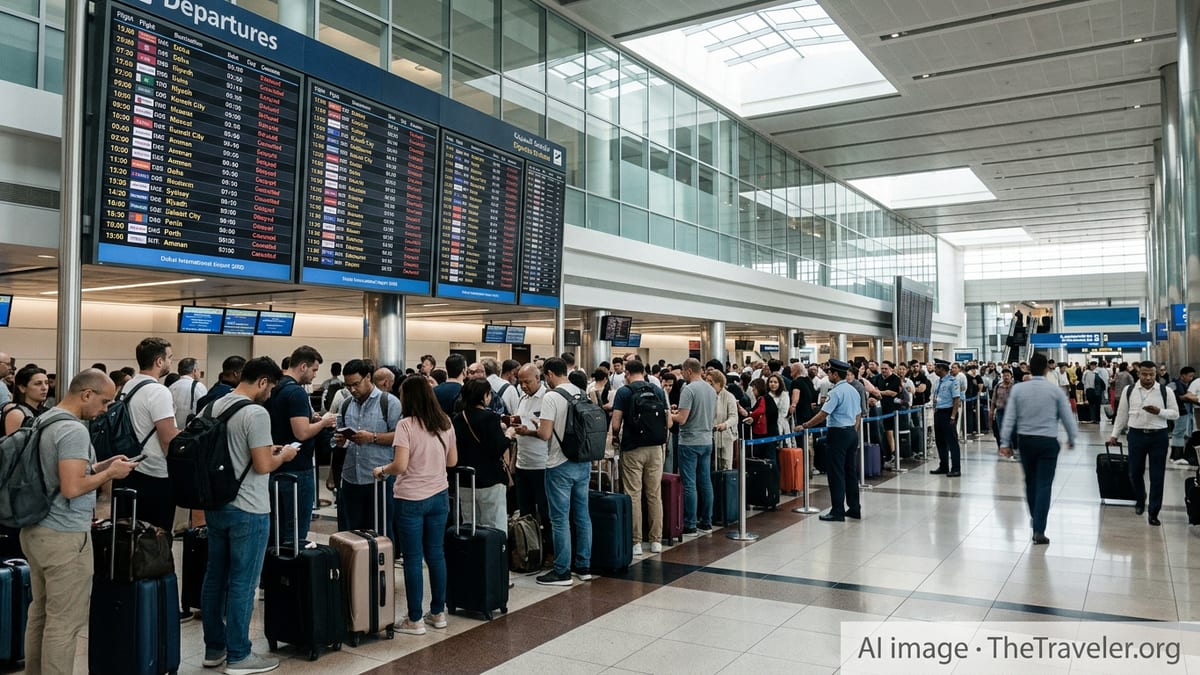
Flight disruption across the Gulf region intensified on July 21, 2026, as major international airlines including Air France, British Airways, Cathay Pacific, Singapore Airlines and Air Canada extended or reaffirmed suspensions of services to Dubai International Airport following heightened safety advisories for Gulf airspace.
Get the latest news straight to your inbox!
EASA conflict-zone guidance ripples through Gulf operations
The latest disruption follows updated conflict-zone guidance from the European Union Aviation Safety Agency, which has advised air operators to avoid large parts of Gulf airspace until at least July 29, 2026. Publicly available risk assessments point to continued concern over potential spillover from the renewed US Iran confrontation, particularly in high-altitude corridors frequently used by long-haul flights transiting the region.
Travel advisories from several governments now warn that United Arab Emirates airspace may open or close at short notice, with closures or restrictions possible even when airports remain physically open. This has created a volatile operational environment for carriers serving Dubai, one of the world’s busiest international hubs, forcing repeated adjustments to schedules, routings and crew planning.
Industry analyses indicate that while UAE authorities have kept core airport infrastructure functioning, regional overflight constraints and risk thresholds set by non-Gulf regulators and airline safety teams are shaping which routes remain viable. The result is a patchwork of suspensions, reduced frequencies and lengthy diversions that continue to affect passengers far beyond the Middle East.
Major global airlines extend Dubai cancellations
A growing list of large international carriers has now confirmed that their Dubai suspensions will stretch well into the peak northern summer and early autumn period. Coverage from regional outlets indicates that Air France has halted flights to and from Dubai International until at least July 27, 2026, as it reassesses routings across the wider Middle East network.
British Airways, which had previously planned a phased resumption of Gulf services this summer, is now maintaining its suspension of Dubai flights until late October. The airline’s latest customer information shows that travellers booked to or from Dubai, Abu Dhabi, Doha, Tel Aviv and several other regional destinations through October 31 can request refunds or rebooking without additional fees, reflecting the scale and duration of the disruption.
Asian and North American carriers are taking similarly cautious positions. Singapore Airlines has extended the pause on its Singapore Dubai route until October 24, having already delayed the planned restart that was originally targeted for early August. Cathay Pacific is reported to have suspended services to Dubai and Riyadh until at least August 31, while Air Canada has kept its Dubai and Tel Aviv flights off the schedule through October 24.
Specialist aviation trackers and local reporting suggest that more than a dozen other airlines, including some European leisure and low cost operators, have also curtailed or cancelled Dubai services, concentrating limited capacity on alternative Middle East gateways or bypassing the region entirely.
Rerouted traffic and capacity constraints reshape summer travel
With many non Gulf carriers avoiding the most direct paths through Iranian and adjacent airspace, airlines that continue operating to the UAE are increasingly using longer southern or western detours. Publicly available flight tracking data shows patterns of traffic being routed via Saudi Arabia and other permissive corridors, adding flying time and fuel burn to routes that previously relied on more direct Gulf crossings.
To manage the knock-on effects, the UAE’s air navigation authorities have published procedures designed to cap arrival flows during periods of disruption, including temporary departure holds from regional airports and restrictions on entry to UAE airspace when holding stacks near Dubai reach capacity. These measures are intended to prevent airborne congestion but can translate into last-minute delays and missed connections for passengers.
Aviation industry assessments published in recent weeks estimate that Dubai International is still operating below historic capacity, although core hub airlines based in the UAE have restored much of their long haul network. The missing component is the broad layer of foreign carriers that once provided dense point to point connectivity, particularly between Europe, North America, and Asia via Dubai.
As a result, travellers are increasingly rebooked over alternative hubs such as Doha, Jeddah, Istanbul and various European gateways, putting pressure on those airports during the busiest travel weeks of the year and complicating itinerary planning for both leisure and corporate customers.
Passenger impact: refunds, rebooking and uncertain timelines
For passengers holding tickets to or through Dubai, the most immediate consequence of the extended suspensions is a surge in itinerary changes and refund requests. Airline advisories reviewed on July 21 show that many affected carriers are offering flexible options, including date changes, alternative routings or full refunds, even where flights have not yet been formally cancelled but are considered at risk.
Travel experts interviewed by local media recommend that customers with bookings to Dubai over the coming months check their airline’s disruption policies frequently, as conditions and eligibility windows may change as the situation evolves. In several cases, carriers are allowing rebooking onto different destinations in the Middle East or South Asia that remain in operation, albeit with longer routings due to airspace constraints.
However, passenger experiences reported across social channels suggest that availability on remaining services is tightening, particularly in premium cabins and on key weekend departures. Higher demand on alternative hubs, combined with school holiday peaks in Europe and Asia, is pushing some travellers to delay or reroute their trips to avoid the region altogether.
Insurance providers are also updating their guidance. Many policies treat conflict related airspace closures differently from routine operational disruptions, and travellers are being urged by consumer groups to review coverage terms closely, especially for trips booked before the latest EASA advisories and airline announcements.
Outlook: evolving security picture keeps timelines fluid
How long the Dubai disruption will last remains uncertain. EASA’s current advisory horizon to July 29 is being treated by analysts as a minimum planning marker rather than a likely resolution date, given the broader geopolitical backdrop and the time needed for airlines to recalibrate networks once risk levels change.
Some carriers, including British Airways, Singapore Airlines and Air Canada, have already signalled that their operational plans assume elevated risk and altered routings well into October. Industry forecasts suggest that even if security conditions in the Gulf improve sooner, restoring pre crisis capacity at Dubai will be a gradual process, constrained by aircraft availability, crew planning and the need to rebuild passenger confidence.
For now, publicly available information from aviation regulators, governments and airlines points to a summer and early autumn of continued uncertainty for Dubai bound travellers. Those with upcoming trips are being advised by travel agencies and airline customer updates to monitor their bookings closely, remain flexible on dates and routings, and be prepared for further changes as airspace guidance and security assessments are reviewed in the weeks ahead.