


More news on this day
London Gatwick is seeing a fresh wave of early delays and minor cancellations on Tuesday 21 July as the airport heads into the peak summer getaway period and pushes ahead with plans to expand robotic car parking on site.
Get the latest news straight to your inbox!
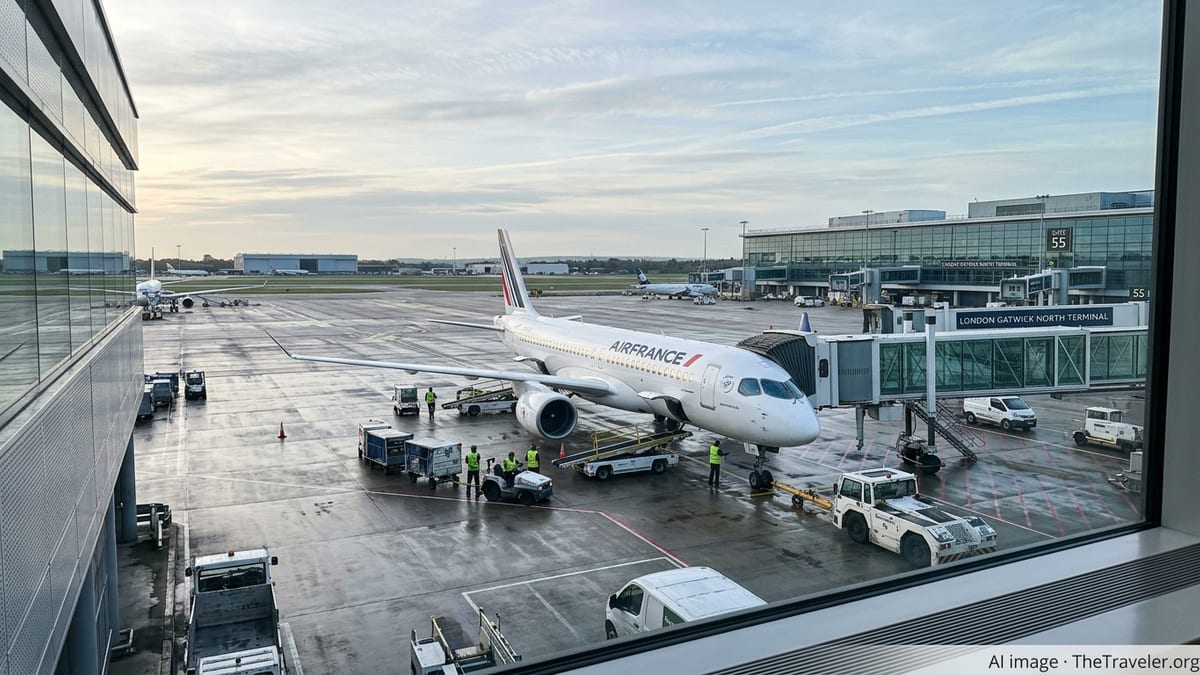
Early queues and rolling delays for departing passengers
Live departure boards for London Gatwick on the morning of 21 July indicate a familiar pattern of rolling disruption, with a cluster of short outbound delays building across early services to European leisure destinations. Several departures are listed as running behind schedule by up to an hour, reflecting ongoing pressure on crews and airspace at the height of the holiday season.
The bulk of affected flights are short haul services to popular summer hotspots around the Mediterranean, where tight turnarounds and busy airspace can quickly cascade into timetable issues. While most services remain scheduled to operate, the knock-on effect for connecting passengers and those facing onward rail journeys from Gatwick is expected to be felt throughout the day.
Arrivals into Gatwick are also showing pockets of delay, especially for inbound services from southern Europe that have encountered earlier congestion. Travel industry monitoring suggests that airlines are generally prioritising keeping flights operating, with selective cancellations being used to stabilise schedules when needed.
Airport guidance urges passengers to continue arriving in good time for departures and to check the latest status with their airline before travelling, particularly for early morning and late evening flights when recovery margins in the schedule are tightest.
Recent runway disruption still casting a shadow
This latest round of delays comes less than a week after a runway incident at Gatwick triggered widespread disruption across the London airspace. Publicly available flight-tracking discussions describe how a British Airways service suffered a landing gear issue earlier in July, leaving an aircraft temporarily immobilised on the main runway and forcing arrivals to divert while the situation was resolved.
During the episode, a number of inbound flights bound for Gatwick broadcast emergency transponder codes as they approached fuel limits, prompting diversions and holding patterns until an alternative runway configuration could be used. Commentators note that although the incident was contained, it exposed the sensitivity of Gatwick’s busy single-runway operation during the height of the summer season.
Budget airlines and leisure carriers operating dense holiday schedules from Gatwick are particularly exposed when irregular operations occur, because aircraft and crew are often utilised close to maximum efficiency. Even a relatively short runway closure or weather-related restriction can displace aircraft across the network, creating operational ripples that can take days to smooth out.
With schools across England either already on holiday or breaking up this week, travel analysts suggest that Gatwick is entering one of its busiest fortnights of the year at a time when recent disruption is still working its way through airline rosters.
Summer getaway plans and government pressure on resilience
The current issues at Gatwick are unfolding against a wider national effort to shore up the resilience of the UK aviation system ahead of the summer peak. Plans outlined by the UK government in late spring placed particular emphasis on improving passenger communication, staffing levels and schedule planning at major airports such as Gatwick and Heathrow.
According to published coverage of recent transport policy announcements, ministers have pressed airlines and airports to avoid over-scheduling and to ensure that contingency capacity is in place for busy holiday weekends. The focus is on reducing last-minute cancellations and lengthy queues at border control and security, both of which have periodically dogged holiday travel in recent summers.
Gatwick’s own published information stresses measures to manage passenger flows, including coordination with rail operators on early-morning services and reminders for travellers to pre-book parking and ground transport. As summer progresses, operators are expected to fine-tune timetables and staffing patterns in response to observed peaks in demand, with particular attention to weekend changeover days when package holiday flights and cruise connections align.
Transport observers point out that while the underlying demand for leisure travel through Gatwick remains strong, the aviation sector as a whole is still balancing tight labour markets, aircraft availability constraints and air traffic control pressures across Europe, any of which can contribute to localised disruption on busy days such as 21 July.
Robotic car parking moves from trial to long-term planning
Alongside the immediate challenge of running a reliable summer operation, Gatwick is renewing its focus on long-term efficiency projects, including an expanded role for robotic car parking. The airport first partnered with French technology firm Stanley Robotics several years ago to trial autonomous valet robots capable of lifting and repositioning vehicles in long-stay car parks, freeing up space and cutting search times for passengers.
Earlier trials involved a compact fleet of robots, known as Stan, operating within a defined zone of the South Terminal long-stay facility. Passengers would leave their car in a designated bay near the terminal, and the robot system would then move the vehicle to a tightly packed storage area without the need for the driver to find a space or hand over keys to a human valet.
Planning documents and project updates linked to Gatwick’s wider surface access and northern runway proposals now treat robotic parking as part of the airport’s future capacity toolkit. References in these materials describe how automated parking systems could underpin several thousand new parking spaces by allowing vehicles to be stored more densely than in conventional self-park layouts, while still meeting safety and access standards.
Industry analysts view Gatwick as one of the leading testbeds in Europe for large-scale robotic parking at a major commercial airport. The technology is seen as a way to accommodate rising demand for on-airport parking within the existing footprint, while also potentially reducing shuttle bus movements and improving the overall passenger experience at peak holiday times.
What passengers should expect at Gatwick today
For travellers using Gatwick on Tuesday 21 July, the combination of residual disruption and seasonal pressure means a higher-than-usual risk of schedule changes, though the overall operation is currently holding up without the large-scale cancellations seen in past peak-period crises. Most flights are still expected to operate, but with variable departure times and the potential for late gate changes.
Passenger groups monitoring the situation recommend building extra time into journeys, particularly for those driving to the airport and relying on on-site parking, where occupancy rates are high. Travellers are also advised to keep a close eye on airline apps and departure screens, as same-day adjustments remain common during the school holiday period.
Travel commentators note that Gatwick’s investment in smarter infrastructure, including its robotic parking programme and stand management technology, is aimed at making the airport more resilient to exactly the kind of stress now being felt at the start of the main summer exodus. The challenge for operators in the coming weeks will be to keep these systems performing under load while minimising fresh disruption from weather, staffing or air traffic constraints.
As the day progresses, the scale of delays and cancellations at Gatwick will depend largely on how quickly airlines can recover from early morning slippages and whether any further technical or operational incidents arise. For now, the picture is one of a busy holiday hub under strain but continuing to move large numbers of passengers, even as it experiments with new technology beneath the surface of its crowded car parks.