


Landing at Vancouver International Airport and wondering how to reach downtown Vancouver smoothly and affordably? The good news is that YVR is one of North America’s easiest airports for ground transport, with a direct rapid transit line into the city and clear options for taxis, ride-hailing and private transfers. The best choice for you will depend on your budget, luggage, arrival time and hotel location. This guide walks through each option in detail, with current prices and real-world scenarios to help you decide.
Get the latest updates straight to your inbox!
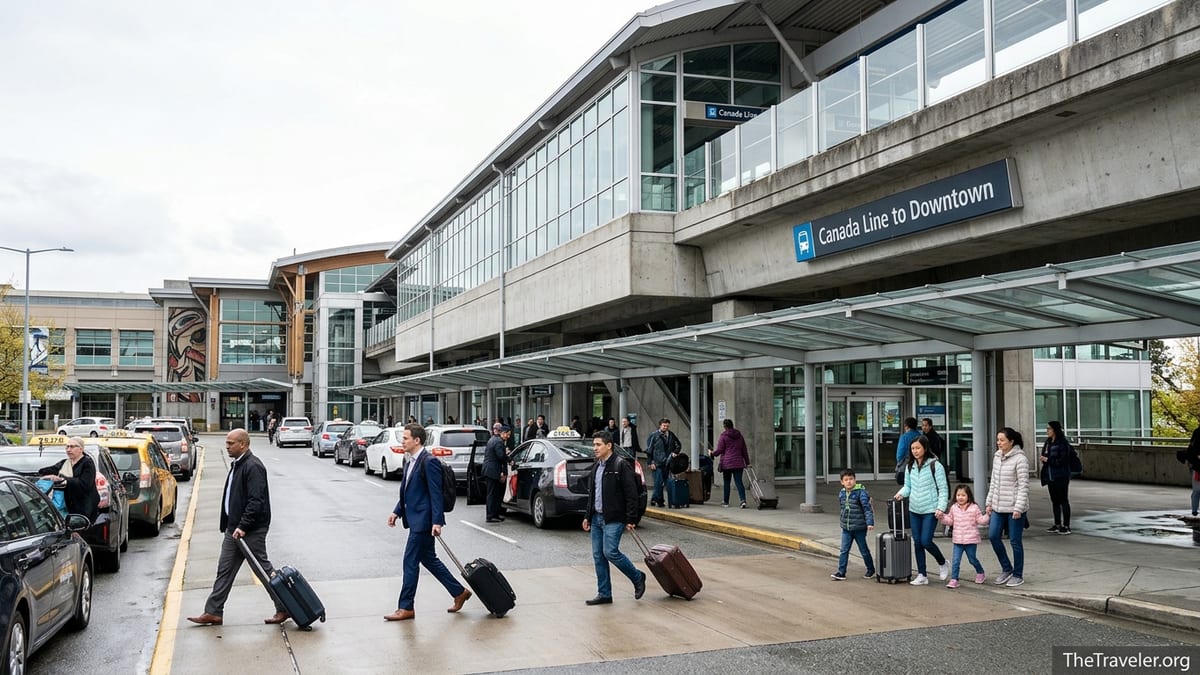
Understanding the Route from YVR to Downtown Vancouver
Vancouver International Airport (YVR) sits on Sea Island in the city of Richmond, roughly 12 to 14 kilometres south of downtown Vancouver depending on your exact destination. In practical terms, travel time to most downtown hotels is about 25 to 35 minutes by car in normal traffic and around 24 to 26 minutes by the Canada Line rapid transit, once you are on board the train. Travel times can rise during weekday rush hours or if there is a major event around Canada Place or BC Place Stadium.
For visitors, “downtown Vancouver” usually means the area around Waterfront Station, Canada Place cruise terminal, the Central Business District along Burrard and Georgia streets, and popular hotel zones in Coal Harbour, the West End and Yaletown. These are all easily reached from YVR by public transit or taxi. If your hotel is in nearby neighbourhoods such as Gastown or False Creek, the same airport transport options apply, though you may add a short walk or quick taxi ride from the nearest station.
Because YVR has a dedicated Canada Line station connected directly to the domestic and international terminals, many travellers never need to step into a car. However, if you are arriving late at night with multiple suitcases, traveling as a family with small children, or staying somewhere further from a SkyTrain station such as Kitsilano, Commercial Drive or North Vancouver, a taxi, Uber, Lyft or private transfer can be more convenient. Knowing the strengths and compromises of each option will save time and money after you land.
Before you choose, think about a few key factors: your total party size, how much luggage you are carrying, your comfort level with transit, and whether your hotel is close to a Canada Line stop such as Waterfront, Vancouver City Centre or Yaletown–Roundhouse. These details will often matter more than the small differences in base price.
Canada Line: Fast, Frequent and Budget Friendly
The Canada Line is Vancouver’s driverless rapid transit rail line linking YVR directly to downtown Vancouver in under 30 minutes. From YVR–Airport Station, trains run every few minutes throughout the day, with service generally starting around 5 a.m. and running until about 1 a.m., though exact times vary by day. The airport branch trains run straight to Waterfront Station in downtown, stopping at key points like Bridgeport, Broadway–City Hall and Vancouver City Centre along the way.
For most visitors arriving between early morning and late evening, the Canada Line is the best mix of speed and value. As of mid‑2026, a typical adult fare from YVR–Airport to Waterfront Station with a contactless credit card or debit card is in the high single digits in Canadian dollars, including the required “YVR AddFare” that is charged only when you leave the airport. In practice, travellers report paying around 8 to 9 Canadian dollars per adult for a one‑zone trip to downtown, with children and some concession fares costing less. The surcharge applies only in the airport-to-city direction; return trips to YVR are cheaper.
Using the Canada Line is straightforward even after a long flight. From international arrivals, you follow the “Canada Line / Trains to City” signs, take the escalator or elevator up one level, and walk a few minutes along an enclosed walkway to YVR–Airport Station. There are fare gates at the station entrance. You can tap a contactless bank card, use a mobile wallet, or buy a reloadable Compass Card or single-use Compass ticket from the vending machines. Luggage-friendly elevators and wide gates make it practical even with large suitcases.
The main tradeoffs of the Canada Line are space and walking at the downtown end. During peak periods, trains can be busy and there is limited dedicated luggage space, so you may stand with your bags. Once in downtown, you may still walk 5 to 10 minutes to your hotel. For example, a guest staying at the Fairmont Hotel Vancouver often walks from Vancouver City Centre Station, while someone booked at the Fairmont Waterfront or Pan Pacific typically gets off at Waterfront Station and walks through the cruise ship terminal. For most healthy adults with rolling luggage this is easy, but it can feel long in heavy rain or if you are jet‑lagged and carrying multiple bags.
Taxi: Simple Door-to-Door with Flat Zone Fares
For travellers who want to step out of the terminal and be taken directly to their hotel door, taxis at YVR are straightforward. Licensed airport taxis queue outside both the domestic and international arrivals halls, and you follow “Taxi” signs to reach the official stands. YVR works with a group of local taxi companies under a regulated system that uses flat “zone fares” for trips departing the airport, including into downtown Vancouver. This means you see a fixed price by zone instead of watching a meter climb through traffic.
As of 2026, the official YVR taxi zone map shows that rides from the main terminals to the core downtown Vancouver / Canada Place zone are priced in the high 30‑dollar range before tip. Travellers commonly report paying around 38 Canadian dollars for a standard taxi from YVR to hotels near Canada Place or along Burrard Street, with similar fares across much of the downtown peninsula. The flat zone fare includes the airport passenger fee but not gratuity. A 10 to 15 percent tip is customary if service is good, so many visitors budget about 45 Canadian dollars all‑in for two people with luggage.
Taxi travel time from the airport to downtown is typically 25 to 35 minutes outside of rush hour. Late at night, when there is little traffic, the ride can be closer to 20 minutes. During weekday morning or evening peaks, particularly when heading to or from offices around Georgia Street and Granville Street, it can stretch past 40 minutes if there are incidents on the Arthur Laing or Oak Street bridges. The key benefit is that you do not have to navigate stations, elevators or rainy sidewalks with suitcases; the driver drops you right at your hotel entrance.
Taxis are especially convenient for couples or small groups arriving late, people with mobility issues, and families with young children who may not want to wrangle strollers and luggage on a train. If you are staying at downtown hotels like the Sheraton Wall Centre, Hyatt Regency Vancouver or JW Marriott Parq Vancouver and you arrive after midnight when train frequencies are lower, a taxi often feels worth the extra cost compared with the Canada Line fare plus a late-night walk. Just be sure to join the official taxi queue instead of accepting offers from unofficial drivers inside the terminal.
Uber, Lyft and Other Rideshare Options
Uber and Lyft both operate at Vancouver International Airport, giving you app-based alternatives to taxis. After collecting your luggage, you can request a ride in the usual way through the Uber or Lyft apps, selecting “YVR Airport” as your pickup point. The airport has designated rideshare pickup areas in the parking structures near the terminals; the apps provide walking directions once your driver is assigned. Unlike some cities, there is no special landside pickup outside the main doors exclusively for rideshares, so expect a short walk following clear signage.
Fares with Uber or Lyft from YVR to downtown vary based on demand, traffic and the type of service you choose, such as UberX, Comfort, XL or Lyft’s standard and larger-vehicle options. In normal conditions without surge pricing, many visitors see quotes in a similar range to taxis for a standard ride, often around 35 to 45 Canadian dollars from the airport to central downtown addresses. At busy times or during heavy rain, prices can rise significantly because of dynamic surge pricing, occasionally pushing costs toward 60 Canadian dollars or more for a standard service.
The advantage of rideshare is predictability before you commit. The app shows an estimated fare ahead of time, you see your driver’s name and vehicle, and you can share your trip progress with family or friends. This is particularly attractive for solo travellers concerned about transparency of pricing, or for tech-comfortable visitors who already use Uber at home. Another plus is vehicle choice; larger groups with lots of luggage can request XL-type vehicles and know they have space before the car arrives, instead of hoping a minivan taxi is next in line.
The downsides include the potential for longer waits during peak times compared with walking to the taxi rank, the possibility of surge pricing, and the need for mobile data or Wi‑Fi on arrival to use the apps. If your phone battery is low after a long-haul flight or your roaming plan is limited, arranging a rideshare can be more stressful than stepping into a taxi. And because Vancouver also charges airport fees to rideshare operators, the savings over a regulated taxi flat fare might be modest on this particular route.
Private Transfers, Hotel Shuttles and Limousines
For travellers who prioritise comfort, certainty and personal service, pre-booked private transfers and limousine services are another popular way to get from YVR to downtown Vancouver. Local operators offer sedans, SUVs, vans and full-size limousines that meet you in the arrivals hall with a sign and escort you directly to a waiting vehicle. These services usually track your flight, adjust pickup time if you are delayed, and help with loading your luggage.
Pricing for private transfers from YVR to downtown generally starts somewhere above the standard taxi fare once you factor in meeting service and wait time. For example, a pre-booked sedan for up to three passengers might cost in the range of 70 to 110 Canadian dollars including airport fees, while premium SUV or van options can run higher, particularly during peak cruise season or major conventions. Many companies charge a flat rate per vehicle rather than per person, so private transfers can be good value for families or small groups who would otherwise need two taxis or a taxi plus UberXL.
Private transfers make the most sense in specific situations. Cruisers arriving for a voyage from Canada Place with multiple suitcases each often appreciate the extra luggage capacity and direct drop-off at the cruise terminal’s dedicated entrance. Business travellers staying at properties like the Fairmont Pacific Rim or Shangri‑La may value the guaranteed vehicle type, extra legroom and the ability to work en route. Parents arriving late at night with infants can pre-arrange a car seat, which is not standard in most taxis or rideshares unless you bring your own.
Some downtown hotels and tour operators bundle airport transfers into packages, particularly around major events or for conference groups. If you are travelling with more than four people, it is worth comparing a private van rate against the combined cost of multiple taxis or individual Uber rides. Just remember that these services usually require advance booking and may have cancellation windows; they are less flexible than simply walking out to the taxi stand and leaving when you are ready.
Choosing the Best Option by Budget, Luggage and Hotel Location
When deciding how to travel from YVR to downtown Vancouver, start by weighing your budget against your tolerance for walking and time with luggage. For a solo traveller or couple staying near a Canada Line station, such as at the EXchange Hotel near Waterfront or the Sutton Place Hotel roughly midway between Vancouver City Centre and Burrard stations, the Canada Line is usually the smartest choice. You tap your card at the airport, ride for about 25 minutes and walk a few blocks, spending a fraction of the cost of a taxi.
For visitors with heavier luggage or those booked into hotels not directly near a SkyTrain stop, the calculation shifts. Consider a family of four with two large suitcases and two carry-ons staying at the Sheraton Vancouver Wall Centre or the Hilton Vancouver Downtown. The Canada Line fare multiplied by four, plus a 10 to 15 minute walk through downtown with tired children, may not feel appealing after a long flight. In this scenario, a taxi or rideshare costing 40 to 50 Canadian dollars door‑to‑door is often worth paying for comfort and convenience.
Hotel location also matters in more subtle ways. If you are staying in Yaletown at the Opus Hotel, the closest station (Yaletown–Roundhouse) is a short walk from the Canada Line, making transit straightforward. On the other hand, if your accommodation is in the far West End near English Bay, such as the Sylvia Hotel, you would need to transfer to a city bus or walk a long distance from the nearest station, turning a simple train ride into a multi‑step journey. In those cases, many visitors opt for taxi or rideshare at least on arrival, then use public transit during their stay.
Finally, consider your arrival time and any mobility needs. Late-night arrivals, especially after 11 p.m., can make the Canada Line less attractive if you are unsure about train frequency or do not want to navigate deserted streets with bags. Travellers using wheelchairs or walking aids will find both the Canada Line and airport taxis accessible, but a pre-booked accessible private vehicle can remove uncertainty. If you know you will be exhausted or anxious on arrival, planning a door-to-door option in advance adds peace of mind that can be more valuable than saving 20 dollars.
Real-World Scenarios: Which Option Fits You?
Different types of travellers tend to gravitate toward different YVR transfer options. Backpackers and budget-focused visitors, especially those used to urban transit, almost always choose the Canada Line. A solo traveller staying at a hostel near Gastown, for example, might ride to Waterfront Station, walk 10 minutes up Water Street and check in having spent less than 10 Canadian dollars. Even if they need to connect to a bus for a short hop, the combined cost stays far below any private vehicle option.
Business travellers on tight schedules often prioritise certainty and time. A consultant flying in for meetings at offices near Georgia and Burrard might pre-arrange a taxi or plan to take whichever arrives first between a taxi and Uber. With a rolling carry-on and laptop bag, they can go from baggage claim to hotel room in around 35 to 45 minutes, with minimal walking. If the company is paying, the extra 30 to 40 Canadian dollars over the Canada Line fare can be a reasonable trade‑off for a direct trip where they can take calls or catch up on email in the car.
Families and small groups frequently use a mix of options depending on the stage of the trip. One common pattern is to take a taxi or pre-booked transfer on arrival when everyone is jet-lagged and loaded with luggage, then use the Canada Line or city buses when leaving Vancouver after a lighter repacking. Another realistic example: a group of six friends spreading between two downtown Airbnb apartments might find that two taxis are cheaper and simpler than multiple transit tickets plus walking, especially if one of the apartments is in a steeper part of the West End where hauling suitcases uphill would be unpleasant.
Cruise passengers need to factor in both luggage volume and check-in times. Many visitors arriving on the same day their ship departs from Canada Place prefer taxis or pre-arranged transfers, because they can be dropped directly at the cruise terminal’s porters’ area without navigating stairs or elevators at Waterfront Station. The cost difference compared with the Canada Line becomes modest when split between two or three adults, and the reduced stress at the start or end of a cruise can be significant.
The Takeaway
Vancouver International Airport offers a rare combination for travellers: a clean, modern train that runs directly from the terminal to downtown, alongside regulated taxis, rideshares and private transfer services. The Canada Line is usually the fastest and cheapest way into central Vancouver for most daytime arrivals, especially if your hotel is near a station and you travel light. Taxis and rideshares shine when you want door-to-door service, arrive late, or carry bulky luggage, while private transfers add comfort and predictability for groups, cruisers and travellers with specific mobility or service needs.
If you value cost above all, plan to use the Canada Line, tap your card at the gate and walk a few extra blocks on arrival. If you value convenience, build the price of a taxi or Uber into your trip budget and enjoy a direct ride to your hotel. And if you are traveling with a larger party or have complex needs, look into private transfers before you fly so that your first impressions of Vancouver are relaxed and stress-free. Whatever you choose, the journey from YVR to downtown is short, straightforward and a pleasant introduction to one of Canada’s most scenic cities.
FAQ
Q1. How long does it take to get from Vancouver airport to downtown?
The Canada Line train takes around 24 to 26 minutes from YVR–Airport Station to Waterfront Station once you are on board, while taxis, Ubers and private cars usually take 25 to 35 minutes in normal traffic. During peak rush hours or major events, driving times can extend beyond 40 minutes.
Q2. How much does the Canada Line cost from YVR to downtown Vancouver?
As of 2026, an adult fare from YVR–Airport to downtown with a contactless bank card is typically in the high single digits in Canadian dollars, including the airport “YVR AddFare” surcharge that only applies when leaving the airport. The exact amount can vary slightly depending on time of day and ticket type, but it remains significantly cheaper than a taxi.
Q3. Where do I catch the train at Vancouver International Airport?
After clearing customs and collecting your bags, follow signs marked “Canada Line / Trains to City.” You will take an escalator or elevator up from the arrivals level and walk along a covered walkway directly to YVR–Airport Station, where you can buy a fare or tap a contactless card at the gates.
Q4. Are there flat-rate taxis from YVR to downtown Vancouver?
Yes. Taxis leaving YVR use a zone-based flat fare system for trips from the airport, including to the downtown and Canada Place area. For central downtown hotels, the flat fare is generally in the high 30‑dollar range in Canadian dollars before tip, so many travellers budget around 45 dollars total with gratuity.
Q5. Is Uber or Lyft cheaper than a taxi from Vancouver airport?
In typical conditions, Uber and Lyft fares from YVR to downtown often fall in a similar range to taxis, roughly 35 to 45 Canadian dollars for a standard ride. At busy times or in bad weather, surge pricing can push rideshare costs higher than the regulated flat taxi fares, so it is worth checking both options when you land.
Q6. What is the best option if I have a lot of luggage?
If you have multiple large suitcases or are travelling with sports equipment or a stroller, a taxi, Uber, Lyft or private transfer is usually more comfortable than the train. Door-to-door service avoids busy train carriages and downtown sidewalks. For very bulky or numerous bags, pre-booking a private van or SUV with guaranteed luggage space is often worth the added cost.
Q7. Which option is best for families with young children?
Families often prefer taxis or private transfers on arrival because they offer direct service and space for strollers and bags. If you need child seats and do not plan to bring your own, some private transfer companies can provide them by request. For older children and lighter luggage, the Canada Line is safe, clean and straightforward, and can be a fun, low-cost introduction to the city.
Q8. How late does the Canada Line run from YVR into the city?
Canada Line service from YVR typically begins around 5 a.m. and runs until about 1 a.m., with departures every few minutes at peak times and slightly less frequently late at night. If your flight arrives very late or is significantly delayed, check the current schedule on arrival; if trains have stopped or will be infrequent, a taxi or rideshare may be more practical.
Q9. What is the cheapest way to get from Vancouver airport to downtown?
The cheapest practical option for most travellers is the Canada Line train using a contactless debit or credit card or a Compass Card. It offers a single, relatively low fare per person compared with the much higher flat price of taxis or the per-vehicle cost of rideshares and private transfers, especially when you travel alone or as a couple with light bags.
Q10. Do I need to book transportation from YVR to downtown in advance?
You do not need to book in advance for the Canada Line, taxis or rideshares, as these are available on demand at the airport. Advance booking is only necessary if you prefer a private transfer, limousine or specialised accessible vehicle. For most visitors, deciding between the train, taxi or Uber after you land is perfectly reasonable and allows you to adjust based on how you feel and current conditions.