


Palancar Reef, off the southwest coast of Cozumel, is one of the Caribbean’s classic scuba destinations. With clear water, easy drift diving and towering coral formations, it offers something for almost every certified diver, from relaxed reef cruises to dramatic wall descents. This guide focuses on what you can realistically expect on a trip to Palancar today, and how to match its famous sites to your skills and comfort level.
Get the latest updates straight to your inbox!
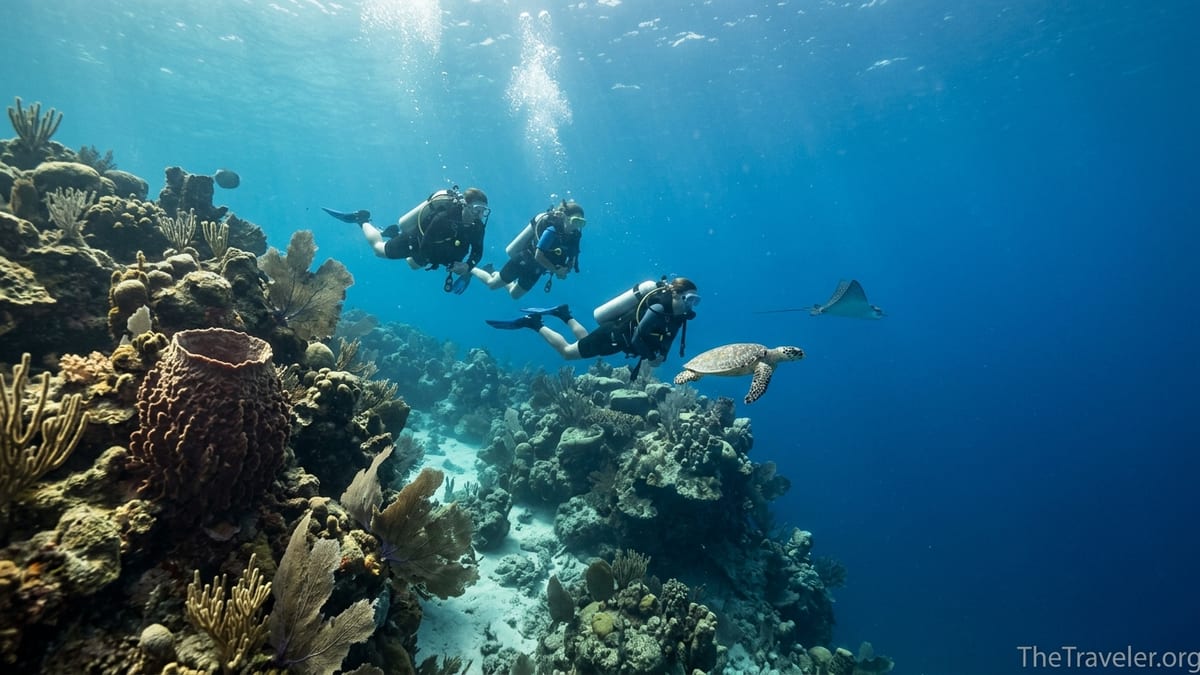
Where Palancar Reef Is and Why Divers Love It
Palancar Reef lies along Cozumel’s southwest coast inside the Arrecifes de Cozumel National Park, part of the wider Mesoamerican Barrier Reef system. Boat rides from the main hotel and pier zone near San Miguel typically take 25 to 45 minutes depending on the operator’s dock and boat speed. Many dive shops cluster their morning two-tank trips around Palancar and the neighboring Columbia and Santa Rosa areas, so it is often the centerpiece of a Cozumel dive vacation.
Visibility here commonly ranges around 70 to 100 feet or more in calm conditions, which means you can see vast sections of the reef and watch other buddy teams gliding along the wall. The water is warm most of the year, often in the upper 70s to low 80s Fahrenheit, so many divers feel comfortable in a 3 mm full suit or even a shorty in summer. What draws people back, though, is not just the pleasant conditions but the mix of lush coral buttresses, sandy swim-throughs and the sensation of flying with the current along dramatic drop-offs.
Unlike some destinations that revolve around a single signature pinnacle or wreck, Palancar is a loose collection of distinct sectors spread over several kilometers. Names like Palancar Gardens, Palancar Caves, Palancar Bricks and Palancar Horseshoe describe specific zones, each with its own typical depth range, current pattern and coral architecture. You can easily spend multiple days here without repeating the same profile, especially if you alternate deeper wall dives with shallower reef meanders.
The reef also benefits from active local management. Palancar sits inside a protected marine park, so operators must follow rules on mooring buoys, group sizes and interaction with marine life. You will notice permanent moorings at the start of the dive and briefings that highlight no-touch policies for the sponges and hard corals that make this place special.
Drift Diving at Palancar: How It Actually Feels
Cozumel is famous for drift diving, and Palancar is one of the easiest places to understand what that really means. Instead of finning along a fixed course, you descend as a group, adjust your buoyancy and then let the prevailing current carry you along the reef like an underwater conveyor belt. The boat tracks your bubbles and picks you up wherever you surface, so there is no need to swim back to a starting point.
Currents at Palancar vary from light to moderate, with occasional stronger runs after weather changes. On a typical morning dive at Palancar Gardens, for example, a guide might describe the current as “gentle push” and encourage you to tuck in close to coral heads if you want to slow down or photograph a turtle. On other days, especially at the more exposed sites like Palancar Horseshoe or Bricks, the flow can be brisk enough that you simply streamline, keep your profile tidy and enjoy the ride while the scenery scrolls past.
Drift diving here is usually done mid-water along the edge of a wall or over rolling coral ridges. You will rarely need to kick hard except for small position adjustments. Good trim and buoyancy are more important than leg strength. Most operators providing Palancar trips including outfits such as Scuba Mau, Dive Palancar, ScubaTony or Aldora Divers emphasize pre-dive briefings that cover hand signals for current strength, staying close to the group and what to do if you drift slightly shallower or deeper than the main pack.
If you are new to drift diving, many instructors suggest starting with a shallower first tank at Palancar Gardens or a similar site, then progressing to the deeper walls later in your trip. Some operators group divers by experience and gas consumption so that relaxed photographers can take their time in mild current while more experienced guests might ask for a stronger-flow day on the deeper sections of Palancar or nearby Santa Rosa Wall.
Walls, Coral Formations and Underwater Topography
Palancar’s reputation comes largely from its complex coral architecture. Instead of a flat reef, you will encounter towering buttresses of hard coral, giant barrel sponges and a labyrinth of swim-throughs and caverns where light filters down in shafts. On a typical dive at Palancar Caves, for instance, you might start near the top of the wall at around 60 feet, drop over ledges that step down to 80 or 90 feet and then weave in and out of overhangs where schools of grunts and snappers shelter.
The outer wall itself can feel like the edge of a balcony hanging over deep blue water. At Palancar Horseshoe, named for its horseshoe-shaped indentation in the reef, many dives follow the arc of the structure at depths around 70 to 90 feet, with the abyss falling away below. Looking out from the wall, it is common to see eagle rays gliding in the blue or turtles crossing from one coral tower to another. The combination of wall, deep water and clear visibility makes depth awareness and computer monitoring especially important.
Shallower sections such as Palancar Gardens feature dense coral gardens with big brain corals, sea fans and colorful sponges rising from a sandy bottom. Here you can expect more sunlight, richer colors and longer bottom times. Divers often report spotting splendid toadfish tucked under ledges, small groups of lobsters, and occasional nurse sharks resting in the sand between coral heads. The swim-throughs in these gardens typically stay in the 40 to 60 foot range, making them accessible to a wide range of certified divers.
The spur-and-groove structure common to the Mesoamerican Reef is very evident here. Long coral ridges run parallel to the coast with sandy channels between them. Guides use these channels as natural highways during drift dives, occasionally ducking into side passages to explore arches or peek inside overhangs. Staying slightly above the top of the ridges gives you the best view of both the wall drop-off and the marine life threading through the coral.
Depth Levels, Visibility and Currents: Matching Sites to Your Experience
Palancar dives typically range from about 40 feet on the shallowest garden profiles to around 100 feet on the deeper wall sections, though exact depths vary with operator and diver certification. Many Open Water divers will be limited to maximum depths near 60 feet on their first visits, which still allows them to enjoy Palancar Gardens and the upper portions of Palancar Caves. Advanced Open Water or equivalent divers, especially those with deep or drift specialties, may plan dives that touch 80 to 100 feet on sites like Horseshoe or Bricks before drifting shallower along the reef.
Visibility is one of Palancar’s strong points. On many days you can see 80 to 100 feet horizontally, which helps reduce anxiety on deep or wall dives because you rarely feel enclosed. After storms or during seasonal changes the water can cloud slightly, but even then it often remains clear enough to see your entire group and the wall structure. Most operators schedule their Palancar trips in the morning when sea conditions are typically calmer and light penetration is better.
Cozumel currents generally run north to south along the reef, but local eddies can create upwellings, downwellings or shifts in direction along the wall. Experienced local guides read these patterns in real time and adjust depth or distance from the wall accordingly. You might hear a briefing example such as, “If we feel a down current at the corner, we will move a little shallower and away from the drop-off, staying over the sand.” Listening closely and following the guide’s lead is key, especially if you have limited experience with irregular currents.
For divers who are still building confidence, it is worth being clear with your chosen shop about your experience level when booking. Many Cozumel operators group guests with similar depth limits and drift comfort on the same boat, which can mean a relaxed 50-foot tour of Palancar Gardens for newer divers and a separate, deeper wall run for those with more dives logged. If you have not been in the water for a year or more, expect reputable shops to recommend or require a refresher session before taking you to Palancar’s deeper sites.
Certification Needs, Training and Safety Considerations
Most Palancar dives are suitable for certified Open Water divers who are comfortable in currents and have recent experience. That said, conditions can change quickly, and deeper wall sections can push the practical demands closer to what many training agencies categorize as advanced or deep diving. If you hold only a basic certification and minimal post-course dives, operators may start you on shallower reefs such as Paradise or Chankanaab and then progress to Palancar Gardens after you demonstrate solid buoyancy and gas management.
Advanced Open Water or equivalent training opens more of Palancar to you. Many shops in Cozumel offer Advanced courses that include deep and drift dives right on Palancar or neighboring walls, giving you formal training while you enjoy the park. Deep adventure dives might be run to around 90 feet on Palancar Caves or Horseshoe with the instructor monitoring narcosis signs, air consumption and ascent rates. Drift-focused dives reinforce techniques like staying with the group, using natural features to control speed and deploying a surface marker buoy if separated.
On the safety side, Palancar is very well served by professional operators, but you still need to manage your own limits. Dive computers are standard on these reefs, and no-stop limits become more restrictive as you explore deeper sections repeatedly over several days. Many divers sensibly schedule shallower second tanks, such as finishing a morning with Columbia Shallows or a higher section of Palancar Gardens, to add extra off-gassing time and extend their overall trip comfort.
Reef protection is also part of safe diving here. Gloves are generally discouraged to reduce the temptation to touch coral, and guides will emphasize proper trim to avoid fin kicks that stir up sand over delicate sponges. Some operators in Cozumel now highlight their eco-certifications and park partnerships, so if low-impact diving is important to you, you can ask specifically about their conservation practices when choosing a shop.
Choosing a Dive Operator and Typical Costs
Cozumel has an unusually dense concentration of quality dive shops serving Palancar. On the larger side are operations integrated into resorts along the southern hotel strip, such as Dive Palancar based near several big beach properties. These outfits often appeal to travelers who want to step from their room onto the boat dock with minimal logistics, and they can handle groups of mixed experience by assigning extra guides.
Smaller boutique operators, including names frequently recommended by repeat visitors like ScubaTony, Aldora Divers, Scuba Mau, Blue Dream or Mermaid Divers, often run faster six to ten passenger boats with early departures. That can mean arriving at Palancar moorings before the big boats and enjoying the reef with fewer other groups in the water. These smaller shops usually emphasize personal attention, grouping divers by experience and offering extras such as steel tanks for longer bottom times or free snacks between dives.
As of recent seasons, a standard morning two-tank boat dive to Palancar and a neighboring site in Cozumel tends to fall in the ballpark of 100 to 150 US dollars per diver, depending on the operator, tank size, whether nitrox is included and whether gear rental is needed. Full rental gear packages often run in the approximate range of 25 to 40 US dollars per day. Private charters for families or photography-focused groups cost more but can be worthwhile if you want maximum control over site choice and profiles.
When comparing operators, practical questions to ask include maximum divers per guide, whether they offer hotel pier pickup along the coast, what emergency equipment they carry on board and how they choose sites based on wind and current forecasts. Online reviews, diver forums and word of mouth often mention which shops are especially patient with newer drift divers or which prioritize advanced walls and longer runtimes. Booking a multi-day package can sometimes reduce per-day costs and help the operator plan a progression of sites for you that builds skills and variety.
What to Expect Underwater: Marine Life and Real Dive Scenarios
Marine life on Palancar is typical of a healthy Caribbean reef with some local specialties. You can expect regular sightings of green and hawksbill turtles grazing on sponges, schools of grunts and snappers milling around coral heads, and angelfish and parrotfish working along the ridges. On deeper sections and near the drop-off, divers often spot eagle rays gliding past in small groups, especially in cooler months, and nurse sharks resting under ledges or cruising slowly along the sand.
One distinctive resident to look for is the Cozumel splendid toadfish, a colorful, whiskered fish that tends to hide in small caves and undercuts with only its head showing. Guides at Palancar are adept at pointing these out with their lights during the dive. In recent trip reports, divers also mention encountering clusters of Caribbean spiny lobsters under overhangs, particularly on the reef edges and in the deeper channels between coral towers.
A typical first dive scenario at Palancar Gardens might involve descending to a sandy area at 40 to 50 feet, checking everyone’s buoyancy and then drifting along a line of coral ridges. The guide points out a turtle feeding on a sponge, leads the group through a wide, arching swim-through where sunlight pours in from above and then takes a relaxed path back over shallower coral at the end of the dive to stretch bottom time. On a subsequent day, a deeper trip to Palancar Caves could see the team dropping along the wall to around 80 feet, briefly exploring canyon-like passages, then working shallower to 60 feet for the second half of the dive while watching the blue for pelagic visitors.
Night and twilight dives are less common at Palancar itself but not unheard of, sometimes paired with late-afternoon departures that include a dusk dive on a nearby reef followed by a true night dive closer to shore. If you are interested, ask operators whether they schedule such trips seasonally. Seeing the reef transition at dusk, with tarpon hunting in your light beams and bioluminescence in the water, adds another dimension to the Palancar experience.
The Takeaway
Palancar Reef rewards divers who match its conditions to their training, choose operators carefully and embrace the rhythm of drift diving. Its mix of dramatic walls, lush coral gardens and warm, clear water has made it a mainstay of Cozumel dive itineraries for decades, yet each visit can feel different depending on current strength, site selection and how closely you pay attention to the details of the reef.
If you are a newer diver, think of Palancar as an achievable goal rather than an intimidating challenge. Start with shallower, slower sections and work with guides who are comfortable coaching buoyancy and drift skills. If you are more experienced, communicate your comfort with deeper walls and stronger currents so that operators can place you on appropriate boats and routes. Either way, expect memorable encounters with turtles, rays and intricate coral formations that justify Palancar’s reputation as one of the Caribbean’s essential reef systems.
Plan enough days to see several distinct Palancar sites, build surface intervals with Cozumel’s relaxed island atmosphere and keep your expectations flexible. Weather and current may shift your planned wall to a different sector, but in this corner of the Mesoamerican Reef, almost every option still offers the same core pleasures: effortless movement, expansive visibility and the sense of flying along a living underwater canyon.
FAQ
Q1. Is Palancar Reef suitable for beginner divers?
Palancar has sections that work for newer certified divers, especially Palancar Gardens in the 40 to 60 foot range with mild current. Absolute beginners should gain basic drift experience on shallower reefs first, ideally with a refresher if they have not dived recently.
Q2. What certification do I need to dive the walls at Palancar?
Open Water certification is typically enough for the shallower parts of Palancar, but deeper wall sections around 80 to 100 feet are usually reserved for Advanced Open Water or equivalent divers with recent deep and drift experience.
Q3. How strong are the currents at Palancar Reef?
Currents are usually light to moderate, creating relaxed drifts where you barely need to fin. At times they can strengthen or shift near corners and walls, so staying close to the guide and following briefings is essential.
Q4. What water temperature and exposure protection should I expect?
Water temperatures around Palancar are often in the upper 70s to low 80s Fahrenheit. Many divers are comfortable in a 3 mm full wetsuit; some prefer a shorty in the warmest months or slightly thicker neoprene if they chill easily.
Q5. Can I see big animals like sharks or rays at Palancar?
Yes, it is common to see turtles, nurse sharks and eagle rays, especially along the edges of the wall and in deeper channels. Sightings vary by season and day, so they should be treated as a bonus rather than a guarantee.
Q6. How much does a typical two-tank boat dive to Palancar cost?
Recent prices for a standard two-tank morning trip to Palancar and a nearby site often fall roughly between 100 and 150 US dollars per diver, with full gear rental adding about 25 to 40 US dollars per day.
Q7. Do I need my own dive computer for Palancar Reef?
Most operators strongly encourage or require each diver to have a personal computer, especially for deeper walls. If you do not own one, many shops rent basic dive computers alongside standard gear packages.
Q8. How many days should I plan to dive Palancar?
With multiple distinct sites such as Gardens, Caves, Bricks and Horseshoe, three to five dive days allow you to sample varied profiles and conditions while still leaving time for rest days or topside activities.
Q9. Are night dives offered on Palancar Reef?
Night and twilight dives are less common directly on Palancar but some operators offer late-afternoon departures that include a dusk dive there and a full night dive on a nearby, slightly shallower reef.
Q10. How do I choose a reliable dive operator for Palancar?
Look for operators with small group sizes, clear safety briefings, positive recent reviews and local guides who know Palancar’s currents. It is worth asking how they group divers by experience and how they decide which specific Palancar site to visit each day.