


For many visitors to Mallorca, picking up a rental car at Palma de Mallorca Airport is the start of a classic Mediterranean holiday: beach resorts, winding mountain drives, and quiet stone villages far from the main bus routes. With dozens of rental brands clustered around the terminal and a maze of insurance options, deposits, and parking rules, it pays to understand how the system works before you land. This guide brings together the latest practical information to help you decide whether a car is worth it, and how to use it confidently for beach resorts and road trips around the island.
Get the latest updates straight to your inbox!
How Car Rental Works at Palma de Mallorca Airport
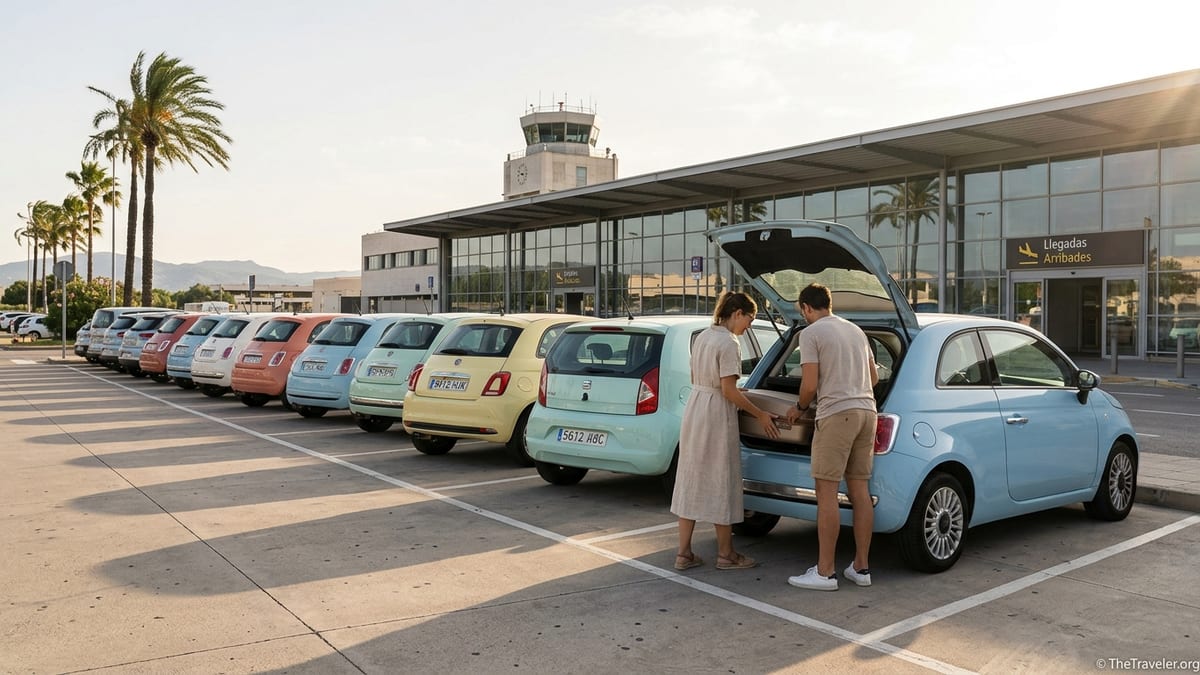
Palma de Mallorca Airport (PMI) is one of Spain’s busiest leisure hubs, and that shows in the size of its car rental operation. The main car hire desks are on the ground floor of the arrivals hall and, for some brands, also inside the baggage reclaim area. Aena, the airport operator, lists in-terminal brands such as Avis, Budget, Europcar, Goldcar, Hertz, OK Mobility, Record Go and Sixt, with vehicles parked in the multi-storey car park directly opposite the terminal. In practice, this means that after you exit customs, you follow the “Car hire / Rent a car” signs, sign the contract at the desk, then take a short, covered walk across to the car park levels where your vehicle is waiting.
There are also “off-airport” rental companies that keep lower prices by operating from nearby industrial estates or local offices. With these firms, you typically meet a minibus in the airport’s general parking or at a designated shuttle bay and are driven five to ten minutes to their depot. This can work well in peak summer when queues at on-airport counters are long, but it adds a transfer step at the start and end of your trip. If you are landing late at night with children or a lot of luggage, a brand with cars in the airport car park is usually the most straightforward choice.
Most major desks at Palma keep extended summer hours, often from early morning until after midnight, but smaller companies or off-airport operators may not. Travelers arriving on late flights in July and August often report that collecting a car at 23:00 is possible with the bigger brands, whereas some local firms close around 22:00. Always check your specific provider’s office hours for Palma de Mallorca Airport and make sure your flight details are on the booking so they know when to expect you.
Whichever company you choose, expect a standard EU rental process: your driving licence, passport or ID card, a credit card in the driver’s name for the deposit, and a contract that includes basic cover and optional extras such as child seats, additional drivers, and GPS or smartphone connectivity units.
Rental Desks, Pick-up Zones and Return Procedures
The airport’s multi-storey car park stands directly in front of the passenger terminal, connected by walkways, with dedicated spaces and counters for the big rental brands. Aena notes that, for example, Avis Budget operates from arrivals level 0 with its vehicles on parking level 2, while Europcar, Goldcar and Hertz are located on level 1 of the car park, and some brands such as OK Mobility and Sixt use level 0 as well. In practice, staff will direct you to a specific floor and row, and some companies have a small kiosk in the car park itself where you complete paperwork or collect keys after checking in at the main desk.
At busy times, there can be a two-stage process with popular low-cost brands. For instance, with Goldcar or Record Go, travelers sometimes first queue at a terminal counter to verify documents, then cross to the car park where another office or machine issues the keys. Knowing this in advance helps you gauge how much time to allow before driving to your accommodation, especially if you still have a 60-minute run to Alcúdia or Cala d’Or ahead of you.
Returning the vehicle is generally more straightforward. You follow airport signs for “Car Rental Return” or “Rent a car / devoluciones” as you approach the terminal. These bring you into the same multi-storey car park, where each company has a marked zone. Staff do a quick walk-around check for obvious new damage and verify the fuel level, or you may be asked to drop the keys in a secure box if you return the car before or after staffed hours. Because the general car park, long-stay car park and car rental floors sit next to each other, it is important to follow rental-car signage rather than standard parking signs, or you could accidentally drive into a public pay car park.
If you are using an off-airport company, the return procedure works in reverse. You drive back to their depot, they check the car, and a shuttle takes you to the departures forecourt. This adds transit time at the end of your holiday, so allow a buffer before check-in, especially during weekend mornings in July and August when the airport is particularly busy.
Insurance, Deposits and Fuel Policies in Mallorca
Rental prices in Mallorca can look low at first glance, but most visitors notice the real costs emerge at the insurance and deposit stage. Standard contracts usually include a basic collision damage waiver with a relatively high excess, often in the range of several hundred to more than a thousand euros. The rental company then offers its own “full cover” or “premium” insurance that reduces this excess to zero or a small amount, in return for a daily fee. At budget brands, travelers often report that front desk staff are persistent in promoting these policies, especially in high season.
Many international visitors arrive with separate coverage, such as a credit card that includes rental car insurance or a third-party excess policy bought online. However, it is common for Palma airport rental staff to explain that such external policies do not prevent them from blocking a deposit on your credit card, nor do they cover certain types of damage under the rental company’s terms. For example, customers sometimes find that windscreen, tyre, underbody, and key loss are excluded from the basic cover, and are only included in the company’s own premium package. One traveler in a recent discussion described paying a modest fee in advance for third-party insurance, then being told at the Goldcar desk that they would still need to leave a substantial deposit or purchase the company’s more expensive in-house cover to avoid it.
Deposits or pre-authorizations are routinely taken on a credit card in the main driver’s name. For a compact car, an amount in the range of 600 to 1,200 euros is not unusual with basic cover in Mallorca, decreasing significantly if you buy the rental company’s full insurance. Some firms now market “no deposit” or “zero excess” options that bundle all risk into a higher daily rate. For travelers nervous about large holds on their card, these can provide peace of mind, but comparing the total cost for your dates is essential.
Fuel policies at Palma de Mallorca Airport have become more customer-friendly over time, but differences remain. Many mainstream brands now offer “full to full,” where you pick up the car with a full tank and return it full, paying only for what you actually use. Some budget rentals still use “full to empty” or variants in which you pay for a tank of fuel at collection, sometimes at a marked-up rate, and return the car as empty as you like. Before committing, consider your itinerary. If you are only driving between the airport and a nearby resort like Palma Nova or Can Pastilla, you may not use enough fuel to make a prepaid tank worthwhile.
Is a Rental Car Worth It for Palma and the Beach Resorts?
Whether a rental car is worthwhile in Mallorca depends heavily on your plans. If you are staying for a long weekend in central Palma and only plan to visit nearby beaches such as Cala Major or Ciudad Jardín, the city’s buses, taxis and occasional ride-hailing services are usually sufficient. Palma’s historic centre has narrow streets, controlled access zones where non-resident vehicles can be fined, and scarce street parking. In this case, many visitors have found that a taxi from the airport to a hotel in La Lonja or Santa Catalina, combined with day trips by public transport or organised tours, is both easier and often cheaper than renting a car for the entire stay.
For classic beach resorts, a car becomes more attractive. Families heading to Alcúdia or Playa de Muro on the north coast, Cala Millor and Sa Coma on the east coast, or Santa Ponsa and Peguera in the southwest often appreciate the flexibility of a hire car. It lets you do supermarket runs, reach quieter coves like Cala Mesquida or Cala Anguila, and adapt to toddlers’ nap schedules without relying on timetables. For a week-long stay in July, a compact rental can make it easy to drive from a resort hotel to water parks near Magaluf, markets in towns such as Sineu, or viewpoints like Mirador Es Colomer above Port de Pollença.
However, if your beach holiday is mostly hotel-pool-and-local-beach, with just one or two excursions, it can sometimes be better value to skip a full-week rental and instead book organised tours or single-day car rentals from resort offices. Many international chains and local rentals have pick-up locations in larger resorts such as Alcúdia, Cala d’Or or Palmanova. In that scenario, you avoid paying for several days when the vehicle sits unused in a hotel car park.
Seasonality matters too. In peak August, Mallorca’s roads and parking lots are noticeably busier, particularly around hotspots like Port de Sóller, Cala Deià, Cala Llombards, and Cap de Formentor. A car still provides access and flexibility, but you must factor in extra time for traffic and parking, plus the patience to navigate oversubscribed lots. Outside July and August, road conditions are calmer, and a rental car becomes a more relaxed way to explore the island, especially for travelers staying in fincas or rural hotels away from bus routes.
Driving Conditions: Mountain Roads, Highways and Scenic Routes
Mallorca’s road network is a mix of modern dual carriageways and dramatic mountain routes. The main highway from Palma to Alcúdia and Pollença, and the road to Manacor and the east coast, are generally wide, well-marked and straightforward for drivers used to European standards. Speed limits are clearly posted, and overtaking lanes are common. Visitors often comment that these main arteries feel no more demanding than motorways in mainland Spain, with good signage and regular service stations.
Things change significantly in the Serra de Tramuntana, the UNESCO-listed mountain range running along the northwest of the island. The Ma-10 road between Andratx and Pollença is famous for its scenery and its concentration of hairpins and steep drops. Sections near viewpoints and villages such as Valldemossa, Deià and Fornalutx combine narrow lanes, rock walls and limited visibility, while the side road down to Sa Calobra is widely regarded as one of the more intense drives in the Balearics, with very tight switchbacks and heavy coach and cyclist traffic in high season. Local driving guides consistently stress the need for slow, attentive driving, using low gears on descents, and allowing faster vehicles to pass at safe pull-outs.
For many visitors, a compact car makes a real difference on these roads. Travelers who have driven both small hatchbacks and larger seven-seat vehicles on the Ma-10 often report that the smaller car is noticeably easier to maneuver in village streets and in cramped car parks. While big tour coaches do navigate the Tramuntana daily, they are driven by professionals who know the route intimately. First-time visitors who are nervous about mountain roads sometimes opt to avoid Sa Calobra by car altogether, choosing instead to visit by boat from Port de Sóller or Port de Pollença, while still enjoying sections of the Ma-10 that feel more comfortable.
Elsewhere on the island, rural lanes leading to smaller calas or agroturismo properties can also be narrow, occasionally dropping to a single track bordered by stone walls or dry fields. In these situations, patience and low speeds are key. It is customary in Mallorca, as elsewhere in Spain, to use passing places courteously and to reverse if you are closer to a pull-in than the oncoming car. Night driving on such roads demands extra caution due to limited lighting and the possibility of animals or cyclists.
Parking at Beach Resorts, Palma and Rural Stays
Parking is one of the most practical considerations when deciding whether to rent a car in Mallorca. At Palma de Mallorca Airport itself, the general car park and car rental parking stand immediately opposite the terminal, making pick-up and drop-off easy. For visitors continuing into Palma city, however, street parking in the old town and around the cathedral is limited, regulated by coloured lines and often reserved for residents or short stays. Many hotels in central Palma do not have their own garages, so guests either pay for nearby public underground car parks or choose not to bring a car into the city at all.
In resort areas, parking tends to be more forgiving but varies by location. Larger purpose-built resorts such as Alcúdia, Playa de Muro, Cala Millor or Sa Coma feature wide streets and a mix of hotel lots, small private garages and public spaces, which are usually manageable outside peak weeks. In July and August, free spaces near popular beachfronts can fill up late in the morning, so arriving earlier or accepting a short walk from a backstreet space is often necessary. At compact coves like Cala Deià, Cala Varques or small inlets on the southeast coast, parking is deliberately limited to protect the environment, with informal roadsides and small, sometimes unpaved lots that can fill by mid-morning on hot days.
For rural fincas and agroturismo hotels, on-site parking is usually part of the appeal. These properties often sit a few kilometres from the nearest village, reached via country lanes, and provide guests with their own gravel lots or courtyards for parking. Here, the main challenge is navigation rather than space: ensuring you arrive by daylight the first time so that you can get used to the access road and landmarks. Most such properties give detailed directions in addition to a GPS pin, which is worth reading ahead of time.
Across the island, it is advisable not to leave valuables visible in parked cars, particularly at trailheads, miradores or isolated beach access points where opportunistic theft sometimes occurs. While Mallorca is generally considered safe, local tips often highlight that bags or electronics should be stowed out of sight or taken with you when you leave the vehicle. Taking a quick photo of your parking location or bay number is also helpful in large resort car parks where every row looks similar late at night.
Planning Road Trips: Sample Routes from Palma Airport
With a rental car collected at Palma de Mallorca Airport, classic road trip itineraries open up immediately. One popular circuit for a week-long stay begins with a direct drive from the airport to a north-coast base in Port d’Alcúdia or Port de Pollença, roughly 45 to 60 minutes on the main highway. From there, travelers often use the car to explore Playa de Muro’s long beaches, the old town of Alcúdia with its market days, and viewpoints like Mirador Es Colomer. A day trip up to Cap de Formentor, timed for early morning or late afternoon to avoid parking congestion, showcases some of the island’s best coastal scenery.
Another route uses Palma as a starting point before heading into the Serra de Tramuntana. After a night or two in the capital, you can drive from the airport to Valldemossa, stroll its stone streets, continue along the Ma-10 to Deià and Sóller, and then choose between looping back via the tunnel to Palma or carrying on to the north. This loop is ideal for visitors wanting a mix of culture, sea views and mountain landscapes, as long as they are comfortable with twisting roads and occasional tight passes through villages.
On the east coast, a car makes it easy to combine resort time with visits to caves and smaller coves. From the airport, the drive to Cala d’Or, Porto Cristo or Cala Millor typically takes around an hour along well-maintained roads. Once based in one of these towns, you can use the rental car for morning trips to nearby calas and inland to Santanyí, Felanitx or Artà for markets and historic sites. A compact vehicle is again advantageous here, as many of the most appealing beaches sit at the end of narrower access roads with limited parking.
For those happy to move every couple of nights, a classic circuit might be Palma to Sóller, then along the Ma-10 to Pollença, across the interior to Artà or Manacor, and finally back to Palma Airport via the main highway. This style of trip lets you experience both mountain and rural landscapes, as well as the long sandy bays. When planning driving days, factor in realistic times: an apparent 60-kilometre stretch in the Tramuntana can take much longer than the same distance on the central motorway due to bends, viewpoints, and village traffic.
The Takeaway
Renting a car at Palma de Mallorca Airport gives you the freedom to move between beach resorts, into the Tramuntana mountains and out to quiet rural corners at your own pace. The airport is well set up for car hire, with multiple on-site brands based in the arrivals hall and multi-storey car park, plus a cluster of off-airport operators offering shuttle transfers and occasionally lower prices. Understanding where your chosen company’s desk and pick-up area are, and how late they stay open, can save considerable stress on arrival.
Cost-wise, the most important decisions involve insurance, deposits and fuel policy. A headline price for a compact car rarely tells the full story. Expect a significant card hold unless you buy the company’s own full cover, and read carefully which types of damage are included. If you are uneasy about unexpected charges at the counter, consider a provider that clearly advertises zero-excess, no-deposit packages and compare total cost rather than day rates alone.
Whether a car is worth it depends on your plans. For a purely urban stay in central Palma, taxis and public transport often suffice, and parking can be more trouble than it is worth. For family holidays in resorts such as Alcúdia, Playa de Muro, Cala d’Or or Santa Ponsa, or for itineraries that include mountain villages, remote calas and rural hotels, a compact rental car is often the most efficient way to experience Mallorca. Comfortable driving in mountain conditions and a willingness to plan around parking hotspots will make that experience far more relaxing.
Ultimately, a car unlocks the quieter side of the island: early swims at beaches before the crowds arrive, sunset viewpoints along the Ma-10, and lunches in inland villages where tour buses rarely stop. With realistic expectations about driving and costs, and by choosing the right vehicle size and insurance, a Palma de Mallorca Airport rental can turn a straightforward beach holiday into a memorable Balearic road trip.
FAQ
Q1. Do I need to book my Palma de Mallorca Airport rental car in advance?
Booking in advance is strongly recommended, especially from May to October, when demand is high and walk-up prices or availability can be unpredictable.
Q2. Which side of the road do people drive on in Mallorca?
In Mallorca, as in the rest of Spain, driving is on the right-hand side of the road, with overtaking on the left and roundabouts taken counter-clockwise.
Q3. Is it difficult to drive from Palma Airport to Alcúdia or Cala d’Or?
The main routes from Palma Airport to major resorts such as Alcúdia, Pollença and Cala d’Or use modern highways and are generally straightforward for drivers used to European roads.
Q4. What type of car is best for driving in the Tramuntana mountains?
A small or compact car is usually best, as it is easier to handle on narrow, winding roads and simpler to park in tight village streets and lookout points.
Q5. Can I rely on my credit card insurance instead of buying the rental company’s full cover?
Many travelers use credit card insurance, but rental firms may still block a substantial deposit and exclude certain damage types, so you should confirm details before declining their cover.
Q6. Is parking free at most beaches in Mallorca?
Parking varies: some beaches have free roadside or dirt-lot parking, while others use paid municipal car parks or have limited spaces that fill quickly in high season.
Q7. Do I need an international driving permit to rent a car in Mallorca?
Drivers from the EU, UK and many other countries can use their standard licence, but some non-EU visitors may need an international permit, so it is wise to check before travel.
Q8. Are child seats required in rental cars in Mallorca?
Yes, Spanish law requires appropriate child restraints, and rental companies can provide baby, child and booster seats for an additional daily fee if you do not bring your own.
Q9. How much time should I allow to return my car at Palma Airport before a flight?
In summer it is sensible to arrive at the rental return area at least 30 to 45 minutes before your check-in time, or earlier if using an off-airport shuttle.
Q10. Is it safe to leave luggage in a parked rental car while sightseeing?
It is better to avoid leaving luggage or valuables in view; if you must, use supervised car parks and keep items out of sight to reduce the risk of opportunistic theft.