


Ask art and architecture lovers in Florence which small site they would never skip, and two names come up again and again: the Pazzi Chapel at Santa Croce and the Medici Chapels behind San Lorenzo. Both are compact, deeply atmospheric spaces linked to powerful Florentine families, but they deliver very different experiences. If you only have time or budget for one, the choice is not obvious. This guide breaks down what each site actually feels like to visit today, how much it costs, and which travelers are likely to get the most out of each.
Get the latest updates straight to your inbox!
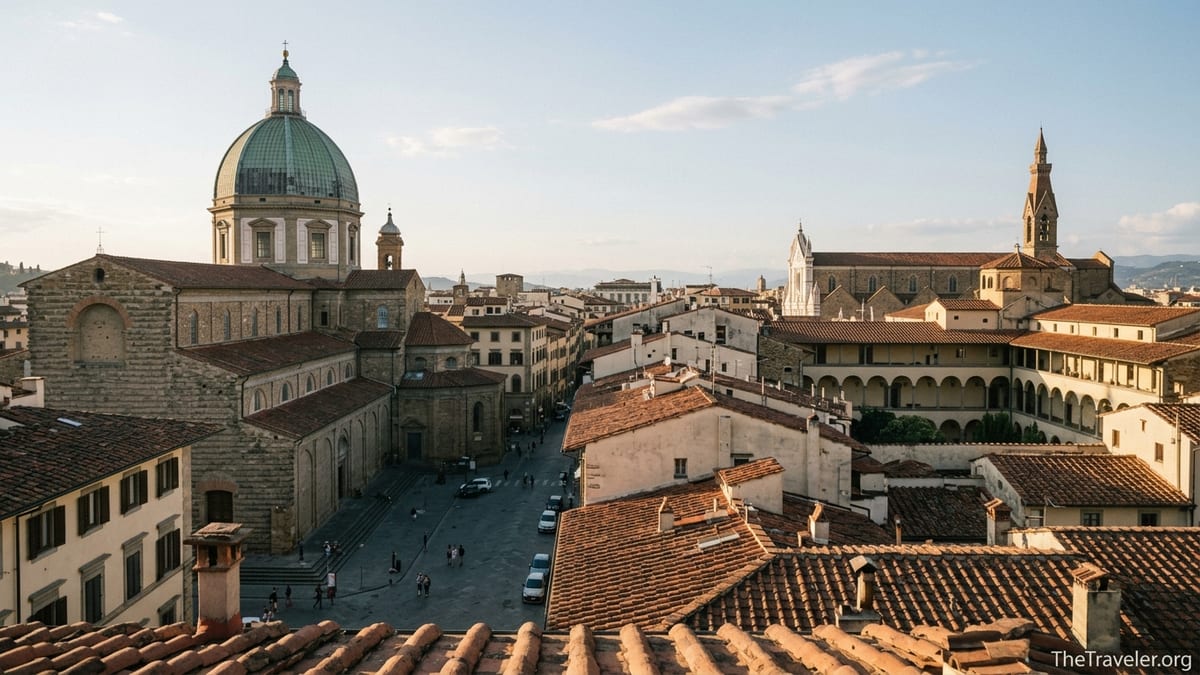
Two Very Different Florentine Chapels
The Pazzi Chapel and the Medici Chapels are often mentioned in the same breath, yet they serve different sides of Florence’s story. The Pazzi Chapel, tucked inside the cloister of the Basilica of Santa Croce in the eastern part of the historic center, is a serene, measured masterpiece of early Renaissance architecture traditionally associated with Filippo Brunelleschi. Step inside and you are in a pale, geometrically perfect space of pietra serena stone and white plaster, more about proportions and calm than about spectacle.
The Medici Chapels, by contrast, sit behind the hulking Basilica of San Lorenzo a short walk from the Duomo. This state museum complex includes the New Sacristy designed by Michelangelo and the huge Chapel of the Princes, clad in inlaid semi-precious stones. Visitors enter from Piazza Madonna degli Aldobrandini, not through the church itself, and move through a series of spaces that grow progressively more theatrical, culminating in the glittering mausoleum of the Medici grand dukes.
In simple terms, the Pazzi Chapel is about quiet harmony and early Renaissance ideals, while the Medici Chapels are about power, dynastic propaganda and late Renaissance bravura. Understanding this contrast is key to choosing which experience best matches your interests, attention span and tolerance for visual overload.
Location, Access and Practicalities
For most travelers staying in central Florence, both sites are easy to reach on foot. The Pazzi Chapel is inside the Santa Croce complex, about a 10 to 15 minute walk east from the Duomo. You enter via the ticket office on the square in front of the basilica, then pass through the church and cloisters to reach the chapel. Visitors often see it as part of a broader Santa Croce visit that includes the tombs of Michelangelo and Galileo, Giotto’s frescoes and the vast nave of the church itself.
The Medici Chapels are slightly north of the Duomo, only a few minutes’ walk away, near the San Lorenzo street market. The official entrance is on the relatively quiet Piazza Madonna degli Aldobrandini at the back of San Lorenzo, separate from the busy basilica façade. Inside, you move on a fixed route controlled by museum staff, which helps regulate crowds in the most precious rooms. Many travelers drop by before or after a visit to the nearby Mercato Centrale food hall or the San Lorenzo leather stalls.
In terms of logistics, the Medici Chapels operate as a dedicated state museum with security checks, timed flows and a more formal atmosphere. The Pazzi Chapel feels more like a highlight within a church complex, and depending on the season, you may find only a handful of people in the cloister when you arrive. For those who dislike queues and are willing to detour slightly off the main tourist axis, the Pazzi Chapel can feel easier and calmer to access.
Tickets, Prices and Crowds
Ticketing is one of the biggest practical differences. As of mid 2026, entry to the Medici Chapels is via a museum ticket that is moderate in price compared to Florence’s blockbuster attractions. Expect to pay in the rough range of 10 to 15 euros for a standard adult ticket, with reduced rates for EU youth and other concessions. During peak months, especially April through October, same-day tickets are usually still available at the on-site ticket office, but lines can form in late morning and early afternoon. Travelers report that visiting shortly after opening around 8:15 am or in the last hour before closing typically means shorter waits and a more contemplative experience.
For the Pazzi Chapel, you generally pay to enter the entire Santa Croce complex rather than buying a separate chapel ticket. Prices here are in a similar range, roughly around 8 to 12 euros for adults depending on current policies and included exhibitions. The ticket covers the basilica, chapels, cloisters and museum spaces. Because many visitors focus on the tombs and frescoes inside the main church, the cloister containing the Pazzi Chapel often feels noticeably quieter. Even on busy days in Florence, it is common to find only a small group of people sitting on the stone benches in the cloister while others rush through the nave next door.
In terms of sheer crowd density, the Medici Chapels usually draw more international tour groups, especially those focused on Michelangelo. You may find yourself sharing the New Sacristy with a couple of guided groups pointing out the famous allegorical figures of Night and Day. The Pazzi Chapel, on the other hand, tends to attract architecture students, design enthusiasts and independent travelers. If avoiding crowds is your top priority, the edge goes to the Pazzi Chapel.
Architectural Atmosphere: Calm Geometry vs Baroque Splendor
Architecturally, the Pazzi Chapel is arguably the purer experience. The small rectangular space reads as a three-dimensional demonstration of early Renaissance ideals: a clear geometry, harmonious proportions and restrained decoration. Gray pietra serena stone articulates the arches, pilasters and entablature against white walls. A low dome with a central oculus lets daylight wash softly across glazed terracotta roundels attributed to the Della Robbia workshop, which show the symbols of the Evangelists. Travelers often describe the sensation of standing in the center of the floor, looking up and feeling the space “click” into balance, like stepping into a perfectly tuned instrument.
The Medici Chapels are the opposite of restrained. The Chapel of the Princes is clad from floor to dome in polychrome stone and inlaid semi-precious materials: jasper, lapis, agate and more set into elaborate patterns. The space feels almost vertical, a high domed cylinder ringed with monumental sarcophagi. The New Sacristy, smaller and more intimate, is dominated by Michelangelo’s sculpted tombs of Lorenzo and Giuliano de Medici and the allegorical figures reclining beneath them. The stone architecture and sculptural figures merge into a single theatrical composition, making the room feel like a stage set frozen in marble.
For visitors sensitive to atmosphere, the Pazzi Chapel offers a contemplative, almost meditative environment, ideal for travelers who seek calm after the sensory overload of Florence’s streets. The Medici Chapels deliver drama and grandeur, a statement of power and wealth. If your eyes light up at richly colored stonework and bold sculpture, the Medici complex will likely resonate more strongly. If you prefer minimalism and line over ornament, the Pazzi Chapel is the stronger choice.
Art Highlights and Storytelling Value
From an art historical perspective, the Medici Chapels have more headline pieces. The New Sacristy contains some of Michelangelo’s final sculptural works in Florence, including the famous allegorical figures of Night and Day on the tomb of Giuliano, and Dawn and Dusk on the tomb of Lorenzo. Even travelers with limited art background tend to recognize the sinuous forms and expressive faces from guidebooks and museum reproductions. Recent conservation and new lighting have made the surfaces more legible than in past decades, allowing you to appreciate the chisel marks and subtle modeling up close.
The Chapel of the Princes adds a different kind of artistry: the extraordinary technique of pietre dure, in which thin slices of stone are cut and assembled like a puzzle to form patterns and coats of arms. This technique later became a Florentine specialty, and the chapel is one of the most opulent early showcases of the craft. For visitors curious about how such spaces were engineered and maintained, the long restoration campaign completed in recent years has also renewed the dome’s interior and lighting, making the decorative program easier to read from floor level.
The Pazzi Chapel, by contrast, is less about individual masterpieces and more about the whole space as a work of art. Its decoration is relatively sparse: a few glazed medallions, a simple altar, restrained wall articulation. Yet for students of architecture and design, this is part of the appeal. The chapel is often cited in university syllabi as a key example of early Renaissance space, and you may find small groups of sketching students sitting in the cloister or along the walls. For the average visitor, the storytelling connection comes from guides explaining the Pazzi family’s attempt to rival the Medici, and how rivalry and patronage shaped the city’s skyline.
If your goal is to stand in front of specific, famous works you have read about, the Medici Chapels provide more recognizable names and images. If you are more interested in how proportion, light and geometry create mood, the Pazzi Chapel’s subtlety may deliver a more rewarding experience.
Visitor Experience: Time, Comfort and Emotional Impact
Most travelers will spend longer in the Medici Chapels than in the Pazzi Chapel simply because there is more to see. A focused visit to the Medici complex typically takes 45 to 75 minutes, especially if you pause to study the New Sacristy sculptures, circle the Chapel of the Princes several times and examine the Medici tomb inscriptions. Audio guides and guided tours are commonly available through local operators, and some specialized tours include access to the so-called “secret room” associated with Michelangelo’s sketches when it is open by reservation, although access is limited and often sells out quickly.
By contrast, many visitors spend around 15 to 30 minutes in and around the Pazzi Chapel itself, often embedded in a longer 60 to 90 minute visit to the Santa Croce basilica and museum. You might sit for a few quiet minutes in the cloister, step into the chapel to admire the dome and proportions, then loop back to the nave to see major tombs and frescoes. The relative simplicity of the Pazzi Chapel means you can absorb it fully without feeling rushed, which appeals to travelers who tire quickly in dense museums.
Emotionally, the Medici Chapels can feel overwhelming and even somber. You are in a monumental burial complex, surrounded by massive sarcophagi and sculpted figures that personify time, mortality and power. Some visitors describe a sense of awe edging into heaviness. The Pazzi Chapel, on the other hand, often leaves people refreshed. The green grass of the cloister, the sound of footsteps echoing under the arches, and the soft daylight inside the chapel create a gentle transition from the noise of the city outside.
In purely subjective terms, travelers who thrive on intensity, drama and “big” experiences often come away declaring the Medici Chapels unmissable. Those who seek small, quiet moments and architectural clarity frequently name the Pazzi Chapel as one of their favorite corners of Florence.
Value for Money and Itinerary Fit
When considering value, it helps to look at what each ticket actually bundles. The Santa Croce ticket that includes the Pazzi Chapel gives access to a large Gothic basilica, side chapels, tombs of major figures like Michelangelo and Machiavelli, cloisters and a small museum. Even if the Pazzi Chapel itself occupies only part of your visit, you are buying a half-day’s worth of content if you choose to explore everything. This makes the Pazzi option particularly good value for travelers who enjoy churches and are happy to spend time wandering through multiple spaces.
The Medici Chapels ticket, by contrast, is focused tightly on the chapels themselves and the small connected museum displays of reliquaries and Medici artifacts. While dense and high quality, the experience is more concentrated. Many travelers pair it with a separate (and separately ticketed) visit to the Basilica of San Lorenzo, the Laurentian Library or the nearby Mercato Centrale. In terms of cost per hour of engaged viewing, the Medici Chapels are still reasonable, but they feel more like a specialized stop than an all-afternoon destination.
In a two-day Florence itinerary, it is realistic to visit both if you pace yourself. For example, you might spend a morning at Santa Croce and the Pazzi Chapel, then another morning at San Lorenzo and the Medici Chapels, leaving afternoons free for the Uffizi, Accademia or simply wandering the streets. For travelers on very tight schedules, however, choosing one strong secondary site in addition to the main museums is often more satisfying than rushing through several.
If you are traveling with children or companions who fatigue quickly in ornate interiors, the clear, simple forms of the Pazzi Chapel and the freedom to sit in the cloister can make that visit feel gentler and easier. The Medici Chapels, with their heavy symbolism and dense ornament, may appeal more to adults and older teens who already have some interest in history or art.
Which Travelers Should Choose Which Chapel?
Some travelers are clearly better matched to one site over the other. Architecture aficionados, minimalists and design professionals generally find the Pazzi Chapel speaks directly to their interests. They notice the rhythm of the columns, the ratios of height to width, the way daylight softens on the plaster, and they appreciate being able to sketch or sit quietly without constant foot traffic. Budget-conscious travelers who want maximum content per ticket also find the Santa Croce complex, with the Pazzi Chapel as its jewel, to be strong value.
The Medici Chapels are particularly rewarding for those fascinated by the Medici dynasty, Michelangelo’s later work or the decorative arts of the late Renaissance and Baroque periods. Travelers who have read about Lorenzo the Magnificent or seen reproductions of Night and Day often describe a strong emotional thrill in encountering the original sculptures in situ. The Medici complex also suits visitors who enjoy learning about power, politics and patronage, as the entire space functions as a visual argument for Medici legitimacy and grandeur.
Solo travelers and couples who enjoy slow, reflective sightseeing often gravitate toward the Pazzi Chapel, especially in the late afternoon when the light is soft and the cloister quiet. Larger groups and guided tour participants may find the Medici Chapels more engaging, since a good guide can unpack the layered symbolism and historical anecdotes woven into the tombs and decorative program. For photographers, both sites offer rewards: the Pazzi Chapel and its cloister provide balanced, natural light and clear lines, while the Medici Chapels reward a more detail-oriented approach, picking out stone inlays, sculpted hands and expressive faces.
If you must choose only one and want a general recommendation: travelers who prioritize iconic artworks and big names should pick the Medici Chapels, while those who prioritize atmosphere, calm and architectural clarity should choose the Pazzi Chapel within Santa Croce.
The Takeaway
There is no single “better” chapel in Florence, only a better match for your interests and energy. The Pazzi Chapel offers a pocket of early Renaissance harmony, folded into one of the city’s most important church complexes and often blissfully free of heavy crowds. Its value lies in proportion, light and the way a modestly sized space can feel perfectly balanced.
The Medici Chapels, by contrast, deliver some of Florence’s most powerful combinations of sculpture, decoration and dynastic storytelling. Michelangelo’s figures in the New Sacristy alone justify the ticket for many visitors, while the glittering Chapel of the Princes showcases a level of material luxury rarely seen elsewhere. For travelers who love art history and dramatic interiors, it can be one of the emotional high points of a trip.
Whenever possible, experiencing both offers the richest understanding of Florence: one chapel whispering of measured humanism and ideal geometry, the other proclaiming power and memory in marble and stone. If time or budget force a choice, think honestly about whether you crave quiet equilibrium or grand theatricality. Florence is generous enough to offer both, only a short walk apart.
FAQ
Q1. If I have time for only one, should I visit the Pazzi Chapel or the Medici Chapels?
The Medici Chapels are usually the better choice if you want to see famous artworks, especially Michelangelo’s sculptures. The Pazzi Chapel is better if you value calm, architectural purity and a quieter experience within the broader Santa Croce complex.
Q2. How long does a typical visit take at each site?
Most visitors spend 45 to 75 minutes in the Medici Chapels, especially if they linger in the New Sacristy and Chapel of the Princes. The Pazzi Chapel itself takes around 15 to 30 minutes, often combined into a 60 to 90 minute visit to the entire Santa Croce complex.
Q3. Are advance tickets necessary?
For the Medici Chapels, advance tickets are helpful in peak season but many travelers still buy on the day, especially early in the morning or late in the afternoon. The Pazzi Chapel is included in the Santa Croce ticket, which is usually easy to purchase on arrival, though very busy holiday periods can see lines at the basilica entrance.
Q4. Which site is better for avoiding crowds?
The Pazzi Chapel and its cloister are generally quieter, partly because many visitors focus on the main nave of Santa Croce and overlook the side spaces. The Medici Chapels can become crowded in the late morning and early afternoon, especially with guided groups.
Q5. Can I take photos inside?
Photography rules can change, but in recent years non-flash photography has typically been allowed in both the Pazzi Chapel area and the Medici Chapels. Tripods and professional lighting equipment are generally not permitted. Always check posted signs and follow staff instructions on the day of your visit.
Q6. Are there combined tickets that include these chapels and other museums?
The Medici Chapels are sometimes included in combined tickets managed by the Bargello group of museums, which can offer good value if you also plan to visit places like the Bargello Museum itself. The Pazzi Chapel is included with the standard Santa Croce ticket, which covers the church, cloisters and related museum spaces rather than other city museums.
Q7. Which chapel is more suitable for visitors with limited mobility?
Both sites involve some steps and uneven historic flooring. The Medici Chapels have been adapted in recent years with clearer routes and improved access, but parts of the complex may still be challenging. The Santa Croce complex, including the Pazzi Chapel, also has ramps and modified access points, though the cloister paving can be irregular. Travelers with specific mobility needs should allow extra time and, if possible, ask staff on site for the most accessible path.
Q8. Is one site better for children or teens?
The Medici Chapels often engage older children and teens who enjoy dramatic spaces and stories about powerful families, intrigue and Michelangelo. The Pazzi Chapel, with its simple geometry and open cloister, can be more comfortable for younger children who may need space to move around and occasional breaks from heavy ornament.
Q9. Can I see the chapels as part of a guided tour?
Yes. Many licensed guides in Florence offer private or small-group tours that include either the Medici Chapels or Santa Croce with the Pazzi Chapel. Some specialized tours focus on Michelangelo and the Medici and spend extra time in the New Sacristy, while architecture-focused tours often highlight the Pazzi Chapel as a key stop.
Q10. When is the best time of day to visit each site?
Early morning or the last hour before closing typically offer the quietest conditions at both sites. Morning light in the Pazzi Chapel cloister can be especially beautiful, while the Medici Chapels often feel calmer in the late afternoon after most group tours have finished.