


More news on this day
Penang Port has introduced its first vessel traffic management system, a move that positions Malaysia alongside Indonesia and Myanmar in adopting smarter maritime control technologies to manage dense shipping lanes, grow cruise tourism and reinforce regional trade links across the Malacca Strait and Andaman Sea.
Get the latest news straight to your inbox!
A Strategic Upgrade on One of the World’s Busiest Sea Lanes
The new vessel traffic management system, commonly known as VTMS, is designed to monitor and coordinate vessel movements in and around Penang’s approaches, including the Penang Strait that links directly to the Strait of Malacca. Publicly available information shows that this corridor ranks among the world’s busiest shipping routes, carrying a substantial share of global seaborne trade and concentrating container, tanker and bulk traffic through a relatively narrow waterway.
Penang Port has been expanding as the northern gateway for Malaysia’s trade, handling rising volumes of containerized cargo and serving industrial clusters in Penang, Kedah and Perak. Economic assessments of the state highlight that maritime and logistics activities already underpin a significant portion of Malaysia’s total trade value, with Penang functioning as a critical export platform for electronics and high value manufacturing. The deployment of VTMS is intended to protect these flows by reducing navigational risk and congestion.
The system integrates radar, automatic identification system data, cameras and communications tools to give operators a consolidated picture of vessel movements. According to technical descriptions of similar systems at other ports, VTMS platforms can detect potential collision courses, manage traffic separation schemes and support emergency responses, making them a core element of modern smart-port strategies.
By establishing a dedicated traffic management capability at Penang, Malaysia is aligning its northern maritime gateway with the digital control environments already in place or emerging at other major ports along the Malacca and Singapore straits. This is expected to reinforce the country’s position in regional shipping networks that connect South Asia, East Asia and the wider Indo Pacific.
Malaysia Joins a Growing VTMS Network in Indonesia and Myanmar
The introduction of VTMS at Penang adds Malaysia to a list of regional economies that are investing in traffic control technologies to manage increasingly crowded sea lanes. Indonesia has rolled out VTMS solutions in key locations including ports and chokepoints along the archipelago’s main shipping corridors, while Myanmar has adopted similar systems to oversee vessel movements near major river mouths and coastal trade hubs.
These investments reflect a wider trend across Southeast Asia to digitize port operations and enhance situational awareness in congested maritime zones. Reports indicate that governments and port operators are pursuing integrated vessel traffic and information systems that can share data on ship arrivals, departures and transits, supporting both safety and commercial planning. The shared objective is to keep cargo and passenger flows reliable while mitigating environmental and security risks.
For Malaysia, Penang’s VTMS is particularly significant because it strengthens the northern segment of a tri national maritime chain that runs from Indonesian ports on Sumatra through the Malacca Strait to emerging nodes in Myanmar along the Bay of Bengal. Trade analysts describe this corridor as a critical component of the Indonesia Malaysia Thailand Growth Triangle and an important alternative routing for goods moving between South Asia and the broader ASEAN market.
As Indonesia and Myanmar continue to refine their own traffic systems, the addition of Penang’s platform could facilitate more consistent standards and data exchange across borders. This in turn can enable shipping lines and logistics providers to coordinate schedules and manage risks across a continuous stretch of sea that is central to energy shipments, container trades and regional cabotage services.
Boost for Cruise Tourism Through Swettenham Pier
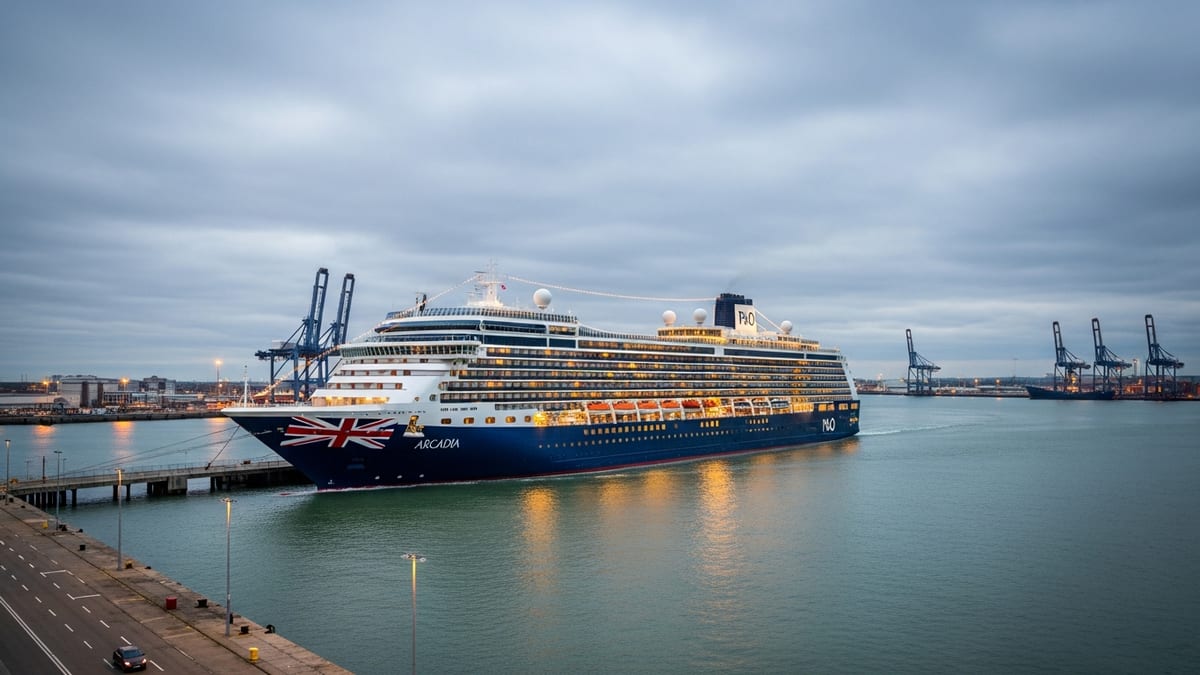
Penang’s VTMS is also expected to support the rapid expansion of cruise tourism calling at Swettenham Pier Cruise Terminal in George Town. The terminal is frequently cited in tourism and port data as Malaysia’s busiest cruise port of call, handling hundreds of thousands of passengers each year and accommodating some of the world’s largest cruise vessels.
Tourism Malaysia and state level agencies have placed cruise development at the heart of broader visitor economy plans, promoting Penang as a heritage rich gateway for regional itineraries linking Singapore, Thailand and Indonesia. As cruise lines deploy larger ships and introduce more frequent sailings, precise control of vessel arrivals, berthing windows and harbor approaches becomes increasingly important for maintaining safety and on time operations.
VTMS technology contributes to this by monitoring ship positions as they enter and leave the Penang Strait, guiding them through existing traffic separation schemes and constrained channels near the island. It can help port controllers sequence the movements of cruise vessels, cargo ships and smaller craft that share coastal waters, reducing the risk of congestion or close quarter situations around the cruise terminal.
Improved traffic management is likely to underpin future investments in cruise infrastructure, such as terminal enhancements and new homeporting arrangements. Industry observers note that cruise operators increasingly factor in port safety systems and reliability when planning deployment, suggesting that Penang’s digital upgrade could strengthen its competitive position within the regional cruise circuit.
Enhancing Cargo Efficiency and Regional Supply Chains
Beyond tourism, Penang’s VTMS aims to improve throughput and reliability for cargo operations at facilities such as the North Butterworth Container Terminal and other terminals managed under Penang Port. Recent economic studies show that the port already plays a pivotal role in moving manufactured goods from Malaysia’s northern industrial belt to markets across Asia, with container volumes growing alongside investment in electronics and medical device production.
Efficient vessel traffic management can reduce waiting times at anchorage, optimize pilotage and tug deployment, and support just in time berthing for scheduled services. These operational gains are increasingly important as shipping lines consolidate routes, deploy larger container ships and seek to cut fuel consumption associated with delays and queuing.
Analysts tracking Malacca Strait trade flows point out that congestion and navigational incidents can ripple through supply chains, affecting schedules at downstream hubs such as Port Klang, Singapore and Tanjung Pelepas. By strengthening its own traffic control capabilities, Penang contributes to the overall resilience of regional networks that handle a significant share of Asia’s export traffic and energy imports.
The VTMS also supports environmental objectives by helping authorities manage vessel speeds, routing and anchorage usage in sensitive coastal areas. Better oversight can reduce the likelihood of groundings, spills and near shore accidents that could disrupt fisheries, tourism assets and urban waterfronts around George Town and the wider Penang coastline.
Positioning Penang as a Smart Maritime Gateway
The launch of Penang’s first VTMS fits within a broader regional movement toward smart ports that combine physical infrastructure with digital platforms. Across Asia, major ports have been upgrading to next generation traffic management, port community systems and automation tools that share data among shipping lines, terminal operators and logistics providers.
According to published coverage and technical documentation from similar projects worldwide, advanced VTMS solutions increasingly incorporate data analytics and artificial intelligence to predict traffic patterns, flag anomalies and assist human operators. While Penang’s specific configuration has not been fully detailed in public sources, its deployment signals that the port is preparing for more complex traffic environments and potential integration with future smart shipping technologies.
By aligning safety, efficiency and tourism growth objectives, Penang’s new traffic management capabilities position the state as a model for midsized ports along crowded international sea lanes. The system supports Malaysia’s wider ambitions to deepen maritime connectivity, capture more value from regional trade and expand high yield cruise tourism without compromising navigational safety.
As vessel volumes and ship sizes continue to rise across the Malacca Strait, the combination of VTMS investments in Malaysia, Indonesia and Myanmar indicates that coastal states are moving toward a more coordinated, data driven approach to managing some of the world’s most strategically important waters.