


More news on this day
A person was killed in a train collision in Northridge, California, prompting disruption to regional rail services and renewed attention on safety practices along one of Southern California’s busy passenger and freight corridors.
Get the latest news straight to your inbox!
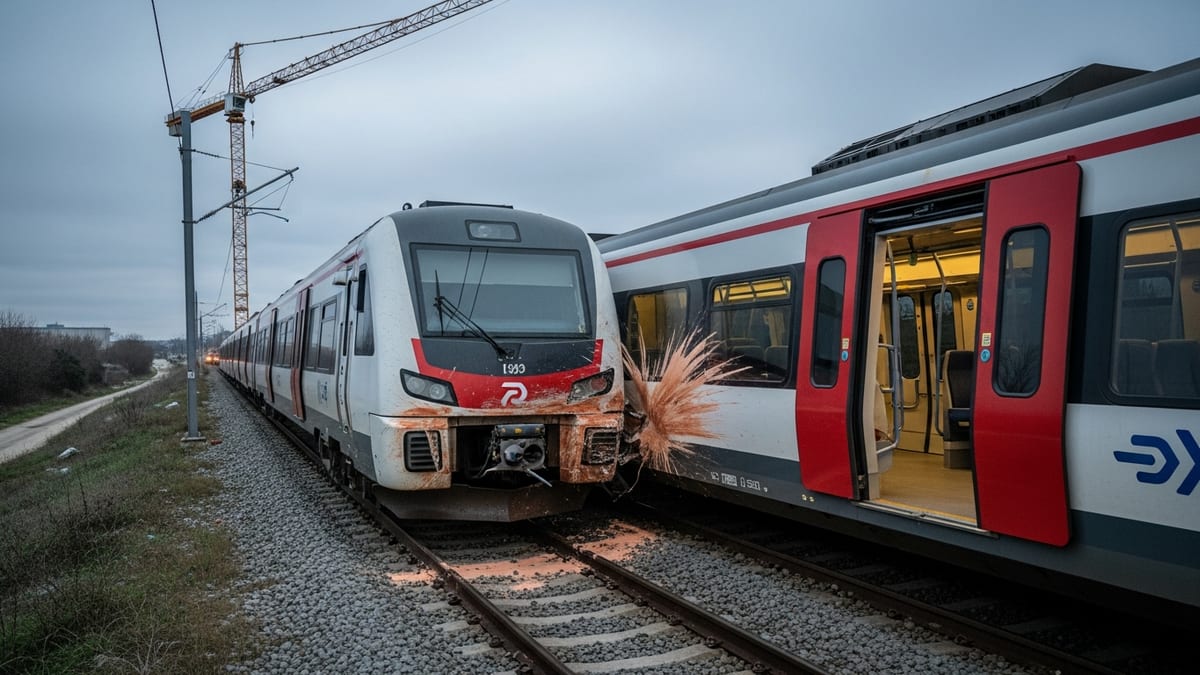
Fatal Collision in a Busy San Fernando Valley Rail Corridor
Initial reports indicate that the collision occurred at a grade-level crossing in the Northridge area, a neighborhood in Los Angeles’ San Fernando Valley that is intersected by both commuter and freight rail lines. The incident involved a passenger train traveling through the corridor and a person who was on or near the tracks at the time of impact.
Publicly available information suggests the person was pronounced dead at the scene, with no serious physical injuries reported among passengers or crew on board the train. Rail traffic in the area experienced significant delays as services were temporarily halted while emergency responders and rail personnel worked around the collision site.
The stretch of track that passes through Northridge is part of a wider network that carries intercity, commuter, and freight trains across the region. The combination of frequent train movements and nearby residential, commercial, and university areas has long placed safety at grade crossings and along the right of way under particular scrutiny.
Local residents reported seeing trains idling on nearby sections of track and crossing gates remaining down longer than usual as operations were adjusted in the aftermath. Some north-south roadways that intersect the rail line experienced extended traffic backups while investigators documented the scene and cleared debris from the right of way.
Disruption to Rail Services and Local Travel
The collision led to delays and cancellations on services using the Northridge segment, affecting travelers moving between Los Angeles and suburban communities to the northwest. Passenger trains approaching the area were held or re-routed where possible, while some departures were canceled during the initial response.
Travelers using connecting buses and local transit also encountered knock-on delays. Grade crossings near the collision point remained closed for an extended period, with traffic congestion reported on nearby surface streets as drivers sought alternate routes. In some cases, motorists waited through multiple signal cycles as trains and inspection vehicles moved slowly through the affected segment.
Regional rail disruptions from such incidents often extend well beyond the immediate crash site. When a fatal collision occurs, trains in both directions may be stopped for hours as officials document the location of the impact, assess potential damage to tracks and signaling equipment, and coordinate the safe movement of stranded trains through the area.
Passengers already on board trains can face prolonged travel times, with some services terminating short of their planned destinations. Riders may be transferred to substitute buses or advised to use other transit lines while rail operations gradually return to regular schedules.
Ongoing Questions Around Circumstances and Contributing Factors
Key questions in the Northridge case center on how the person came to be in the path of the train and whether they were attempting to cross at a designated location or were elsewhere on the right of way. Published coverage of similar incidents in California and across the United States shows that grade-crossing fatalities and trespasser incidents along rail lines are a persistent concern.
Investigations in cases of train-person collisions typically examine train speed, visibility conditions, the status of crossing gates and lights where applicable, and the behavior of individuals around the tracks in the moments before impact. In some cases, people attempt to cross tracks after warning devices are activated, misjudge a train’s speed, or walk along the right of way despite posted restrictions.
National data consistently indicate that the majority of fatalities involving trains and individuals occur away from station platforms and often involve pedestrians or people on foot near the tracks. In busy metropolitan regions with dense development close to rail corridors, these risks can be heightened when shortcuts, informal pathways, or congested crossings encourage people to cross tracks outside of protected areas.
The Northridge collision will likely be reviewed alongside other recent rail incidents in Southern California and beyond, as transportation agencies and safety advocates look for patterns that might point to needed improvements in design, signage, enforcement, or public education.
Rail Safety Measures and Community Concerns
The fatality in Northridge comes amid long-running national discussions about rail safety and the best ways to protect people near busy tracks. Common measures at grade crossings include warning lights, bells, and crossing arms, as well as roadway striping and signage designed to keep vehicles and pedestrians clear when trains are approaching.
In locations with higher traffic volumes or a history of close calls, some rail corridors have seen investments in grade separation projects that place rail lines on bridges or in trenches, allowing road traffic to pass overhead or underneath without directly crossing the tracks. Such projects are costly and can take years to complete, which often leads communities to weigh large-scale infrastructure changes against quicker, lower-cost interventions.
Public awareness campaigns are another key component of rail safety strategy. These efforts typically emphasize that trains require long distances to stop and can appear quieter or farther away than they actually are, particularly where newer rolling stock or upgraded track conditions allow for smoother, faster operations. Campaign messages often urge pedestrians and drivers to avoid walking along tracks, cutting across at undesignated points, or trying to beat descending gates.
For Northridge residents who live, work, or study near the rail line, the latest collision is likely to intensify calls for continued investment in safety measures and outreach, especially in areas close to schools, commercial centers, and major arterial roads.
Wider Context of Train Collisions and Prevention Efforts
While serious rail collisions remain relatively rare compared with other forms of traffic crashes, incidents involving trains often result in severe injury or death because of the size and speed of the vehicles involved. Events in recent years, both in the United States and abroad, have prompted renewed attention to technology and design solutions that could reduce risk for people on or near railway lines.
Advances in detection systems, including sensors, cameras, and automated warning technologies, are being tested or deployed in various rail networks. Some systems are designed to identify obstacles or people on the tracks and alert train operators, while others can interface with signaling infrastructure to reduce train speeds or trigger additional warnings when a potential hazard is detected.
Urban planners and transportation specialists also point to the importance of land-use decisions near rail corridors. Creating clear, well-lit, and accessible legal routes across or around the tracks can help discourage informal paths that bring people into conflict with train movements. Efforts to coordinate transit planning with pedestrian and bicycle infrastructure are increasingly seen as part of a broader strategy to reduce exposure to high-risk rail environments.
As details of the Northridge collision continue to be compiled from public records and media coverage, the incident stands as another reminder of the consequences when people and trains occupy the same space. For travelers across Southern California, it underscores both the utility of the region’s rail network and the need for continued vigilance around the tracks that run through residential neighborhoods and commercial hubs.