


More news on this day
Pakistan International Airlines has moved all of its United Kingdom flights back onto its own Boeing 777 fleet from 26 November 2026, after wet‑lease partner Norse Atlantic Airways abruptly suspended operations and triggered last‑minute cancellations on two busy Pakistan–UK services the previous evening.
Get the latest news straight to your inbox!
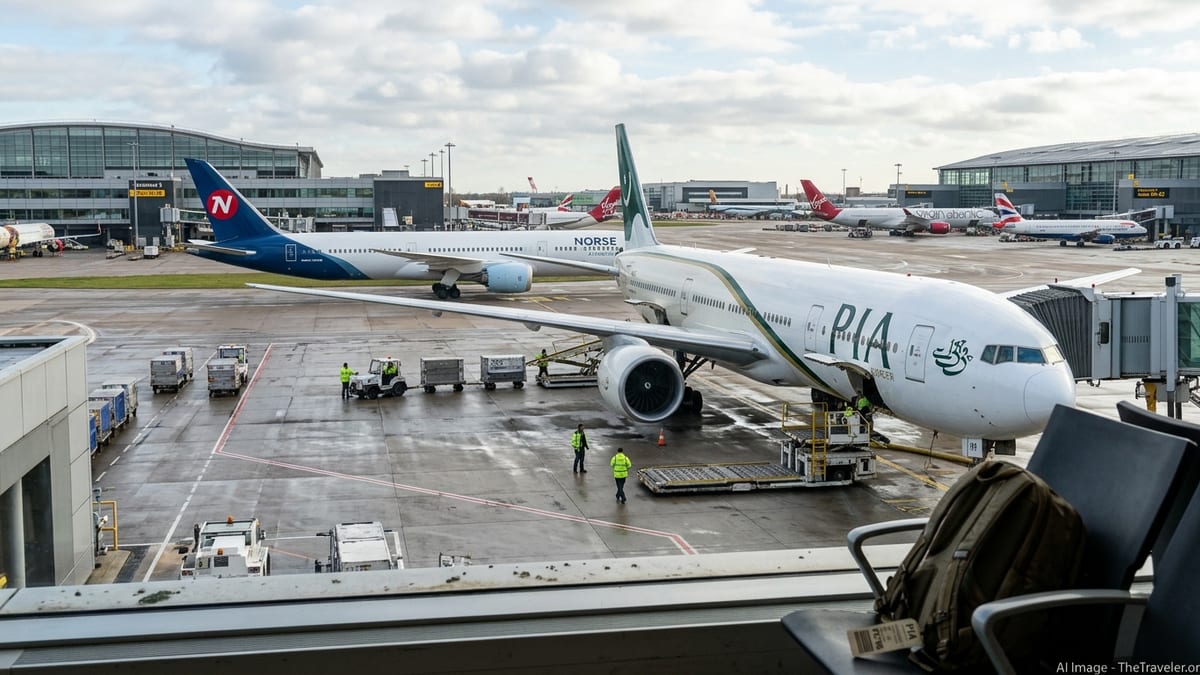
How the Norse suspension disrupted PIA’s UK routes
PIA confirmed on 26 November that it had restored regular operations between Pakistan and the UK using its in‑house Boeing 777s, a day after two flights were cancelled when Norse Atlantic withdrew aircraft it had been supplying under a wet‑lease agreement. According to the airline and airport departure data, the affected services were flight PK786 from London Heathrow to Islamabad and PK710 from Manchester to Lahore, both scheduled to depart on 25 November 2026.
Passengers on those flights reported that boarding was imminent when the cancellations were announced, with ground staff citing an operational suspension at Norse as the cause. Public statements from PIA describe the suspension as unexpected and say customers on the two flights were offered rebooking on later departures or refunds, in line with the carrier’s usual disruption procedures.
PIA said it activated a contingency plan on the evening of 25 November once it received confirmation that Norse aircraft would no longer be available. From the first departures on 26 November, all Pakistan–UK services that had been assigned to Norse Boeing 787‑9s reverted to PIA‑operated Boeing 777s, with PIA flight numbers, crews and maintenance oversight.
What Norse Atlantic has said about its financial situation
The disruption to PIA’s schedule followed a series of announcements from Norse Atlantic outlining a worsening liquidity position. In a stock exchange filing dated 25 November, the long‑haul carrier warned that its financial situation had become critical and that it required immediate short‑term funding to continue operating. A further communication on 26 November stated that Norse was suspending all flight operations while its board sought emergency financing, and that it would move to file for bankruptcy if no solution emerged in the very near term.
Norse, which operates a single‑type fleet of Boeing 787‑9 Dreamliners, has been using several of its aircraft on wet‑lease and charter contracts alongside its own scheduled services. Under the ACMI model used for the PIA agreement, Norse supplied aircraft, crew, maintenance and insurance, while PIA sold the tickets and controlled the route network. Norse’s recent corporate disclosures highlighted its dependence on income from such contracts during the 2026 winter season and referenced general liquidity risks, but did not set a public end date for the PIA arrangement before the sudden suspension.
With Norse’s fleet now grounded while the company pursues financing options, its aircraft are not operating passenger services for any partner airline. For PIA, the immediate impact has been limited to the UK routes that had been assigned to Norse 787‑9s. Other Norse clients have been separately adjusting their schedules, but there is currently no confirmed timeline for any restart of Norse operations or for the possible return of its aircraft to ACMI service.
How PIA is restructuring its Pakistan–UK schedule
PIA’s long‑haul operation currently relies on its Boeing 777 fleet, which the airline has now redeployed to cover all scheduled flights between Pakistan and the UK. Schedule filings and live departure boards on 26 November show services from Islamabad and Lahore to London Heathrow, and between Pakistan and Manchester, operating with PIA Boeing 777s substituted in place of the previously planned Norse 787‑9s.
Before the Norse suspension, PIA had been increasing capacity for the Northern Winter 2026 season on its UK network. The airline added more Islamabad–London Heathrow frequencies from late October and has been preparing to resume Islamabad–Birmingham flights from 1 December 2026. Industry timetable data indicate that the Norse‑operated 787‑9s were being used primarily on London Heathrow and Manchester routes to support this growth, particularly at times when runway slots and demand are strongest.
With the Norse aircraft withdrawn at short notice, PIA is relying on its own 777s to maintain the planned programme. The airline has publicly stated that shifting aircraft to the UK will not cause cancellations elsewhere in its network, although it has not detailed the internal rotation changes required to achieve this. At this stage, there has been no formal announcement of cuts to Pakistan–UK frequencies as a direct result of the Norse suspension, but PIA has advised passengers to keep checking their bookings given the rapid change in operating plans.
What the aircraft swap means for current and future passengers
For travellers, the main immediate change is the type of aircraft and operating carrier on specific sectors. Customers who originally booked PIA flights that were due to be operated by Norse Boeing 787‑9s will now fly on PIA’s Boeing 777s instead. The services retain PIA flight numbers, and all onboard products and cabin crews are provided by PIA rather than Norse.
PIA has said that passengers affected by the 25 November cancellations at London Heathrow and Manchester are being rebooked on the next available flights on the same routes, subject to seat availability, or offered refunds. For some travellers with urgent connections or time‑sensitive itineraries, this may still mean significant delays, particularly given limited alternative capacity between Pakistan and the UK in the immediate days after the disruption.
Under UK and EU air passenger rights rules, passengers departing from UK airports generally retain rights to care, assistance and, in many cases, financial compensation when flights are cancelled at short notice and the operating airline is considered responsible for the disruption. Legal guidance notes that an operational or commercial failure by a wet‑lease partner is usually treated as part of the contracting airline’s operational risk, meaning that responsibility typically remains with the airline that sold the ticket. Travellers from the cancelled PIA services are being encouraged by consumer advisers to retain boarding passes, receipts and any written communication from the airline in case they wish to pursue claims.
For passengers with upcoming bookings in the next few weeks, reservation systems on 26 November show PIA services between Islamabad, Lahore and London Heathrow, and between Pakistan and Manchester, continuing to appear on schedules with PIA listed as the operating carrier. The airline is recommending that customers reconfirm flight numbers, departure times and aircraft details close to departure, especially where their original confirmation referred to Norse‑operated sectors or indicated a Boeing 787‑9.
Outlook for PIA’s UK operations and what travellers should monitor
The Norse suspension is an early test of PIA’s wider fleet and network strategy following its recent restructuring and renewed focus on international markets. The airline has previously signalled its intention to grow its long‑haul fleet over the next several years, including through a mix of owned aircraft and leased capacity to restore and expand routes to Europe and beyond. The decision to wet‑lease two Norse 787‑9s for the 2026 winter season formed part of that approach, giving PIA additional long‑range capacity without an immediate fleet purchase.
With that capacity no longer available, PIA has indicated that it is evaluating alternatives while prioritising schedule stability on its UK routes. Options under discussion include sourcing additional aircraft from other lessors, entering into new short‑term wet‑lease agreements with different operators, or adjusting the deployment of its existing 777 fleet across the network. Any such changes would depend on market availability of suitable widebody aircraft, pricing, and regulatory clearances for operations into the UK and other European points.
In the near term, the key variables for both PIA and its customers are whether Norse secures new financing and how effectively PIA can sustain its revised 777‑based schedule through the busy winter travel period. If Norse obtains funding and resumes flying, the Norwegian airline could in principle return to ACMI work, but there is currently no confirmed plan for reinstating the PIA wet‑lease. If Norse proceeds to bankruptcy proceedings, PIA will need to rely fully on its own fleet and any alternative leasing arrangements it can put in place.
Travellers planning trips between Pakistan and the UK over the coming weeks should monitor airline announcements, booking updates and airport departure information particularly closely on routes to London Heathrow, Manchester and the planned Birmingham service from early December. Given the compressed timeline for the fleet switch, allowing extra time at the airport, ensuring contact details are up to date in bookings, and checking for any reissued tickets or schedule changes will be important steps to avoid surprises as PIA’s revised operating pattern beds in.