


More news on this day
A powerful Thanksgiving nor’easter is disrupting travel across the United States, with thousands of flights delayed or canceled on one of the year’s busiest travel days and New York City’s 100th Macy’s Thanksgiving Day Parade postponed to Saturday, November 28, 2026, because of safety concerns over high winds and flooding.
Get the latest news straight to your inbox!
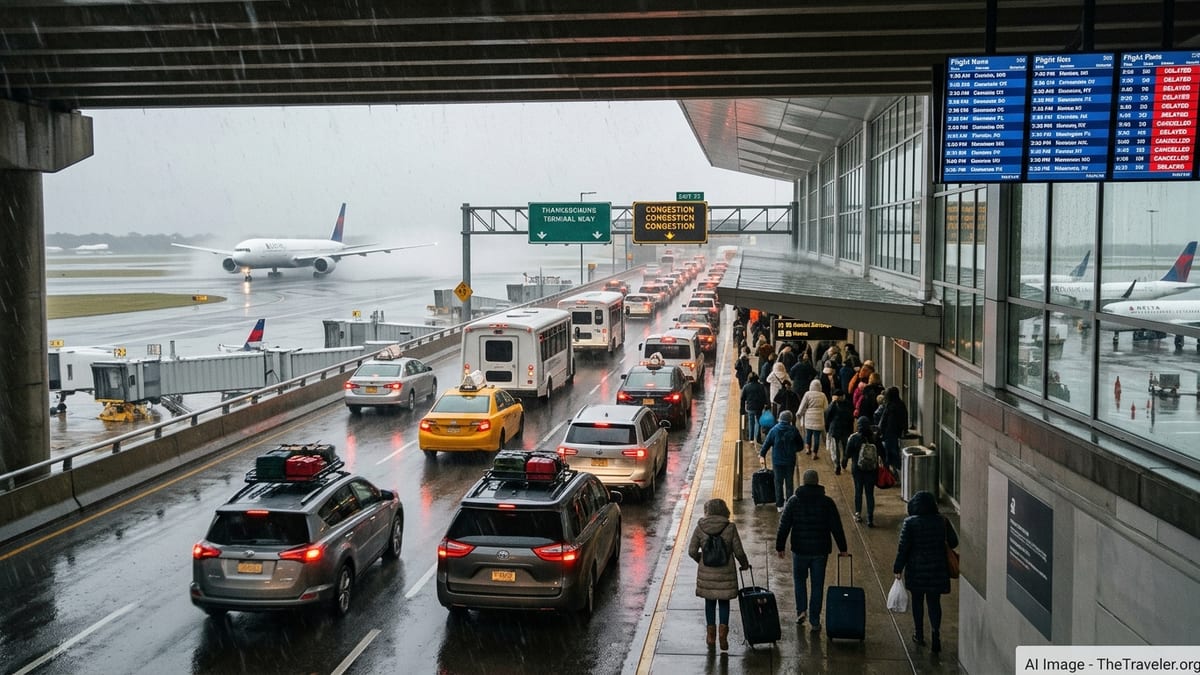
Storm system hits as peak Thanksgiving travel begins
The coastal storm arrived just as U.S. holiday travel peaked, compounding pressure on airports and highways. The Transportation Security Administration said ahead of the holiday that it expected to screen roughly 17.6 million passengers nationwide between Tuesday, November 24, and Monday, November 30, with more than 3 million travelers projected on Sunday, November 29 alone, traditionally one of the busiest days of the year for air travel.
By Wednesday, November 25, the impact on the air network was already clear. Flight-tracking service FlightAware reported more than 3,700 flight delays and about 60 cancellations within, into or out of the United States by late afternoon, as deteriorating weather and congestion built across major hubs. Those figures continued to climb into the evening as the storm strengthened along the East Coast.
Early on Thanksgiving morning, delays and cancellations continued to mount. As of around 7:30 a.m. Eastern time on Thursday, November 26, roughly 400 flights in the United States had been delayed and around 360 canceled, according to real-time FlightAware data. The Federal Aviation Administration warned travelers to expect additional disruptions through Thursday and into Friday as the storm tracked north and east.
Nor’easter brings coastal flooding, high winds and hazardous flying conditions
The National Weather Service described the system as a powerful coastal storm with the potential to bring major coastal flooding, dangerous marine conditions, heavy rain and damaging wind gusts from the mid-Atlantic to New England through Thanksgiving. In a forecast discussion early Thursday, the agency highlighted coastal flooding as a primary concern, along with scattered power outages and tree damage in parts of the Northeast.
Coastal flood warnings and storm-related advisories were in effect along wide stretches of the Eastern Seaboard, including portions of New Jersey, New York and New England. New Jersey’s governor issued a statewide emergency declaration on Wednesday, November 25, citing expectations of high winds, heavy rainfall and multiple rounds of tidal flooding, with the most significant impacts projected for Thursday’s high tides. Emergency management briefings from federal and state agencies urged coastal residents and travelers alike to prepare for flooded roadways, detours and possible closures of low-lying routes.
Aviation officials warned that the storm’s strong winds, turbulence and low clouds would complicate flying. The FAA said Wednesday that gusty winds were likely to slow operations at New York’s LaGuardia Airport, Newark Liberty International Airport, John F. Kennedy International Airport and San Francisco International Airport, and that thunderstorms could trigger ground delays at Miami International Airport and Fort Lauderdale-Hollywood International Airport. By early Thursday, the FAA was reporting hours-long delays at some affected airports as the system intensified.
Macy’s Thanksgiving Day Parade postponed for first time in its history
New York City is experiencing some of the most visible effects of the storm. On Wednesday evening, November 25, Mayor Zohran Mamdani and New York City Emergency Management issued a formal travel advisory for Thanksgiving Day, warning that a coastal storm would bring strong winds, heavy rain and widespread coastal flooding to the city. In coordination with Macy’s and the New York City Police Department, officials decided to postpone the 100th Macy’s Thanksgiving Day Parade until Saturday, November 28, marking the first postponement in the event’s century-long history.
City and parade officials said the decision was driven by safety concerns for spectators, balloon handlers and performers. Longstanding city rules prohibit the parade’s largest balloons from flying when sustained winds exceed 23 miles per hour or gusts top 34 miles per hour, thresholds the approaching storm was widely expected to surpass during much of Thursday. Forecasts for New York City called for wind gusts potentially reaching or exceeding 60 miles per hour at times on Thanksgiving afternoon and evening, along with periods of heavy rain and localized flooding.
By Thursday morning, LaGuardia Airport had already recorded wind gusts near 40 knots, around 45 miles per hour, though New York’s major airports were still operating close to normal schedules, aside from weather-related delays. The parade, which typically draws hundreds of thousands of spectators along its Manhattan route and millions more via national television broadcasts, has previously adjusted balloon operations in high wind but had never before been moved off Thanksgiving Day itself.
Knock-on travel effects from Miami runway incident and coastal flooding
In Florida, the storm’s broader pattern of unsettled weather combined with an unrelated but significant incident at Miami International Airport to add to disruption. On Wednesday evening, a FedEx cargo aircraft arriving in gusty, rainy conditions overran a runway at Miami International. The plane came to rest beyond the pavement and there were no injuries reported, but the incident prompted a temporary closure of most of the airport’s runway capacity while officials responded and inspected the airfield.
Airport and federal authorities said inbound flights to Miami were effectively halted for around 90 minutes and that departures were subject to extended delays while operations were reconfigured around the remaining open runway. The FAA reported that by early Thursday, delays into and out of Miami were stretching into hours for some flights as airlines worked through the backlog created by the shutdown and the continuing influence of thunderstorms in the region.
Away from the airports, the coastal storm and related king tide events created hazardous conditions in several waterfront cities. Along parts of the Atlantic and Gulf coasts, unusually high tides combined with onshore winds to flood parking lots, low-lying streets and some access roads near beaches, ports and marinas. In California, separate Pacific storms and king tides damaged sections of at least one city pier and inundated coastal neighborhoods earlier in the week, complicating regional travel just as the Thanksgiving getaway period gathered pace. Authorities stressed that, while many of these impacts were localized and often brief, they could still delay drivers and interfere with access to coastal attractions, ferry terminals and cruise berths.
What Thanksgiving travelers should expect through the weekend
With the storm still moving through the Northeast on Thursday, officials emphasized that conditions remain fluid for the rest of the holiday period. The National Weather Service expects heavy rain and the strongest winds along parts of the mid-Atlantic and New England coasts through Thanksgiving Day and into early Friday, followed by gradually improving conditions from south to north. Inland areas are forecast to see periods of rain and gusty winds, with mountain regions picking up snow as colder air wraps around the storm.
The FAA and major airlines are warning that delays could linger beyond the worst of the weather as aircraft and crews are repositioned and as crowded Sunday return flights face limited slack in schedules. Passengers traveling into or out of the most affected airports, including New York City’s three major airports, Boston Logan, Philadelphia, Washington’s Reagan National and Dulles, as well as Miami and Fort Lauderdale, are being urged to check flight status frequently on airline websites or mobile apps, enable notifications for gate or timing changes and allow additional time at the airport for check-in and security screening.
New York City officials advise local residents and visitors to avoid unnecessary travel during the height of the storm on Thursday afternoon and evening, especially in coastal and flood-prone areas. Those planning to attend the rescheduled Macy’s Thanksgiving Day Parade on Saturday morning are being told to verify the revised start time and route details closer to the day, as organizers finalize operational plans under a compressed schedule. Travelers driving along the East Coast corridor should monitor local forecasts, watch for coastal flood advisories and be prepared for detours where roads near the water may be temporarily closed at high tide.
Across the country, transport and weather agencies are encouraging anyone with flexible plans to build extra time into their journeys and to consider adjusting departure times to avoid the worst of the conditions. While the storm is expected to move away from the Northeast before the end of the long weekend, its effects on airline and ground networks may persist for days, particularly during the busiest Sunday return period when even minor disruptions can cascade quickly through the system.