


Pigeon Island National Landmark is one of northern Saint Lucia’s most rewarding half-day outings, blending coastal hiking, breezy viewpoints, historic ruins and calm Caribbean beaches. Set at the northern tip of Rodney Bay and a short hop from Gros Islet, it is easy to reach yet feels a world away from the busy resort strip. This guide explains how Pigeon Island fits into the wider north of the island, how to get there, what to expect on arrival, and how much time to plan for a relaxed visit.
Get the latest updates straight to your inbox!
Where Pigeon Island Sits in Northern Saint Lucia
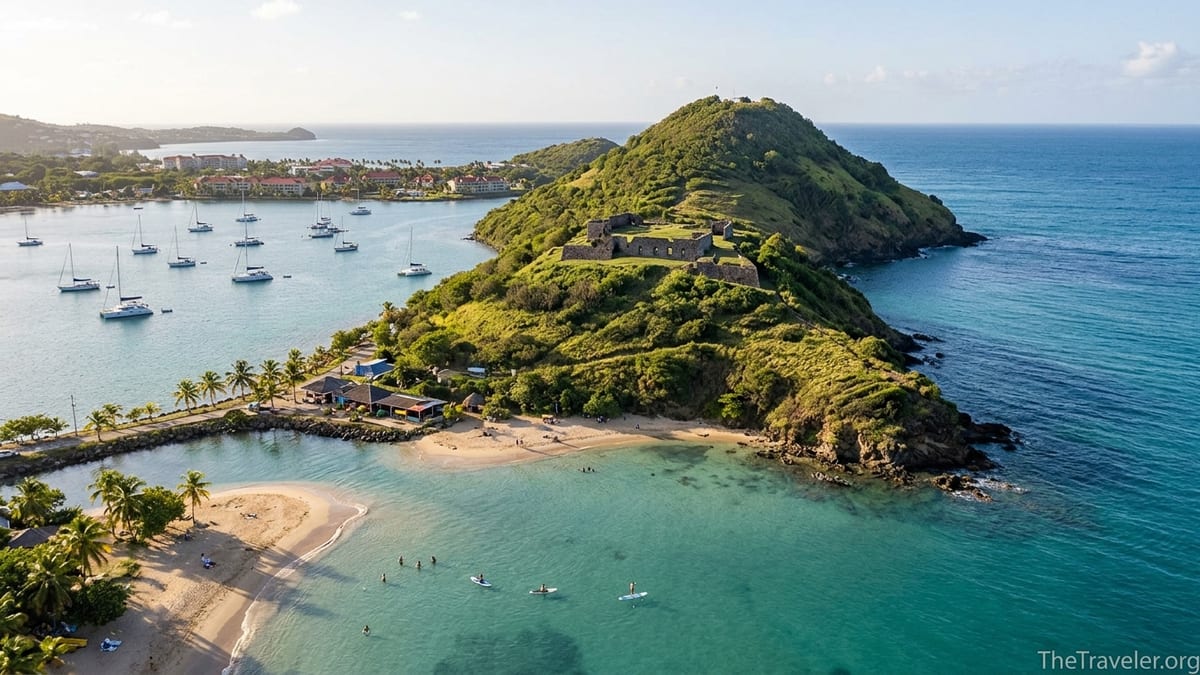
Pigeon Island is not an offshore island in the traditional sense but a rocky peninsula that forms the northern arm of Rodney Bay, in the district of Gros Islet. A man-made causeway, built in the 1970s using material dredged to create Rodney Bay Marina, now links it directly to the mainland, so visitors simply drive or walk across rather than take a boat. From the landmark’s hilltops you see the curve of Reduit Beach to the south, the low-rise resorts of Rodney Bay Village, and the clustered houses of Gros Islet to the east.
The site is officially managed as Pigeon Island National Landmark by the Saint Lucia National Trust, covering roughly 44 acres of dry coastal forest, grassy slopes and historic fortifications. Its location makes it a natural finale to a day spent in the north: you can be on the trails within about 10 to 15 minutes’ drive of most Rodney Bay hotels such as Bay Gardens Beach Resort, Coco Palm and Harbor Club, and only a little farther from Cap Estate villas and Gros Islet guesthouses.
In practical terms, northern visitors often weave Pigeon Island into an easy local circuit. A common pattern is a relaxed breakfast along Rodney Bay’s waterfront, a mid-morning hike and swim on Pigeon Island, followed by a late lunch back in the marina or at one of Gros Islet’s simple roadside grills. Because the landmark is so close to the main resort cluster, it rarely requires complex planning or long transfers, which is a contrast to full-day excursions to Soufrière or the Pitons.
From the wider island perspective, the landmark sits around 30 minutes’ drive north of the capital Castries and roughly 90 minutes from Hewanorra International Airport in Vieux Fort, depending on traffic and road conditions. Many travelers staying in the north never make it south on shorter trips, which makes Pigeon Island one of the key ways to experience Saint Lucia’s nature and history without leaving the Rodney Bay and Gros Islet area.
Rodney Bay, Gros Islet and the Pigeon Island Connection
The relationship between Pigeon Island, Rodney Bay and Gros Islet is both historic and practical. Historically, the British navy used Pigeon Island as a lookout over Gros Islet Bay and Rodney Bay during 18th century conflicts, constructing Fort Rodney to watch French fleet movements in nearby Martinique. Today, the same hilltop guns that once guarded the bay now frame postcard views over modern marinas, resorts and the small town of Gros Islet.
On the ground, most visitors approach Pigeon Island from Rodney Bay. The Rodney Bay Marina area is the main yachting hub in the north, with charter bases, casual restaurants and small supermarkets. From the marina roundabout, the causeway runs less than 2 kilometers out to Pigeon Island. Walking the full distance at a leisurely pace takes around 20 minutes along a flat but mostly unshaded road, so many travelers opt for a short taxi ride instead, especially in the midday sun.
Gros Islet itself, just inland from Rodney Bay, is a low-rise local town known for its Friday Night Street Party, when food stalls and music lines the main streets. Many guesthouses and mid-range rentals sit on the backroads between Gros Islet and the marina, and guests there often choose to visit Pigeon Island either in the early morning before the heat builds or the afternoon after a slow local lunch. The landmark’s beaches provide a quieter counterpoint to Rodney Bay’s busy Reduit Beach, particularly outside weekends and public holidays.
Because of this tight cluster, you can combine multiple northern highlights without long transfers. One realistic example: a couple staying at a mid-range hotel in Rodney Bay Village takes a 10 USD taxi to Pigeon Island in the morning, spends three hours hiking and swimming, then catches another short ride back to change before an evening in Gros Islet for grilled fish and local music. All of this fits into a single relaxed day without ever driving more than 15 minutes at a time.
Getting to Pigeon Island and Practical Visitor Details
From Rodney Bay or Gros Islet, reaching Pigeon Island is straightforward. Government-regulated taxis with light blue TX license plates are widely available near the marina, the Rodney Bay mall area and larger hotels. For a party of two or three, a one-way taxi ride to the landmark typically runs in the region of 10 to 20 USD depending on your exact pickup point and bargaining, though rates can change, so confirm with your hotel front desk or driver beforehand.
Fit visitors sometimes choose to walk from Rodney Bay Marina along the causeway instead of taking a taxi. The walk is under 1.5 kilometers and takes around 15 to 20 minutes, but there is little shade and midday temperatures can feel intense, especially between January and May when the trade winds are strongest and the sun is high. A practical approach is to walk early in the morning, enter when the gate opens, and then either walk or take a taxi back once the heat builds.
On arrival you pass through a small entrance gate and ticket office. Recent traveler reports in 2026 mention an entrance fee in the region of 10 USD per adult for foreign visitors, with discounts for children and locals, but you should carry both cash and a bank card and be prepared for modest price adjustments. Some visitors report paying with card while others suggest cash was preferred, so having a mix is helpful, especially given that Saint Lucia can be cash-reliant in smaller establishments.
Official documentation from the Saint Lucia National Trust notes standard opening hours from around 9 am to 5 pm, although visitors on the ground sometimes report the gate opening a little after 9 am. To avoid disappointment, aim for a mid-morning arrival rather than relying on an exact opening time, and do not plan to start hikes too close to closing, as staff may begin clearing the trails before the posted time. The site is signposted as non-smoking and prohibits bringing pets, glass bottles and certain disposable items, so keep your visit low-impact and follow posted rules.
What to See and Do on Pigeon Island
Most visitors come to Pigeon Island for a mix of gentle hiking, historic ruins and beach time. There are two main hilltops within the landmark. The lower one hosts the remains of Fort Rodney, with old stone barracks, cannon and interpretive signs. A well-defined path and a series of stone steps leads up in around 15 to 20 minutes at an easy pace. From the top you can see the curve of Rodney Bay, the resorts of Reduit Beach, and inland towards Gros Islet’s neighborhoods. It is an ideal first stop for photos before the day gets too hot.
The second, slightly higher peak is often referred to simply as the Signal Hill or the upper fort. The route is a little steeper and more rugged underfoot but still manageable for reasonably fit travelers wearing closed shoes or supportive sandals. Expect another 15 to 20 minutes from the fort area. On clear days, visitors report seeing across to Martinique to the north and along the exposed Atlantic coast, as well as back over Gros Islet and the Rodney Bay Marina. Pair this climb with plenty of water and sun protection, especially in the dry season.
Between these hilltops are scattered ruins and grassy areas where you can pause in the shade of casuarina and tropical almond trees. A small interpretive center, when open, offers context about Pigeon Island’s role in colonial-era battles, the lives of soldiers stationed there, and the more recent transformation into a national landmark. Even if the indoor displays are limited during your visit, simply walking among the crumbling walls and gun batteries gives a sense of the strategic value this rocky outcrop once held.
Once you have explored the heights, the calm Caribbean-facing beaches at the base of the peninsula are the reward. Two main sandy coves sit within the landmark boundaries. Visitors frequently spend an hour or two swimming in the sheltered water, snorkeling over patches of seagrass and rock near the headlands, or simply cooling off after climbing to the viewpoints. Beach chairs and umbrellas may be available for rent from local operators on busier days, though offerings can vary depending on cruise ship schedules and private events.
Beaches, Food and Facilities Around the Landmark
Pigeon Island’s two beaches offer a quieter alternative to Reduit Beach while still feeling accessible. The smaller cove nearer the entrance can be busier when local boat charters or small groups reserve loungers. Travelers in 2026 note occasional days when one beach was largely taken up by a boat group, so it is wise not to rely entirely on having a specific stretch of sand to yourself. The second beach, a short walk farther along the shoreline path, tends to feel more relaxed and is often where independent visitors spread out towels or rent a couple of chairs.
Facilities on-site are modest but sufficient for a half-day. There are basic restrooms near the entrance and at least one simple beach bar or snack hut within or just beside the landmark, serving items like grilled fish, chicken, local Piton beer and soft drinks. Do not expect a wide restaurant lineup inside the park itself. Instead, many visitors stop at a café or bakery in Rodney Bay on the way in, or plan a proper sit-down meal back in the marina or Gros Islet afterwards. A practical routine is to bring a refillable water bottle, some fruit or nuts, and then buy a cold drink or light snack at the beach bar while you rest.
Just beyond the landmark entrance on the causeway you will also find a handful of independent beach clubs and restaurants. These venues sometimes host weddings, corporate events or live music, particularly on weekends. If you arrive to find one section of the shoreline closed for a private function, simply adjust by using the remaining public areas inside the landmark or focusing more on the hiking trails and viewpoints. In high season between December and April, early-morning and late-afternoon visits give you the best chance of a calmer atmosphere.
For families, the beaches and grassy areas provide room for children to play, but parents should keep an eye on steeper drops near the old fort walls and on the rocky Atlantic side of the headland. The Caribbean side is generally calm, yet conditions can vary with weather and swells, so weak swimmers are safer close to shore. There are no lifeguards permanently on duty, so caution and common sense are important.
How Long to Spend and How to Structure Your Visit
For most travelers staying in Rodney Bay or Gros Islet, Pigeon Island works best as a half-day excursion. A typical first-time visit might last between two and four hours. In that time you can comfortably hike up to Fort Rodney, continue to the higher viewpoint, wander through the ruins, take plenty of photos, and still have time for a swim or a short beach break before you leave. Visitors who enjoy photography, picnicking or lingering at the beach bars may easily stretch their stay to closer to five hours without feeling rushed.
If you are staying elsewhere on the island, such as Soufrière or Marigot Bay, and driving or being driven up for the day, it makes sense to combine Pigeon Island with other northern stops to justify the transfer. For example, travelers sometimes book a private driver for around 200 to 250 USD for the day from the south, visiting Castries Market in the morning, enjoying lunch in Rodney Bay, then finishing with a mid-afternoon hike and swim at Pigeon Island before returning to their accommodation. This approach avoids multiple long drives on different days.
Cruise passengers tendering into the Rodney Bay or Pigeon Island area generally have enough time for a focused two to three hour stop at the landmark, leaving additional time for shopping or a meal near the marina. One realistic pattern is to disembark by mid-morning, take a 10 to 15 minute taxi ride to the gate, spend around two hours walking and swimming, then be back on board by late afternoon. Given that taxi and park fees have to fit within a single port call, sharing transport with fellow passengers can lower per-person costs.
Time of day plays a big role in how your visit feels. Early morning visits around opening time offer cooler temperatures, quieter trails and softer light for photography. Midday brings stronger sun and livelier beaches, which can suit travelers who prefer to swim more than hike. Late afternoon visits reward you with gentle golden light over Rodney Bay and Gros Islet, but you must keep an eye on closing hours and allow enough time to descend safely from the upper viewpoints.
Visit Tips: Weather, Safety and Budgeting
Northern Saint Lucia has a warm tropical climate year-round, but conditions on Pigeon Island are shaped by its exposed headland position. Trade winds can be brisk, especially between December and March, which brings relief from the heat but can also make the Atlantic side feel wild. Paths on the climbs are mostly dry and rocky rather than muddy, particularly in the winter and early spring high season. In the wetter months from June to November, showers can sweep through quickly, temporarily making some sections slippery, so shoes with decent grip are recommended.
Safety-wise, Pigeon Island is generally considered a low-risk, family-friendly site. Basic precautions still apply: avoid climbing on ruined walls, keep children away from unfenced drops, and do not hike the steeper trails in unsuitable footwear. Heat is the main hazard, so bring enough water and sun protection. A realistic packing list for a half-day visit from Rodney Bay might include 1 to 1.5 liters of water per person, sunscreen, a hat, sunglasses, light breathable clothing and either closed-toe walking shoes or sturdy sandals.
Budgeting for a visit is relatively simple compared with full-day island tours. Allow for the entrance fee of roughly 10 USD per adult, plus taxi fares if you are not walking or driving yourself. For a couple staying in Rodney Bay, a typical spend might be around 40 to 60 USD in total for the park entrance, a round-trip taxi and a couple of drinks or light snacks on the beach. Families or groups can distribute taxi costs over more people, but their overall total will still feel modest compared with boat-based excursions or guided island tours that can easily run over 100 USD per person.
Because Saint Lucia in general operates on a mix of Eastern Caribbean dollars and US dollars, and because some small vendors do not accept cards or may have unreliable connections, carrying a reasonable amount of cash is wise. Visitors in 2026 consistently report that while larger restaurants and hotels in Rodney Bay take cards without issue, cash remains important for taxis, tips, small snack shacks and informal services such as beach chair rentals near Pigeon Island. Plan to withdraw enough in Rodney Bay or Castries before your visit, as there are no ATMs inside the landmark itself.
The Takeaway
Pigeon Island National Landmark brings together much of what makes northern Saint Lucia appealing: accessible hikes with big views, a tangible sense of history, and calm Caribbean coves all within a few minutes’ drive of Rodney Bay and Gros Islet. Its location on the edge of the resort zone makes it logistically easy to visit, whether you are staying in a large beachfront hotel, a small guesthouse inland or stepping off a cruise ship for the day.
With realistic expectations and a bit of planning around the sun and opening hours, most travelers will find that two to four hours is the ideal amount of time to explore the hilltop forts, wander the ruins and enjoy a cooling swim. You do not need specialist gear or guides, only sensible shoes, water and a willingness to climb a few short but steep paths. In return, you gain wide views over Rodney Bay, Gros Islet and the open sea that help anchor your understanding of how this corner of Saint Lucia fits together.
For visitors whose trips are focused in the north and who may not have time to reach the Pitons or the island’s rainforests, Pigeon Island offers an accessible taste of nature and heritage without the long transfers. Even for those exploring the whole island, it remains a worthwhile stop, especially on a day when you want to stay closer to your base yet still feel you have discovered something distinctly Saint Lucian.
Whether you are a history enthusiast, a casual hiker, a photographer chasing elevated viewpoints or simply someone looking for a quieter beach atmosphere than central Rodney Bay, Pigeon Island earns a place on your Saint Lucia itinerary. Treated as a relaxed half-day escape, it may well become one of the most memorable chapters of your time in the Caribbean.
FAQ
Q1. How long should I plan to spend at Pigeon Island National Landmark?
Most visitors find that two to four hours is enough to hike to the viewpoints, explore the ruins and enjoy some beach time, making it an ideal half-day trip.
Q2. How do I get to Pigeon Island from Rodney Bay or Gros Islet?
You can take a short taxi ride of around 10 to 20 minutes from most Rodney Bay or Gros Islet hotels, or walk roughly 15 to 20 minutes from Rodney Bay Marina along the causeway.
Q3. Do I need a tour guide to visit Pigeon Island?
No, you can easily visit independently. Trails are clearly marked and historic sites have basic signage, though hiring a guide can add context if you are especially interested in the island’s history.
Q4. What is the approximate entrance fee for Pigeon Island?
Recent visitors in 2026 report an adult entrance fee of about 10 US dollars for international guests, with lower rates for children and Saint Lucian residents, though prices can change.
Q5. Are the hikes at Pigeon Island suitable for children and older travelers?
The main trails to Fort Rodney and the higher viewpoint are short but can be steep. They are manageable for active children and mobile older travelers wearing good footwear and taking their time.
Q6. Can I swim and use the beach at Pigeon Island?
Yes, there are two calm Caribbean-side beaches within the landmark where visitors swim, snorkel and relax. Conditions are generally gentle, but there are no permanent lifeguards, so caution is advised.
Q7. What should I wear and bring for a visit?
Light clothing, a hat, sunscreen, sunglasses and sturdy sandals or walking shoes are recommended. Bring water, a swimsuit, a towel and some cash for small purchases or taxis.
Q8. Are there food and drink options inside the landmark?
Facilities are limited to simple beach bars or snack huts offering drinks and light meals. Many visitors eat in Rodney Bay or Gros Islet before or after their visit for more choice.
Q9. Is Pigeon Island crowded?
Crowds vary with season and cruise ship schedules. Mornings and late afternoons are usually quieter, while mid-day on weekends and public holidays can be busier, especially on the beaches.
Q10. Can I combine Pigeon Island with other activities in northern Saint Lucia?
Yes, many travelers pair a visit with time on Reduit Beach, shopping or dining in Rodney Bay, or an evening at Gros Islet’s Friday Night Street Party, all within a short drive of the landmark.