


Airport lounges used to be the domain of first class tickets and elite frequent flyers. Plaza Premium has helped change that. As one of the world’s largest independent lounge operators, it sells access directly to travelers, partners with major credit card issuers, and even runs lounges on behalf of airlines. Understanding what Plaza Premium actually does, and how its network fits into the wider lounge ecosystem, can save you money and frustration on your next trip.
Get the latest updates straight to your inbox!
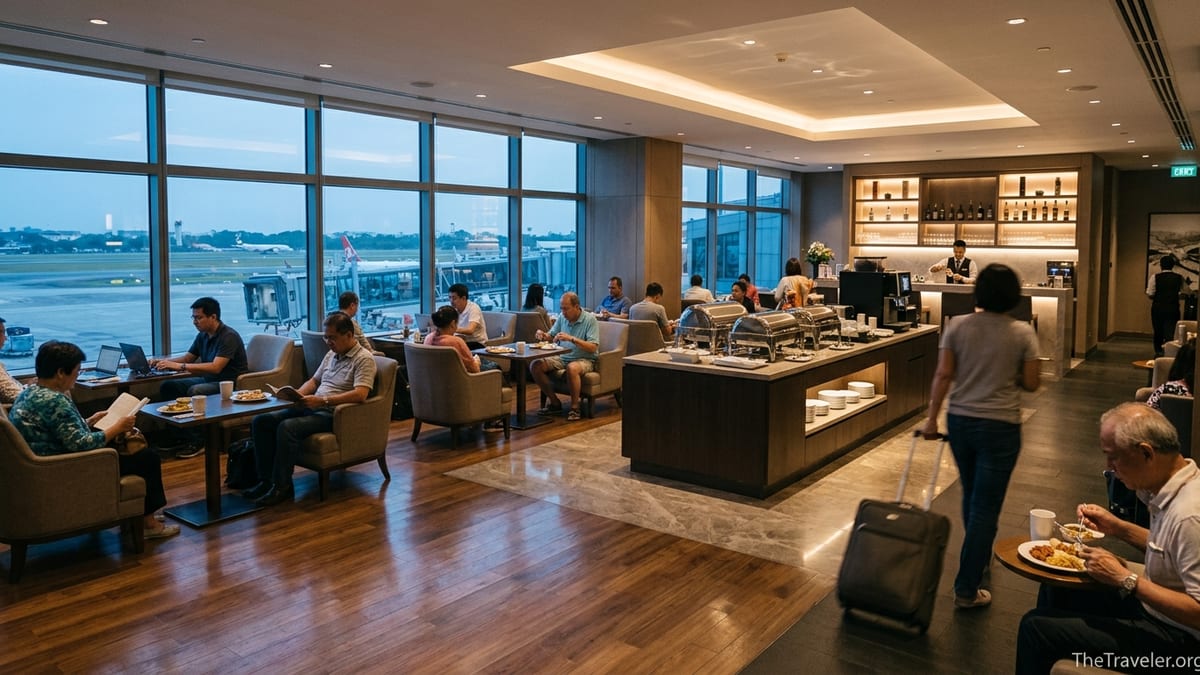
What Plaza Premium Lounge Actually Is
Plaza Premium is an independent airport lounge operator based in Hong Kong that focuses on pay-per-use and partnership-based lounges rather than traditional airline club models. Instead of belonging to a single carrier like American Airlines or Qatar Airways, most Plaza Premium lounges are neutral spaces that serve passengers from many airlines. The company operates more than 250 locations globally when you include lounges, transit hotels and meet-and-greet services, with a particularly strong footprint in Asia, the Middle East and Canada.
In practical terms that means you might see the Plaza Premium name at very different types of airports and terminals. At London Heathrow, for example, Plaza Premium runs independent lounges in Terminals 2, 4 and 5 where any passenger can pay to enter, regardless of airline or cabin. At Hong Kong International Airport, it operates multiple lounges in different concourses, plus Aerotel, an airside transit hotel. In North America, you will find Plaza Premium-branded lounges at hubs such as Toronto Pearson, Vancouver, and Dallas Fort Worth, among others.
Plaza Premium also has a growing role behind the scenes. The company does not only run lounges under its own name. It provides management and staffing for some airline-branded lounges and co-branded concepts. A good example is the Virgin Atlantic Clubhouse at Newark Liberty, which is operated by Plaza Premium but carries the Virgin Atlantic identity for passengers. In the United States, Plaza Premium is also the operating partner behind the Chase Sapphire Lounge by The Club network, bringing its experience to a bank-branded product.
Because Plaza Premium is both a visible brand and a quiet operating partner, travelers often use its lounges without realizing who is actually providing the service. That dual role can be confusing when you look at credit card benefits or digital lounge maps. Understanding the distinction between Plaza Premium-branded lounges and lounges managed by the group for other brands helps clarify which benefits actually apply to you.
How Plaza Premium Fits Into the Lounge Ecosystem
To see where Plaza Premium sits in the wider lounge landscape, it helps to contrast it with a traditional airline lounge network. Carriers like United or British Airways build lounges primarily for their own customers and elite members. Access is defined by ticket class or frequent flyer status. Plaza Premium, on the other hand, operates largely as a third-party host, with business models built around direct paid entry, corporate contracts, and credit card partnerships.
This is why Plaza Premium lounges often appear in terminals where an airline’s own lounge is missing or overloaded. At Heathrow Terminal 2, for instance, the Plaza Premium Lounge serves passengers from a wide range of Star Alliance and non-alliance airlines who either do not have status or are traveling in economy and want a more comfortable space before departure. Similarly, at Toronto Pearson, Plaza Premium lounges are used by a mix of leisure and business travelers flying everything from low-cost domestic carriers to long-haul international airlines that do not operate their own clubs there.
Plaza Premium used to have a large presence in third-party membership programs like Priority Pass and LoungeKey. That changed in 2021, when Plaza Premium ended most of its agreements with those platforms and shifted toward direct credit card partnerships and its own Smart Traveller loyalty scheme. Some Plaza Premium locations still appear in the Priority Pass network in specific circumstances, but the relationship today is far more limited and localized than it once was. For most travelers, it is safer to view Plaza Premium as a separate category from Priority Pass, even if there are a few overlapping cases.
At the same time, Plaza Premium has tapped into the boom in bank-backed lounges. The Chase Sapphire Lounge by The Club locations, for example, are operated by the same group that runs Plaza Premium lounges, even though you will not see the Plaza Premium name on the door. In Canada and Asia, Plaza Premium also works with local banks and card issuers to provide complimentary or discounted entry. The end result is a patchwork of access rules that can vary not just by airport, but by specific lounge and partnership.
What You Actually Get Inside a Plaza Premium Lounge
While every lounge has its own character, Plaza Premium tries to maintain a reasonably consistent baseline of amenities. At a typical location, you can expect soft seating, a buffet of hot and cold dishes, self-serve soft drinks, coffee and tea, and a selection of alcoholic beverages. Wi-Fi is included, and there are usually plenty of power outlets at or near the seating areas. Many lounges also offer shower suites, quiet zones or semi-private nooks, and some sell access to nap rooms or small private bedrooms for an extra fee.
A concrete example helps. At the Plaza Premium Lounge in London Heathrow Terminal 2, the space is located airside after security and usually opens early in the morning to capture long-haul departures. Walk-up prices often start around the equivalent of 40 pounds for a two or three hour stay, with pre-booking sometimes slightly cheaper. Inside, travelers typically find a hot buffet featuring items like scrambled eggs and baked beans at breakfast, a salad bar, desserts, and a staffed bar for beer, wine and simple spirits. There are shower rooms that can be reserved at reception, sometimes bundled with access and sometimes sold as a separate 30-minute session.
In Asia, offerings can be a little more elaborate. At Hong Kong International Airport, Plaza Premium lounges are known for cooked-to-order noodle bowls, local dishes and extended opening hours to match connecting traffic. Some locations integrate spa services or massage chairs, appealing to long-haul passengers who might spend several hours on the ground. At Kuala Lumpur and Jakarta, Plaza Premium lounges often provide made-to-order dishes alongside buffets, reflecting local tastes more than a one-size-fits-all Western menu.
North American lounges tend to strike a middle ground. At Toronto and Vancouver, for example, Plaza Premium lounges usually provide a mixture of hot items, snacks, and a staffed bar, with showers available in select lounges. In Dallas Fort Worth Terminal E, the existing Plaza Premium lounge is primarily geared toward domestic travelers looking for a more comfortable place than the gate area, with power outlets at nearly every seat and a buffet that is solid but not as extensive as some airline flagship lounges. Across all regions, the overarching theme is giving economy and premium economy travelers a quieter, more comfortable space than the public concourse, even if the experience stops short of the most luxurious airline-owned lounges.
How Access and Pricing Really Work
Plaza Premium markets itself heavily as pay-per-use, which simply means that anyone can buy access regardless of ticket or status, within capacity limits. Walk-up prices vary significantly by airport and region, but a typical range is roughly 40 to 60 US dollars for a two or three hour visit in major international hubs. In London, entry to a Plaza Premium lounge at Heathrow might run around the equivalent of 55 to 60 US dollars at peak times. In Hong Kong or Kuala Lumpur, advertised prices can be somewhat lower in local currency, though still enough that using a complimentary card benefit often represents better value.
Beyond simple walk-up access, Plaza Premium sells multi-visit products and time-based passes. One common option for travelers within the Americas is a two-visit Plaza Premium Lounge Pass, priced around 80 US dollars, that can be used at participating locations in Canada, the United States and some Latin American airports. Depending on the specific lounge and the time of day, this pass can reduce the effective cost of a visit by a third or more compared with paying each time at the door. Some passes are sold through Plaza Premium’s own channels while others appear via airline or credit card promotions.
The most powerful access methods for many frequent travelers in the United States and Canada are premium credit cards. Selected American Express Platinum and Centurion cards, for instance, provide complimentary access to Plaza Premium lounges as part of Amex’s broader global lounge benefits, separate from Priority Pass. In practice, this means that an American Express Platinum cardholder departing from Vancouver or Toronto can usually enter the Plaza Premium lounge without paying a separate fee, as long as there is capacity. In some markets, guest access rules and the exact list of participating lounges can change, so it is important to confirm details shortly before travel.
Other banks have forged their own deals. The Capital One Venture X card, as one example, has advertised unlimited access to Plaza Premium lounges for primary cardholders and authorized users in addition to Priority Pass access. This is particularly useful at airports where Plaza Premium has a strong presence but Priority Pass coverage is thinner, such as certain Canadian terminals. Local card issuers across Asia and the Middle East also frequently bundle Plaza Premium access into their premium cards, meaning you may discover complimentary entry options that are not obvious from global marketing materials.
Plaza Premium, Priority Pass and Other Programs
Many travelers first encountered Plaza Premium through the Priority Pass app. For years, most Plaza Premium lounges accepted Priority Pass and LoungeKey members, making them a cornerstone of those programs. That era effectively ended in mid-2021, when Plaza Premium chose not to renew most of its agreements with those membership networks. Since then, only a small subset of Plaza Premium lounges have remained in Priority Pass, often due to specific local arrangements or because the lounge is marketed under a different brand even if Plaza Premium is involved behind the scenes.
The practical consequence is that having Priority Pass no longer guarantees Plaza Premium access. A traveler with a Priority Pass membership visiting London Heathrow Terminal 2 today, for example, should not expect that card to be sufficient for entry to the Plaza Premium lounge there, even if it used to work in the past. Instead, they would need a qualifying American Express, Capital One or other partner card, or they would have to pay the lounge’s posted walk-up rate. This shift has surprised many infrequent travelers who assumed older blog posts or forum threads still reflected the current situation.
Plaza Premium has supplemented these changes with its own loyalty program, Smart Traveller, which allows members to earn points on paid lounge visits and redeem them for future access or upgrades. For a traveler who buys entry regularly, especially in Asia or Canada, this can marginally improve value over time. However, the most meaningful savings still tend to come from credit card partnerships rather than the standalone loyalty scheme, since premium cards can turn a 50 or 60 dollar lounge visit into a de facto free benefit when used a few times per year.
Other independent lounge operators provide similar services, which can create confusion when comparing benefits. Aspire and No1 Lounges in the United Kingdom, for instance, may participate in Priority Pass or sell pay-per-use access, but they are not part of Plaza Premium. Likewise, in the United States, Escape Lounges and The Club locations are separate brands, though some are now tied to specific credit card issuers. When planning lounge access, it is important to check whether a location is actually operated by Plaza Premium, merely accepts certain cards that also work at Plaza Premium, or has no connection at all beyond being part of the same airport.
Beyond Lounges: Hotels, Meet and Greet and Airline Contracts
Although lounges are the most visible side of the business, Plaza Premium Group has deliberately diversified into other parts of airport hospitality. One of the most prominent examples is Aerotel, its in-terminal and airside hotel brand. Aerotel properties appear in airports like Hong Kong, Singapore and London, offering short-stay rooms, overnight accommodations and shower-only packages for transit passengers. These hotels are often located a short walk from Plaza Premium lounges or other airport amenities, creating a broader ecosystem of services under the same corporate umbrella.
Another product line is meet-and-greet and concierge-style services. At some airports, Plaza Premium offers assistance with arrivals, departures and connections, including fast-track immigration support where permitted, baggage handling, and personal escorts through the terminal. Under names such as Allways, these services are aimed mainly at premium leisure and corporate travelers who value a smoother ground experience, especially in unfamiliar or complex airports. Pricing for such services can vary widely, but it typically reflects the local labor market and the level of personalization involved.
Plaza Premium also works behind the scenes as a contract lounge operator for airlines and airport authorities. In Vancouver and Phnom Penh, for example, it has developed dual-concept lounges that separate premium airline passengers from pay-per-use guests while using shared back-of-house operations. In Newark, it operates the Virgin Atlantic Clubhouse, while in the United States and elsewhere it increasingly partners with banks and airlines to manage branded spaces that do not carry the Plaza Premium name. For the traveler, this means that the service style they encounter in a bank or airline lounge might actually be shaped by Plaza Premium, even when the branding suggests otherwise.
This broader reach is one reason Plaza Premium continues to expand into new markets. Recent announcements have highlighted plans for dual-concept lounges at Dallas Fort Worth Terminal D, adding to the operator’s existing presence in Terminal E. These lounges are intended to handle both premium airline passengers and pay-per-use or cardholder traffic more efficiently, reflecting a trend toward flexible, multi-partner spaces. For travelers in North America, this kind of expansion signals that Plaza Premium is not just an overseas brand but an increasingly relevant player in US airports as well.
How to Decide if Plaza Premium Is Worth It for You
Whether a Plaza Premium lounge visit is good value depends heavily on your travel style, itinerary and the alternatives in a given airport. For an economy-class traveler on a long layover in a busy hub like Heathrow or Hong Kong, paying around 50 US dollars for a few hours of quiet seating, hot food, drinks and Wi-Fi can be a reasonable trade-off, especially if nearby restaurants and bars charge high prices. If you plan to take a shower, catch up on work and enjoy a proper meal before an overnight flight, the per-hour cost of lounge access often compares favorably with buying those services separately in the terminal.
On the other hand, travelers with short connections or very early departures may find less value. If you only have an hour between flights and need to walk a long way to reach the lounge, you might end up spending more time checking in and settling your bill than actually relaxing. Similarly, if you are already flying business class on an airline that operates a strong lounge in that airport, Plaza Premium may not offer a clear upgrade. For instance, a business class passenger on a major European carrier in its home hub will often prefer the airline’s own lounge, which may feature more premium amenities tailored to that airline’s schedule.
Comfort expectations also matter. While some Plaza Premium lounges, particularly in Asia and the Middle East, are impressively designed and well provisioned, others can feel crowded or basic at peak times. Reviews of the Heathrow Terminal 2 lounge, for example, often mention that the space becomes congested during busy departure waves and that the buffet can be modest compared with top-tier airline clubs. For travelers who are sensitive to crowding, it can be wise to schedule lounge time outside the busiest banks of flights or to moderate expectations compared with glossy marketing photos.
If you travel several times per year, it is worth doing a quick personal value calculation. Add up the likely number of lounge visits you will make, check whether any of your existing credit cards quietly include Plaza Premium access, and compare that with the cost of buying individual entries or a multi-visit pass. For some travelers, one premium card that includes Plaza Premium, plus one or two other lounge programs, can be more cost-effective than buying access on a trip-by-trip basis. For others, especially occasional vacationers, pre-booking a single Plaza Premium visit online for a long outbound or inbound flight may be all they need.
The Takeaway
Plaza Premium has turned independent airport lounges into a mainstream option rather than a niche escape. By focusing on pay-per-use access, large-scale partnerships with credit card issuers, and behind-the-scenes operating contracts, it sits at the intersection of airline, bank and traveler interests. For passengers, the result is a network of lounges that can be accessed in many different ways, from walk-up payments at Heathrow to complimentary entry with an American Express or Capital One card in Vancouver or Hong Kong.
Understanding what Plaza Premium actually does helps cut through some of the confusion that surrounds airport lounge access today. It is not an airline, nor is it simply another logo inside the Priority Pass app. It is a global hospitality provider that runs both its own lounges and those of partners, and it has deliberately repositioned itself away from broad third-party membership schemes toward more targeted credit card and airline collaborations. This shift has made accurate, up-to-date information about access more important than ever.
For travelers willing to do a bit of homework before a trip, Plaza Premium can add real comfort and value to the airport experience. Checking which lounges exist in your departure and transit airports, comparing access methods, and setting realistic expectations for amenities all help ensure that your visit feels like a smart upgrade rather than an unnecessary splurge. Whether you are connecting through Hong Kong, departing Toronto in winter, or waiting out a delay in London, Plaza Premium lounges are increasingly part of the answer to a basic question: how do you make the hours between security and boarding more pleasant.
FAQ
Q1. What is Plaza Premium Lounge and how is it different from airline lounges?
Plaza Premium is an independent lounge operator that runs pay-per-use and partner-access lounges for travelers flying on many different airlines, whereas airline lounges are usually reserved for that carrier’s own premium passengers and elite frequent flyers.
Q2. Can I still use Priority Pass to access Plaza Premium lounges?
In most cases, no. Plaza Premium ended the majority of its agreements with Priority Pass and similar programs in 2021, and only a small number of locations still have limited arrangements, so you should not assume your Priority Pass card will work at Plaza Premium lounges.
Q3. How much does it typically cost to enter a Plaza Premium lounge?
Walk-up prices vary by airport, but many major hubs charge roughly 40 to 60 US dollars for a stay of two to three hours, with some locations offering lower rates or promotional discounts when you pre-book online.
Q4. Which credit cards give complimentary access to Plaza Premium lounges?
Access options change over time, but many travelers in North America and Asia can enter with selected American Express Platinum or Centurion cards, and certain premium cards from issuers like Capital One and regional banks also provide complimentary or discounted entry at participating locations.
Q5. What amenities can I usually expect inside a Plaza Premium lounge?
Most Plaza Premium lounges offer comfortable seating, Wi-Fi, hot and cold buffet food, soft drinks, coffee and tea, a selection of alcoholic beverages, restrooms and power outlets, with showers, quiet areas and nap rooms available at many but not all locations.
Q6. Are Plaza Premium lounges worth paying for if I am flying economy?
They can be, especially on long layovers or before overnight flights, since the cost of entry often compares favorably with buying meals, drinks and a quiet workspace separately in the terminal, though the value depends on how much time you have and how busy the lounge is.
Q7. Does Plaza Premium operate any services beyond airport lounges?
Yes. Plaza Premium Group also runs Aerotel transit hotels in several airports, offers meet-and-greet services under brands like Allways, and operates or manages some airline and bank-branded lounges behind the scenes.
Q8. Can families with children use Plaza Premium lounges?
Generally yes, and families often do, though rules about child pricing and age limits vary by location, and some lounges may feel crowded or less relaxing during peak family travel periods.
Q9. How can I find out if there is a Plaza Premium lounge in the airport I am using?
The most reliable method is to check the current list of locations published by Plaza Premium or your credit card issuer shortly before you travel, since lounge openings, closures and partnership details can change.
Q10. Do I need a reservation to use a Plaza Premium lounge?
You usually do not need a reservation, but pre-booking can be helpful at busy airports or peak times because it may guarantee entry and occasionally provide a small discount compared with walk-up prices.