


Airport lounges have quietly become one of the most hotly contested battlegrounds in modern travel, and Plaza Premium is right at the center of that race. With more than 250 locations globally and a growing footprint in hubs like London Heathrow, Hong Kong, Vancouver and Orlando, Plaza Premium often appears side by side with airline-branded spaces and independent competitors when you search for “lounge access” before a trip. Yet the value you get from these lounges depends heavily on which access package or card you use, and how you actually travel. This review looks at Plaza Premium Lounges through the lens of real-world lounge packages and memberships, to help you decide when they are worth your money and when another option may be smarter.
Get the latest updates straight to your inbox!
What Makes Plaza Premium Different in a Crowded Lounge Market
Plaza Premium sits in a sweet spot between airline-operated lounges and bare-bones contract spaces. Many locations are open to all passengers regardless of cabin class or airline, which makes them a lifeline in airports where you might not hold status. At London Heathrow, for example, Plaza Premium runs multiple lounges across terminals, giving economy passengers flying airlines without their own lounges a realistic way to find a quiet seat, buffet and bar before a long flight.
The group has also focused on design and food, positioning itself as a step above the typical “generic contract lounge.” In Orlando, reviewers often compare the Plaza Premium Lounge favorably to some Priority Pass competitors at other U.S. airports, particularly on the quality of hot dishes and made-to-order items. You will not mistake the average Plaza Premium for an ultra-luxurious first-class facility, but in many international terminals they feel closer to a mid-range airline business lounge than a basic pay-per-use space.
Another hallmark is the breadth of the network. In Asia, Plaza Premium is a major player in Hong Kong, Macau, Kuala Lumpur and Jakarta, while in North America it has expanded in Vancouver, Toronto, Edmonton and Orlando, with dual-concept lounges announced for Dallas Fort Worth. For frequent flyers who route through the same hubs repeatedly, that consistency can make it worthwhile to learn how best to access Plaza Premium via cards and packages rather than buying one-off day passes on every trip.
That said, quality can vary slightly from lounge to lounge. A freshly renovated lounge in Vancouver with barista coffee and shower suites will naturally outshine an older, more compact space in a smaller regional terminal. When comparing packages, it is important to evaluate not only whether “Plaza Premium access” is included, but also the specific airport and terminal where that benefit will actually matter to your itinerary.
Access Options: From Walk-up Day Passes to Credit Card Perks
One of Plaza Premium’s selling points is flexibility. Travelers can walk up and pay for entry, book access in advance through the company’s own booking platform or through the airport website, or enter with an eligible lounge package or credit card. At Hong Kong International Airport, for instance, any passenger can buy a two-hour pass to the Plaza Premium Lounge near Gate 1, while many cardholders will be able to enter without paying that full sticker price.
Walk-up and pre-booked prices vary by airport and length of stay. In Hong Kong, a recent published rate for a two-hour visit hovered in the range of roughly 80 to 90 U.S. dollars equivalent, with a longer five-hour stay costing over 100 dollars. In Vancouver or Toronto, three-hour access typically lands in a lower band, often around 50 to 70 dollars depending on time of day and demand. These prices make sense for long layovers or when you absolutely need a shower and a workspace, but they quickly add up if you are simply looking for a drink and a snack before a short flight.
The more interesting angle is package-based access. In Canada, many bank-issued Visa Infinite cards now bundle DragonPass memberships that include Plaza Premium, giving cardholders several complimentary visits a year. In the United States, premium cards such as the Capital One Venture X and The Platinum Card from American Express provide access to Plaza Premium through partner networks or direct agreements in many locations. For a family of four connecting through Vancouver or Orlando, those bundled visits can easily offset a card’s annual fee within a year.
Frequent users should compare how they normally travel to the structure of their lounge package. A solo business traveler who flies twice a month through the same couple of hubs will extract excellent value from a package that includes unlimited or heavily discounted Plaza Premium entries. By contrast, a leisure traveler taking only one big international trip a year may find that a single pre-booked Plaza Premium visit and a couple of restaurant credits via another lounge network offers a better balance of comfort and cost.
Plaza Premium vs Priority Pass, DragonPass and Other Lounge Packages
The relationship between Plaza Premium and major lounge networks has evolved significantly over the past few years. Plaza Premium lounges used to be widely accessible with Priority Pass and LoungeKey, which are often included with high-end credit cards worldwide. That broad access ended in mid-2021, when Plaza Premium and Priority Pass cut ties for dozens of locations. Since then, the picture has become more fragmented, with some lounges available through specific card-linked arrangements and others requiring direct Plaza Premium or DragonPass access.
For many travelers, DragonPass has quietly become the most reliable third-party package for Plaza Premium access. Canadian card issuers, in particular, shifted their lounge benefits from Priority Pass to DragonPass after the split, allowing cardholders to continue entering Plaza Premium at airports like Vancouver, Toronto and Edmonton. If your main goal is Plaza Premium access in Canada and parts of Asia, holding a DragonPass-linked package can be more useful than a standalone Priority Pass membership.
Priority Pass is still far from obsolete. It covers an enormous global network of more than a thousand lounges and often includes restaurant credits at U.S. airports. In some terminals, you might be able to choose between a Plaza Premium Lounge via DragonPass and a strong Priority Pass partner lounge just a short walk away. For example, at Heathrow you may find a Plaza Premium option and a separate independent lounge in the same terminal, one accessible with your Priority Pass and the other with your Amex or DragonPass card.
Other packages such as LoungeKey tend to mirror Priority Pass coverage but are tied directly to certain bank cards. Meanwhile, several U.S. card issuers have created their own lounge brands, such as American Express Centurion Lounges and Capital One Lounges, and then supplemented those with access to Plaza Premium. In practice, this means you might have an itinerary where you can choose between a Centurion Lounge, a Plaza Premium Lounge and a generic contract lounge, all with the same card wallet in your phone. Understanding those overlaps is crucial when comparing whether a dedicated Plaza Premium package is worthwhile for you.
On-the-Ground Experience: Food, Seating, Showers and Wi-Fi
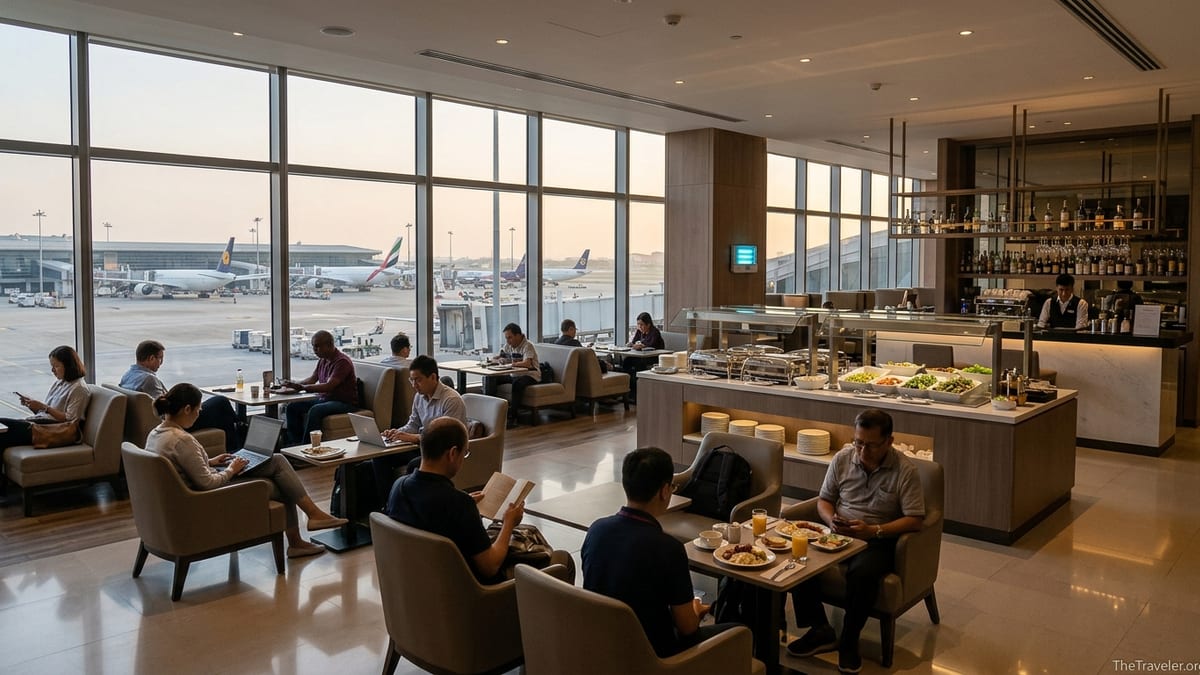
Comparing Plaza Premium to other lounge options only makes sense if you understand what you actually get when you walk through the door. Across the network, the core features remain fairly consistent: buffet-style hot and cold food, a self-serve or staffed bar, soft drinks and coffee, Wi-Fi, plenty of power outlets, and a mix of dining tables, armchairs and small workstations. Many locations also offer showers, and a few larger lounges include family zones or quiet rooms.
Take the Orlando International Airport Plaza Premium Lounge as a concrete example. Travelers report a notable step up in food quality versus some competing U.S. lounges, with items like fresh salads, pasta dishes and hot entrees that feel like a real meal rather than finger food. The bar there features cocktails developed specifically for Plaza Premium, so it feels more like a casual hotel bar than a basic airport self-service setup. For a family heading home from Florida theme parks, that can translate into a proper dinner and decompression space before an evening flight.
In Asia and Canada, showers are a major perk. The Plaza Premium Lounge in Hong Kong near Gate 1 includes shower rooms that transit passengers can reserve after long-haul flights. In Vancouver, the new dual-concept lounge and Plaza Premium First facility adds upgraded dining, barista-made coffee and more atmospheric lighting, creating a clear separation between the standard lounge area and the premium experience sold at a higher rate. For anyone connecting from a red-eye domestic flight to a daytime transpacific departure, the ability to shower, change and have a quiet breakfast is arguably the single biggest reason to pay for lounge access.
Wi-Fi performance and seating availability vary by time of day and airport, but Plaza Premium generally fares well in user reviews. Morning and evening peaks can still feel crowded, especially at major hubs during busy travel seasons, but the overall environment tends to be noticeably calmer than the terminal concourse. Business travelers appreciate the abundance of power points and the presence of semi-private nooks where they can take calls without shouting over boarding announcements.
Pricing and Value: When Plaza Premium Is Worth the Money
From a pure pricing perspective, Plaza Premium walk-up fees often look steep, especially in major Asian hubs where two- or three-hour passes can cost almost as much as a low-cost one-way ticket. Yet in the context of airport prices, they are less extreme than they first appear. Two restaurant meals, a couple of drinks and a coffee in a busy terminal can quickly approach the same total that you would pay for lounge entry, especially for solo travelers in expensive airports like Hong Kong or London.
For families or small groups, prepaid packages and card-based access tend to shift the value equation dramatically. Imagine a family of four flying economy from Toronto to Europe. If both adults hold a credit card that includes several Plaza Premium visits via DragonPass, they can typically bring at least one guest each into the lounge. Even allowing for a modest guest fee on top of the included visits, the total cost for everyone to enjoy a hot meal, open bar, snacks and Wi-Fi before an overnight flight can undercut what they would have spent wandering the terminal and buying dinner piecemeal.
By contrast, a day tripper flying domestically from a mid-priced U.S. hub with strong Priority Pass restaurant options might get better value by using their lounge membership for sit-down dining credits in the terminal instead of paying extra for Plaza Premium. In such cases, the equation comes down to how much you value a quieter environment and guaranteed seating. If you are happy to eat in a bustling airport restaurant, Plaza Premium’s premium may not feel justified for a short layover.
Travel frequency is the final piece of the puzzle. If you expect to visit Plaza Premium lounges three or four times a year at airports well covered by your existing card benefits, you probably do not need to purchase a separate Plaza Premium Pass product. On the other hand, if your travel pattern heavily centers on airports where Plaza Premium is the best or only non-airline lounge option, investing in a package that increases your access quota or discounts guest fees can pay for itself relatively quickly.
Comparing Real Itineraries: How Packages Play Out in Practice
Consider a common transatlantic scenario. A traveler based in Boston is flying to London Heathrow and then connecting to a regional European city on a separate low-cost carrier ticket. They hold an American Express Platinum card and a Priority Pass membership from another bank card. Arriving into Heathrow Terminal 3, they can choose the Amex Centurion Lounge if open, but their onward flight leaves from Terminal 2, where Plaza Premium operates a well-regarded independent lounge. Because Plaza Premium at Heathrow is part of Amex’s Global Lounge Collection, they can use that card to enter the lounge during their multi-hour layover without paying the full walk-up fee.
Next, imagine a Canadian couple flying from Vancouver to Hong Kong. Both hold mid-tier bank cards with DragonPass-based access to Plaza Premium. In Vancouver’s international terminal, they can enter the new dual-concept Plaza Premium lounge, enjoy a proper dinner and maybe even pay a small surcharge to try the Plaza Premium First section. After landing in Hong Kong, they can again access Plaza Premium’s lounge there to shower and have breakfast before continuing to Southeast Asia. Over the course of the trip, they may have saved several hundred dollars by using bundled visits and modest surcharges instead of paying each time at walk-up rates.
A third scenario involves a family vacation to Orlando. At Orlando International, Plaza Premium is one of the better full-service lounges in the terminal used by many North American airlines. A family with a premium travel card that includes Plaza Premium access can treat the lounge as an all-inclusive pre-flight stop. Hot buffet items, kids’ snacks, drinks and Wi-Fi are all included within the visit. Compared with ordering four separate meals, drinks and desserts at a terminal restaurant, the savings can be significant, particularly if some visits are complimentary under the card’s yearly allowance.
On the other side of the ledger, there are itineraries where Plaza Premium packages are less compelling. A traveler who mostly flies domestically within the United States through hubs dominated by airline-operated lounges, and who already holds elite status with one major airline, may rarely encounter a situation where Plaza Premium is the only or best option. For them, Priority Pass restaurant credits or their airline’s own lounge membership could deliver more tangible daily value than an additional package targeted at Plaza Premium specifically.
The Takeaway
Plaza Premium has carved out a distinctive place in the airport lounge ecosystem as a global independent brand that delivers a consistently comfortable experience across dozens of airports. Its lounges are rarely the most luxurious spaces in any terminal, but they are often the most accessible quality option for travelers without airline status, particularly in hubs like Hong Kong, Vancouver, Toronto, London Heathrow and Orlando.
When you compare Plaza Premium against the wider landscape of lounge packages, a few patterns emerge. DragonPass-linked products are currently the most straightforward way to secure regular Plaza Premium access, especially in Canada and parts of Asia. Premium U.S. credit cards from issuers like American Express and Capital One add another layer of access through partner arrangements, sometimes putting Plaza Premium alongside proprietary lounges and Priority Pass options in the same airport.
For occasional travelers, paying walk-up rates for Plaza Premium makes the most sense on long layovers or before red-eye flights where a hot meal, shower and quiet workspace can materially improve the journey. For frequent flyers, the key is to map your typical routes against Plaza Premium locations and then choose a lounge package that maximizes bundled visits rather than paying individually each time. Done well, Plaza Premium can shift from being a pricey indulgence to a foundational part of a smart, comfort-focused travel strategy.
Ultimately, the value of Plaza Premium Lounges after comparing airport lounge packages comes down to how, where and how often you travel. If your routes align with the network and your wallet already includes one of the major cards or lounge products that unlock its doors, Plaza Premium can be one of the most reliable upgrades you add to the modern airport experience.
FAQ
Q1. Are Plaza Premium Lounges worth paying for if I do not have a lounge membership?
Plaza Premium can be worth the walk-up or pre-booked price on longer layovers, especially when you need a shower, a quiet workspace and a substantial meal. For short waits in airports with good dining options, paying out of pocket for the lounge is less compelling unless you particularly value a calm environment.
Q2. Which lounge packages most reliably include Plaza Premium access today?
DragonPass-linked memberships and credit cards are often the most consistent way to access Plaza Premium in multiple regions, particularly in Canada and parts of Asia. Some premium U.S. credit cards also provide access through direct partnerships, while coverage through traditional Priority Pass memberships is more limited than it once was.
Q3. How do Plaza Premium Lounges compare with airline business class lounges?
Plaza Premium usually sits slightly below a flagship airline business lounge in terms of exclusivity and amenities but above many contract lounges. Food and drink are generally better than in basic lounges, and facilities like showers and quiet zones are common, though the overall atmosphere may not be as tailored to one airline’s premium cabin passengers.
Q4. Can I bring guests into Plaza Premium Lounges with my credit card or package?
Guest policies depend on the specific card or membership. Many premium cards allow at least one complimentary guest per visit, while others charge a reduced guest fee. If you are traveling as a couple or family, check your card’s terms carefully so you know how many people you can bring in without unexpected charges.
Q5. Do Plaza Premium Lounges have showers, and do I need to pay extra to use them?
Many Plaza Premium Lounges in international terminals offer showers, especially in hubs like Hong Kong and Vancouver. In most cases, shower use is included in the lounge visit, though some locations may require advance reservations at the reception desk during busy times.
Q6. Is food at Plaza Premium generally better than in other independent lounges?
Reviews frequently highlight Plaza Premium’s food as a step up from many independent competitors, with hot buffet items and a selection of snacks that feel closer to a hotel breakfast or light dinner. Quality varies by location, but lounges in cities like Orlando, Vancouver and Hong Kong tend to receive positive feedback on both variety and taste.
Q7. If I already have Priority Pass, does it still help with Plaza Premium access?
Priority Pass access to Plaza Premium is more restricted than it was a few years ago, and many Plaza Premium locations are no longer included. In some airports you may find overlapping coverage where a lounge is part of both networks, but you should not assume that a Priority Pass card will automatically get you into Plaza Premium everywhere.
Q8. How early can I enter a Plaza Premium Lounge before my flight?
Most Plaza Premium Lounges allow entry several hours before departure, and some explicitly permit use upon arrival as well. Exact policies can vary by airport, but in practice you can usually enter as soon as you have cleared security and hold a same-day boarding pass.
Q9. Are Plaza Premium Lounges suitable for families with children?
Yes, many Plaza Premium locations welcome families and provide a more relaxed environment than crowded gate areas. Some larger lounges feature family-friendly seating areas, and buffet options typically include simple dishes and snacks that suit younger travelers, though you should not expect full-scale playrooms in every location.
Q10. Should I buy a dedicated Plaza Premium Pass product or rely on my existing cards?
Most travelers are better off first maximizing any Plaza Premium access bundled with their existing credit cards or lounge packages. A dedicated Plaza Premium product may make sense if you travel frequently through airports where Plaza Premium is the best or only non-airline lounge option and you expect to visit enough times each year to outweigh the cost of the pass.