


Booking an airport lounge used to feel like buying a pocket of calm in the middle of chaos. Plaza Premium Lounge, one of the largest independent lounge operators worldwide, built its brand on exactly that promise. Yet in recent years, a wave of crowding, access denials and difficult refunds has left many travelers wondering: should you actually trust Plaza Premium with your booking, or are you better off taking your chances in the terminal?
Get the latest updates straight to your inbox!
Who Plaza Premium Lounge Is, And Why Trust Matters
Plaza Premium Group operates dozens of branded lounges in major hubs including London Heathrow, Toronto Pearson, Vancouver, Hong Kong, Orlando and Dubai, as well as managing some airline-branded spaces. For many travelers, these lounges are the default option when they do not have access to an airline’s own facility. You can usually get in by paying at the door, pre-booking online, using a lounge pass product or presenting an eligible credit card or membership like DragonPass or certain Amex and Capital One cards.
This scale makes Plaza Premium an important player in the airport experience. If you are flying from Heathrow Terminal 2 or 5, Orlando International’s Terminal C or Toronto Pearson’s Terminal 1, there is a good chance the main pay-per-use lounge you see is a Plaza Premium. When a brand controls that much of the market, its reliability becomes more than a minor concern; it can shape how relaxed or stressful your entire journey feels.
Trust matters especially because lounge access is often purchased for a specific window of time, like a three-hour preflight visit. If you have paid 45 to 80 US dollars per person to secure that slot, or used a limited free visit from a premium credit card, you want to be confident you will actually get a seat, something to eat and a quiet space. When that promise breaks down, you cannot simply roll your booking to another day. Your flight will leave regardless.
In that sense, booking Plaza Premium is not like booking a flexible hotel rate that you can move or cancel with ease. It is closer to buying a concert ticket: time-bound, sometimes non-refundable, and very disappointing if the experience does not match the marketing.
What Recent Traveler Experiences Really Look Like
Recent firsthand reports paint a very mixed picture. On the positive side, some Plaza Premium lounges still deliver a solid experience. Travelers passing through Orlando International Airport’s Terminal C, for example, have noted in late 2024 and 2025 that the new Plaza Premium space there offers better food than many competing Priority Pass lounges in the United States, with hot dishes, salads and desserts that feel closer to a mid-range hotel buffet than to a sparse snack bar. Cocktails priced under about 10 US dollars have also been reported in that lounge, which is modest by airport standards.
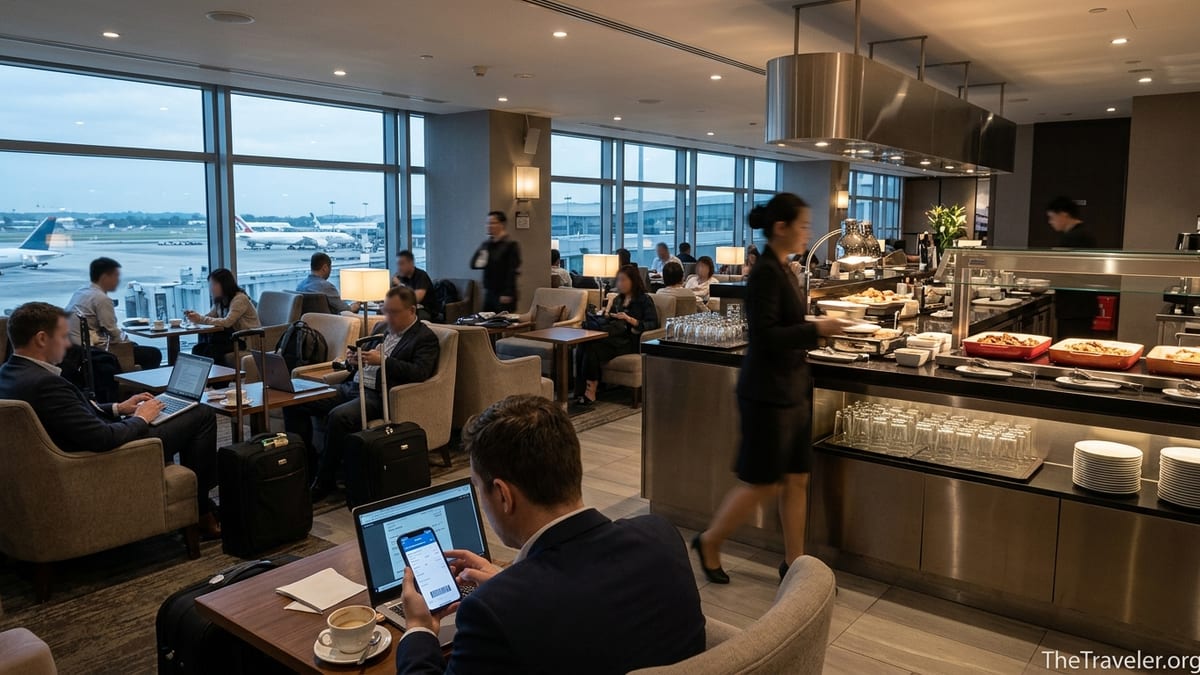
However, even where the product is strong on paper, crowding is a recurring theme. Multiple reviewers at Orlando describe the Plaza Premium dining room as having the atmosphere of a busy hotel breakfast buffet just before closing time, with travelers circling for seats and sometimes asking to share cocktail tables when no individual spots are available. In peak periods, guests have described standing to eat because every chair is taken.
Similar patterns show up at European hubs. At London Heathrow Terminal 5, several recent reviews describe Plaza Premium’s lounge as uncomfortably packed, with guests shoulder-to-shoulder, queues for food and drinks, and reserved seating sections that appear unused while walk-in guests struggle to find anywhere to sit. Some travelers who prepaid upward of 100 euros for access and extra hours have reported leaving after 20 to 30 minutes because they simply could not relax or even find space to settle.
Outside North America and Europe, feedback is equally uneven. In Brazil, for instance, complaints filed on consumer platforms in 2025 and 2026 highlight issues ranging from reduced overnight service quality during construction to denied entry for customers who believed they held valid card-based access. In Turkey, recent complaints about Plaza Premium at Istanbul Sabiha Gökçen mention restricted or inconsistent admission for local bank cardholders who expected complimentary visits, emphasizing how confusing access rules can feel on the ground.
How Access Really Works: Cards, Passes And Fine Print
One of the biggest sources of frustration is the gap between what marketing implies and what the fine print actually says. Plaza Premium’s own FAQs emphasize that entrance is never guaranteed and is always subject to lounge capacity, even if you hold an eligible bank card or prepaid pass. In practice, that means your shiny metal credit card or digital QR code may not get you through the door when the lounge is busy.
Credit cards complicate matters further. Many North American travelers, for instance, assume that cards like Capital One Venture X or various Amex products will automatically unlock Plaza Premium everywhere. In reality, each partnership has its own list of participating lounges and often a hidden web of restrictions. Some locations accept a given card only during certain hours, or only for departing passengers, or only in specific terminals. A traveler at Hong Kong International, for example, reported being turned away from Plaza Premium despite holding a premium card they believed would grant access, and directed instead to a different lounge.
Third-party memberships and passes introduce another layer. Programs such as DragonPass, Priority Pass and airline-sold lounge access codes for use with Plaza Premium can appear straightforward when purchased online from a bank portal or a travel agency. Yet recent online discussions show how easily problems arise when multiple intermediaries are involved. In one common scenario, a traveler books entry through a site like Trip.com or Holiday Extras using a pass that is ultimately processed by DragonPass and honored by Plaza Premium. If something goes wrong on the day, the lounge might direct the traveler back to the pass provider, which in turn points them to the online travel agency, leaving the customer stuck between three companies.
Even Plaza Premium’s own products can have caveats. The Plaza Premium Lounge Pass, sold directly online, can offer two lounge visits for roughly 80 US dollars in the Americas, saving money compared with paying walk-up rates of 60 to 70 dollars per visit at some airports. But that pass still does not guarantee a seat, and it may be locked to certain regions or validity windows. If your plans change or your flight is delayed past the lounge’s closing time, you may find that the pass is far less flexible than it seemed when you bought it.
Common Booking Pain Points: Overcrowding, Denials And Refunds
When travelers ask whether they can trust Plaza Premium with a booking, they are usually thinking about three risks: being denied entry even with a reservation or benefit, finding a severely overcrowded lounge, and struggling to get a refund when things go wrong. Unfortunately, real-world reports suggest all three are legitimate concerns.
Overcrowding is arguably the most widespread issue. At locations like Heathrow, Orlando and some Canadian and Brazilian airports, guests have described scenes where every surface is claimed, food stations are overrun and staff continue admitting new arrivals even when there are no free seats. In Edinburgh, frequent flyers have complained that a once-pleasant lounge has deteriorated under Plaza Premium management, citing poor food replenishment and a space that feels more like a budget cafeteria than a premium retreat.
Denials despite bookings or apparent eligibility are another flashpoint. At Dallas Fort Worth’s Terminal D, a traveler who pre-booked Plaza Premium with a specific 1 p.m. check-in time reported being turned away at the door and told that the lounge only admits customers within two hours of scheduled departure, even if they have a confirmed reservation. Other travelers have shared stories of arriving at Plaza Premium lounges with confirmation emails, only to find a “full” sign at the entrance and a waitlist that never moves before boarding.
Refunds often prove the most frustrating part of the experience. Trustpilot reviews in 2025 and 2026 include multiple examples of travelers charged more than once for a booking, then told they would have to pay a fee to get their overpayment refunded. Others describe being bounced among Plaza Premium, DragonPass and an online agency when seeking compensation for a denied visit. With policies that may impose short complaint windows, such as a two-week limit after travel, customers who are busy or traveling long itineraries can easily miss their chance to pursue a refund.
When Plaza Premium Booking Makes Sense
Despite these problems, Plaza Premium can still be a reasonable choice in specific circumstances. The key is to treat a booking as a calculated gamble rather than a guaranteed sanctuary. If you understand the risks and price the experience accordingly, the equation can sometimes work in your favor.
For example, if you are departing from Orlando Terminal C on an evening flight and know from reviews that the Plaza Premium lounge there serves solid hot food and has showers, a discounted advance booking around 40 to 50 US dollars may still feel worthwhile. Even if the lounge ends up busier than you hoped, you might recover much of that value through a decent meal, a couple of drinks and a comfortable chair with power outlets compared with standing in a crowded food court.
Likewise, if you are traveling through a hub where Plaza Premium runs the only independent lounge and walk-up rates during peak times are 60 dollars or more, using a credit card benefit or lounge pass can be appealing. In Toronto or Vancouver, for instance, having your card grant you two or three complimentary visits per year can transform a long connection. In those cases, you are not risking extra cash; you are simply using a perk that may or may not materialize in practice.
Pre-booking can also make sense in off-peak windows. A mid-morning visit on a weekday at a secondary terminal is less likely to be slammed than a Friday afternoon in a major transatlantic hub. Guests who time their lounge stays away from traditional rush hours often report calmer spaces, shorter buffet lines and a better chance of finding a quiet corner.
Red Flags To Watch Before You Click “Book”
To decide whether you should trust Plaza Premium with a particular booking, it helps to run a quick checklist before paying. The first red flag is timing. If your desired visit coincides with heavy bank-card or airline departures, such as evening long-haul banks at Heathrow or Friday evening domestic waves in Canada, you should assume higher crowding risk and treat any nonrefundable purchase very cautiously.
Second, consider the booking channel. Booking directly through Plaza Premium or via its own lounge pass product typically reduces the number of intermediaries involved if something goes wrong. Purchasing access through a third-party site that then uses a separate membership like DragonPass introduces more potential for finger-pointing later. If a site’s terms mention that refunds must be handled by another company, or that complaints must be made within a very short time window, that is a clear sign you should only proceed if you can afford to lose the money.
Third, pay attention to access rules by location. Some Plaza Premium lounges impose cut-off times or special conditions, such as only allowing access within a certain number of hours before departure, or only accepting certain credit cards in limited time bands. Stories from Dallas, Istanbul, Hong Kong and other airports show how often these local rules surprise travelers who assumed all Plaza Premium lounges worked the same way.
Finally, look for patterns in very recent reviews, not just the star average. If several travelers in the last few months mention permanent “lounge full” signs, poor food replenishment or constant construction, that is a strong signal to hold off, especially if the booking is nonrefundable. Conversely, if the newest reviews describe improvements after a refurbishment or new management, you may decide the risk is acceptable.
How To Protect Yourself If You Decide To Book
If you decide Plaza Premium is still worth a shot for your upcoming trip, there are practical ways to protect yourself. Start by preferring refundable or flexible rates whenever they are available, even if they cost a few dollars more. At some airports, Plaza Premium sells both standard and flexible bookings, with the latter allowing changes or refunds up to a set deadline before arrival. The small premium on price can buy real peace of mind if your flight time shifts or if you later read new complaints about overcrowding.
Next, document everything. Take screenshots of eligibility pages showing that your credit card, airline ticket or lounge pass should be accepted at the location you plan to use. Save your booking confirmation, terms and conditions and any emails that describe specific check-in times or stay lengths. If you are denied entry despite meeting those conditions, this documentation becomes your leverage when requesting a refund from Plaza Premium, your card issuer or a travel agency.
Arrive early within your allowed window, particularly if the lounge is known to fill up. For example, if a location only lets you in within three hours of departure, do not plan to stroll up at the two-hour mark and still expect space. Getting there closer to the start of that window may not eliminate crowding, but it gives you a better chance to secure a seat and access to food before the peak rush.
Finally, have a backup plan. Check what other lounges, airline clubs or quiet gate areas exist in your terminal. At Heathrow, for instance, some travelers have walked from an overflowing Plaza Premium lounge to a competing space like Club Aspire and found it marginally calmer. In North American airports, you might discover that an airline-branded club accessible via a different credit card provides a more predictable experience. Even knowing which public restaurants have relatively comfortable seating and power outlets can soften the blow if your Plaza Premium plan falls apart.
The Takeaway
So, should you trust Plaza Premium Lounge with your booking? The honest answer in 2026 is that trust needs to be conditional. Plaza Premium still offers genuine value in certain airports and time slots, and some of its newer or better-managed lounges can turn a draining layover into a tolerable or even pleasant pause. However, recurring reports of overcrowding, opaque access rules and difficult refunds mean you should not rely on the brand blindly.
If you view any Plaza Premium booking as a calculated bet rather than a sure thing, you can decide whether the potential upside justifies the risk for your specific trip. When paying cash, that often means waiting for promotions, avoiding busy banks of departures and insisting on flexible terms wherever possible. When using credit card or lounge pass benefits, it means mentally preparing yourself for the possibility of being turned away or having to pivot to a backup.
In short, Plaza Premium can be part of a smart airport strategy, but it should rarely be the only pillar you lean on. Combine it with alternative lounge access options, realistic expectations and a willingness to walk away if the lounge is overcrowded, and you will be far more likely to end your preflight time feeling in control rather than cheated.
FAQ
Q1. Does a confirmed Plaza Premium booking guarantee I will get into the lounge?
Not completely. Plaza Premium’s own policies state that all access is subject to capacity, meaning that in extreme crowding they can still restrict entry even if you hold a reservation or eligible card.
Q2. Are Plaza Premium lounges generally worth the money?
It depends on the location, time of day and price you pay. In some newer lounges with decent hot food, showers and bar service, paying around 40 to 60 US dollars can offer fair value compared with buying separate meals and drinks in the terminal. In overcrowded or poorly stocked lounges, the same price can feel like a waste.
Q3. Is it better to book Plaza Premium directly or through a third party?
Booking directly with Plaza Premium usually reduces complexity if something goes wrong, since you deal with one company instead of a chain of an online agency, a pass provider and the lounge. Third-party deals can be cheaper but often come with stricter refund rules and more finger-pointing when disputes arise.
Q4. Can I rely on my credit card to get me into any Plaza Premium lounge?
No. Each card issuer has a specific list of participating lounges and conditions, such as limited hours, guest caps or terminal restrictions. You should always check your card’s current lounge directory and, if possible, the lounge’s own information for your exact airport and terminal before you travel.
Q5. What is the main complaint travelers have about Plaza Premium?
Consistent themes in recent reviews include overcrowding, difficulty finding seats, food that is not replenished quickly enough and frustration when entry is denied despite pre-bookings or advertised eligibility through cards and passes.
Q6. How can I reduce the risk of being turned away from a Plaza Premium lounge?
Arrive near the start of your permitted check-in window, avoid peak departure times when possible, confirm the latest access rules for your specific lounge, and keep screenshots of any eligibility information. Choosing flexible or refundable bookings where available also helps.
Q7. What should I do if I am denied entry after paying in advance?
Ask staff for a written note or email confirming that capacity or local rules prevented your entry. Then contact the company you paid, whether that is Plaza Premium, a card-linked pass or an online agency, supplying your documentation and requesting a refund or credit as soon as practical after travel.
Q8. Are some Plaza Premium lounges better than others?
Yes. Feedback suggests that newer lounges in airports like Orlando Terminal C or certain terminals in Vancouver and Toronto often perform better, while some older or heavily used locations in London, Edinburgh and parts of South America and Asia draw more criticism for crowding and maintenance.
Q9. Is using a Plaza Premium Lounge Pass safer than paying walk-up?
A Plaza Premium Lounge Pass can lower the cost per visit, especially in the Americas, but it does not remove crowding risk or guarantee a seat. It is best seen as a way to trim the price of something that still carries the usual uncertainties.
Q10. If I do not trust Plaza Premium, what are my alternatives?
Alternatives include airline-branded lounges accessed through status, business-class tickets or day passes, competing independent lounges where available, and premium public spaces in the terminal such as quieter restaurants or bars with comfortable seating. In some airports, co-working style spaces or newer lounge brands may offer a more reliable experience than Plaza Premium.