


More news on this day
Passengers on a Qantas Airbus A220 preparing to depart Sydney for Melbourne faced an unexpected evacuation on Monday night after smoke entered the cabin, prompting crew to clear the aircraft before takeoff and raising new questions about safety perceptions following a string of recent incidents involving the airline.
Get the latest news straight to your inbox!
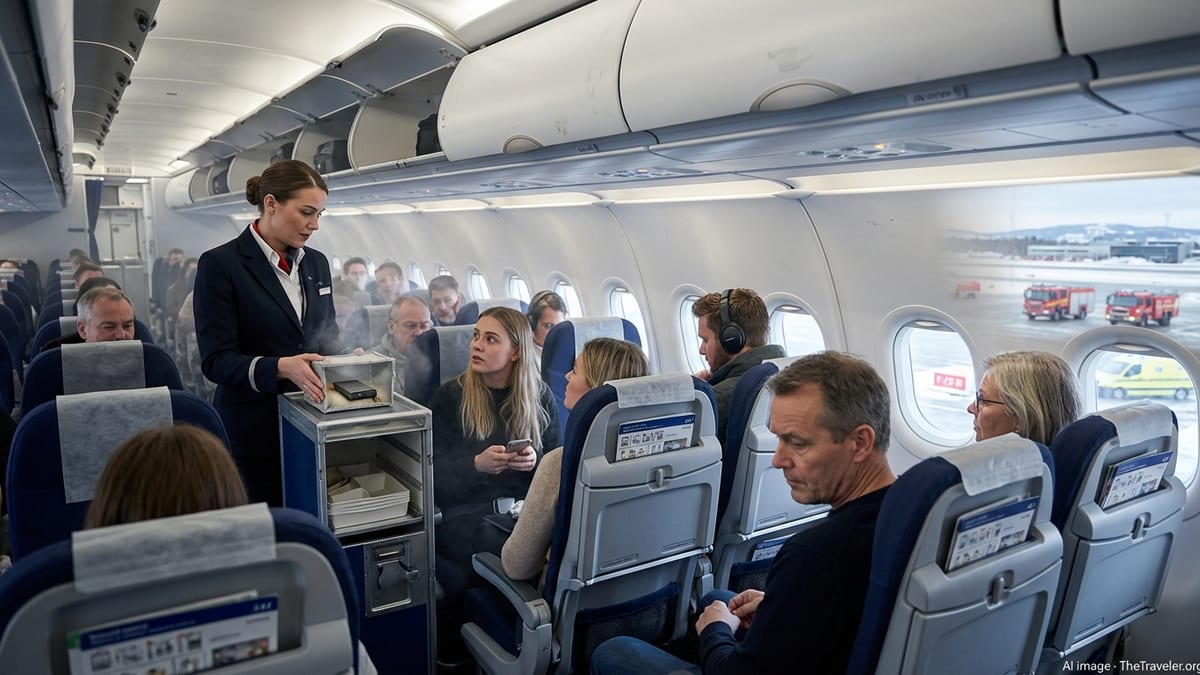
Smoke in Cabin Prompts Evacuation at Sydney Airport
Reports indicate the incident occurred on the evening of Monday, 7 September 2026, as the Qantas A220 sat on the tarmac at Sydney Airport ahead of a scheduled flight to Melbourne. Passengers preparing for departure began noticing smoke drifting through the cabin while the aircraft remained on the ground.
According to publicly available coverage, the aircraft was being maneuvered by an airport tug when exhaust from the ground vehicle is understood to have entered the air-conditioning system and spread into the cabin. The situation led cabin crew to initiate an evacuation before the aircraft commenced taxi or takeoff roll, with passengers escorted back into the terminal.([pressnewsagency.org](https://pressnewsagency.org/qantas-flight-is-evacuated-before-takeoff-at-sydney-airport/?utm_source=openai))
Initial engineering inspections later found no fault with the A220 itself. The aircraft involved is one of QantasLink’s newest narrowbody jets, part of a fleet renewal program that began bringing A220s into Australian domestic service from 2024.([aviationa2z.com](https://aviationa2z.com/index.php/2026/09/08/qantas-flight-evacuated-after-smoke-fills-a220-cabin/?utm_source=openai))
The flight was ultimately cancelled, and passengers were rebooked on alternative services the following morning. While there were no injuries reported, the episode added to a sense of unease among some domestic travellers after a run of unrelated technical events reported across the Qantas network.([aviationa2z.com](https://aviationa2z.com/index.php/2026/09/08/qantas-flight-evacuated-after-smoke-fills-a220-cabin/?utm_source=openai))
Tug Exhaust Identified as Source of the Smoke
Subsequent reporting from Australian and international outlets has pointed to the tug’s exhaust as the likely cause of the cabin smoke. The vehicle, used to push back and reposition aircraft at the gate, was operating close to the A220 when its exhaust emissions appear to have been drawn into the aircraft’s ventilation system.([pressnewsagency.org](https://pressnewsagency.org/qantas-flight-is-evacuated-before-takeoff-at-sydney-airport/?utm_source=openai))
Coverage indicates that once passengers began to notice visible haze and a smell of smoke, crew moved quickly to halt departure preparations and return travellers to the terminal. Emergency slides were not deployed and the disembarkation is described as controlled, with passengers exiting via the standard doors and airbridge.([7news.com.au](https://7news.com.au/news/qantas-flight-evacuated-as-smoke-fills-cabin-at-sydney-airport-c-22838466.amp?utm_source=openai))
Engineers who inspected the A220 after the event are reported to have found no mechanical or electrical malfunction, and the aircraft later returned to service after checks were completed. This aligns with summaries from Australian news digests that have described the episode as a smoke contamination event originating outside the aircraft rather than an onboard systems failure.([aviationa2z.com](https://aviationa2z.com/index.php/2026/09/08/qantas-flight-evacuated-after-smoke-fills-a220-cabin/?utm_source=openai))
Aviation observers note that while such ground-related smoke incursions are relatively rare, they can trigger the same precautionary responses as smoke from an onboard source. Any visible smoke in a cabin is treated as potentially serious until its origin is clearly identified and verified as safe.
New A220 Fleet Under Scrutiny After High-Profile Scares
The incident has unfolded at a sensitive time for Qantas, which is in the midst of rolling out the A220 as a core component of its domestic and regional fleet. QantasLink’s A220s are configured to carry 137 passengers and have been promoted as offering quieter cabins and improved fuel efficiency compared with the retiring Boeing 717s.([qantasnewsroom.com.au](https://www.qantasnewsroom.com.au/wp-content/uploads/2024/02/QantasLink-A220-cabin.pdf?utm_source=openai))
Although available reporting suggests the Sydney smoke incident was caused by an external ground vehicle and not by any defect in the aircraft, its timing has contributed to heightened attention on Qantas operations. Travellers have been closely following news of several unrelated events involving other aircraft types across the network, increasing the likelihood that any disruption or precautionary evacuation gains rapid public visibility.([vtimes.com.au](https://vtimes.com.au/may-bay-cua-qantas-gap-su-co-lien-tiep-4106791.html?utm_source=openai))
Analysts emphasise that new aircraft types commonly undergo intensive monitoring during their first months in service, with operators, regulators and manufacturers collaborating to refine procedures based on real-world experience. In this case, attention is likely to focus on ground-handling practices around the A220 and the way external emissions can interact with the jet’s environmental control systems.
Publicly accessible safety reviews of other Qantas incidents involving smoke or fumes have historically highlighted the importance of clear communication, rapid assessment of risk and disciplined evacuation protocols. The approach taken in Sydney, where passengers were removed as a precaution and the aircraft only returned to service after engineering sign-off, appears broadly consistent with those themes.([atsb.gov.au](https://www.atsb.gov.au/sites/default/files/media/5771115/ao-2016-051-final.pdf?utm_source=openai))
Recent Engine-Flame Diversion Adds to Traveller Anxiety
The smoke scare in Sydney followed close on the heels of a separate, widely reported incident involving a Qantas Boeing 737 operating flight QF122 from Queenstown to Sydney on Saturday, 5 September 2026. Video captured by passengers showed bursts of flame from one engine shortly after departure, prompting a diversion to Christchurch.([abc.net.au](https://www.abc.net.au/news/2026-09-06/panic-fear-after-sydney-qantas-flight-spits-fire/107121528?utm_source=openai))
Passengers from that flight have described a series of loud bangs and visible flames from the left engine during the climb, followed by turbulence and an eventual safe landing in Christchurch. Public information indicates that the aircraft has been temporarily grounded while engineering investigations continue, with Qantas flying additional personnel to New Zealand to support the examination.([abc.net.au](https://www.abc.net.au/news/2026-09-06/panic-fear-after-sydney-qantas-flight-spits-fire/107121528?utm_source=openai))
While the two events involve different aircraft types and unrelated circumstances, their proximity in time has sharpened public focus on Qantas operations. News coverage and social media commentary have linked the episodes as part of a broader conversation about maintenance regimes, training and the challenges of operating a large, aging fleet alongside brand-new aircraft.
Regulators and investigators have not yet released detailed findings on the Queenstown incident, and no systemic link has been suggested between that episode and the A220 tug-exhaust event in Sydney. However, both occurrences are contributing to a climate in which travellers are closely watching how the airline manages risk, communicates disruptions and implements safety protocols.
Safety Protocols and Traveller Confidence at Sydney Airport
Monday’s evacuation at Sydney Airport illustrates how multiple layers of aviation safety are designed to function when an anomaly is detected. In this case, ground support equipment appears to have been the underlying factor, yet primary impact was on cabin comfort and perceived safety rather than on the aircraft’s technical integrity.([pressnewsagency.org](https://pressnewsagency.org/qantas-flight-is-evacuated-before-takeoff-at-sydney-airport/?utm_source=openai))
Industry observers note that airports and airlines may review tug positioning, exhaust direction and pushback procedures following the event, especially around newer aircraft whose intake and ventilation characteristics differ from older models. Adjustments to operating guidelines, briefings for ground crews or enhanced coordination between ramp teams and cockpit crews are among the potential outcomes.
For travellers, the visual of smoke in an enclosed cabin can be confronting even when the source is benign. Recent media coverage suggests that some passengers remain unsettled by the succession of Qantas incidents, though aviation specialists continue to describe commercial airline travel as one of the safest forms of transport, with strict oversight and thorough incident investigation processes.([aviationa2z.com](https://aviationa2z.com/index.php/2026/09/08/qantas-flight-evacuated-after-smoke-fills-a220-cabin/?utm_source=openai))
As the A220 becomes more prominent on domestic routes from Sydney, Melbourne and other capitals, the carrier’s handling of even minor irregularities will likely remain under scrutiny. Transparent communication, prompt engineering checks and a cautious approach to any sign of smoke or unusual odour are expected to be central in maintaining confidence among frequent flyers and occasional travellers alike.
https://aviationa2z.com/index.php/2026/09/08/qantas-flight-evacuated-after-smoke-fills-a220-cabin/
https://7news.com.au/news/qantas-flight-evacuated-as-smoke-fills-cabin-at-sydney-airport-c-22838466
https://pressnewsagency.org/qantas-flight-is-evacuated-before-takeoff-at-sydney-airport/
https://www.abc.net.au/news/2026-09-06/panic-fear-after-sydney-qantas-flight-spits-fire/107121528