


More news on this day
Qatar Airways is accelerating the rollout of Starlink satellite Wi-Fi across its long-haul fleet, bringing faster, more reliable in-flight connectivity to many of its Europe services and reshaping expectations of what passengers can do at 35,000 feet.
Get the latest news straight to your inbox!
Rapid Starlink Rollout Across the Long-Haul Fleet
Publicly available fleet data and recent industry reports indicate that Qatar Airways has now equipped around 150 widebody aircraft with Starlink, covering its Boeing 777s, Airbus A350s and an expanding number of Boeing 787-8s. This rapid deployment over roughly a two-year period positions the carrier among the leading global adopters of next-generation satellite connectivity for long-haul travel.
According to recent coverage tracking airline connectivity upgrades, the airline completed Starlink installation programmes for the 777 and A350 families in about 14 months before extending the service to its 787-8 Dreamliners. This strategy means that much of Qatar Airways’ long-haul network is now operated by aircraft types that either already offer, or are in the final stages of receiving, high-speed Starlink internet access.
Qatar Airways’ official connectivity pages describe Starlink as available on select routes operated by these widebody types, with availability subject to aircraft scheduling and potential last-minute equipment changes. As more aircraft re-enter service after cabin or connectivity upgrades, the share of flights equipped with streaming-capable Wi-Fi continues to rise, especially on high-demand intercontinental corridors.
For travellers flying between Doha and major European hubs, this means growing odds that their journey will be served by a Starlink-enabled aircraft, particularly on flagship routes traditionally assigned to the 777 and A350 fleets.
Stronger Digital Link Between Doha and Europe
Connectivity information published by Qatar Airways shows that Starlink is now available to more than 130 destinations served by its Starlink-equipped aircraft types, including a wide range of European cities. Key markets such as London, Paris, Amsterdam, Madrid and other major gateways regularly see 777 or A350 deployments, which are listed among the fleet families with completed Starlink installation.
Because Starlink availability is linked to aircraft type rather than specific routes, Europe-bound passengers benefit most on services scheduled with 777 and A350 aircraft, and increasingly on selected 787-8 flights. Industry tracking sites that monitor tail-by-tail configurations report that these widebodies form the backbone of Qatar Airways’ Europe network, especially on higher-frequency or premium-heavy routes.
This configuration-driven approach gives the airline flexibility to rotate Starlink aircraft across its European schedule while still raising the baseline level of connectivity. As more Dreamliners and, in time, additional widebodies complete installation, reports suggest that an even larger share of Europe services will offer the same high-speed experience currently seen on key transcontinental and ultra-long-haul sectors.
For business and leisure travellers alike, that translates into a more consistent digital experience when transiting through Doha to or from Europe, with fewer “offline” gaps on multi-leg journeys across the network.
What Starlink Changes for the Passenger Experience
Qatar Airways promotes its Starlink offering as providing high-speed, low-latency internet that supports activities such as video streaming, online gaming, real-time messaging and cloud-based work tools. This represents a marked step up from earlier generations of in-flight connectivity, which often struggled to support data-intensive tasks, particularly on busy long-haul flights.
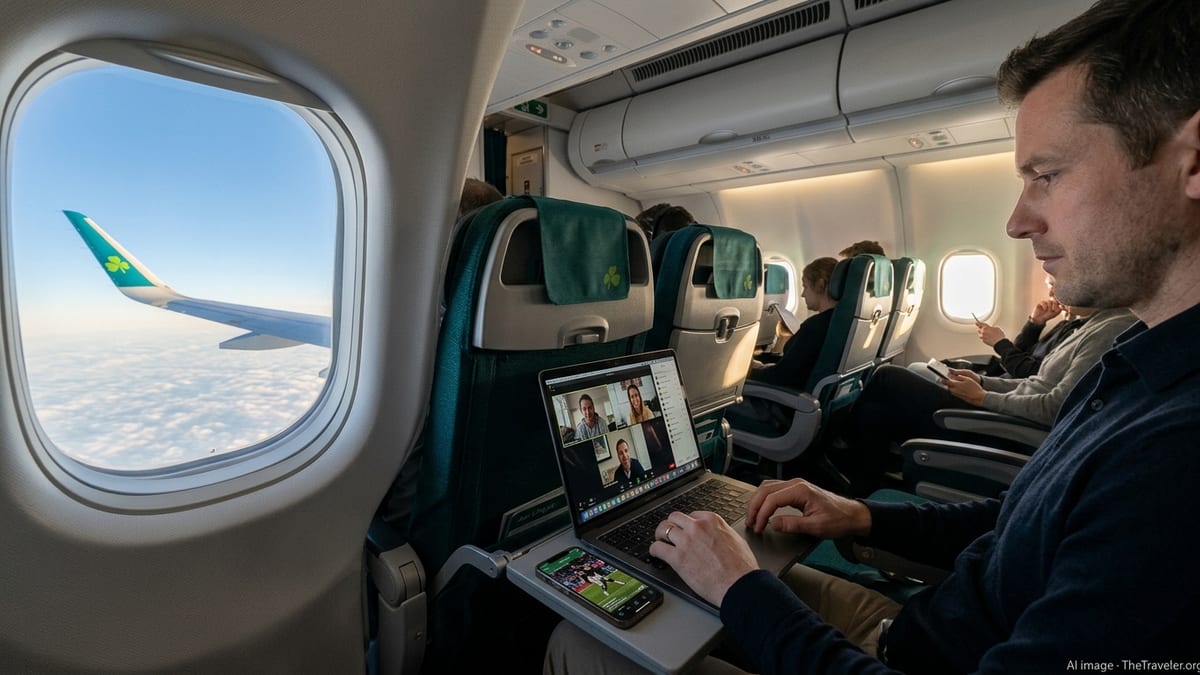
Information published by the airline and Starlink’s own performance reports suggest that passengers can expect connection speeds comparable to, or better than, many ground-based hotel or public Wi-Fi networks, subject to overall usage and routing. This allows travellers on Europe services to join video conferences, upload large work files or stream entertainment content with a level of reliability that was previously difficult to achieve at cruising altitude.
Crucially for many travellers, Qatar Airways presents Starlink access as complimentary for passengers on equipped aircraft. Industry analysis notes that this positions the carrier among a small but growing group of airlines using free, high-speed Wi-Fi as a differentiator on long-haul routes, rather than treating connectivity as an ancillary product.
For frequent flyers who regularly commute between European capitals and cities across Asia, Africa or the Americas via Doha, this shift reduces the productivity cost of time spent in the air and helps align in-flight connectivity expectations with those on the ground.
Competitive Pressure on Europe’s Long-Haul Market
The rapid expansion of Starlink across Qatar Airways’ long-haul fleet is also reshaping competitive dynamics on Europe routes. Space-based broadband providers have highlighted the Middle East carrier as one of the earliest and most comprehensive adopters of the technology, even as other global and European airlines move ahead with their own satellite connectivity strategies.
Starlink’s own aviation progress reports list a growing roster of international carriers committing to installation programmes, including several based in Europe. However, current reporting indicates that Qatar Airways’ widebody implementation is among the most advanced, particularly in terms of full-fleet coverage on specific aircraft families and the widespread availability of complimentary access.
For travellers choosing between connecting options to and from Europe, such as through Doha, Istanbul or major EU hubs, connectivity is becoming a more visible factor alongside schedule, aircraft type and onboard service. Analysts tracking the sector suggest that carriers offering free, high-speed Wi-Fi on the majority of their long-haul departures may gain an edge in attracting digitally dependent passengers.
As Qatar Airways continues to integrate Starlink across additional aircraft and deploys these jets on Europe-heavy rotations, the move is likely to intensify pressure on rivals to match or exceed similar levels of in-flight connectivity on overlapping routes.
What Passengers Should Know Before Boarding
Despite the rapid rollout, connectivity on a given flight is not guaranteed, and publicly available guidance underscores a few practical points for passengers. Starlink availability depends on the specific aircraft operating the route on the day, and last-minute swaps for operational reasons can mean an anticipated Starlink-equipped flight occasionally operates without the service.
Qatar Airways’ online booking flows and onboard connectivity pages highlight Starlink on selected services, typically where a 777 or A350 is scheduled. Aviation forums and expert sites that track individual aircraft suggest that checking the planned aircraft type shortly before departure can give travellers a reasonable indication of whether Starlink is likely to be available, while still leaving room for operational changes.
Once on board a Starlink-enabled aircraft, the connection process broadly follows a familiar pattern: passengers enable Wi-Fi on their devices, select the airline’s network and follow the on-screen portal instructions. Published user reports from recent flights between Doha and European destinations describe log-in processes measured in seconds rather than minutes, with stable access maintained for most of the cruise segment.
As coverage extends to more aircraft and routes, Europe-bound travellers using Qatar Airways can increasingly plan for in-flight time as connected time, treating long-haul journeys not as offline interruptions but as an extension of their digital lives.
Sources: Qatar Airways onboard connectivity; Qatar Airways Starlink feature page; CAPA - Centre for Aviation report on Qatar Airways Starlink rollout; StarlinkFlights Qatar Airways connectivity tracker; Starlink Aviation Progress Report