


Cartagena’s Rafael Núñez International Airport (CTG) is busy, compact, and still catching up with the city’s tourism boom. For arriving travelers, that often translates into tight spaces, variable lines at passport control, and some uncertainty about how long it will take to get out of the terminal. This guide brings together the latest data and real traveler experiences to help you understand what to expect at immigration, baggage claim, and customs, and how much time to allow after landing.
Get the latest updates straight to your inbox!
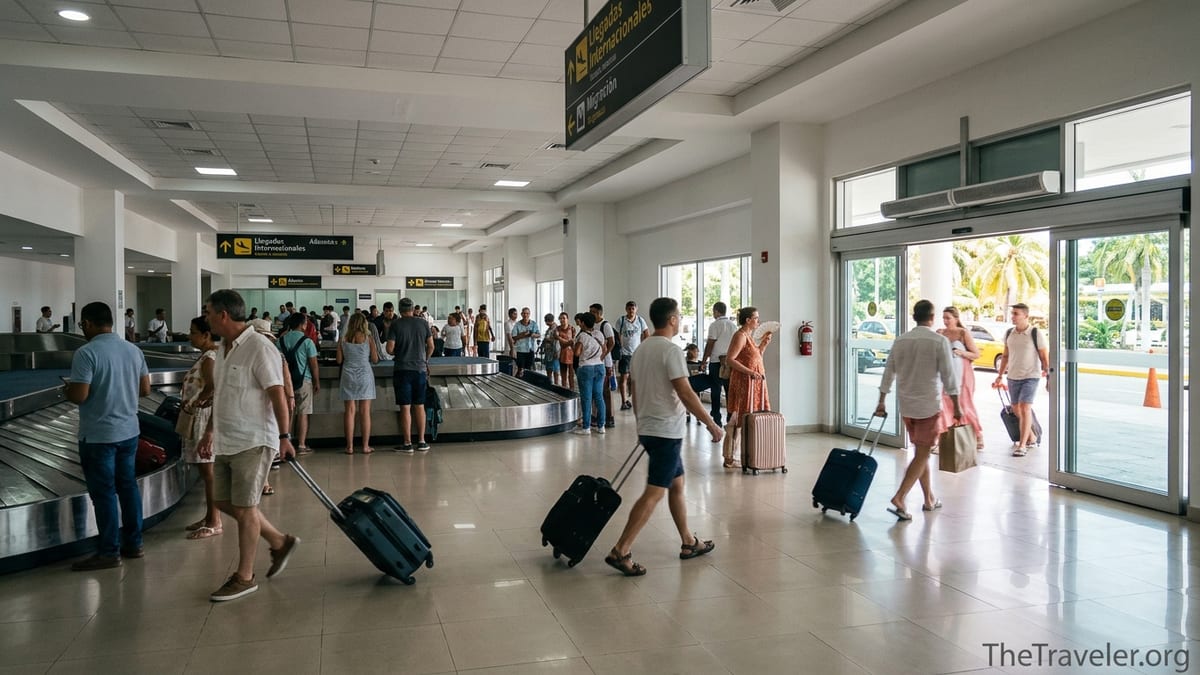
Airport overview and layout: what you are walking into
Rafael Núñez International Airport sits in the Crespo neighborhood, a short drive from Cartagena’s historic walled city and Bocagrande hotels. It is one of Colombia’s busiest airports by passenger traffic, handling around 7.5 million passengers a year and ranking among the top three in the country. The catch is that CTG is still a relatively small, low-rise terminal that now handles traffic levels closer to a major city airport, which is why bottlenecks form quickly at immigration and security.
The international arrivals experience is straightforward in terms of layout. After stepping off the aircraft, passengers follow a short corridor directly to Migración Colombia passport control. There is a single main immigration hall used by all nationalities, with separate lanes for Colombian citizens and foreign visitors when staffing allows. Once cleared, you descend to baggage claim, where several carousels serve both international and some domestic flights. Customs screening takes place just beyond the carousels, before sliding doors open to the public arrivals area.
The terminal is compact enough that walking distances are short. You will generally move from aircraft door to the immigration queue in under five minutes, even if your aircraft parks on a remote stand and you are bused to the building. This compact size is an advantage if everything is flowing smoothly, but it also means limited space in the immigration hall and baggage area, so lines can feel more intense than at larger hubs.
Colombia’s infrastructure agency has approved a major expansion and modernization of Rafael Núñez that is expected to increase capacity from roughly 7 million to about 11 million passengers annually over the coming years. Construction work has started in phases, but as of mid‑2026 many arrivals are still handled in the existing terminal. Travelers should not expect a brand‑new building yet, but they may notice construction zones and minor detours within and around the terminal.
Immigration and passport control: typical wait times and real examples
Passport control at Rafael Núñez is managed by Migración Colombia, the national border agency. The number of officers on duty and the arrival pattern of flights have a big impact on wait times. Live tracking tools that aggregate traveler data indicate that on an average day, immigration at CTG can be as quick as 10 to 20 minutes during light periods, but can stretch well past an hour when several international flights land close together.
Recent traveler reports illustrate how variable the experience can be. On a midweek morning, passengers arriving on a nonstop from New York described walking straight off the plane and clearing passport control in under 15 minutes, with only a few people ahead of them in the foreign passport line. In contrast, a Sunday afternoon arrival from Miami reported about 2 to 2.5 hours from joining the immigration queue to reaching the officer’s desk, largely because multiple U.S. and Canadian flights touched down within the same 30‑minute window and only a limited number of booths were staffed.
Timing within the day matters. Data from queue‑tracking services show that late morning and early afternoon are often more moderate, while late afternoon and evening waves, particularly around 3 pm to 7 pm on Fridays through Sundays, see the heaviest pressure at immigration. If you land at 10:30 am on a Tuesday from Panama City, for example, it is common to be through passport control in roughly 20 to 30 minutes. If instead you land at 5:30 pm on a winter Saturday from Atlanta, you could be in line 60 to 90 minutes depending on whether other flights from North America and Europe arrive at the same time.
There is currently no equivalent of U.S. Global Entry or dedicated electronic gates for most foreign visitors at CTG. Some Colombian citizens can use automated kiosks when available, which slightly eases the main line, and there are priority arrangements for passengers requiring assistance, families with very young children, or occasionally for business‑class passengers when airlines coordinate with airport staff. For the majority of tourists, though, the realistic expectation is to stand in a conventional queue, so plan your post‑arrival schedule accordingly.
Baggage claim and customs: how long it really takes
Once you clear immigration, you enter a small baggage hall with a few carousels serving incoming flights. Because the walk from your gate is short, it is common to arrive at the carousel before bags start to appear, especially when you have cleared passport control quickly. On lighter days, first bags from an international flight may show up about 10 to 20 minutes after landing. During congested periods, especially when handling staff are stretched by several arriving aircraft at once, some travelers have reported waiting 30 to 45 minutes for all baggage from a full Airbus A320 or Boeing 737 to be delivered.
Real‑world timelines often look like this: a traveler arriving from Orlando at 11 am in low season spends about 25 minutes in the immigration line, then another 15 minutes waiting by the carousel, leaving the customs area roughly 45 to 50 minutes after wheels‑down. On a busier weekend afternoon, another traveler arriving from Toronto reaches the baggage hall after an hour in passport control, only to find that bags are already circling. They are able to grab luggage immediately and walk straight to customs, exiting the controlled area about 75 minutes after landing even though immigration alone ate up most of that time.
Customs procedures in Cartagena are fairly standard for Colombia. You will pass your bags through an x‑ray scanner and may be asked brief questions about your stay or the contents of your luggage. Officers are especially alert to large quantities of electronics, high‑value goods, or items that look like they are for resale instead of personal use. Travelers carrying more than the duty‑free allowance of alcohol or tobacco, or transporting professional camera gear or musical instruments, should be prepared for additional questions and possibly extra paperwork or taxes.
Most visitors who stay within normal tourist limits, such as a couple each carrying one checked suitcase and a carry‑on with clothes and a laptop, pass through customs in under 10 minutes once their bags are on the belt. Random inspections or secondary checks can extend this to 20 minutes or more. During afternoon peaks, a short line sometimes forms for the exit x‑ray machines, adding another 5 to 10 minutes, but the main time‑consuming step for most travelers remains immigration rather than customs.
Peak arrival times and how to read your flight schedule
To predict what you might face upon landing, it helps to understand when the airport is at its busiest. In recent years Rafael Núñez has seen sustained growth in international tourism, with strong traffic from cities such as Miami, Fort Lauderdale, New York, Orlando, Atlanta, Toronto, Mexico City, and Lima. Many of these flights are scheduled to arrive in banks that suit hotel check‑in times and cruise departures, which unfortunately also means they clump together in the immigration hall.
Historically, the busiest arrival waves for international flights are late morning to early afternoon and late afternoon into early evening. On a typical high‑season Saturday, for example, you might see a Miami arrival at 11:30 am, a New York arrival shortly after noon, and a Toronto flight soon after, all feeding into the same passport control area. Later, another wave from U.S. hubs and regional capitals tends to arrive in the 4 pm to 7 pm window. If your ticket shows an arrival time that overlaps these bands, build extra margin into any after‑arrival commitments.
Seasonality also influences wait times. December to March and again July to August are prime travel months for Cartagena, with holidaymakers from North America and Europe combining with Colombian vacationers. The city hosts festivals and cruise calls during these months, which further elevate demand. Travelers arriving during these peak seasons should assume that immigration and baggage claim may be significantly slower than shoulder months like May or late September. On the other hand, midweek flights in low season often report surprisingly quick processing, especially early in the day.
One practical way to gauge conditions is to look up how many international flights are scheduled to arrive within an hour of your own, using your airline’s app or any flight‑tracking service. If you see only your flight and perhaps one regional arrival from Panama or Bogotá, your odds of a 30‑ to 45‑minute exit are good. If you count four or five narrow‑body jets arriving from major foreign hubs between, say, 4 pm and 5 pm, it is wiser to assume that getting landside could take 90 minutes or more, even before any weather or operational delays.
How much time to allow after landing: transfers, drivers and connections
The most practical question for many travelers is how long to allow between scheduled landing and whatever comes next, whether that is a domestic connection, a private driver pickup, a catamaran departure to the Rosario Islands, or a dinner reservation inside the walled city. Because of how unpredictable immigration can be at Rafael Núñez, it is important to err on the side of caution, especially in high season.
For travelers heading directly into Cartagena with a pre‑booked hotel transfer or ride‑hailing pickup, a safe planning assumption is 60 to 90 minutes from scheduled arrival time to exiting the terminal. In lighter periods you will often be out in 40 to 50 minutes, but giving your driver a pickup time 75 minutes after landing provides a comfortable buffer. For example, if your flight from Atlanta is due at 2:15 pm, telling a transfer company to meet you at 3:30 pm is reasonable. Many local operators are familiar with the airport’s variability and will monitor actual arrival times, but it still helps to communicate this window in advance.
For tight onward travel, like catching a domestic flight on a separate ticket, caution is crucial. While the airport is small, you must clear immigration, collect bags, and pass customs before checking in again. During busy periods this can easily consume more than an hour. Travel advisers commonly recommend at least 3 hours between the scheduled arrival of an international flight into Cartagena and the departure of a separately booked domestic flight. That allows for a 90‑minute worst‑case immigration experience, baggage retrieval, a walk to the domestic check‑in counters, and the usual security and boarding time for the onward flight.
If your itinerary involves catching a cruise departure or a time‑sensitive excursion, plan an even larger buffer. For instance, if a catamaran from the Bocagrande pier is scheduled to sail at 4 pm, choosing a flight that lands at 11 am rather than 1 pm gives you more room for delays at passport control and traffic into the city. Travel companies operating in Cartagena often schedule airport pickups at least two to three hours before such departures precisely because lines at immigration and customs can occasionally be much longer than average.
Travelers with mobility needs or families with small children may wish to request assistance through their airline. This can sometimes result in faster movement through the immigration hall or at least a seat while waiting, though it is not a guaranteed fast‑track. Some premium tour operators in Cartagena offer VIP arrival services that include help with formalities; these services can be expensive and availability may vary, so confirm in advance if you are considering this option and still plan for potential queues.
Strategies to reduce your waiting time and stress
While you cannot control how many flights arrive at the same time as yours, there are several tactics that can meaningfully reduce your time in line or at least make the experience more manageable. The first is seat selection and disembarkation strategy. Because the airport is small, passengers who leave the aircraft near the front frequently reach immigration several minutes ahead of the crowd. On a full single‑aisle aircraft, picking a seat closer to the front door or traveling carry‑on only so you can move quickly into the terminal can shave 10 to 20 minutes off your total process if it puts you ahead of a large group.
Second, complete any required forms in advance where possible. Colombia has periodically used online pre‑registration forms for health or migration purposes, and airlines occasionally distribute arrival cards for specific circumstances. Even when no paperwork is required before landing, having your passport, accommodation address, and return travel details easily accessible on your phone or a printout can speed your individual interaction with the immigration officer and avoid delays caused by digging through bags at the desk.
Third, be realistic about connections and ground transport. If you are booking flights yourself, prefer itineraries that arrive earlier in the day and avoid peak weekend banks whenever possible. When organizing transfers, tell your driver that lines at immigration can be unpredictable and that you might be anywhere from 45 to 90 minutes getting out. Many transfer companies based in the walled city and Boca Grande are accustomed to monitoring real‑time flight status and will adjust pickup timing if your aircraft lands early or late, but they cannot predict how long passport control will take on a given day, so build that uncertainty into your plans.
Finally, prepare for the climate and comfort level in the terminal. Cartagena’s tropical heat and humidity can make a crowded immigration hall feel particularly stuffy, and air‑conditioning in older sections of the terminal is not always consistent. Carry a refillable water bottle that you can top up once past customs, dress in lightweight layers, and have patience ready for a potentially noisy, crowded experience. Knowing that these conditions are normal at Rafael Núñez makes it easier to stay calm if you find yourself in a slow‑moving line.
The Takeaway
Rafael Núñez International Airport is the gateway to one of South America’s most atmospheric coastal cities, but its compact terminal and rapid growth mean that arrivals can feel congested, especially at immigration. Travelers routinely report anything from 15‑minute breezes through passport control on quiet weekday mornings to two‑hour grinds when several full flights arrive together in high season. Baggage claim and customs are generally quicker, yet they add their own 20 to 40 minutes depending on staffing and the volume of checked luggage.
For most visitors, a realistic expectation is 60 to 90 minutes from scheduled landing to exiting the terminal, with shorter times during off‑peak periods and potentially longer waits on busy weekend afternoons or holiday seasons. The best strategies are simple: choose earlier or midweek arrivals where you can, sit toward the front of the aircraft, keep your documents ready, and build generous buffers into any onward plans. Above all, remember that the reward at the other end of these lines is Cartagena itself, with its Caribbean light, colonial streets, and sea breezes only a short ride away once you clear the airport doors.
FAQ
Q1. How long does it usually take to clear immigration at Rafael Núñez International Airport?
Typical immigration times range from about 15 to 45 minutes during quieter periods, but can stretch to 60 to 90 minutes or more when several international flights arrive close together, especially on weekends and in high season.
Q2. How much total time should I allow from landing to leaving the airport?
A conservative planning window is 60 to 90 minutes from scheduled landing to exiting the terminal. That includes immigration, baggage claim, and customs and gives you a buffer for busy days.
Q3. Are there fast‑track or priority immigration options at Cartagena airport?
There is no widely available fast‑track lane for most foreign visitors. Priority is sometimes given to passengers with disabilities, families with very young children, and occasionally premium‑cabin travelers, but most tourists will use the regular lines.
Q4. What are the busiest arrival times for immigration at CTG?
Late mornings and late afternoons into early evenings, particularly on Fridays, Saturdays, and Sundays, are usually the busiest. These periods often coincide with multiple arrivals from cities like Miami, New York, Orlando, and Toronto.
Q5. How long does baggage claim usually take at Rafael Núñez?
On lighter days, first bags can appear 10 to 20 minutes after landing. When several flights arrive at once, waiting 30 to 45 minutes for all luggage from a full flight is not unusual.
Q6. Is customs at Cartagena airport strict or time‑consuming?
Customs is generally straightforward for ordinary tourists. You will usually pass your bags through an x‑ray machine and may be asked brief questions. Most passengers clear customs in under 10 minutes once they have their luggage, unless selected for a more detailed inspection.
Q7. How much time do I need between an international arrival and a separate domestic flight?
If you are on separate tickets, aim for at least a 3‑hour gap between scheduled international arrival and domestic departure. This allows for long immigration lines, baggage collection, customs, and check‑in for your next flight.
Q8. Should I tell my driver a specific pickup time after landing?
Yes. A good rule of thumb is to schedule your pickup 75 minutes after your scheduled arrival time. Many local transfer companies know the airport’s patterns and will monitor your flight, but this timing helps avoid excessive waiting on either side.
Q9. Does the small size of the airport make arrivals faster overall?
The small terminal means short walking distances, which helps. However, limited space and staffing can create bottlenecks at immigration and security, so a small footprint does not always translate into shorter processing times during peak hours.
Q10. Are there ongoing expansion works that might affect arrival times?
Yes. An expansion and modernization program is underway to increase the airport’s capacity. While much of the work is staged, travelers may encounter construction areas or temporary arrangements, but the main effect on timing still comes from passenger volumes and staffing rather than the building works themselves.