


The Greek islands are not one destination but hundreds of distinct worlds scattered across the Aegean and Ionian seas. For a first-time visitor, choosing where to go, how to move between islands, what it will cost, and when to visit can feel overwhelming. This guide breaks the island puzzle into clear pieces so you can plan a realistic, unforgettable first trip to Greece.
Get the latest updates straight to your inbox!
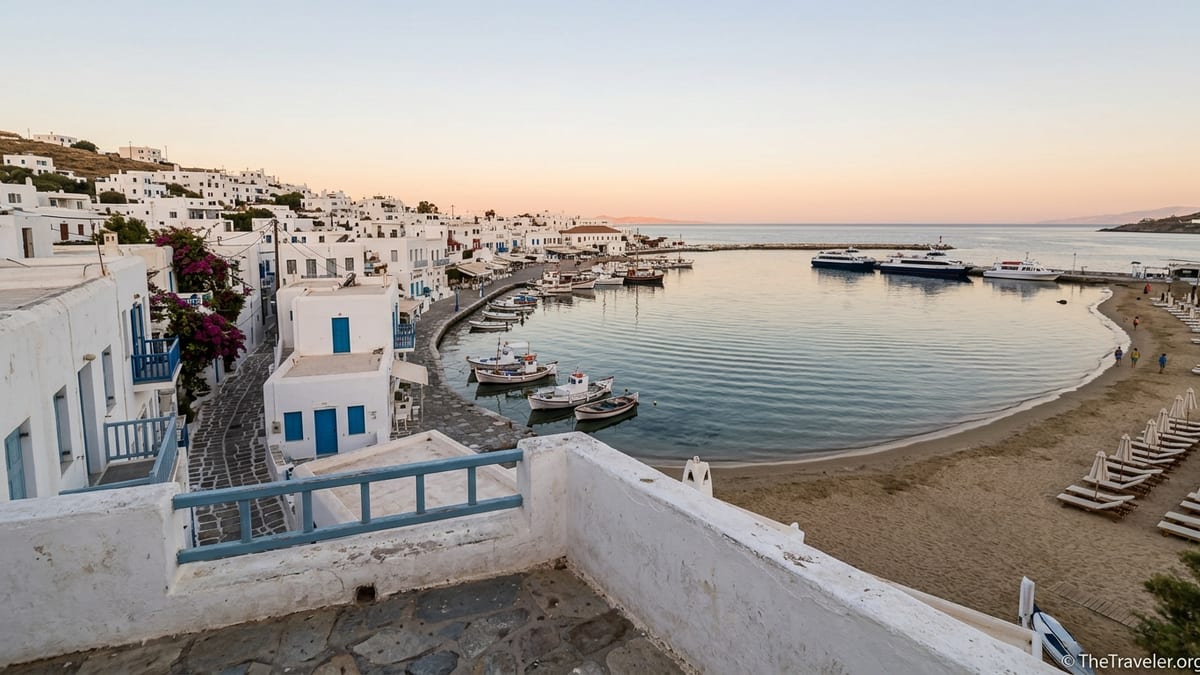
Where the Greek Islands Are and How They Are Grouped
Greece has thousands of islands and islets, with several hundred inhabited, spread mainly across two seas: the Aegean to the east of the mainland and the Ionian to the west. When people talk about “the Greek islands,” they usually mean island groups rather than individual spots on the map. Understanding those groups is the first step to planning a logical itinerary.
In the central Aegean you find the Cyclades, the classic whitewashed islands that circle the sacred island of Delos. This group includes famous names such as Santorini, Mykonos, Paros, and Naxos, plus quieter islands like Milos and Serifos. South of the Cyclades lies Crete, Greece’s largest island, stretching like a long, mountainous barrier that closes the Aegean Sea.
To the southeast, near the coast of Turkey, sit the Dodecanese islands, including Rhodes, Kos, and Patmos. North of them, also close to Turkey, are the North Aegean islands such as Samos, Chios, and Lesvos. Closer to Athens, in the Saronic Gulf, are Aegina, Hydra, and Poros, popular for short getaways from the capital. Further north in the Aegean, off the coast of the mainland, lie the green Sporades islands like Skiathos and Skopelos.
On the western side of Greece, in the Ionian Sea between Greece and Italy, the Ionian islands form a separate world. These include Corfu, Kefalonia, Lefkada, and Zakynthos, known for lush landscapes, Venetian-influenced architecture, and calm, turquoise waters. For a first trip, most travelers focus either on the Cyclades and nearby Aegean islands or on the Ionian, rather than trying to mix both coasts in a short itinerary.
Which Island Group Is Best for a First Visit
The “best” Greek islands for a first-timer depend on what you want most: iconic postcard views, easy beaches, nightlife, or quieter local life. The Cyclades are usually the most practical starting point. They are well connected to Athens by ferries and flights, offer a wide range of budgets, and give you the classic image of Greece: white cube houses, blue-domed churches, and cliffside sunsets.
Within the Cyclades, Paros and Naxos have emerged as strong bases for first trips. Paros offers attractive villages like Naoussa, plenty of mid-range hotels, and frequent ferries to nearby islands, while often pricing 30 to 40 percent below Santorini at peak times. Naxos is larger and greener, with long sandy beaches near its main town, family-friendly shallow water, and good local food, yet remains more relaxed than Mykonos or Santorini in summer.
If you dream more of greenery and calm seas than stark white cliffs, the Ionian islands are a good alternative for a first trip. Corfu combines beaches, a charming old town with Venetian fortresses, and easy direct flights from many European cities in summer. Kefalonia and Lefkada are favorites for road trips, where you rent a car and drive between beaches rather than rely on ferries.
For travelers who want one island that feels like a small country, Crete is an excellent first choice. You could spend ten days there without leaving, combining archaeological sites like Knossos near Heraklion, city life in Chania or Rethymno, and hikes through gorges such as Samaria. The trade-off is that you will focus on one island instead of sampling several, but the logistics are simpler for a first-timer.
Starter Islands: Concrete Suggestions by Traveler Type
For a typical first-time trip of 8 to 10 days in summer, a realistic pattern is Athens plus two islands in the same group. One classic route is Athens, then Mykonos, then Santorini, returning by flight to Athens. Mykonos provides upscale beach clubs, nightlife, and well-serviced beaches such as Psarou and Paradise, while Santorini offers the dramatic caldera views and villages like Oia and Fira. This route is popular but also the most expensive and crowded in July and August.
Travelers who want a more balanced and affordable introduction often choose Paros and Naxos instead. For example, you might fly into Athens, take a high-speed ferry to Paros, stay in Naoussa for three nights, then continue by ferry to Naxos for four nights. From Paros you can do a day trip to the smaller island of Antiparos; from Naxos you can rent a car for a day to explore mountain villages like Apeiranthos and drive to quieter beaches on the west coast.
If nightlife is not a priority and you prefer a slower pace, consider pairing Naxos with a smaller Cycladic island such as Koufonisia or Amorgos. Another option is Rhodes in the Dodecanese combined with nearby Symi. In that case, you might base yourself in Rhodes Town or Lindos for history, beaches, and restaurants, and take a day cruise to Symi’s colorful harbor or stay one or two nights there for a quieter atmosphere.
Families with young children often choose Naxos, Corfu, or Crete. On Naxos, beaches like Agios Prokopios offer shallow, clear water and lots of beachside tavernas where you can eat without moving far from your sunbeds. In Corfu, many resorts on the east coast have calm water and hotel pools. In Crete, the north coast around Chania and Rethymno has family-oriented hotels and easy excursions, such as boat trips to Balos Lagoon or walks through shorter gorges suited to children.
Getting Around: Ferries, Flights, and Realistic Timings
Most Greek islands are linked by a dense web of ferries, especially from late May to late September. The main passenger port for the Aegean is Piraeus, about 30 to 40 minutes from central Athens by metro or taxi in normal traffic. For example, a high-speed ferry from Piraeus to Mykonos often takes around 2.5 to 3 hours, while a conventional ferry can take about 5 hours. To Santorini, fast ferries are usually around 4.5 to 5 hours, while slower ones can exceed 7 hours.
Ferry prices vary widely by route, speed, and season, but as a rough guide, a standard economy seat on a busy summer route like Piraeus to Santorini might cost the equivalent of several dozen euros per person. Seats in business class or on the fastest catamarans cost more. Within the Cyclades, shorter hops such as Paros to Naxos can be under two hours and considerably cheaper. When planning, remember that boarding and disembarking are energetic affairs: you carry your own luggage on and off the ship and need to be ready to move quickly when the ramp goes down.
Several islands also have airports with direct flights from Athens and, in season, from other European cities. Mykonos, Santorini, Paros, Naxos, Rhodes, Kos, Corfu, Zakynthos, Kefalonia, Skiathos, and Crete all have airports that regularly serve domestic flights. Flights from Athens to the islands are often about 35 to 50 minutes in the air, but you should allow two hours at the airport in summer because lines at check-in and security can be long.
First-time visitors are often tempted to visit four or five islands in ten days. In practice, every ferry or flight day costs you half a day in packing, transfers, and waiting. A good rule of thumb is to limit yourself to two, at most three, islands in a ten-day trip, and to keep them within the same island group. For instance, combining Mykonos, Paros, and Naxos works well, while attempting Corfu, Santorini, and Rhodes in a single short trip creates long, expensive transit days.
Costs: What You Actually Spend on a Greek Islands Trip
Prices vary by island, season, and how you like to travel, but some patterns are clear. Santorini and Mykonos are the most expensive major islands, with caldera-view suites and luxury beach clubs that can command very high nightly rates and sunbed fees in July and August. In contrast, mid-range guesthouses in islands like Naxos, Paros, or Rhodes can be considerably cheaper for a similar standard of room, especially if you book early or stay just outside the busiest villages.
Food is where many travelers are pleasantly surprised. Away from the most touristy waterfronts, a filling dinner at a neighborhood taverna, with shared plates like Greek salad, grilled fish or souvlaki, house wine, and dessert, can often land in the range of a few dozen euros for two people, especially on less famous islands or outside peak dates. In high-profile areas of Mykonos Town or Santorini’s caldera, the same meal in a trendy restaurant can cost significantly more, particularly if you order cocktails or imported wine.
Daily expenses also include local transport. On many islands, buses connect the main town to popular beaches, and a typical one-way ticket might cost a few euros per person. Renting a small car for a day to explore Naxos or Crete might range roughly from several dozen to over a hundred euros depending on season, insurance, and demand. On some smaller islands or for confident riders, renting a scooter or ATV is common, but first-time visitors should be cautious and ensure their travel insurance covers these vehicles.
To control costs on your first trip, choose one expensive island and pair it with a cheaper one, or skip the highest-priced islands entirely. For instance, you could spend two nights in Santorini for the caldera views, then move to Paros or Naxos for five nights at much lower nightly rates. Booking accommodation and key ferries several months ahead is especially important for July and August, when last-minute prices and availability can be challenging.
Weather, Seasons, and When to Visit the Islands
Most first-time visitors imagine the Greek islands in peak summer: blazing sun, hot temperatures, and full beaches. July and August are indeed the hottest and busiest months, with many islands seeing daytime highs around the low to mid-30s Celsius. The sea is warmly swimmable, nightlife is at its peak, and ferry schedules are dense. The trade-offs are crowds, higher prices, and strong winds, especially in the Cyclades, where the seasonal meltemi wind can be intense for days at a time.
For many travelers, late May, June, September, and early October strike a better balance. In June and September, you typically enjoy warm days, cooler nights, and sea temperatures comfortable for swimming, along with somewhat lower prices and fewer crowds than in August. Restaurant owners have time to chat, and you are more likely to find sunbeds on popular beaches without reserving far in advance. On the other hand, some beach clubs and seasonal restaurants may operate reduced hours at the very start or end of the season.
In spring, particularly April and early May, the islands are often green with wildflowers, and hiking is especially pleasant. However, the sea can still feel cold for long swims, and ferry schedules are less frequent. By late October, many islands begin to “close” for the season, with seasonal hotels and restaurants shutting down; this is less true on larger islands like Crete or Rhodes, which maintain more year-round life.
If you can only travel in peak summer, plan more carefully. Book ferries and accommodation early, choose some less-famous beaches or villages where you can escape the crowds, and consider islands that spread visitors out better, such as Naxos, which has long stretches of beach and inland villages, or Crete, where you can head into the mountains or lesser-known south coast if the main resorts are busy.
Beaches, Swimming, and Safety Considerations
The Greek islands are famous for their beaches, but conditions vary widely. Volcanic islands like Santorini and Milos have dramatic black or red sand and rock formations, while islands such as Naxos or Zakynthos offer long, pale sandy beaches that are softer underfoot. Some beaches are fully serviced with sunbeds, umbrellas, beach bars, and music, while others are wild coves where you need to bring water, snacks, and shade.
On popular organized beaches in places like Mykonos or Paros, you will usually find rows of sunbeds rented by the day or half-day. Prices vary greatly; a pair of loungers with an umbrella on a central Mykonos beach in August can cost far more than on a quieter island, where you might pay only a modest sum. Many organized beaches include showers, changing cabins, and lifeguards in high season. Less developed beaches may have no facilities at all, so check locally before you go, especially if traveling with children.
Swimming safety is generally good, but you should always follow basic precautions. On windy days in the Cyclades, waves and currents can become stronger, and red flags may be raised on lifeguarded beaches. In some rocky areas, sea urchins live near the shore; locals sometimes wear water shoes when entering the water over stones. Jellyfish can appear from time to time in some regions; beach staff or lifeguards will usually warn bathers if there is a problem on a particular day.
Beyond the water, general safety on the Greek islands is relatively high for tourists. Petty theft can occur, especially in crowded lanes of island capitals or around busy ports, so use the same common-sense precautions as in any European destination: keep valuables in a money belt or zipped bag, avoid leaving phones and wallets unattended on the beach, and use hotel safes for passports and extra cash when available. At night, most island towns are lively but feel safe to walk, with families and couples strolling the promenades.
Practical Tips for First-Time Greece and Island-Hopping
For a smoother first island trip, start by booking your international flights into and out of Athens, then decide on one island group and two or three islands at most. Check flight and ferry schedules before finalizing your dates, especially for early season or late season travel when some routes run only a few times per week. If you are landing in Athens in the afternoon or evening, consider spending your first night in the city, then taking a morning ferry or flight to the islands to avoid tight connections.
Pack for strong sun. Even in May and September, you will likely need high-SPF reef-safe sunscreen, a hat, sunglasses, and a light long-sleeve layer for windy evenings. Many visitors underestimate how strong the sun can be when reflecting off white buildings and water. A compact travel umbrella or thin cotton scarf can double as shade on exposed ferry decks or at archaeological sites like Delos or Knossos, where shade is limited.
Card payments are widely accepted in hotels, restaurants, and larger shops, particularly on popular islands and in Athens. Still, it is useful to carry some cash in euros for small purchases such as bus tickets, inexpensive cafés, sunbeds at quiet beaches, or villages where card terminals are less reliable. ATMs are common in main towns, though smaller islands might have only one or two machines, so withdraw before heading into more remote areas.
Finally, remember that the islands are places where local routines and ferry schedules may not always align with rigid plans. Build a little flexibility into your itinerary. For example, avoid booking a last ferry arrival into Piraeus on the same evening as your long-haul flight home; instead, return to Athens the day before. If wind or sea conditions disrupt one beach day, use that time to explore hillside villages, visit a winery, or linger in a café in the main town. Adopting a slower pace is part of the pleasure of a first Greek islands trip.
FAQ
Q1. How many Greek islands should I visit on my first trip?
Most first-time visitors are happiest with two islands in a 7 to 10 day trip, or three islands if you have at least 12 days. This keeps travel days manageable and gives you time to relax instead of constantly packing and catching ferries.
Q2. Is it better to fly or take ferries between the Greek islands?
For longer routes such as Athens to Santorini or Crete, flights save several hours and reduce the impact of rough seas. For shorter hops within the same island group, like Paros to Naxos or Rhodes to Symi, ferries are efficient, scenic, and usually the only practical option.
Q3. Are the Greek islands expensive compared with mainland Greece?
Popular islands like Mykonos and Santorini are noticeably more expensive than most mainland destinations, especially for accommodation and nightlife. Many other islands, such as Naxos, Paros, and parts of Crete, can be only slightly pricier than the mainland if you eat in local tavernas and avoid the most upscale areas.
Q4. Do I need to book ferries and accommodation in advance?
In July and August it is wise to book both ferries and accommodation several weeks or even months ahead, especially on famous islands. In shoulder seasons like late May, June, and September, you often have more flexibility, but booking your main long-distance ferries and first nights in advance still provides peace of mind.
Q5. Can I drink the tap water on the Greek islands?
On some large islands and in many mainland cities the tap water is treated and technically safe, but visitors often find it tastes mineral-heavy. On smaller islands, locals may recommend using bottled water for drinking while using tap water for brushing teeth and washing; always check what your host advises when you arrive.
Q6. Do I need a car on the islands?
It depends on the island and your plans. Compact islands with good bus networks, like much of Naxos or Paros, can be explored by public transport and occasional taxis. Larger or more mountainous islands, such as Crete or Kefalonia, are much easier to experience fully with a rental car for at least a few days.
Q7. Is it safe to travel solo on the Greek islands?
Solo travelers, including many women, generally report feeling safe on the Greek islands, especially in well-visited resort areas. As always, use standard precautions: avoid walking alone in very dark or isolated areas late at night, keep an eye on your drink in bars, and share your itinerary with someone at home.
Q8. What should I wear for evenings on the islands?
Evenings on most islands are relaxed. Lightweight dresses, linen shirts, shorts, and sandals are standard, with a light sweater or shawl for breezy nights. Very upscale venues in places like Mykonos Town may expect smart-casual outfits, but there is rarely a strict dress code.
Q9. How early should I arrive at the ferry or airport?
In peak season, aim to be at the ferry port at least one hour before departure, or earlier if you need to collect physical tickets from a kiosk. For flights, arriving at the airport around two hours before departure is usually sufficient, but small island airports can get busy when several flights cluster together.
Q10. What is a realistic budget per day on the Greek islands?
Budgets vary widely, but many mid-range travelers plan for a daily spend somewhere between a modest and moderate three-figure sum in euros per couple, excluding flights. This typically covers a comfortable guesthouse, meals in mid-range tavernas, local transport, and small extras, with more needed on high-end islands or if you enjoy fine dining and beach clubs.