


Rafael Núñez International Airport (CTG) is the compact, beachside gateway to Cartagena de Indias. For first-time visitors, its small size is an advantage, but the arrival can still feel hectic as you navigate immigration, baggage, taxis, and ride apps in the Caribbean heat. This guide walks you step by step through what to expect at CTG today, how to reach Bocagrande and the Walled City smoothly, and what first-time Cartagena travelers should know before leaving the terminal.
Get the latest updates straight to your inbox!
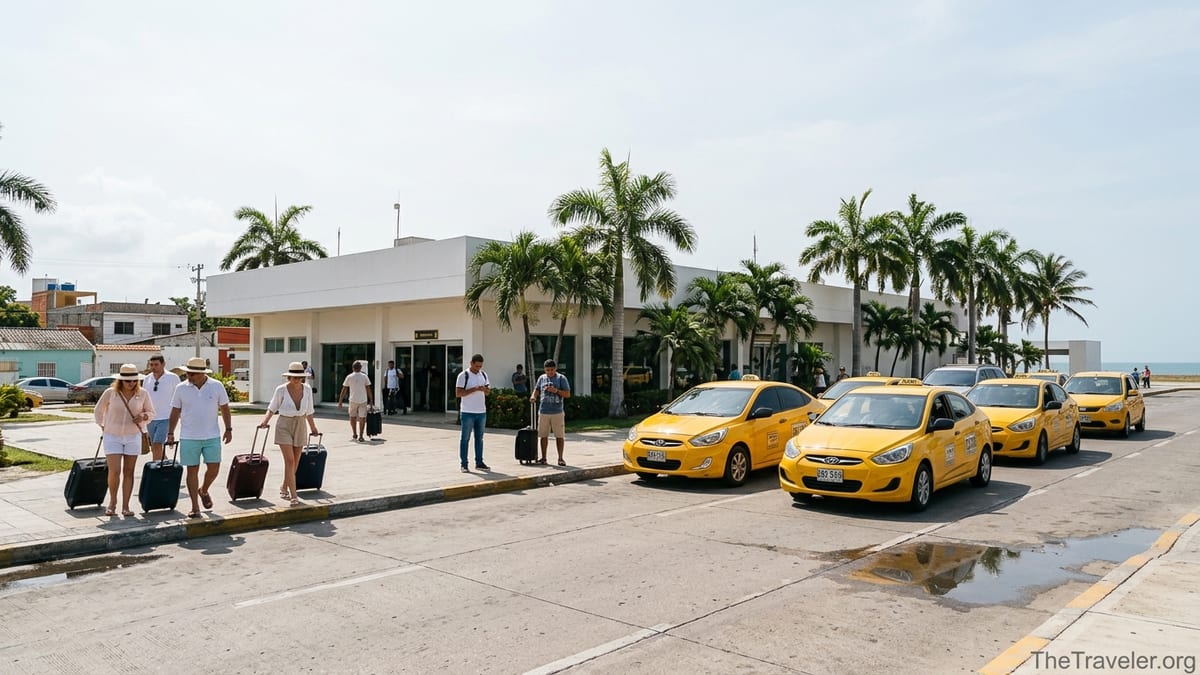
Understanding Rafael Núñez International Airport Today
Rafael Núñez International Airport sits in the Crespo neighborhood, just north of Cartagena’s historic center and the hotel strip in Bocagrande. The distance is short. The airport is roughly 3 kilometers from the Walled City and about 8 to 9 kilometers from central Bocagrande, which means most city transfers run 15 to 25 minutes in normal traffic. That short hop is one of the big advantages of flying into Cartagena compared with other Colombian cities where transfers can take an hour or more.
CTG has a relatively simple layout for passengers. There is one main terminal building divided between domestic and international sides. International arrivals use a dedicated arrivals hall where you will clear immigration, collect your luggage, and then pass customs. Once you exit customs, you step directly into a compact public arrivals area with ATMs, a few small cafés, phone shops, and the official taxi desk. The departures level is just upstairs, with check-in counters, security, and the boarding gates, so it is easy to move between levels on foot if you need to reach departures to meet a driver.
The airport operates long days, with many flights from Bogotá, Medellín, and other Colombian cities, as well as international services from hubs such as Miami and Panama City. That means arrivals are spread across the day, but congestion is typical in the mid-morning and late afternoon waves when multiple jets arrive close together. At these times, immigration lines can stretch to 30 to 60 minutes, while late evening and mid-day flights often move faster.
Inside the terminal, services are straightforward rather than luxurious. You will find a few cafés and snack bars, small convenience shops, mobile phone operators selling local SIM cards, and car rental counters. There are seating areas but not enough for every passenger during peak times, and air conditioning can feel weak near the doors. Plan on handling essentials like cash, data, and transportation arrangements efficiently, then heading to your hotel where you will be more comfortable.
Arrivals: Immigration, Baggage Claim, Money and SIM Cards
After landing at CTG on an international flight, you will disembark directly into the immigration area. Colombia now uses a mix of staffed booths and automated e-gates for certain passport holders, though availability can vary. Have your passport, completed check-in documents and accommodation address ready. For many nationalities, a tourist entry of up to 90 days is granted on arrival, but always confirm current rules with your airline or consulate before travel since requirements can change.
Once stamped in, you walk a short distance to baggage claim. CTG is small enough that even if you are at the last carousel, it is only a few steps away. Baggage delivery is generally on par with other regional airports. During busy holiday weeks like Christmas or Easter, waits can stretch toward 30 to 40 minutes, but at quieter times luggage can appear in 10 to 15 minutes. While you wait, look around for local bank ATMs near baggage claim or just beyond customs. Using a bank ATM to withdraw Colombian pesos typically gives better rates than airport currency exchanges or withdrawing large amounts from a hotel ATM later.
After customs, you step into the public arrivals hall. On your right or left side you are likely to see mobile providers such as Claro or Movistar operating small kiosks that sell prepaid SIMs and eSIM activations. Many travelers arriving in 2026 report paying roughly the equivalent of 10 to 20 US dollars for a package including several gigabytes of data and local calls for a week or more. Bringing an unlocked phone allows you to get connected immediately, which makes it much easier to use apps like Uber or WhatsApp to coordinate transfers.
If you prefer to avoid dealing with phones and cash right away, you can walk directly to the official taxi stand in arrivals and pay in cash. However, even if you plan to use taxis, having at least some pesos on hand is helpful for small differences in agreed fares or tipping porters. A common routine for many first-time visitors is: withdraw roughly the equivalent of 100 to 150 US dollars in pesos at the airport ATM, buy a local SIM if needed, then head to the taxi desk or meet a pre-booked transfer outside.
Ground Transport Options: Taxis, Uber and Transfers
The moment you step outside Rafael Núñez International’s arrivals doors, you will encounter drivers calling out offers for taxis, private cars, and shuttles. It can feel chaotic. The key is to know that Cartagena has an official taxi system linked to the airport and that ride-hailing apps such as Uber and Cabify are also active in the city. Regulations around where ride-hailing drivers can stop at the terminal evolve over time, but in practice many travelers in 2026 successfully use both official taxis and ride apps to leave CTG.
Official airport taxis are the most straightforward choice for first-time visitors. Inside the arrivals hall there is usually an official taxi desk or kiosk where you can tell the clerk your hotel name, for example “Hotel Movich in the Centro Histórico” or “Hyatt Regency in Bocagrande.” The clerk checks the airport’s current fare table and prints a slip with the price. You then hand this slip to the driver outside. Recent estimates from taxi fare calculators and local guides indicate that trips from the airport to central Bocagrande often fall roughly in the 25,000 to 35,000 Colombian peso range in 2026, while trips to the Walled City are typically a bit less due to the shorter distance. Actual fares vary with traffic patterns and city regulations, so treat these as ballpark figures.
Ride-hailing services like Uber and Cabify operate in Cartagena and list Rafael Núñez International Airport as a pickup location. When ordering a ride, travelers often find that meeting points work more smoothly just outside the main arrivals crush. A common strategy is to request the ride in the app once you are past customs, then walk a short distance toward the departures level or to a quieter curb area in front of the terminal where your driver can stop briefly without blocking traffic. Expect Uber fares to fluctuate with demand. Many visitors report that, at off-peak times, an Uber from CTG to hotels in Getsemaní or Bocagrande can be mildly cheaper than the posted airport taxi rate, while late-night or peak-demand pricing can close that gap.
Private transfers are another option, especially favored by travelers arriving on late-night flights or those carrying bulky luggage or surfboards. Many hotels in Bocagrande and the Walled City offer pre-arranged pick-up service for a fixed fee, often similar to or slightly higher than the official taxi rate. You will usually meet the driver with a sign in the arrivals hall. Independent transfer companies also sell services online, quoting prices in US dollars per vehicle. These services can be cost-effective for small groups. For example, a family of four heading to a mid-range hotel in Bocagrande may pay a single flat rate comparable to two separate taxis.
From CTG to Bocagrande: Beachfront Hotel Strip
Bocagrande is Cartagena’s modern beachfront strip, lined with high-rise hotels such as the Hyatt Regency, Hotel Almirante, and many apartments rented on short stays. The area lies south of the airport along the coastline. The drive, in light traffic, can be as quick as 15 minutes. During busy late afternoons or holiday weekends, the coastal road can slow significantly, stretching the trip toward 30 to 40 minutes, especially if there are events or cruise passenger movements in town.
For first-time visitors, the simplest way from CTG to Bocagrande is the official airport taxi. At the taxi desk, you can show the printed address of your hotel, for example “Carrera 1 No. 12-118, Bocagrande,” and confirm the fixed rate for the “Bocagrande / Laguito / Castillogrande” zone. Because Cartagena taxis usually do not use a meter, it is important to have this slip that specifies the price before getting into the car. Once seated, drivers typically take the coastal road past the Walled City ramparts before turning into Bocagrande’s main avenue.
Travelers who prefer ride apps can check prices on Uber or Cabify for a sense of cost before deciding. If the apps show a long wait or high surge pricing, an official taxi is usually faster. If the wait is short and the app price looks competitive, you can follow the instructions in the app to reach the pickup point. For example, some travelers choose to walk out of arrivals and head toward the departures curb to get away from the taxi line and meet their ride more quietly.
Once in Bocagrande, most hotels and apartment buildings have doormen or security personnel who can help with luggage and point you to check-in. The neighborhood is oriented around the main beachfront road, so even if your driver is unfamiliar with a smaller side street, giving a nearby hotel’s name often helps. For example, if you are staying in a small apartment building behind the Hyatt Regency, you can tell the driver “near the Hyatt Regency Bocagrande” and then guide the final block or two using your phone’s map.
From CTG to the Walled City and Getsemaní
The Walled City, or Centro Histórico, is Cartagena’s postcard-perfect colonial core. Just outside the walls sits Getsemaní, a lively neighborhood packed with boutique hotels, restaurants, and bars. Because the airport lies only a few kilometers away, transfers to these areas are among the quickest and most popular routes from CTG. In normal conditions, an official taxi ride to a hotel near Plaza Santo Domingo inside the walls may take 15 to 20 minutes; a ride to a guesthouse near Plaza de la Trinidad in Getsemaní is often closer to 10 to 15 minutes.
When using an airport taxi to reach the Walled City, you again start at the taxi desk in arrivals. Mention your hotel by name, such as “Hotel Bastión Luxury” or “Casa San Agustín,” and the staff selects the correct fare zone for Centro Histórico. Because streets inside the old city can be narrow and partially pedestrianized, some drivers may drop you at the nearest accessible corner rather than directly at your door. This is common around small plazas and on evenings when streets are crowded. To avoid confusion, look at your route in a map app and be prepared for a short walk on cobblestones.
Getsemaní is usually a little easier for vehicle access because several streets remain open to cars and taxis. If your hotel is on or near Calle del Guerrero, Calle de la Media Luna, or Calle San Andrés, drivers can usually stop a few steps away from your accommodation. For ride-hailing, using the exact hotel pin in the app helps prevent drivers from defaulting to the main entrance of the Walled City. Travelers commonly compare ridesharing and taxi prices and choose based on wait time. For example, if Uber shows a car five minutes away at a moderate price, it can be a convenient option; if no cars are nearby, the official taxi line is the safer bet.
At peak festival periods or during large cruise ship visits, entry to Centro Histórico can slow, especially around Puerta del Reloj and Plaza de los Coches. If your driver anticipates heavy congestion at a particular gate, they may suggest entering near another access point or dropping you slightly outside the walls. This is normal in Cartagena’s compact center. As a visitor, keep valuables close as you walk your final block or two and enjoy your first glimpse of Cartagena’s famous balconies and plazas.
Car Rental, Parking and When Driving Makes Sense
Several international and local car rental companies maintain desks at Rafael Núñez International Airport. You will typically see the counters in or near the arrivals hall, with brands that often include well-known international names alongside Colombian agencies. If you have reserved a vehicle in advance, you will complete the paperwork at the counter and then either walk or take a short shuttle to the parking area where the cars are kept. Walk-up rentals are possible but often more expensive and less predictable in terms of vehicle availability.
For many first-time Cartagena visitors, renting a car is not necessary and can even be a liability. The main tourist areas of Centro Histórico, Getsemaní, and Bocagrande are compact and saturated with taxis and ride-hailing cars. Parking in and around the Walled City is limited and often paid. Hotels in Centro frequently lack on-site parking, and nearby garages can add a significant daily cost. Unless you plan to explore beaches or destinations far outside the city, such as Playa Blanca early in the morning or the Totumo Mud Volcano, relying on taxis and ride apps usually proves cheaper and less stressful than driving yourself.
If you do choose to rent a car at CTG, make sure your reservation clearly lists insurance coverage acceptable under Colombian law. Inspect the vehicle carefully for existing scratches or dents and ensure they are recorded before you leave. Once on the road, expect local driving styles that include quick lane changes and frequent stopping. Within Bocagrande and the Walled City perimeter roads, traffic can be dense and slow at peak times, so driving offers little time savings over taxis.
Parking at or near the airport itself is relatively simple. CTG has surface parking lots close to the terminal where you can leave a car for short or longer stays, paying by the hour or day. If you are picking up friends or family arriving on a later flight, you can park, walk into the terminal to meet them, and then exit together. For visitors flying into Cartagena, however, leaving a rental car parked at the airport overnight rarely makes sense. It is typically better to rent only for the days when you truly need to travel beyond the city and to return the car at the airport or a city location afterward.
First-Time Cartagena Tips Right From the Airport
Stepping out of the airport in Cartagena means stepping into coastal Caribbean heat and humidity. Light clothing, sunscreen, and a reusable water bottle in your carry-on will make that first hour significantly more comfortable. After collecting bags, consider a quick restroom stop and water purchase in the terminal before heading for taxis. Once outside, shade can be limited and taxi lines exposed to the sun, so a few minutes of preparation inside can help.
Safety perceptions are a common concern for first-time visitors. Around CTG, the environment is typically busy but functional. Official airport taxis that you book through the desk are generally considered the safest and most straightforward option for new arrivals, especially at night. If you choose Uber or another app, confirm the license plate and driver name carefully before getting into the car and avoid sharing a ride with strangers who approach you in the arrivals area. In the city, the tourist zones of Centro, Getsemaní, and Bocagrande are heavily trafficked and policed, but normal big-city precautions apply: keep smartphones discreet when not in use, carry only the cash you need, and avoid walking alone along empty streets late at night.
Money and payment habits can affect how smooth your first hours go. While many mid-range and higher-end restaurants and hotels in Cartagena accept cards, small shops, taxis, and street vendors tend to prefer cash. With airport taxi fares and small purchases, paying in pesos is easier than trying to use foreign currency. As a practical example, if your hotel room is prepaid and you only need to cover a taxi to Bocagrande plus your first dinner, withdrawing the equivalent of 50 to 80 US dollars in pesos at the airport is usually enough to start, with the option to top up at ATMs in town.
Language is another factor to plan for. English is spoken in many hotels, tourist restaurants, and some transfer companies, but a majority of taxi drivers and small shopkeepers speak mostly Spanish. Having your hotel address written down, either printed or saved as a screenshot on your phone, helps a great deal. Simple phrases like “al hotel en Bocagrande por favor” or “al Centro Histórico, por esta dirección” go a long way. Using translation apps offline can also fill the gaps.
FAQ
Q1. How long does it usually take to get from Rafael Núñez International Airport to the Walled City? In normal traffic, the drive from CTG to most hotels in the Walled City takes around 15 to 20 minutes. At busy times such as late afternoons or holiday weekends, it can stretch closer to 30 minutes.
Q2. What is a typical taxi cost from the airport to Bocagrande? Official airport taxi fares are set by zone and can change, but many travelers in 2026 report paying in the rough range of 25,000 to 35,000 Colombian pesos from CTG to central Bocagrande, depending on exact location and time of day.
Q3. Can I use Uber or other ride apps at Rafael Núñez International Airport? Yes. Uber and similar ride-hailing apps operate in Cartagena, and many visitors successfully use them to leave the airport. Pickup rules can shift, but meeting drivers at or near the departures level or a less crowded curb often works more smoothly than right at the main arrivals exit.
Q4. Is it safe to arrive late at night and take a taxi into town? Many flights land in the evening and at night, and official airport taxis regularly operate at these hours. Most visitors who use the airport taxi desk and go directly to hotels in the Walled City, Getsemaní, or Bocagrande report uneventful rides. As always, avoid unlicensed drivers who approach you aggressively and confirm the fare before departure.
Q5. Should I rent a car at CTG for a short stay in Cartagena? For most first-time visitors staying primarily in the Walled City, Getsemaní, or Bocagrande, renting a car is not necessary. Taxis and ride apps cover most needs, and parking can be difficult and costly in central areas. Renting a car only makes sense if you plan significant day trips outside the city.
Q6. Where can I buy a SIM card or eSIM at the airport? After customs in the arrivals hall, you will usually find small kiosks from major Colombian mobile operators selling prepaid SIM cards and data packages. Having an unlocked phone allows you to activate service on the spot so you can immediately use maps, messaging, and ride apps.
Q7. Do I need Colombian pesos immediately, or can I pay everything by card? Cards are widely accepted at many hotels and larger restaurants, but taxis, small cafés, and street vendors often prefer cash. Withdrawing a moderate amount of pesos from a bank ATM at the airport is advisable so you can comfortably pay your first taxi and small expenses.
Q8. How early should I arrive at CTG for my departure flight? A common rule of thumb is to arrive around 2 hours before domestic flights within Colombia and about 3 hours before international departures. During peak holiday periods or if you need to check bags and handle tax refund or documentation issues, giving yourself extra time adds a margin of safety.
Q9. Are there places to eat or get coffee at Rafael Núñez International Airport? Yes. The terminal has several small cafés and snack bars where you can buy coffee, soft drinks, and simple meals or pastries. The choice is more limited than at large hubs, so many travelers grab something light at the airport and then plan to eat more fully once they reach the city.
Q10. What is the main takeaway for a first-time traveler arriving at CTG? The main takeaway is that Rafael Núñez International Airport is small, busy, and close to the city. If you arrive with your hotel address written down, some pesos in hand, and a clear plan to either use the official taxi desk or a ride app from a known meeting point, your transfer into Cartagena will usually be straightforward. From there, most of the city’s highlights lie just a short ride away.