


More news on this day
Portugal’s rail tourism prospects have received a significant lift as Rail Europe integrates national railway operator Comboios de Portugal into its business-to-business booking platform, expanding international access to Portuguese train services.
Get the latest news straight to your inbox!
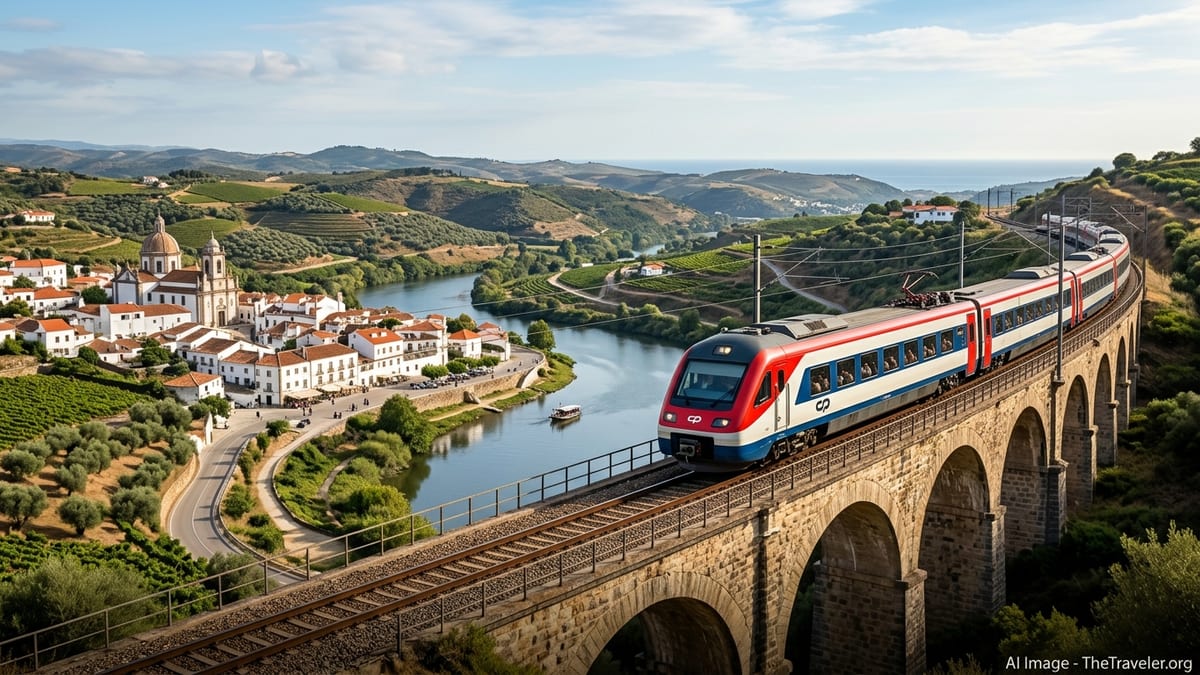
New Connectivity Deal Brings Portugal Onto Global Rail Maps
Rail Europe, a major distributor of European train products to the global travel trade, has added Comboios de Portugal, the country’s national rail operator, to its booking network for agencies and tour operators. Publicly available information on the partnership indicates that travel sellers using Rail Europe’s portal and application programming interface can now search, book and manage CP services alongside other European rail carriers in a single environment.
The integration follows strong trade demand for better access to Portuguese rail, according to industry coverage of the announcement. Until recently, Portugal was listed among the markets not directly connected to Rail Europe’s systems, limiting the visibility of domestic services to customers planning multi-country itineraries. The change means Portuguese rail journeys will appear alongside trains in Spain, France, Italy and other established markets when advisors build itineraries for international clients.
Comboios de Portugal operates the bulk of passenger rail in the country, including Alfa Pendular and Intercidades services linking Lisbon, Porto, Faro and other key cities, as well as regional lines that serve inland destinations. Bringing this network onto a global B2B platform is expected to make it easier for long-haul markets to include Portugal within broader European rail tours, without having to navigate separate booking systems.
Reports on the Rail Europe platform highlight that the integration covers multiple fare types and supports after-sales actions such as exchanges and cancellations within the same interface. This is designed to give travel agencies a more seamless way to combine Portuguese segments with other rail products, potentially increasing the share of visitors who choose trains over domestic flights or self-drive options.
Stronger Platform for Multi-Country Itineraries in Iberia
Rail Europe already works with major Spanish operators including Renfe, iryo and OUIGO Spain, and trade media note that the addition of CP allows agencies to construct Spain–Portugal rail journeys in one place. For travellers, this opens the door to itineraries such as high-speed links between Madrid and the Portuguese border paired with domestic services onward to Lisbon, Porto or the Algarve coast.
European tourism reports show a growing interest in rail-based holidays and in visiting destinations considered outside the continent’s traditional gateways. Sector analysis from organisations such as the European Travel Commission points to expanded rail capacity as a catalyst for exploring lesser-known regions, and Portugal is increasingly cited as a beneficiary of this trend as travellers seek low-carbon alternatives to short-haul flights.
By positioning Portuguese routes inside a familiar booking ecosystem for international agents, the new link is expected to support more cross-border journeys. Industry observers suggest that tour operators specialising in independent rail holidays can now more easily route clients through Iberia using a mix of high-speed and long-distance services, while still issuing tickets and documentation through Rail Europe’s consolidated systems.
The development also aligns with broader European Union efforts to raise the attractiveness of rail for leisure travel. Recent policy papers from Brussels reference closer coordination between transport and tourism stakeholders, with night trains and scenic routes promoted as experiences in their own right. Easier access to Portuguese rail inventory through a pan-European distributor fits within that policy context by making sustainable travel options more straightforward to book.
Tourism Growth Creates Tailwinds for Portugal’s Rail Sector
Portugal’s tourism industry has expanded steadily in recent years, with official statistics indicating record guest numbers and rising overnight stays from international visitors. National tourism data platforms report that the country is on track to welcome around 30 million international tourists annually, consolidating its status as one of Europe’s most competitive destinations.
At the same time, domestic authorities and international organisations such as the OECD have stressed the importance of dispersing visitors more evenly across the territory and reducing pressure on major urban hotspots. Rail is seen as a critical tool for channelling demand beyond Lisbon and Porto, helping travellers reach medium-size cities, UNESCO-listed sites and nature areas in a lower-impact way compared with car-based tourism.
The Rail Europe–CP integration could therefore support policy goals by guiding more foreign visitors toward rail as they move around the country. When agents in markets such as North America or Asia search for European city pairs, Portuguese destinations and connecting trains will now be more visible in the results. This increased exposure may encourage travellers to consider routes that link iconic cities with inland wine regions, historic villages or Atlantic coastal towns using existing rail corridors.
Economic analysis from tourism bodies in Portugal also highlights the role of rail in lengthening stays and increasing average expenditure, as multi-stop itineraries often lead visitors to spend nights in several regions rather than remaining in a single hub. Easier packaging of CP services within international rail passes and multi-country tickets could further amplify these effects.
Benefits and Challenges for Travel Agencies and Travellers
For the travel trade, the immediate benefit of the new integration lies in operational efficiency. Agencies accustomed to working through Rail Europe’s B2B channels can now retrieve live CP schedules, fares and seat availability without switching systems. This reduces manual workloads, supports faster quotation times and allows consultants to react more quickly to schedule changes or disruption.
Travel advisors also gain additional flexibility in tailoring itineraries. With CP inventory accessible alongside products from other European rail companies, agencies can adjust connections, add stopovers or upgrade seating classes across several countries within a single booking flow. This is particularly valuable for high-value, custom-made journeys, where clients expect detailed route planning and straightforward documentation.
For travellers, one of the most noticeable changes will be the ability to incorporate Portuguese rail legs when purchasing complex multi-country trips from a single retail point. Many customers still prefer to book through agencies or tour operators for European rail, especially when language barriers, payment issues or unfamiliar booking rules are a concern. Centralising CP tickets within the Rail Europe environment can help remove friction that previously led some visitors to default to internal flights or car hire.
However, experts also point out that distribution improvements must be matched by on-the-ground capacity and service quality. Portugal’s railway infrastructure has been undergoing modernization, including electrification and signalling upgrades on core routes, yet some regional lines require further investment to meet rising demand. The success of the new partnership will depend in part on continued progress in these areas, ensuring that the travel experience meets expectations generated by easier international access.
Positioning Portugal in the Shift to Low-Carbon European Travel
The Rail Europe–Comboios de Portugal tie-up comes at a time when climate-conscious travellers and policymakers are placing greater emphasis on lower-emission modes of transport. Multiple studies highlight rail as one of the most energy-efficient options for medium-distance journeys within Europe, and international campaigns are encouraging visitors to substitute trains for short-haul flights where practical.
Portugal has signalled its ambition to align tourism growth with sustainability objectives, framing environmental responsibility and regional development as core pillars of its national tourism strategy. Integrating CP into an influential international distribution system supports those aims by making it simpler for tour operators to promote rail-inclusive packages and for visitors to select itineraries that reduce their carbon footprint.
Industry analysts observe that as more national operators join global platforms, rail holidays are becoming easier to compare, price and book across borders. The inclusion of Portuguese services strengthens Iberia’s position within this evolving landscape, offering travellers a broader choice of scenic and cultural routes that can be experienced largely by train.
With tourism demand for 2027 rail journeys already showing strong growth in Southern European destinations, the timing of the Rail Europe and CP integration places Portugal in a favourable position to capture a larger share of eco-minded and experience-driven travellers looking to explore Europe by rail.