


More news on this day
As U.S. travelers again face mass delays and cancellations after a nationwide ground stop, attention is turning to what, if anything, airlines such as United and Southwest are doing for the passengers left sleeping in terminals and scrambling for new flights.
Get the latest news straight to your inbox!
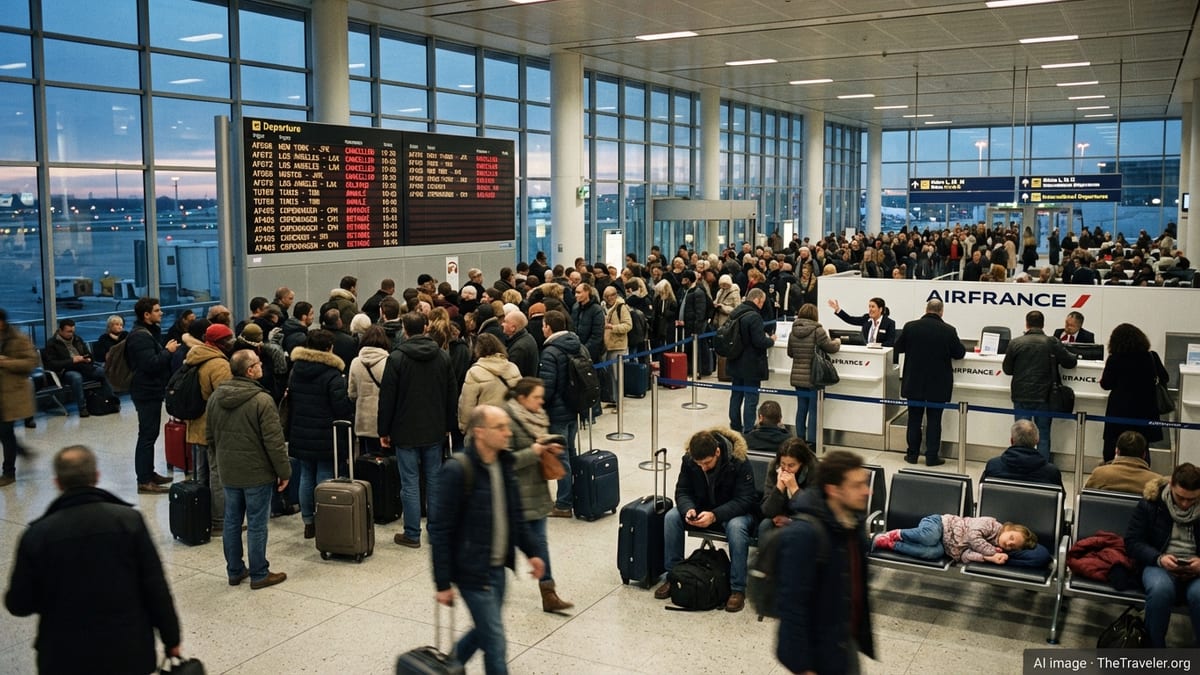
What Airlines Owe Stranded Passengers Under Federal Rules
Federal regulations give stranded passengers fewer automatic protections than many assume. Current rules focus on refunds rather than broad compensation for extra costs such as hotels or meals when flights fall apart. Publicly available guidance from the U.S. Department of Transportation notes that if an airline cancels a flight or makes a significant schedule change and a traveler chooses not to travel, the carrier must provide a refund, even for most nonrefundable tickets. That refund requirement applies regardless of whether the disruption stems from weather, mechanical issues, or wider system problems.
However, federal rules do not require airlines to pay for hotel rooms, meal vouchers, or ground transportation when travelers are stranded, even when long delays or cancellations are linked to an airline’s own operations. Government materials and consumer advisories emphasize that these additional supports are offered on a voluntary basis under each carrier’s customer service plan, creating a patchwork of policies that varies from one airline to the next and often depends on the cause of the disruption.
The Department of Transportation has tried to make that patchwork more transparent through an airline customer service dashboard that lists, in plain language, which major U.S. airlines provide meals, hotels, and ground transportation for passengers affected by delays and cancellations within the airline’s control. The dashboard shows that the 10 largest U.S. carriers, including United Airlines and Southwest Airlines, have pledged to provide at least meal vouchers when passengers wait three hours or more after a controllable cancellation, and hotel accommodations when a controllable problem forces an overnight stay.
Separate rulemaking efforts under discussion at the department would go further by potentially requiring airlines to cover meals, lodging, and related transportation expenses for stranded passengers in certain circumstances. But those proposals remain under consideration, and travelers caught in the latest wave of disruptions continue to rely largely on each airline’s voluntary commitments rather than on a single binding standard.
United Airlines: Hotels and Meals When the Airline Is at Fault
United Airlines has aligned itself with the group of large carriers that promise specific assistance when delays and cancellations are deemed controllable, such as those related to mechanical problems or crew availability. According to information summarized on the federal dashboard and in customer service materials, United commits to providing meal vouchers when passengers are left waiting three hours or more for a new flight following a cancellation or significant delay within the airline’s control.
For overnight disruptions that United classifies as controllable, the airline indicates that it provides complimentary hotel accommodation to affected passengers. The federal dashboard also notes that United has committed to arranging or covering ground transportation between the airport and hotel in those scenarios. These benefits are in addition to rebooking assistance, which can include placing passengers on a later United flight at no additional fare difference when the airline is responsible.
When delays or cancellations are caused by factors outside United’s control, such as severe weather or Federal Aviation Administration ground stops, the picture changes. Publicly available guidance explains that in those cases the carrier generally focuses on rebooking passengers on the next available United flight without extra charges, but coverage for lodging and meals is not guaranteed. Instead, stranded travelers may be offered discounted hotel rates or left to cover their own arrangements and then request goodwill credits through customer relations channels.
Travel advisories and consumer advocates frequently highlight an additional protection that still applies regardless of cause: if United cancels a flight or makes a significant change and a traveler decides not to travel, the airline must issue a refund for unused transportation rather than only a flight credit, so long as the traveler does not accept other compensation such as miles or vouchers in place of that refund.
Southwest Airlines: Vouchers, Digital Links, and Post-Trip Reimbursement
Southwest Airlines, which drew intense scrutiny after its late-2022 operational collapse, now provides more detailed public information about how it handles stranded passengers. The carrier’s customer service plan states that for delays of three hours or longer that are within Southwest’s control, or for Southwest-initiated cancellations within its control, the airline will rebook customers on the next available Southwest flight to their ticketed destination at no additional cost.
Southwest further explains that customers affected by such controllable disruptions can obtain meal support. If a delay of three or more hours leads to a long wait at the airport, the airline indicates it will provide a meal voucher upon request for participating airport vendors. Where vouchers or accepting vendors are not available, Southwest says it will honor reasonable requests for reimbursement of meal costs submitted after travel, as long as passengers use the airline’s designated form within one year of the disrupted flight.
The carrier also outlines a structured approach to hotels and ground transportation when an overnight stay is needed for controllable reasons. Southwest’s policy materials say that some affected customers will receive a link via text or email that allows them to select hotel accommodations covered by the airline. If the chosen hotel does not provide airport shuttle service, Southwest states that it will either issue a voucher for ground transportation or reimburse reasonable transportation expenses upon request. These details are designed to clarify how stranded travelers can actually access the support the airline has committed to on the federal dashboard.
As with other airlines, Southwest draws a sharp distinction between disruptions within its control and those driven by weather or broader air traffic issues. For events outside the airline’s control, such as the latest nationwide ground stop, Southwest emphasizes rebooking on its own flights and waiving certain fare differences or change fees when schedule changes are substantial. Hotel stays and meals in those situations are generally considered the passenger’s responsibility, subject to occasional exceptions made on a case-by-case basis.
How Other Major Carriers Compare
Other large U.S. airlines, including American Airlines, Delta Air Lines, JetBlue Airways, Alaska Airlines and several low-cost carriers, have made similar but not identical commitments. Public comparison tables compiled by consumer travel outlets and the Department of Transportation show that American and Delta, for example, both pledge to provide meal vouchers after three-hour waits and complimentary hotel accommodations when passengers are stranded overnight due to controllable cancellations or long delays.
Alaska Airlines, JetBlue, Hawaiian Airlines and Spirit Airlines are also listed as providing both meals and hotels for controllable overnight disruptions, while Frontier appears on the dashboard as not committing to complimentary hotel accommodations in those scenarios. Several of the major carriers, such as American and Delta, indicate that they may rebook travelers on partner airlines when necessary, particularly during widespread operational disruptions where seats on their own flights are scarce.
Across these airlines, policies for events outside the carrier’s control show less generosity. During episodes like severe storms, air traffic control outages, or system ground stops linked to government infrastructure, U.S. carriers generally continue to focus on rebooking and fee waivers rather than on covering out-of-pocket expenses for lodging or meals. Government advisories and legal summaries stress that there is no broad federal requirement for airlines to cover those costs, which means travelers must look carefully at each airline’s voluntary commitments and any temporary waivers announced during a particular disruption.
Consumer organizations point out that even when airlines have pledged specific benefits to the Department of Transportation, it can be challenging for stranded passengers to secure what is promised during a chaotic travel day. Travelers are often advised to document offers made by gate agents or call center staff, keep receipts for hotels and meals, and submit formal reimbursement requests if immediate vouchers or accommodations are not provided at the airport.
Practical Steps for Stranded Travelers Right Now
The latest wave of delays and cancellations has highlighted the gap between posted policies and real-time experiences in crowded terminals. Publicly available guidance from regulators and consumer advocates emphasizes that passengers should avoid canceling their own reservations during a systemwide disruption until the airline officially cancels or significantly delays the flight. Canceling first can convert a traveler’s situation from an airline-initiated problem with potential refund rights into a voluntary change with fewer options.
Travelers are also urged to check the Department of Transportation’s airline customer service dashboard before or during a disruption to understand, in advance, what their carrier has committed to provide. Knowing that United and Southwest, for example, both list hotel accommodations and meal vouchers for controllable overnight cancellations can help passengers argue their case at an airport service desk or through a mobile app chat when long lines make in-person help difficult.
When rebooking, experts recommend exploring multiple channels at once, including airline apps, websites, and phone support, while waiting in any physical line. In some cases, airlines may waive fare differences for same-carrier rebooking during major disruptions, but that flexibility often depends on internal classifications of the cause of the delay or cancellation, which passengers may not see directly.
Finally, consumer resources highlight that even after a stressful trip, travelers still have avenues to seek redress. If a promised voucher or hotel is not provided, passengers can submit complaints to the airline in writing and, if necessary, file a consumer complaint with the Department of Transportation. While the current system does not guarantee compensation for every stranded traveler, published policies and refund rules give passengers more leverage than it might appear when their flight plans collapse with little warning.