


More news on this day
As U.S. airports recover from the latest nationwide Federal Aviation Administration ground stop, travelers stuck in terminals or far from home are confronting a familiar question: what, exactly, do airlines owe when flights are halted for reasons beyond their control?
Get the latest news straight to your inbox!
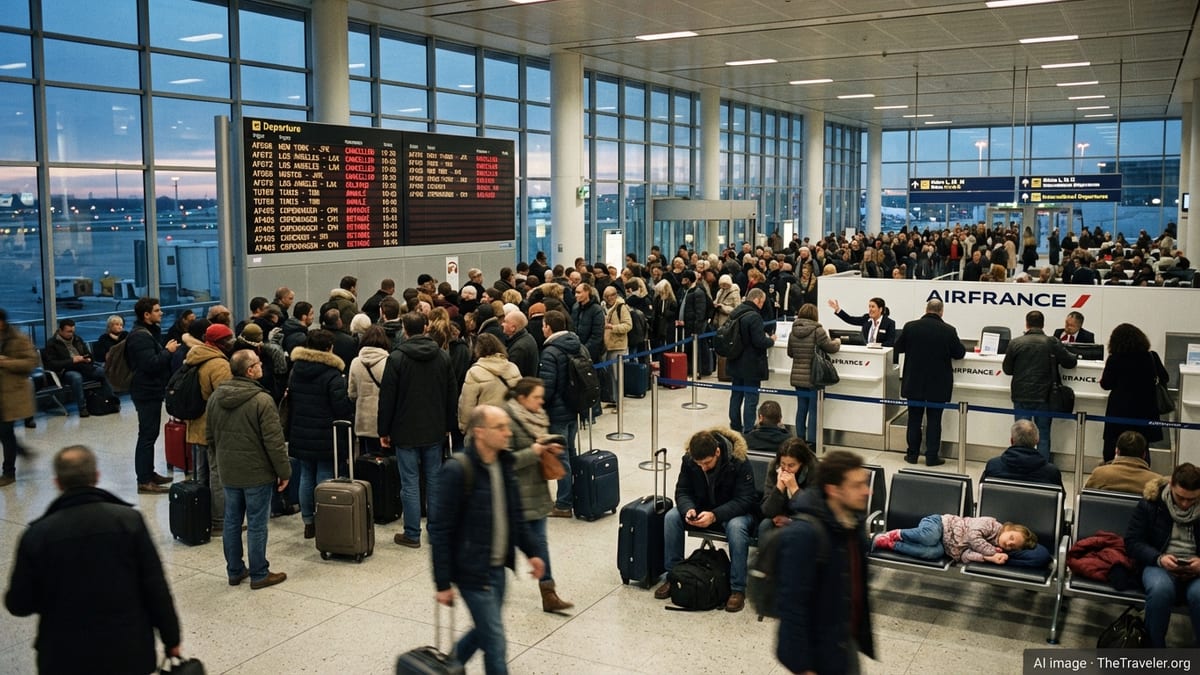
FAA Ground Stops and Why They Matter for Passenger Rights
The United States has experienced only a handful of nationwide ground stops in recent decades, including the current disruption and a January 2023 halt linked to a failure in the FAA’s Notice to Air Missions system. In each case, the order has come from aviation regulators, not from the airlines themselves, and has applied broadly across domestic departures.
Ground stops are typically treated as outside an airline’s control, similar to severe weather or security incidents. Publicly available guidance from the U.S. Department of Transportation indicates that federal rules distinguish between disruptions caused by the carrier and those triggered by external factors such as air traffic control outages or FAA safety directives. That distinction is central to what assistance passengers can demand as a matter of right.
Because the decision to halt departures sits with the FAA, a nationwide ground stop falls into the category of noncontrollable events. Airlines are still responsible for handling customer service and rebooking, but most additional help, including hotel rooms and meal vouchers, depends on airline policies rather than explicit federal mandates.
For travelers, the result is often confusion. Passengers may assume that any large-scale breakdown will trigger automatic compensation. In the current legal framework in the United States, however, the law focuses on refunds and clear disclosure more than on guaranteed cash or accommodation when the cause lies beyond the airline’s control.
What Federal Rules Guarantee When Flights Are Halted
Under U.S. law, the clearest right for passengers affected by a ground stop is the right to a refund if the airline cancels a flight or makes a significant change and the traveler chooses not to travel. Transportation Department refund rules, updated in late 2024, specify that airlines must return money automatically in such situations to the original form of payment, rather than only offering credits or vouchers unless the customer affirmatively chooses another option.
If a flight is canceled outright because departures are frozen, a passenger who decides not to take an offered alternative itinerary is entitled to their money back for the unused portion of the ticket and for any ancillary fees tied to that flight such as seat selection or checked bags. Public guidance from the Transportation Department stresses that airlines may not require customers to accept travel credits in place of a refund when one is due.
Those same federal rules do not, however, require airlines to cover hotel rooms, meals, or ground transportation when the disruption results from something outside the carrier’s control, such as an FAA operational order. Information provided by regulators and widely reported in recent coverage of the nationwide ground stop highlights that there is no general guarantee of accommodation or cash compensation in these circumstances.
Passengers who are rebooked on later flights during a ground stop, and who choose to travel, generally are not entitled to a refund solely because the new itinerary departs later in the day. Regulators note that once a traveler accepts a significantly changed flight and completes the trip, any additional compensation is governed by the airline’s own commitments and, where applicable, state contract law rather than a separate federal payout requirement.
How Airline Policies Treat Ground Stops Versus “Controllable” Disruptions
In recent years, public pressure and federal scrutiny have pushed U.S. carriers to spell out what they will offer during disruptions. The Transportation Department maintains an online cancellation and delay dashboard comparing major airlines’ voluntary promises for events they label controllable, such as internal computer failures or crew scheduling problems. For those situations, large carriers have broadly committed to provide meal vouchers after long waits and hotel rooms plus ground transportation when passengers are stuck overnight.
Those same commitments generally do not extend to FAA ground stops, which airlines categorize as outside their control. Local news outlets and national broadcasters covering the latest halt have emphasized that travelers should not assume that an airline’s controllable disruption promises apply when air traffic control issues or safety directives are involved. Instead, airlines may offer assistance on a case by case basis, often starting with rebooking on their own flights at no extra charge.
Comparisons between the United States and regions such as the European Union and Canada have featured prominently in recent regulatory documents. In those jurisdictions, passenger-protection regimes may require certain services even when delays stem from extraordinary circumstances. By contrast, U.S. regulators have noted that domestic carriers’ obligations beyond refunds remain largely limited to what is laid out in contracts of carriage and customer service plans.
Regulatory filings over the past two years show that U.S. officials have considered, but not yet adopted, rules that would make compensation and services mandatory across the board for airline-caused disruptions. For now, the strongest legal tool for passengers affected by a ground stop is to understand whether the airline categorizes the event as controllable or uncontrollable and then compare the response to the commitments publicized in that carrier’s customer service plan.
Practical Steps for Travelers Stranded by a Ground Stop
For passengers already at the airport when a ground stop takes effect, public consumer guidance suggests a careful balance between flexibility and preserving rights. Analysts advise that travelers avoid canceling reservations on their own through airline apps or websites. If the carrier later cancels the flight because the ground stop persists, the official cancelation can trigger the right to a monetary refund rather than leaving the customer with only a self-initiated change.
Reports from local and national outlets following the latest disruption indicate that airlines have been waiving change fees and fare differences in some cases when passengers move to later departures. Such waivers are policy choices rather than legal requirements in a ground stop scenario, and the scope can differ between carriers. Checking an airline’s alerts page or app before making changes can clarify whether a temporary travel waiver is in effect for the affected dates and airports.
When delays stretch into the evening, travelers can ask gate agents or customer service representatives whether the airline is offering hotel or meal vouchers as a courtesy. Published coverage from consumer advocates notes that some airlines do provide limited assistance even when not legally obliged, particularly if passengers face overnight waits. However, those vouchers are discretionary; there is no overarching federal rule compelling them during an FAA-ordered halt.
Passengers who pay out of pocket for lodging or meals during a ground stop should keep detailed receipts. While reimbursement is not guaranteed, documentation can support later requests to the airline or, in certain cases, claims through travel insurance or credit card protection benefits that cover extended delays. Regulators also remind travelers that they can file complaints with the Transportation Department if they believe an airline has failed to issue a refund that is due.
What Could Change in Future Ground Stops
The latest nationwide halt has renewed attention on passenger rights and regulatory proposals already on the table. A rulemaking effort on controllable delays and cancellations, outlined in the federal regulatory agenda, contemplates requiring airlines to provide specified services such as meals, hotels, rebooking, and transportation to and from lodging when the carrier is at fault. While those proposals do not directly cover FAA-directed ground stops, they could sharpen the distinction between airline-caused and external disruptions.
Recent enforcement actions have also signaled a tougher stance when airlines misclassify events. In a high profile investigation into a major carrier’s winter operational collapse and, separately, in the wake of a large information technology outage at another airline, Transportation Department documents described such breakdowns as controllable, pressing those companies to honor the meal, hotel, and transportation commitments they had advertised to the public.
For now, the framework remains fragmented for passengers stuck in a ground stop. Refunds for cancellations and significant changes are clearly protected, while amenities and compensation hinge on airline-specific policies and discretionary goodwill. Consumer advocates argue that each major disruption adds to the pressure for a more predictable baseline of assistance in the United States, regardless of whether the root cause lies with an airline or an outside system.
As flights gradually resume following the latest FAA order, travel experts say passengers can best protect themselves by knowing the difference between controllable and uncontrollable events, insisting on refunds they are owed, and documenting interactions with airlines. Whether future ground stops play out under a stronger set of national rules will depend on regulatory decisions still taking shape in Washington.