


More news on this day
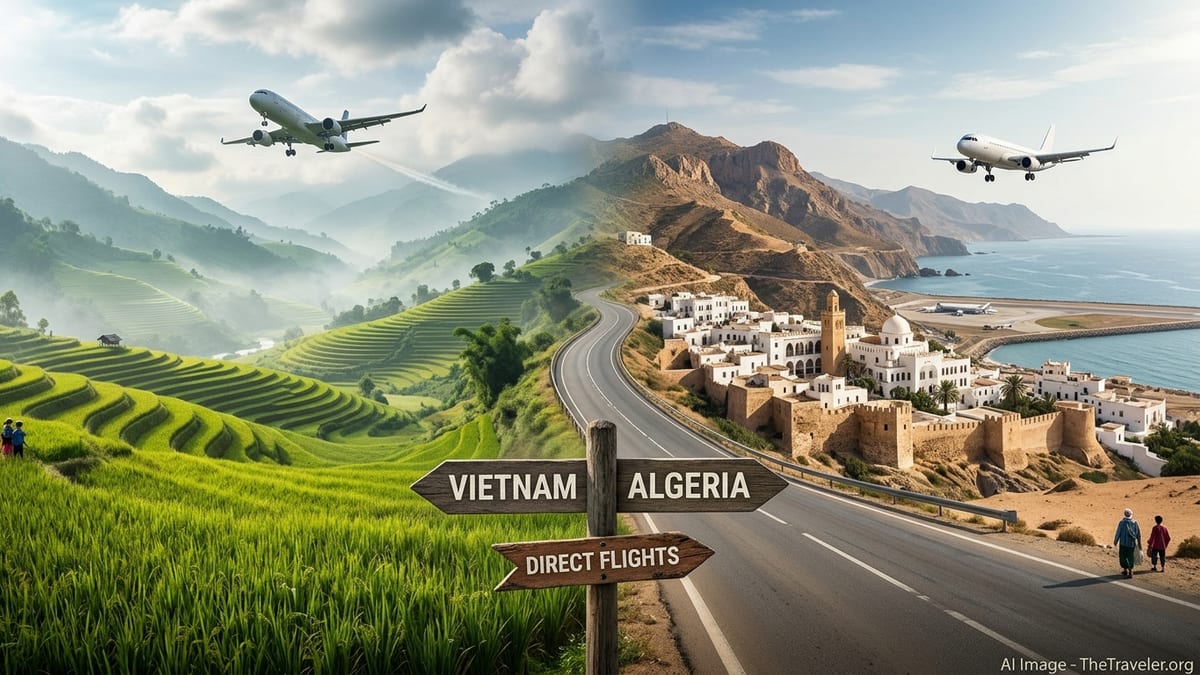
Vietnam and Algeria are moving closer to launching direct air links between Southeast Asia and North Africa, with new diplomatic commitments placing aviation connectivity and tourism growth at the center of an upgraded strategic partnership.
Get the latest news straight to your inbox!
Strategic Partnership Puts Aviation on the Agenda
The prospect of non-stop services between Vietnam and Algeria has gained momentum since the two countries elevated their relationship to a Strategic Partnership in late 2025. Publicly available joint statements from that upgrade highlight transport cooperation, including aviation, as a priority area for implementation in the coming years.
According to the bilateral joint declaration, both sides agreed to expand collaboration in transport, with specific reference to negotiating a bilateral arrangement on direct flights. The stated objective is to improve connectivity and support stronger flows of tourists, business travelers and trade between North Africa and Southeast Asia.
Vietnamese and Algerian officials have also used recent high-level visits to underline the role of air links in unlocking economic potential. Coverage of the 13th meeting of the Vietnam–Algeria Intergovernmental Committee in Algiers describes transport and tourism among the key sectors identified for new cooperation, alongside energy, agriculture and digital transformation.
This emerging aviation agenda is part of a broader effort by Hanoi and Algiers to translate long-standing political solidarity into more tangible economic outcomes. Both governments have signaled that easier travel will be essential if the upgraded partnership is to deliver higher volumes of visitors and investment.
Tourism Demand Grows Despite Lengthy, Indirect Journeys
Although there are currently no direct commercial flights between Vietnam and Algeria, tourism flows are beginning to develop in both directions. Vietnamese media reporting on organized tours notes that travelers typically endure at least two separate flights, often via the Gulf or Europe, with total journey times exceeding 17 hours to reach Algerian destinations.
Despite the distance, Algeria is being promoted to Vietnamese holidaymakers as an emerging destination with a mix of Mediterranean coastline, Islamic and Roman heritage sites, and access points to the Sahara. Articles profiling the market emphasize that groups from Vietnam are increasingly interested in coastal cities such as Algiers and Oran, ancient ruins like Timgad and Djémila, and desert gateways in the country’s south.
On the outbound side from Algeria, publicly available information on Vietnam’s tourism performance shows that the country welcomed more than 12 million international visitors in 2023, driven by its beaches, cultural cities and expanding air network across Asia and beyond. Algerian travelers, who traditionally look to Europe and the Middle East, are seen by Vietnamese tour operators as a promising new long-haul segment seeking fresh destinations in Asia.
Industry observers argue that current multi-stop itineraries and visa procedures limit the scale of this market. However, the willingness of Vietnamese tour groups to undertake long itineraries to Algeria is cited as evidence of underlying demand that could expand rapidly if a direct air route shortens travel times and simplifies planning.
Direct Route Seen as Catalyst for Trade and Investment
The potential impact of a Vietnam–Algeria direct air link extends beyond leisure tourism. Trade data compiled by Vietnamese agencies indicate that bilateral commerce has been growing, with total turnover surpassing 220 million US dollars in 2024, led by agricultural products such as coffee alongside phones, electronics and construction materials.
Reports from Vietnam’s trade office in Algeria describe logistics costs and limited air connectivity as key constraints on business expansion. Proposals to study the feasibility of a non-stop route are framed as a way to reduce transit times for high-value goods, facilitate business travel and support Vietnamese and Algerian firms seeking partners in each other’s markets.
Algeria is Africa’s third-largest economy and an important energy producer, while Vietnam is a fast-growing manufacturing hub and a gateway to wider ASEAN markets. Analysts in both countries point out that improved air links would allow each side to use the other as a regional entry point, taking advantage of trade agreements and established distribution networks.
The planned establishment of a bilateral working group on business cooperation, outlined in the Strategic Partnership documents, is expected to provide a platform for airlines, airport authorities and tourism companies to share data and assess route viability. While no carrier has yet been designated, sector observers suggest that a combination of tourism demand, cargo potential and connecting traffic could ultimately justify regular scheduled services.
Visa Policies and Connectivity Hubs Remain Important
For now, travelers between Vietnam and Algeria continue to rely on existing hub airports in Europe and the Gulf, as well as regional carriers offering connections via cities such as Doha, Istanbul and Paris. Airlines based in these hubs provide the backbone of current traffic, and are likely to remain important even if a direct route is eventually launched.
Publicly available diplomatic information shows that the two governments have also discussed facilitating movement through visa policy. In parallel with aviation cooperation, Vietnam and Algeria have agreed to consider visa exemptions for holders of ordinary passports, a step that could significantly lower barriers for tourists and business visitors if implemented.
Tourism analysts note that improved procedures at consulates, digital visa platforms and clearer travel information in Arabic, French, Vietnamese and English will be necessary to convert interest into bookings. Even in the absence of a non-stop flight, measures that make it simpler to secure travel documents and coordinate connecting journeys can deliver incremental growth.
Observers also underline the importance of aligning aviation talks with airport readiness and tourism product development, including hotel capacity, multilingual guiding services and tailored itineraries for first-time visitors from each country. Without these complementary efforts, a direct route could struggle to achieve sustainable load factors.
Outlook: Opportunity With No Launch Date Yet
Despite the growing policy emphasis on aviation, publicly available information as of mid-November 2026 indicates that no airline or timetable has been formally announced for direct Vietnam–Algeria passenger services. The proposed route remains at the stage of diplomatic commitments, feasibility assessments and broader transport cooperation plans.
Analysts view this as a typical trajectory for long-haul market development, where political agreements and intergovernmental committees lay the foundations before commercial negotiations on aircraft deployment, slot allocation and pricing take place. The recent strengthening of Vietnam–Algeria relations suggests that aviation issues are likely to feature prominently in upcoming rounds of bilateral discussion.
Tourism businesses in both countries are watching closely, promoting Algeria and Vietnam through existing connections while advocating for a faster move toward direct services. Industry briefings highlight the potential for specialist cultural tours, desert and heritage experiences, and combined business-and-leisure trips once travel times shorten.
If realized, a direct air link would create one of the few non-stop corridors between Southeast Asia and North Africa, signaling a new phase in Vietnam–Algeria cooperation. For now, the route remains aspirational, but the alignment of diplomatic intent, emerging tourist flows and trade ambitions is placing aviation firmly at the center of the two countries’ growth plans.