


More news on this day
Thousands of travelers across the United States faced a second day of severe disruption on Saturday, as airlines canceled more than 4,000 flights and delayed thousands more while the nation’s air travel system struggled to restart after an unprecedented nationwide shutdown of departures.
Get the latest news straight to your inbox!
Longest nationwide halt to U.S. flights in decades
Published reports indicate that the Federal Aviation Administration ordered a nationwide ground stop on Friday that halted nearly all departing flights for close to five hours, the most extensive interruption to U.S. air travel since the September 11, 2001 attacks. The shutdown stemmed from a major communications failure that affected systems used by air traffic controllers to direct aircraft across large portions of U.S. airspace.
Data compiled by flight tracking services and cited in multiple news reports show that airlines were forced to cancel nearly 10,000 flights and delay more than 7,000 across the United States on Friday alone, creating one of the most disruptive single travel days in recent history. By early Saturday, ground stops had been lifted and the airspace was technically open, but aircraft, crews, and passengers were stranded far from where they needed to be.
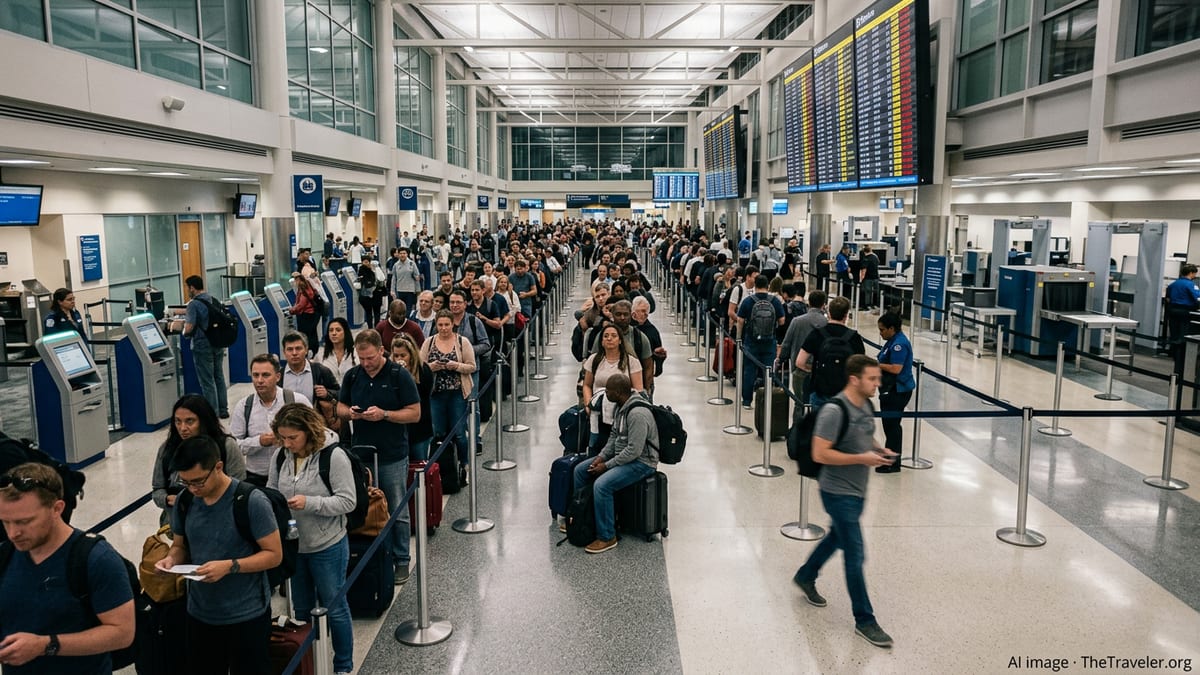
On Saturday, the disruption shifted from a systems crisis to a logistical one. Major carriers canceled more than 4,000 additional U.S. flights and delayed roughly 3,000 more as they attempted to rebuild their networks and move planes and staff back into position. Airports from New York and Washington to Chicago, Dallas, and Los Angeles continued to report lengthy lines, crowded terminals, and departure boards filled with scrubbed and late services.
Communications failure exposes fragile infrastructure
According to publicly available information from federal briefings and airline industry reporting, the immediate trigger for the halt was a massive failure in a network that carries critical radio traffic used by air traffic controllers to communicate with pilots. The outage reportedly affected communications at 17 of the 22 en route centers that manage aircraft during the cruise phase of flight, forcing officials to curtail departures until safe separation between planes could be assured.
Transportation officials have said the breakdown appears to be linked to new technology being added to the nation’s air traffic control system overloading older equipment, creating “intermittent” gaps in radar and voice links between controllers and cockpits. Early assessments circulated in national media coverage emphasize that there is no indication at this stage that the incident was caused by a cyberattack, but investigators continue to review system logs and hardware performance.
The episode has again highlighted longstanding concerns about the age and resilience of key elements of U.S. aviation infrastructure. Recent government audits and industry analyses have warned that some core systems that manage flight information and controller tools were originally deployed decades ago, and that modernization has lagged behind surging traffic volumes and the rising complexity of the national airspace.
Airlines triage schedules and reroute aircraft
As the technical problems eased late Friday, the challenge for airlines quickly became operational. Schedules were thrown off balance nationwide, with aircraft and crews ending the day in the wrong cities and turnaround times compressed by hours. To speed recovery, network planners focused on restoring long-haul links and maintaining service to smaller communities that risked being cut off.
According to Reuters and other outlets summarizing airline statements, American Airlines shifted its priorities on Friday night toward international routes and flights serving smaller cities outside its major hubs, a strategy aimed at repositioning widebody jets and crew members so that the broader schedule could stabilize more quickly. Other large U.S. carriers adopted similar tactics, emphasizing trunk routes between major hubs while trimming frequencies where alternative options existed.
By Saturday afternoon, flight tracking data showed continued heavy disruption, but also signs of gradual improvement as aircraft rotations began to realign. Some airports reported that the majority of cancellations were concentrated in the morning and early afternoon as overnight knock-on effects worked through the system, leaving evening operations somewhat more stable, though still prone to long delays.
Ripple effects for travelers and global networks
The shutdown’s impact extended well beyond U.S. borders. International media reports described delayed or canceled services linking major European and Asian hubs with cities including New York, Washington, Chicago, and Los Angeles. Passengers connecting through the United States on transatlantic and transpacific itineraries often found themselves stranded mid-journey, with limited rebooking options as airlines juggled scarce seats.
At domestic hubs such as Newark Liberty International Airport and Ronald Reagan Washington National Airport, images of departure boards filled with cancellations became emblematic of the disruption. Hotels near major airports in the Northeast and across key hubs in the Midwest and Texas reported surging demand from travelers seeking overnight accommodation as evening departures disappeared from schedules.
Sports leagues and event organizers also faced cascading challenges. Coverage from national sports outlets detailed how professional and college teams in the National Football League, National Basketball Association, National Hockey League, and major college football conferences were forced to adjust travel plans for weekend games, with some teams reviewing bus charters and alternative routings to reach host cities in time.
Questions over modernization and future resilience
The shutdown has intensified scrutiny of how the United States funds and manages upgrades to its air traffic control technology. Recent nonpartisan reports on aviation infrastructure have already flagged gaps between the scale of modernization plans and available funding, as well as persistent staffing shortages affecting several thousand controller positions nationwide.
Analysts note that Friday’s failure follows other high-profile technology incidents in recent years, including outages tied to flight information systems that caused significant but more localized disruptions. While new software tools, data links, and automation are intended to enhance safety and efficiency, each addition also increases the complexity of the overall system and the potential for unexpected interactions between old and new components.
Publicly available comments from federal transportation leaders in recent days have framed the outage as a warning that incremental fixes may no longer be sufficient to guarantee reliability as traffic continues to grow. Aviation and travel industry groups are using the episode to renew calls for sustained investment in both hardware and human resources, arguing that predictable, resilient air service is essential not only for leisure and business travelers, but also for supply chains and regional economies that depend on air connectivity.
For now, forecasts shared in national news coverage suggest that operations should largely normalize ahead of the busy Thanksgiving travel period later in November, provided no additional complications arise. Travelers with upcoming itineraries are being urged in public advisories to monitor airline apps and airport displays closely, confirm flight status before heading to the airport, and allow extra time for check-in and security as carriers work through residual delays.