


More news on this day
Thousands of airline passengers across the United States remain stuck in terminals and on rebooked itineraries after a rare nationwide ground stop on November 13 triggered a wave of cancellations and rolling delays that is expected to spill well into Sunday.
Get the latest news straight to your inbox!
Ground Stop Triggers Systemwide Disruption
The Federal Aviation Administration ordered a nationwide halt to departing flights on Friday afternoon, November 13, after a telecommunications failure disrupted communications and radar feeds at air traffic control centers. Publicly available information from aviation authorities and news outlets indicates that all domestic departures were paused for more than four hours, marking one of the most extensive shutdowns of US air travel since the early 2000s.
The outage occurred during what officials described in public briefings as a network upgrade on the private communications system that links air traffic control facilities. A new router flooded the system and interfered with critical data, forcing controllers to keep planes on the ground until they could confirm that aircraft already in the air were operating safely. While the ground stop ended Friday night, it left planes and crews badly out of position for the following day.
Airlines and flight-tracking services reported that more than 6,000 flights were canceled on Friday alone, with disruptions extending worldwide on routes that rely on US hubs. In addition to cancellations, many flights that did operate departed hours late, straining airport staffing, gate capacity and crew duty limits.
Transportation and homeland security officials have said in public statements that there is no indication of a cyberattack or security threat, and that early findings point to an equipment failure inside an aging telecommunications infrastructure. The event followed, but was not formally linked to, a separate global technology outage affecting some Microsoft services.
Saturday Brings New Wave of Cancellations
By Saturday, November 14, the ground stop had technically lifted and the Federal Aviation Administration described the system as operating normally. For passengers, however, the travel nightmare continued. Data from FlightAware and other trackers cited in national media showed more than 3,000 additional flights within, into or out of the United States canceled on Saturday, with thousands more delayed.
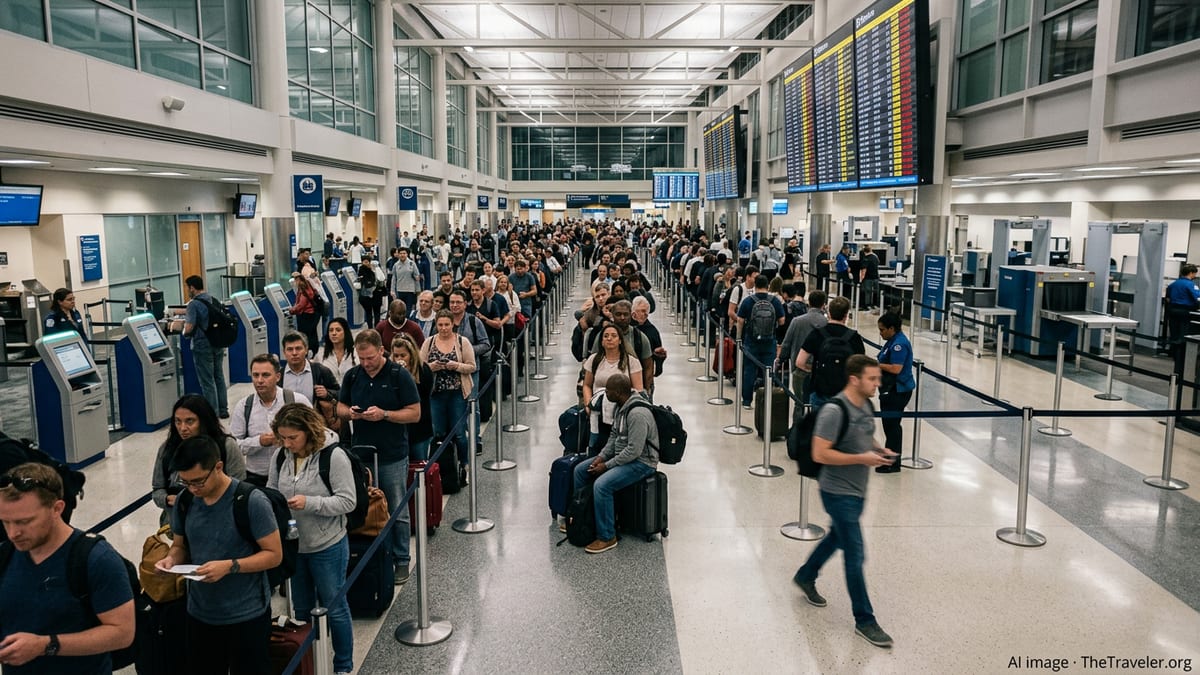
Major hubs including New York’s John F. Kennedy International, LaGuardia, Newark Liberty, Dallas Fort Worth, Chicago O’Hare and Atlanta Hartsfield-Jackson reported some of the heaviest disruption. Local coverage from New York and Chicago described concourses filled with travelers camped on the floor, long lines at customer service counters and baggage claims struggling to match luggage with rebooked passengers.
Even airports with fewer direct cancellations saw knock-on effects as delayed aircraft arrived late and crews reached federally mandated duty-time limits. Airlines in public advisories warned that it would take at least through Sunday, November 15, to fully reset schedules, especially on complex domestic connecting routes.
Some carriers introduced flexible rebooking policies, allowing customers scheduled to fly on Friday and Saturday to switch to later dates without change fees or fare differences on comparable routes. Others extended waivers into Sunday and Monday to relieve pressure at the busiest hubs. However, these policies varied by airline and route, leaving many passengers uncertain about their options until they could reach a customer service representative.
Stranded Passengers Face Limited Options
For travelers already at the airport when the ground stop took effect, options were often limited. Published reports from Dallas, New York and Washington show some passengers abandoning their trips after multiple cancellations, while others turned to rental cars, intercity buses or trains in an effort to reach destinations within a day’s drive.
International travelers were among the hardest hit. Coverage from European and Canadian outlets documented transatlantic flights to US hubs canceled outright, with onward connections impossible to guarantee. At least one major European airport posted notices instructing passengers booked on affected US routes to contact their airline before coming to the terminal, citing limited rebooking capacity over the weekend.
Accommodation was another pressure point. Some airlines provided hotel and meal vouchers for passengers stuck overnight, but others categorized the disruption as outside their control, treating it similarly to weather. Travel insurance advisories released on Saturday encouraged policyholders to seek assistance first from their carrier and to keep receipts for extra expenses such as lodging, meals and alternative transport, noting that insurance typically only reimburses costs that cannot be recovered from the airline.
With many rebooked departures scheduled for early Sunday, airports urged passengers via social media and public statements to check flight status before leaving home and to arrive earlier than usual, anticipating longer waits at check-in and security as backlogged travelers converge on morning departures.
Exposing Fragile Infrastructure and Thin Buffers
The incident has renewed scrutiny on the resilience of the US air traffic system. Commentators in national newspapers and aviation experts quoted in broadcast coverage have noted that this is the second high-profile technology failure affecting Federal Aviation Administration systems in just a few years, following a 2023 outage of the NOTAM safety alert system that also led to a temporary nationwide pause in departures.
Analysts point to a combination of aging infrastructure and increasingly complex software and networking layers. In this case, a single equipment issue during a telecom network upgrade cascaded into a full halt of domestic departures, highlighting the limited redundancy available when core communications links are disrupted. Industry observers argue that while commercial aviation remains statistically safe, the margin for operational disruption has narrowed.
The airline industry’s own structure compounds the effect of such failures. In the US market, four large carriers control the majority of seats, and each runs a tightly optimized hub-and-spoke network. When a nationwide pause throws those networks out of alignment, it can take days to reposition planes and crews, particularly during busy periods when there is little spare capacity.
Airlines and airport operators have publicly supported calls for additional federal investment in air traffic technology, but they also face questions about their contingency planning and communication with customers. After this latest disruption, passenger groups and travel advocates are already urging regulators and carriers to agree on clearer standards for when travelers are owed accommodations, refunds or alternative transportation during control system failures.
What Passengers Can Expect Next
Forecasts from aviation data firms and airline statements suggest that significant disruption will persist at least through the end of Sunday. Travelers with existing bookings over the November 13 to 15 weekend are being advised in public guidance to monitor flight status frequently, use airline apps where available and consider rebooking to off-peak times or later dates if their plans are flexible.
Consumer advocates recommend that stranded passengers document all communications with airlines, keep receipts for out-of-pocket expenses and, where applicable, review the terms of any travel insurance or credit card protections that may cover delays, cancellations or missed connections. In some international cases, travelers departing from or connecting through airports covered by European Union rules may be entitled to compensation, depending on the specific circumstances and the cause of the delay.
For now, the priority for airlines is to clear the backlog of stranded passengers and restore regular schedules. Flight boards on Saturday continued to show large blocks of red cancellation notices, but some domestic and international services were gradually returning. As operations stabilize, attention is likely to shift to investigations into how a single equipment problem was able to paralyze the system and what changes are needed to prevent the next mass stranding.