

More news on this day
Ronald Reagan Washington National Airport is bracing for one of its most disruptive Independence Day periods in years, as an unprecedented July 4 airspace shutdown over the US capital forces rolling flight cancellations, tightly compressed schedules and warnings of severe disruption for summer travelers.
Get the latest news straight to your inbox!
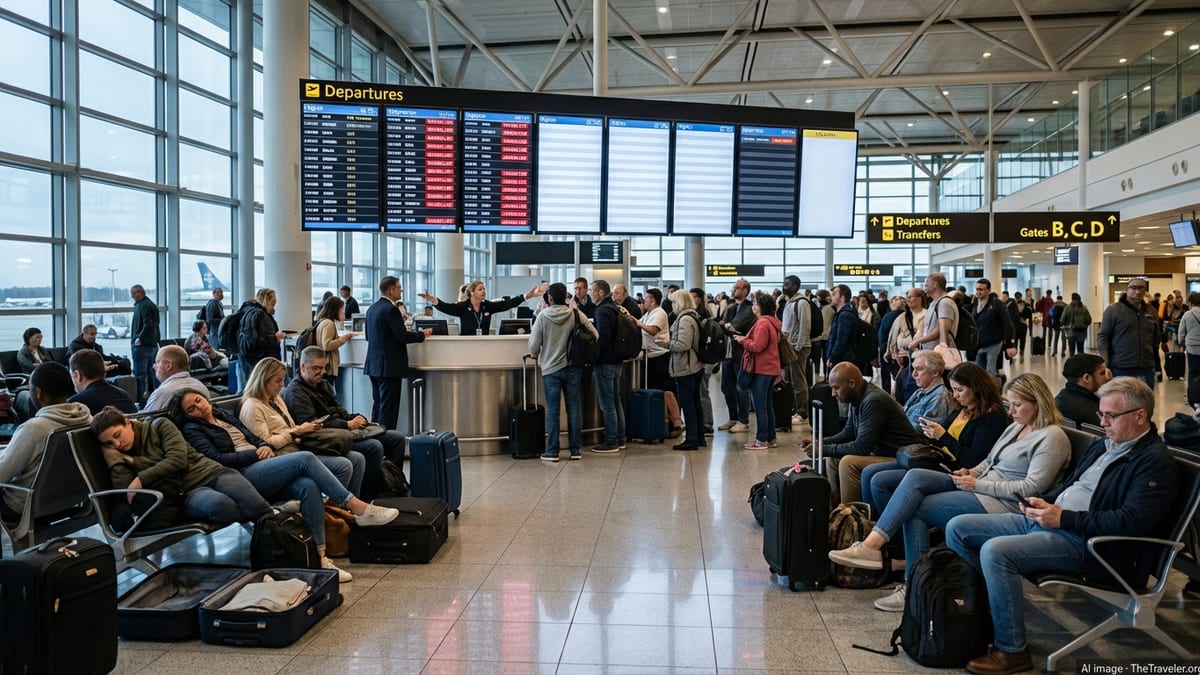
America 250 Security Plan Shuts Down DCA Airspace
Publicly available advisories for the America 250 celebrations indicate that commercial flights at Reagan National (DCA) will cease after midday on July 4, with the airport’s airspace reserved for military flyovers, aerial demonstrations and an expanded fireworks display over central Washington. The Federal Aviation Administration’s restrictions are tied to the capital’s highest-level security designation for this year’s National Mall festivities, which include a large-scale air parade and record-setting pyrotechnics.
Coverage from multiple outlets notes that the Metropolitan Washington Airports Authority has confirmed no scheduled departures or arrivals at DCA after roughly 12 p.m. local time on July 4, and that the airport will not resume normal operations until early on July 5. In addition, rehearsal windows and related security sweeps are expected to affect parts of July 3, further tightening already busy midsummer schedules.
The shutdown follows a series of temporary flight restrictions across the Washington region linked to recent high-profile events, but analysts say the combination of an all-afternoon halt on a peak travel holiday and a multi-day series of aerial displays makes this year’s plan unusually far-reaching for the capital’s primary downtown airport.
Rolling Cancellations and Compressed Holiday Schedules
Airline schedule data and published reports show that carriers have been quietly stripping most afternoon flights from DCA’s July 4 timetables for weeks, effectively pre-canceling hundreds of operations to avoid selling seats on flights that cannot operate once the airspace closes. Some airlines have also reduced or shifted service on July 3, when rehearsal activity is expected to trigger additional restrictions.
Several major US carriers have indicated in public statements that they adjusted their Reagan National schedules in advance to minimize last-minute disruption, pulling down afternoon flights and consolidating demand into the remaining morning departures and late-night arrivals on adjacent days. Industry trackers note that these changes amount to a rolling wave of cancellations and time changes that may not always be obvious to travelers who booked months ago.
Because the holiday falls at the height of the summer rush, aviation analysts warn that even proactive schedule cuts are likely to result in crowding, long lines and limited rebooking options on surviving flights. With DCA handling a dense slate of short-haul business and leisure routes along the East Coast, the loss of an entire afternoon of operations on a single day can ripple outward across multiple hubs for several days.
Passenger Impact: Full Morning Flights, Tight Connections and Longer Trips
Travelers flying to or from Washington around July 4 are already seeing the effect of the airspace shutdown in the form of packed early-morning departures, shifted itineraries and longer overall journey times. Consumer-facing delay trackers and local coverage highlight that many routes normally served by a spread of morning, afternoon and evening flights are reduced to a narrow band of pre-noon options on July 4 itself, forcing passengers to travel either much earlier or on a different day.
For those with fixed schedules, the closure is creating difficult trade-offs. Some travelers are being rebooked through Washington Dulles or Baltimore/Washington International, adding ground transport and connection time to trips that would normally use the more convenient downtown airport. Others are being offered departures on July 3 or July 5 instead of the holiday itself, effectively extending their travel window to dodge the restricted period.
Consumer advocates are reminding passengers that US rules require automatic refunds in cases where a flight is canceled or significantly changed and the traveler chooses not to fly, even if airlines frame the adjustments as schedule optimization around security measures rather than traditional operational disruptions. However, in practice, many passengers are expected to accept reroutings or time shifts to preserve hard-to-change vacation plans.
Strain on Washington’s Three-Airport System
The Reagan National closure is also testing the resiliency of the broader Washington-area airport network. With DCA sidelined for much of July 4 and partially affected on surrounding days, aviation planners expect additional pressure on Dulles and Baltimore/Washington as airlines reroute some traffic and travelers search for alternatives. Past equipment outages and ground stops in the capital region have shown how quickly disruption at one major facility can spill into others when airspace and staffing are constrained.
Local transportation coverage notes that the closure window coincides with a wave of other activities tied to the America 250 calendar, including river and road restrictions that could complicate access to airports and downtown events alike. The convergence of security measures, infrastructure projects and summer storms may create a volatile operating environment where even modest delays can cascade into missed connections and overnight stranding.
Airport operations specialists point out that Reagan National’s tight runway layout, slot controls and proximity to restricted airspace already make it one of the more complex fields to manage during special events. Add in a full airspace shutdown over the core of the city at the height of a holiday, and the margin for absorbing any additional disruption becomes extremely thin.
What Airlines and Travelers Are Doing Now
In the weeks leading up to July 4, airlines have been encouraging customers with DCA itineraries to verify their flight status frequently and, where possible, to move to flights outside the restricted window at no extra charge. Summer travelers are being advised to arrive early, avoid tight connections on itineraries involving Washington, and consider using Dulles or Baltimore/Washington if schedules at Reagan National prove too limited.
Published guidance from the airport operator and federal agencies stresses that all security and airspace measures are being taken in support of a one-time national anniversary, and that commercial flights will resume at Reagan National as soon as the July 4 closure period ends and safety checks are complete. Even so, passenger advocates suggest that travelers build extra buffer time into their plans for several days on either side of the holiday, given the cumulative effect of schedule cuts, rerouting and possible summer weather delays.
For Washington-area residents and visitors alike, the July 4 airspace shutdown underscores how closely the region’s aviation system is tied to the symbolic and security demands of the nation’s capital. As America marks 250 years, that connection is on full display at Reagan National, where the celebration unfolding over the city skies will be mirrored on the ground by crowded terminals, altered plans and an unusual quiet on the runways for much of the holiday itself.