


More news on this day
Passengers traveling through Des Moines International Airport are facing significant flight delays and cancellations after a regional Federal Aviation Administration systems problem affected air traffic control operations across parts of the Midwest.
Get the latest news straight to your inbox!
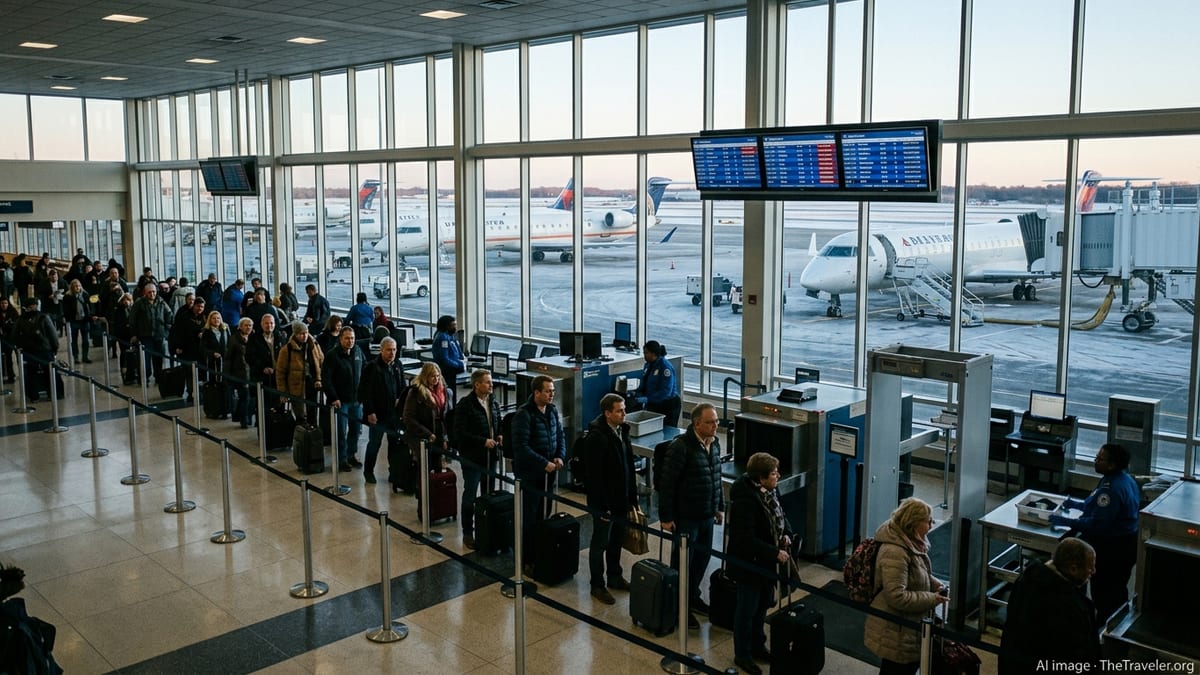
Flights slowed as controllers work through systems problem
Publicly available flight-tracking information on Sunday shows multiple departures and arrivals at Des Moines International Airport listed as delayed or canceled following a regional outage affecting Federal Aviation Administration equipment that supports air traffic control in the Upper Midwest. The disruption has limited the number of aircraft that can be handled safely in affected sectors, forcing airlines to hold flights at their origin or adjust schedules into Iowa.
Reports indicate that the issue stems from a failure in regional air traffic control technology rather than a problem with airport infrastructure in Des Moines. Similar events in recent years have typically involved radar or communications systems at en route control centers that manage high-altitude traffic over multiple states. In such situations, capacity is sharply reduced while backup procedures are put in place, which can quickly cascade into delays at regional airports.
According to published coverage of recent Midwest air traffic disruptions, airspace constraints can trigger temporary ground stops, during which flights bound for an affected area are held at their departure airports until traffic management specialists determine that conditions are safe to resume normal flows. When these restrictions are lifted, lingering congestion often continues for several hours as airlines attempt to reposition aircraft and crews.
Impact on passengers traveling through Des Moines
For travelers at Des Moines International Airport, the outage is translating into longer waits at gates, missed connections, and last-minute itinerary changes. Flight status boards and airline apps show rolling delays for both early morning and afternoon departures, particularly on routes that connect through major Midwest hubs already managing heavy traffic volumes.
Passengers whose itineraries rely on tight connections are among the most affected. Industry experience during similar FAA system issues suggests that late-arriving aircraft and out-of-position flight crews can prompt airlines to cancel later services, even after the initial technical problem has been addressed. That pattern appears to be emerging at Des Moines, where some flights are being proactively removed from schedules as carriers attempt to stabilize operations.
Air travel analysts note that Des Moines functions primarily as an origin and destination airport rather than a large connecting hub, which can leave local passengers heavily dependent on the operational health of larger airports in Chicago, Minneapolis and Denver. When air traffic control limitations reduce capacity at those facilities or on the routes that feed them, schedules in Iowa can quickly become constrained.
Wider Midwest ripple effects from regional FAA outage
The disruption affecting Des Moines is part of a broader pattern of airspace constraints reported across sections of the Midwest. Recent media coverage has described radar and communications outages at regional air traffic control centers that serve major hubs, leading to ground stops and diversions. When controllers have limited access to key systems, they must space aircraft farther apart and reduce the total number of flights permitted in affected sectors.
Historical data on national airspace disruptions shows that even localized outages can spread delays across the country. When flights into one region are held, aircraft and crews arrive late to their next assignments, creating knock-on effects at airports that were not directly touched by the original problem. For a regional airport such as Des Moines, that can mean delays on flights that appear unrelated to the initial outage but rely on aircraft cycling through impacted hubs.
Research into delay propagation within the National Airspace System has shown that such events can push a significant share of the day’s schedule off-plan, especially during peak travel periods. As capacity is restored, airlines typically prioritize long-haul and high-demand routes, which can leave some regional flights facing longer recovery times before operations normalize.
Advice for travelers navigating delays at DSM
Travel experts recommend that passengers scheduled to fly from Des Moines International Airport during a regional FAA outage monitor their flight status frequently through airline apps and text alerts. Schedules can change rapidly as air traffic managers adjust flow rates and as carriers reassign aircraft, and information displayed hours in advance may not reflect final departure times.
According to guidance published by aviation and consumer travel organizations, passengers experiencing significant delays or cancellations should review their airline’s rebooking policies and explore alternative routings where possible, including connections through unaffected hubs. In some cases, adjusting to an earlier or later departure window can increase the chances of securing a confirmed seat once operations begin to recover.
Travelers with flexible plans may also consider adjusting nonrefundable ground arrangements, such as hotel reservations and rental cars, as soon as it becomes clear that their arrival time in Des Moines or at a final destination will change. Given the tendency for FAA-related system disruptions to continue affecting schedules for several hours after the immediate technical issue is resolved, contingency planning can reduce the likelihood of additional costs and complications.
Ongoing monitoring as system recovers
As of Sunday evening, publicly available information indicates that air traffic control capacity in the affected region is gradually improving, but schedules at Des Moines International Airport remain uneven. Some flights are departing close to their original times, while others continue to show extended delays or cancellations as airlines work through accumulated backlogs.
Industry observers point out that a full return to normal operations can take time even after an FAA systems issue is resolved, especially if aircraft and crews end the day in locations that differ from their planned overnight positions. In such cases, early-morning departures the following day may also be affected until carriers are able to realign fleets and staffing.
Given the importance of Des Moines as Iowa’s primary commercial air gateway, the current disruption highlights the sensitivity of regional air travel to the reliability of FAA technology infrastructure. While modern backup procedures are designed to maintain safety, episodes like this underscore how quickly technical problems in the wider air traffic system can translate into visible delays for travelers on local concourses.