


Reindeer rides sit high on many winter wish lists, yet the experiences on offer vary from five‑minute photo opps beside Santa to quiet two‑hour glides through real Arctic forest. Prices, comfort levels and cultural depth differ just as widely. Whether you are planning a family Christmas trip, a romantic Lapland escape or your first Arctic adventure, understanding these differences will help you pick a reindeer experience that genuinely matches your expectations and budget.
Get the latest updates straight to your inbox!
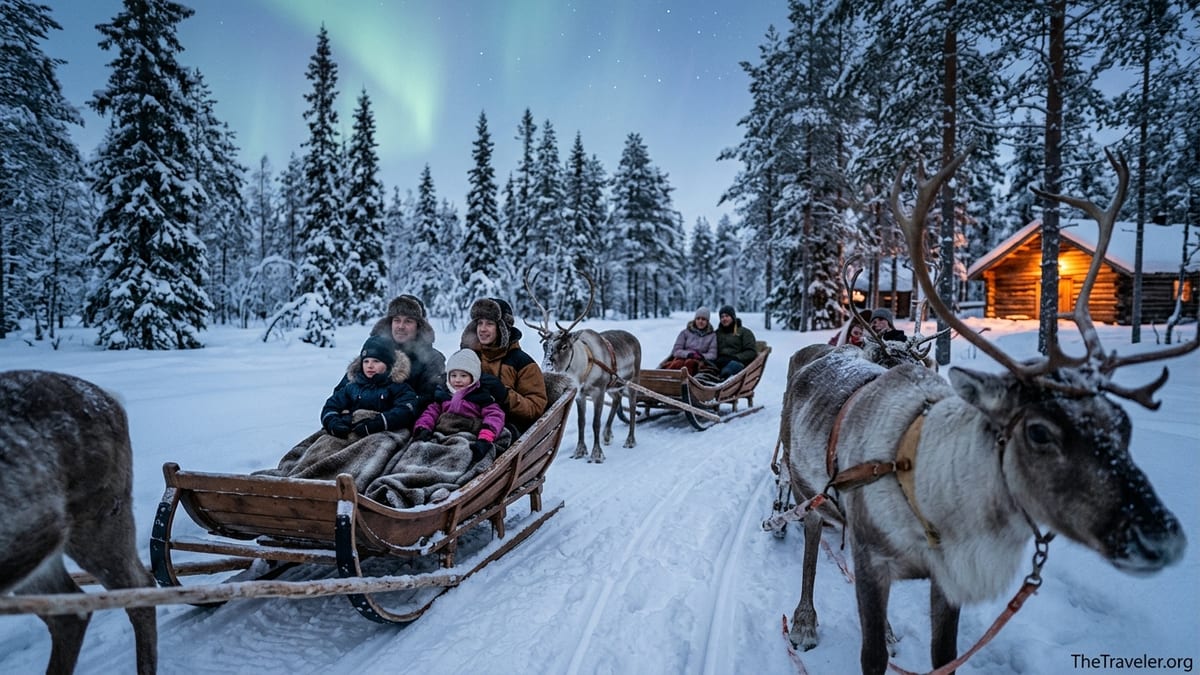
Understanding the Main Types of Reindeer Rides
When you start researching, you will see the phrase “reindeer ride” used for everything from a 400‑meter loop at Santa Claus Village in Rovaniemi to a three‑hour wilderness safari on a working farm. In Rovaniemi, for example, short village rides of around 400 to 500 meters typically last 5 to 10 minutes and are sold walk‑up beside Santa’s office, while longer farm safaris outside town can run 2 to 3 hours including transfers, hot drinks and a 30 to 60 minute sleigh ride through forest trails.
Broadly, you can think of reindeer experiences in three categories. First are quick taster rides located at major attractions such as Santa Claus Village or Levi’s central activity areas, designed mainly for photos and a brief glide. Second are farm‑based visits that combine feeding, stories about herding life and a short ride of 500 meters to 2 kilometers. Third are longer safaris, usually 3 to 7 kilometers of actual sledding bundled with time at a reindeer farm or Sámi camp and sometimes with extras like Northern Lights hunting or snowmobile transfers into the wilderness.
In Finnish Lapland, a short sleigh ride with farm visit often falls in the 1 to 1.5 hour range door‑to‑door, while a proper daytime safari might be described as a three‑hour wilderness experience including about an hour behind the reindeer. In Tromsø, Norway, many reindeer products are half‑day tours of roughly four to five hours, but only 10 to 30 minutes of this is actually sledding, with the rest spent feeding reindeer, learning about Sámi culture and sharing a hot meal in a lavvu tent.
Understanding which of these formats you are booking is essential. Families with small children may be perfectly happy with a 10‑minute loop close to their hotel, while couples looking for quiet romance in the snow are often disappointed if they discover that their “reindeer safari” is mostly a bus ride and group lunch with just a few minutes in the sleigh.
What Different Travelers Typically Want
Families often prioritize convenience and predictability. Parents with toddlers or school‑age kids tend to prefer short rides where they can bail out if anyone gets cold or tired. In Rovaniemi, many families choose the simple Santa Claus Village sleigh loop first to see how the children react, then book a longer farm visit for a different day if everyone enjoys it. Tour operators around Levi and Saariselkä also offer one‑hour farm visits that fit around nap times and hotel dinner slots, with transfers included from central meeting points.
Couples generally look for atmosphere and privacy over sheer duration. A romantic experience might mean a twilight ride through quiet forest followed by hot berry juice beside a campfire on a small family‑run farm. Around Levi, for instance, some operators limit safaris to a handful of sleds so you are not queuing in a big group or sharing your sleigh with strangers. In Tromsø, Northern Lights reindeer tours can be particularly appealing for couples, as they combine gentle sledding with the chance to watch the sky together away from city lights.
First‑time Arctic visitors, especially those flying in from further afield, often want a “greatest hits” package. Many book reindeer sledding in Tromsø that includes feeding, storytelling and a hot meal, or a day in Rovaniemi that combines a reindeer farm visit with husky sledding or a snowmobile trip. If this is your only visit to the region, you may accept that sledding itself is a small part of the day in exchange for the convenience of transfers, winter clothing, meals and a clear schedule.
Reflect honestly on your group’s priorities. If you are travelling with grandparents, think about walking distances on icy paths and time spent standing outside; a farm with heated indoor areas or a warm kota hut will matter more than an extra kilometer of trail. If you are on a couple’s break and value quiet, consider paying slightly more for a private sleigh or a smaller operation rather than a high‑volume attraction where buses arrive every hour.
Price Ranges and What You Really Get for Your Money
Prices for reindeer rides vary widely by length, location and what is bundled with the experience. Around Rovaniemi, recent pricing for short village rides of 400 to 500 meters typically sits around 35 to 60 euros per person, with higher rates during peak Christmas weeks. Longer farm safaris of roughly three hours with a 30 to 60 minute sleigh ride tend to start around 120 to 150 euros per adult, with reduced rates for children. In some cases, a seven‑kilometer, multi‑hour wilderness safari including transfers, hot drinks and guiding may cost upwards of 130 euros per adult.
Package operators in resorts like Saariselkä and Levi often publish fixed prices in advance of the season. A 30‑minute sleigh ride embedded in a one to two hour experience can cost the equivalent of 120 to 150 pounds or euros per adult, slightly less for children, especially when bundled into a wider holiday package. In Tromsø, half‑day reindeer sledding and Sámi culture tours including transfers, hot food, warm clothing and a short sled ride are commonly advertised in the region of 1,700 to 2,200 Norwegian kroner per person.
When comparing these figures, focus on cost per hour of meaningful experience rather than headline price alone. A 50 euro village loop that takes 10 minutes and involves waiting in line outdoors can end up feeling expensive per minute of fun, while a 150 euro farm visit that lasts three hours with time to feed reindeer, sit in a warm cabin and hear stories can feel much better value. Conversely, if you simply want a memorable photograph of the children in a sleigh and do not care about cultural context, that same short loop near your hotel may be exactly what you need.
Also check what is actually included. Some Lapland safaris provide full winter overalls, boots and gloves, which can save money on gear hire if you are only in the region for a day or two. Others expect you to arrive properly dressed. Hot drinks, snacks or a simple lunch might be built into the price, especially on tours of three hours or more; in Tromsø, for example, reindeer tours commonly include a traditional stew or a vegan option served in a lavvu tent. Knowing this in advance helps you judge whether the higher price reflects genuine extras or simply a premium for a busy time slot.
Evaluating Operators and Animal Welfare
For many travelers, the ethical side of animal experiences is just as important as cost or duration. In Lapland and northern Norway, reindeer herding is a long‑established livelihood, and many farms that offer tourist rides continue to rely on herding as a primary income. Around Rovaniemi and Inari you will find family farms that introduce themselves by name and explain their herding history, sometimes stretching back generations. In Swedish Lapland, some small Sámi‑run operations near Kiruna and in villages like Mettäjärvi invite visitors to private reindeer experiences that explicitly prioritize low group sizes and traditional handling.
Look for operators who describe how long their rides are, how many people share a sled, and how often the animals work. Tours that limit group sizes and keep sledding speeds to a walking pace are more typical of welfare‑minded herders. Some farms cap the length of each ride in mid‑winter, or cancel sledding if snow is too shallow or icy, switching instead to feeding and storytelling. In Tromsø, several tour providers note openly that sledding duration may be shortened or removed altogether when conditions are poor, with partial refunds or alternative activities offered.
Reviews can also give clues. Feedback that mentions calm, well‑kept animals and unhurried interactions is a positive sign. By contrast, if many guests comment that reindeer seemed distressed, rushed or repeatedly pulled heavy sleds up steep hills, consider looking elsewhere. It is also worth checking whether the operator describes itself as a working herd or as a purely tourist‑focused attraction; while both can treat animals well, those with roots in herding culture are often keen to present their practices transparently.
Finally, be realistic about what reindeer sledding is. The pace is slow, very different from dog sledding or snowmobiling. Some travelers in Tromsø and elsewhere have reported feeling underwhelmed by the sledding portion but still valued the chance to learn directly from Sámi hosts and feed the herd. If speed is what you want, husky tours may be a better fit, while the reindeer experience becomes your quieter cultural highlight.
Practicalities: Timing, Weather and Safety
Reindeer rides in Lapland and northern Norway depend entirely on snow cover and stable winter conditions. In most areas the main season runs from late November to late March, with the most reliable snow typically in January and February. Early season visits in November or very late trips in April can be rewarding but carry more risk that warm spells will shorten or cancel sledding. Operators in Tromsø and around Rovaniemi often stress that sledding portions are subject to conditions, while the rest of the farm visit or cultural program proceeds as normal.
Daylight hours also affect the feel of your ride. In December, the polar night in northern Lapland means that even midday rides unfold in blue twilight, with headlamps and lanterns creating atmosphere. From late January into March, you will have several hours of bright daylight, which is better for photography and for children still adjusting to jet lag. Evening tours, especially those marketed as Northern Lights experiences, may depart mid‑afternoon and return late at night, so plan for tired kids and build in a restful morning afterwards.
Safety on reindeer rides hinges mostly on temperature management and footing. Dress in layers, with a moisture‑wicking base, insulating mid‑layer and windproof outer shell. Even if a tour company provides overalls and boots, bring your own thin gloves and a hat or balaclava that fits comfortably under a hood. Children tend to get cold faster because they sit still, so pack chemical hand warmers, a spare scarf and snacks. Ask in advance how long you will be outdoors and whether there are heated huts at the farm; many Finnish and Norwegian reindeer camps offer a kota or lavvu where you can warm up between activities.
Finally, pay attention to instructions around the animals. Guides will typically ask you to stay in front of or beside the herd when feeding, avoid sudden movements and keep your hands clear of antlers. Children should be supervised at all times, especially when reindeer are moving between pens or pulling sleds. On most tours, helmets are not standard because the sleds travel slowly on flat ground, but if you feel more comfortable using your own ski helmet for younger kids, ask the operator whether that is acceptable.
Matching Specific Experiences to Your Trip Style
For a classic family Christmas break in Rovaniemi, a popular pattern is to combine a walk‑up village ride one day with a pre‑booked farm safari another. The village loop provides the essential “sit behind a reindeer near Santa” photograph with minimal planning. A few days later, a three‑hour farm visit that includes a longer forest ride and reindeer feeding gives you space to appreciate the animals without crowds. Operators near Rovaniemi and Ranua sometimes add extras such as a snowmobile ride to the farm or a simple lunch of soup and bread in a log cabin, which keeps everyone engaged across age groups.
In Levi or Ylläs, couples often choose a late‑afternoon reindeer safari that starts in the soft light of dusk and ends under a dark sky where, with luck, the Northern Lights may appear. These tours might last around two hours and fifteen minutes, with perhaps 45 minutes of sledding. The rest of the time is spent at the farm, learning about reindeer husbandry from a herder and warming up with hot berry juice by the fire. If your budget allows, booking a private sleigh so you are not sharing with other guests can transform the experience into something far more intimate.
For first‑time visitors to Tromsø who want both culture and scenery, a four to five hour reindeer and Sámi tour that includes transfers, feeding, a short sled ride and a hot meal is often the most straightforward choice. You are collected from a central meeting point, driven out past fjords and mountains, and spend several hours at a camp hearing stories, listening to joik songs and photographing the herd. Even if sledding is shortened due to conditions, most guests still feel they have had a full day’s experience.
Those seeking quieter, more in‑depth encounters may look toward smaller reindeer farms away from the biggest hubs, for example in the countryside near Ranua or in villages across Swedish Lapland. Some of these offer private farm visits, reindeer walks on foot rather than sledding, or hands‑on activities such as helping to feed the herd or learning about seasonal migrations. These options can be particularly rewarding for repeat visitors who have already sampled the better‑known safari products and want something more personal.
Booking Smart: Availability, Group Size and Fine Print
Reindeer experiences around Christmas and New Year in Lapland, as well as peak Northern Lights months in Tromsø, sell out weeks or even months in advance. Rides linked to popular Santa‑themed packages often have limited slots tied to specific hotel stays. If your trip is in December, it is wise to secure your preferred reindeer tour as soon as you book flights or accommodation, especially if you need a particular date to fit around other activities like husky sledding or Northern Lights tours.
Pay close attention to group sizes and sled arrangements in the tour description. Some high‑volume operations send long convoys of sleds nose‑to‑tail, which can feel crowded and reduce the sense of wilderness. Smaller family‑run farms may operate with only a few sleds per departure or offer private rides at a surcharge. Clarify whether adults share a sleigh, whether two parents can ride with a small child, and whether solo travelers will be paired. This makes a big difference to both comfort and mood, especially for couples.
Cancellation and weather policies also matter. Many Norwegian and Finnish operators allow free cancellation up to 48 to 72 hours before the tour, which is helpful if your plans are not fixed. However, because reindeer sledding is so dependent on snow, operators often reserve the right to shorten or remove sled rides while still running the rest of the program. In Tromsø and Rovaniemi, it is common that if sledding is cancelled due to poor snow, guests receive a partial refund or a discount on an alternative activity, rather than a full refund. Read the fine print carefully so you know what to expect.
If you are travelling on a tight schedule, consider booking morning reindeer tours. These leave room for weather‑related rescheduling later in the day or on another date, and give tired children time to recover before evening Northern Lights outings. Always confirm pick‑up points and meeting times the day before, as Arctic winter traffic and weather can lead to adjustments, and bring a paper or offline copy of your confirmation in case mobile coverage is weak at your accommodation.
The Takeaway
Choosing the right reindeer ride comes down to matching the format to your expectations. Short village loops and taster rides are ideal for young families or visitors with limited time who mainly want a photo and a brief sense of the sleigh. Farm‑based visits and longer safaris offer more depth, allowing space to ask questions, feed the herd and absorb the quiet of the forest, but they demand more time and a higher budget.
Couples and first‑timers should think honestly about whether they value romance, cultural learning or simple novelty most, and book accordingly. Spending a little extra for a smaller group, a twilight departure or a farm with a clear herding background can make the difference between a box‑ticking excursion and a memory you revisit for years. With realistic expectations about pace, weather and the proportion of your tour that is actual sledding, a reindeer ride can be a gentle, unforgettable highlight of any Arctic trip.
FAQ
Q1. Are reindeer rides suitable for very young children?
Most reindeer rides are suitable for children as young as two or three, especially short village loops and farm visits where you can sit together in a sleigh and return to heated areas quickly. Always check age policies with the operator and be realistic about your child’s tolerance for cold and unfamiliar animals.
Q2. How far in advance should I book a reindeer ride in Lapland?
For visits in December and early January, it is prudent to book key reindeer experiences several months ahead, ideally as soon as your flights and accommodation are confirmed. Outside peak holiday weeks, booking a few weeks in advance usually gives enough choice, though smaller family farms with limited capacity can still sell out quickly.
Q3. What should I wear for a reindeer sleigh ride?
Dress in multiple warm layers, including a thermal base layer, insulated mid‑layer, windproof outer shell, warm hat, scarf or balaclava, and waterproof mittens. Sturdy winter boots with thick socks are essential. Many tour operators provide additional overalls and boots, but it is wise to arrive already well dressed for sub‑zero temperatures.
Q4. Will I definitely get to go sledding, or could it be cancelled?
Reindeer sledding depends on snow depth and surface conditions, so operators may shorten or cancel the sledding portion if trails become unsafe. In most cases the farm visit, feeding and cultural elements still go ahead, with partial refunds or discounts offered if sledding is removed. Check the specific policy before you book.
Q5. How fast do reindeer sleds go compared with husky sleds?
Reindeer sleds usually move at a gentle walking pace, designed for calm travel rather than speed. Husky sleds are much faster and feel more like an active adventure. If you are looking for thrills, huskies are a better choice, while reindeer rides are best appreciated as quiet, scenic and cultural experiences.
Q6. Are reindeer rides ethical from an animal welfare perspective?
Many reindeer rides are run by herding families for whom animal health is central to their livelihood. Look for small group sizes, clear information on ride length and rest periods, and reviews mentioning relaxed animals. Avoid operators that seem to push long hours or heavy loads, and choose experiences where sledding is kept to moderate distances.
Q7. Can I book a private sleigh just for my family or partner?
In many Lapland and Tromsø operations you can request a private sleigh, often for an additional fee. This can be a good option for couples seeking a romantic atmosphere or families who prefer to manage children’s needs without sharing space. Ask about availability and pricing when you enquire or book online.
Q8. Are reindeer rides accessible for people with limited mobility?
Accessibility varies widely. Some farms have level access, sturdy sleds and staff able to assist guests into the sleigh, while others require walking on uneven, icy ground or climbing small steps. If you or a family member has limited mobility, contact the operator directly with specific questions about transfers, toilets and support.
Q9. Is it worth paying extra for a Northern Lights reindeer tour?
If seeing the Northern Lights is a key goal of your trip, an evening reindeer tour that combines sledding with aurora watching can be appealing. However, there is never a guarantee of clear skies or auroral activity. Consider whether you would still value the tour as a cultural and scenic experience even if the lights do not appear.
Q10. What is the best month to plan a reindeer ride?
In most of Lapland and northern Norway, conditions from late December through early March offer the best combination of snow reliability and daylight. January and February are particularly dependable for sledding, though they can also be the coldest months. Early winter in late November and late season in April can be beautiful but carry more risk of weather‑related changes.