


For many travelers, riding behind a reindeer through a snowy forest sits right at the top of the winter bucket list. It looks magical in photos, promises an authentic Arctic experience, and often comes bundled with visits to Santa villages or Northern Lights excursions. But once you start comparing prices and reading mixed reviews, a fair question pops up: are reindeer rides actually worth it, or are they just an expensive photo opportunity?
Get the latest updates straight to your inbox!
What a Reindeer Ride Experience Is Really Like
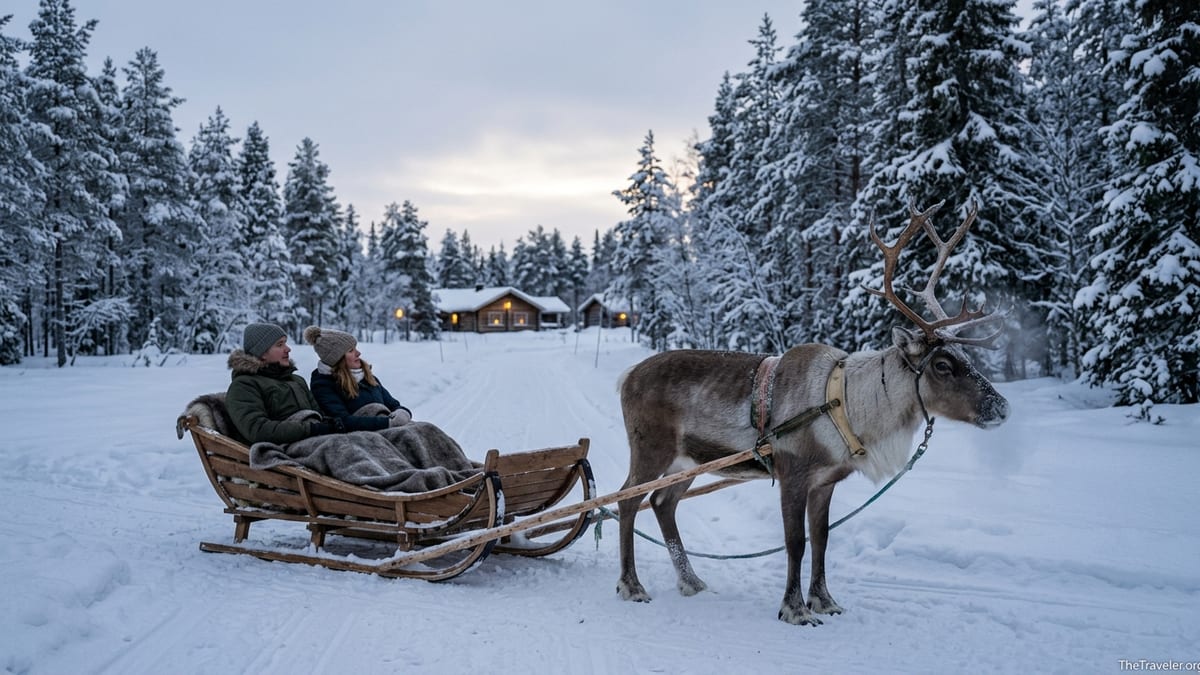
Most commercial reindeer rides are short, guided experiences designed for first-time visitors rather than rugged backcountry expeditions. In Lapland, for example, a typical ride near Rovaniemi or Levi involves sitting in a wooden sleigh lined with reindeer skins while a single reindeer walks or gently trots along a packed snow trail. The pace is slow, often quieter and more contemplative than a husky safari, with the sound of runners on snow and reindeer hooves as your background soundtrack.
In Finland, many tours start with a visit to a reindeer farm, where a herder explains the history of Sámi reindeer husbandry, shows how the harness is fitted, and introduces the animals by name. Travelers often describe the ride itself as surprisingly peaceful: rather than an adrenaline rush, it is more like gliding through a winter postcard. A 500 to 800 meter loop in Santa Claus Village, for instance, usually takes less than 15 minutes from start to finish, including loading and photos, and suits families with small children who want something gentle and approachable.
In Alaska, the format can be quite different. Ranches such as Running Reindeer Ranch near Fairbanks focus less on sleigh rides and more on walking alongside a free-moving herd in the boreal forest. Guests follow the animals along narrow woodland paths, stopping to watch them nibble lichens or bound through the trees while guides explain their adaptations to Arctic life. Travelers who book these walk-with-reindeer tours often report that it feels more like visiting a friend’s off-grid homestead than a theme-park attraction, and the interaction with the animals tends to be more extended and hands-on.
Outside the Arctic, in places like Palmer or Talkeetna in southcentral Alaska, small reindeer farms offer short meet-and-feed sessions. Visitors spend about an hour hearing how the farm operates, stepping into fenced pastures to hand-feed reindeer pellets, and posing for photos with the animals against a backdrop of snowy peaks. These experiences can be just as memorable for children as a sleigh ride, even if the animals never pull a sled.
What It Typically Costs and How Long It Lasts
Reindeer experiences vary widely in price depending on location, length and level of exclusivity, but they are rarely cheap. In Lapland’s major hubs, a brief reindeer sleigh loop at a farm close to town might start at the equivalent of around 30 to 60 euros per adult, more if it is embedded in a package that includes hotel transfers, winter clothing and hot drinks. These rides are often 10 to 20 minutes of actual sleigh time, which can leave some travelers feeling that the per-minute cost is high compared with other winter activities.
If you drive yourself out of town or book with smaller operators, you may find longer rides of 45 to 90 minutes, sometimes bundled with a farm tour, storytelling and a simple lunch around a fire. Those experiences can cost well over 100 euros per person, especially in peak Christmas and New Year weeks. Package excursions that combine snowmobiling to a reindeer farm, a short sleigh ride and a visit to Santa’s village in Rovaniemi are commonly priced at several hundred euros per adult once transfers and guiding are included, though only a fraction of that time is spent actually in the sleigh.
In the United States, prices are usually quoted in dollars and experiences are structured differently. A guided farm tour at a reindeer farm in Palmer, Alaska, for example, starts around 20 dollars per person for about an hour of meet-and-feed time with a variety of animals, including reindeer, moose and yak. Walking tours with reindeer near Fairbanks, which last roughly two hours including an indoor briefing and a forest walk, are often in the 90 to 120 dollar range for adults, reflecting the small-group, owner-operated nature of the businesses.
More immersive or private tours tend to cost more but provide better value for travelers who want depth rather than a quick snapshot. Some homestead-style operations in Alaska offer two-hour nature walks with reindeer on remote forested land, typically priced at around 100 dollars per adult and half that for younger children. These usually include education on local ecology, time for photography and hot drinks afterward, so travelers walk away feeling they have had a full half-day experience rather than paying premium prices for a few laps around a snowy field.
Where Reindeer Rides Shine: Magical Moments Travelers Love
For many visitors, the value of a reindeer ride has little to do with speed or distance and everything to do with atmosphere. Families visiting Santa Claus Village in Rovaniemi, for instance, often recall the moment they first sit in a sleigh, tuck under a thick blanket, and glide quietly beneath snow-laden pines. Elderly grandparents or very young children who might be nervous about snowmobiles or husky teams usually find the slow, steady pace of a reindeer much more comfortable and reassuring.
Some travelers report that a simple 15-minute ride was the highlight of a multi-day Arctic trip because it made the Christmas story feel suddenly tangible. Riding under twilight skies in December, when blue light glows on the snow and lanterns line the track, can feel genuinely enchanting. On farms that limit group size, it is not unusual for guides to pause the sleigh for a moment away from the main loop so guests can listen to the quiet and watch the steam rise from the reindeer’s breath, which often leaves a deeper impression than any number of staged photos.
In Alaska, the magic often comes from intimacy rather than holiday imagery. Travelers at Running Reindeer Ranch regularly mention in their reviews how surreal it feels to stroll through the forest while antlers and soft noses appear suddenly over their shoulders. The animals are allowed to roam and choose whether to approach, which tends to create unscripted moments: a reindeer gently tugging on a hat, lying down in the snow at someone’s feet, or bounding past in a spray of powder. For photographers, this style of interaction can be more rewarding than a fixed sleigh circuit because it allows for varied angles and candid shots.
Another place where reindeer experiences shine is in educational depth. Some operations in Fairbanks and Talkeetna combine reindeer walks or meet-and-feed sessions with talks on the history of reindeer in Alaska, from their introduction in the late nineteenth century to their role in Indigenous livelihoods and modern research. Visitors get to handle antlers, feel the dense winter coat, and hear why reindeer hooves click when they walk. Those who arrive expecting a purely novelty attraction often leave with a new respect for how these animals survive minus-30 degree winters.
When Travelers Feel Reindeer Rides Are Not Worth It
Disappointed reviews and forum posts about reindeer rides tend to cluster around a few recurring themes. The most common is mismatch between expectations and reality. Travelers who imagine racing across open tundra like a Christmas film often feel underwhelmed when they discover that their ride is a short, slow loop in a crowded tourist village. Some visitors to popular Lapland resorts comment that the ride felt more like queuing for an amusement park attraction than experiencing a connection with nature, especially at peak times when multiple sleighs move nose-to-tail along the same track.
Perceived value for money is another sticking point. Because reindeer are slower than huskies and require rest, many farms keep sleigh rides deliberately brief to protect the animals and keep queues moving, particularly in December. The result is that a family might spend 150 euros or more for just a few minutes on the sleigh, followed by a quick photo and a walk back through a gift shop. Travelers who prioritize action, such as snowmobiling or skiing, sometimes conclude that their money would have been better spent on a longer, more active excursion.
Weather can also influence whether a ride feels worth it. On days of heavy snow or high winds, guides may shorten the route or skip storytelling stops to avoid guests getting too cold. In flat light or overcast conditions, the scenery can look less dramatic than the marketing photos suggest. Some visitors admit they did not dress warmly enough, so they spent most of their time shivering instead of appreciating the surroundings, which naturally colors their impression of the experience.
Finally, travelers who are sensitive to animal welfare sometimes feel uncomfortable if they perceive the animals as overworked or the setting as overly commercial. Seeing reindeer tethered near busy parking lots, pulling sleigh after sleigh while groups pose for photos, can feel at odds with the ideal of wild Arctic nature. Even when the animals are well-cared for, the optics of mass tourism can leave some guests questioning whether their money is supporting practices they want to endorse.
Animal Welfare and Ethical Considerations
Ethical concerns around animal-based tourism have grown in recent years, and reindeer rides are no exception. In northern Finland, Norway and Sweden, where reindeer husbandry is closely tied to Sámi culture, many herders now balance traditional livelihoods with tourism income. Academic research on animal welfare in Arctic tourism points out that reindeer are herd animals that need social contact, rest, and freedom of movement, and that work routines must be carefully planned to avoid overuse, especially at busy Christmas markets and resorts.
Responsible operators increasingly emphasize that their reindeer work limited daily hours, have regular days off, and spend the bulk of the year on pasture rather than on tourist tracks. Some farms have moved away from tethering animals individually near roads into larger pens where they can interact and move more naturally between rides. Visitors on guided walks in Alaska and Norway often see this firsthand: the animals are allowed to wander at their own pace while humans adapt to them, not the other way around.
Travelers who care about ethics can look for specific signals when choosing a provider. Reputable farms typically limit group sizes, provide clear explanations of how often each animal works, and encourage guests to keep a respectful distance unless the reindeer approaches. Guides who answer questions openly about feeding, veterinary care and training methods are another positive sign. In contrast, if animals appear stressed, thin, or stand tied in one place for hours with minimal interaction or rest, that is a cue to walk away and report concerns to local tourism boards if necessary.
National regulations also play a role. Nordic countries have relatively strict animal welfare laws that require adequate shelter, access to food and water, and conditions that allow natural behavior. Educational materials produced in collaboration with tourism boards and animal welfare specialists in Finland have pushed operators to rethink how they design rides, such as favoring calmer, shorter sleigh routes for certain animals and rotating teams to prevent fatigue. While enforcement and practices still vary, the trajectory in major destinations is toward more structured welfare guidelines.
How to Choose the Right Reindeer Experience for You
Deciding whether a reindeer ride is worth it largely depends on what you want from the experience. If your priority is a gentle, family-friendly introduction to Arctic animals with a Christmas flavor, a short sleigh loop at a reputable farm near Rovaniemi, Levi or Tromsø can do the job beautifully. For young children who have never seen snow, even a 10-minute glide behind a reindeer can feel unforgettable, particularly when combined with meeting Santa or decorating cookies afterward.
If you are more interested in animals and culture than in the sleigh itself, consider booking a longer farm visit or walk-with-reindeer tour. In Alaska, for example, walking with reindeer in Fairbanks or booking a two-hour nature walk on a homestead near Kenai allows for extended interaction, detailed explanation and time to observe natural behaviors. Similar experiences exist in northern Norway and Swedish Lapland, where Sámi hosts invite guests into traditional lavvu tents for coffee and stories after a short sleigh or lead-reindeer walk.
Travelers who lean toward active adventures might want to treat reindeer rides as a supplement rather than a centerpiece. It can work well to pair a brief reindeer sleigh or farm visit with a longer husky safari, snowshoe hike or snowmobile tour on a different day. This way, you get the charm and photos associated with reindeer without relying on the ride itself to deliver your only big winter thrill.
Timing also matters. If your schedule allows, visiting outside the absolute peak weeks around Christmas and New Year can make reindeer experiences feel more relaxed and personal. Booking morning or late-afternoon slots, when light is softer and crowds thinner, often leads to a more atmospheric ride. In Alaska, shoulder seasons such as early winter or late spring can offer quieter tours with more time to ask questions and fewer overlapping groups on the same trail.
Practical Tips: What to Expect and How to Prepare
Regardless of where you book, reindeer experiences take place outdoors in cold, often unpredictable weather. Even if an operator provides thermal overalls and boots, it is wise to wear multiple warm layers, a windproof outer shell, insulated gloves, and a hat that covers your ears. On sleigh rides, you are sitting still, so you will feel colder than during a walk or ski; many travelers say they wished they had worn an extra pair of socks or brought hand warmers, especially on rides longer than 20 minutes.
Expect a safety and introductory briefing before any reputable tour. Guides will explain how to sit in the sleigh, where to place your hands, and why you should not reach forward to touch the animal’s harness or head. On walking tours, you will be told to give the reindeer space, avoid sudden movements and listen for instructions when animals approach from behind. Children should be closely supervised; many operators specify minimum ages or require small kids to share a sleigh with an adult.
Photography is usually encouraged, but it can be trickier than it looks. Cold temperatures drain phone batteries rapidly, and condensation can fog lenses when you move between warm indoor spaces and the outdoors. Many travelers find it helpful to keep their phone in an inside pocket, use simple settings rather than fiddling with manual controls, and ask guides or fellow guests to take quick photos so they can focus on the experience. On walking tours in Alaska, where reindeer move freely, wide-angle lenses and quick shutter speeds are particularly useful for capturing spontaneous interactions.
Finally, think about accessibility and comfort. Sleighs can be awkward to climb into, especially for guests with limited mobility, though many farms will assist and adapt routes where possible. Paths on reindeer walks may be uneven, icy or narrow, so traction aids like microspikes can make a big difference. Reading recent reviews and, if needed, emailing operators directly before booking will help you gauge whether a specific tour matches your physical needs and expectations.
The Takeaway
Reindeer rides can be worth it, but not for everyone and not in every format. If you go in expecting speed, distance or extreme adventure, you may walk away feeling that a short, expensive sleigh loop did not justify the cost. On the other hand, if what you are looking for is a quiet, atmospheric glimpse into Arctic life, a chance for children to meet the animals from winter stories, or an up-close walk with a herd in the forest, a thoughtfully chosen reindeer experience can be a highlight of a northern trip.
The key is to match your expectations with the reality of what is on offer. Understanding that reindeer are slower, more contemplative travel companions than huskies, recognizing that most commercial rides are brief by design, and choosing operators that prioritize animal welfare all help ensure your visit feels meaningful rather than manufactured. For many travelers, the most enduring memory is not the minutes spent in the sleigh but the soft weight of a reindeer’s muzzle in their hand, the click of hooves on snow, and the sense of sharing a winter landscape with an animal that has shaped Arctic cultures for centuries.
FAQ
Q1. Are reindeer rides safe for children and older travelers?
Reindeer rides are generally designed to be gentle and are often recommended for families and older travelers. The sleigh moves at walking pace on groomed trails, and reputable operators provide clear safety instructions and assistance getting in and out. As long as everyone is dressed warmly and can sit steadily for the duration, the experience is usually considered low risk compared with faster activities like snowmobiling.
Q2. How do reindeer rides compare to husky sledding?
Reindeer rides are typically slower, quieter and shorter than husky sled rides. They emphasize atmosphere and cultural storytelling rather than speed or distance. Husky tours often cover more ground and involve more active participation, such as steering the sled, whereas reindeer experiences lean toward relaxed gliding or walking with the animals. Many travelers enjoy doing both on the same trip for different kinds of memories.
Q3. Do I need to book reindeer rides in advance?
In peak winter months, especially around Christmas and New Year in Lapland or during holiday periods in Alaska, advance booking is strongly recommended. Popular farms and village-based rides often sell out days or weeks ahead. Outside peak times, you may find more flexibility, but reserving a specific time slot still helps avoid long waits and ensures operators can manage animal workloads responsibly.
Q4. What should I wear for a reindeer ride or walk?
Dress for extended time outdoors in freezing temperatures. That means thermal base layers, an insulating mid-layer, a windproof and waterproof outer layer, warm boots, thick socks, insulated gloves, and a hat that covers your ears. Even if the tour provides overalls and boots, having your own warm layers underneath will keep you more comfortable, especially on still sleigh rides where you are not generating body heat.
Q5. Are reindeer rides ethical from an animal welfare perspective?
They can be, provided the operator follows good welfare practices such as limiting working hours, rotating animals, providing rest days and allowing social contact in larger pens or pastures. Laws in Nordic countries and growing awareness in Alaska have pushed many providers to adopt better standards. Travelers should look for transparent information about how animals are housed and worked, observe the condition and behavior of the herd, and choose farms that welcome questions about care.
Q6. How long does a typical reindeer ride last?
The length varies widely. In tourist villages, many standard sleigh loops last about 10 to 20 minutes. Longer excursions outside town or combined farm visits can run 45 to 90 minutes of total tour time, with only part of that spent in the sleigh. Walk-with-reindeer experiences and farm tours in Alaska and Scandinavia often last one and a half to two hours, with the focus on interaction and education rather than continuous riding.
Q7. Can I interact with the reindeer, or do I just sit in the sleigh?
On many tours, you can do both. Village-based rides might be more limited, with brief moments to pet or feed the animals under staff supervision. Farm tours and walking experiences often include time inside enclosures or along forest trails where reindeer are free to approach you. Each operator sets different rules, so check the tour description to see whether hand-feeding, photo opportunities or close-up interaction are included.
Q8. What if the weather is very cold or stormy on the day of my ride?
Operators will assess conditions and may shorten routes, adjust timings or in rare cases cancel tours for safety and welfare reasons. Light snow or low temperatures are normal and rides go ahead, but high winds, blizzards or dangerous ice can lead to changes. It is wise to confirm the operator’s cancellation and refund policies when booking and to build some flexibility into your itinerary in case your tour needs to be rescheduled.
Q9. Are there reindeer experiences that do not involve riding?
Yes. Many travelers choose meet-and-feed sessions, guided farm tours or forest walks with reindeer instead of or in addition to sleigh rides. In Alaska, for example, several ranches focus entirely on walking with the animals in the forest and learning about their biology and history. In Scandinavia, some Sámi hosts offer storytelling, handicraft demonstrations and simple meals in traditional tents, with reindeer present but not harnessed to pull sleighs.
Q10. How can I tell if a reindeer tour is good value for money?
Consider what is included beyond the brief ride itself. Tours that combine a farm visit, cultural or historical explanations, small group sizes, time for questions, and refreshments usually feel more worthwhile than a quick loop with a photo at the end. Reading recent traveler reviews, comparing durations and group sizes, and choosing locally owned operators that emphasize education and welfare can help ensure you get more than just a few minutes in a sleigh for your money.