


More news on this day
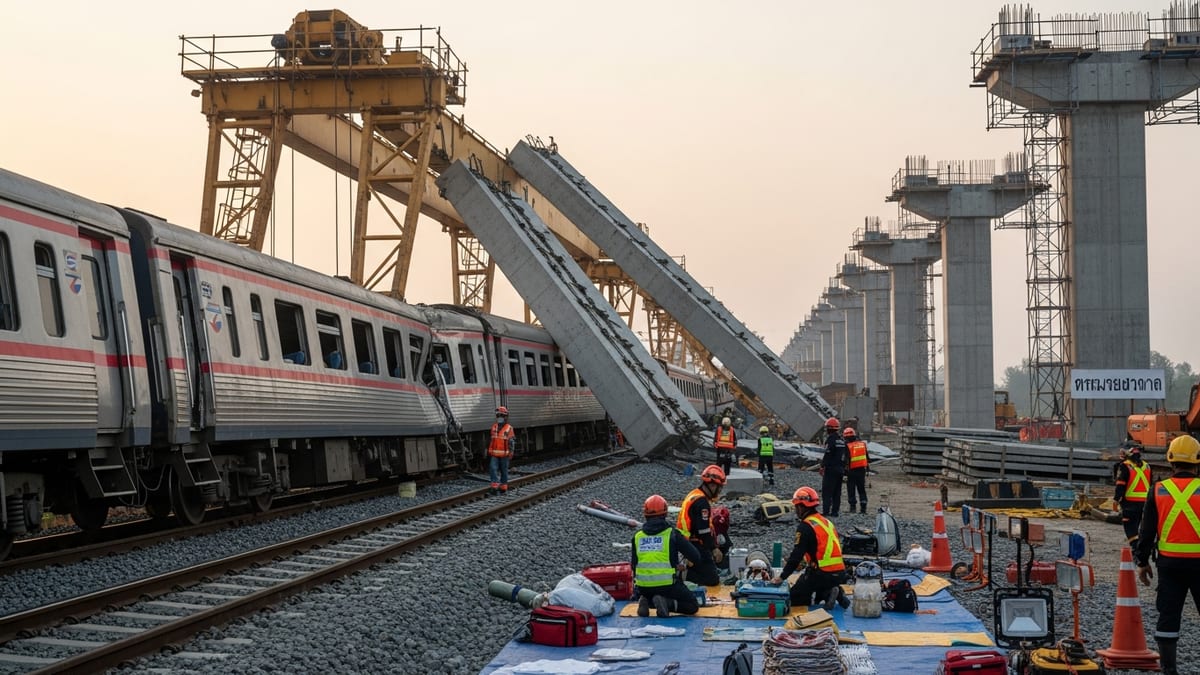
Repair crews and inspectors are working along key rail corridors near Laurens after a recent freight train derailment disrupted service on lines that link toward the Greenwood County area, prompting days of cleanup, infrastructure checks and temporary route changes for rail traffic.
Get the latest news straight to your inbox!
Derailment Disrupts a Quiet Freight Corridor
The derailment occurred on a freight rail segment that serves as a connector between Laurens and routes running toward the Greenwood County line, an area better known for local industry and rural communities than for major rail incidents. Publicly available information indicates that multiple cars left the tracks, damaging sections of rail and ballast and forcing the temporary suspension or rerouting of trains using the affected line.
Early reports describe the incident as a low-speed freight derailment rather than a high-speed crash, which helped limit wider damage. Even so, crews faced scattered railcars, torn-up track components and disturbed signaling hardware that required careful removal and assessment before repair work could fully begin.
Initial assessments shared in regional coverage noted that there were no widespread injuries in nearby communities and no large-scale hazardous materials release, reducing the need for extended residential evacuations. The primary impact has instead been on rail operations, local road crossings and the broader regional logistics network that depends on these tracks.
The location of the incident, close to the Laurens side of the corridor that eventually ties toward Greenwood County, has drawn attention from shippers and local businesses that rely on rail freight for agricultural products, industrial materials and consumer goods.
Intensive Track Repairs and Safety Inspections
Following the derailment, specialized rail maintenance teams moved into the area with cranes, heavy trucks and track machinery to clear damaged cars and begin rebuilding the line. Publicly available updates describe a phased approach: removal of derailed equipment, replacement of damaged rails and ties, and resurfacing of the ballast structure that stabilizes the track.
Once the worst physical damage is addressed, railroads typically conduct geometry testing and visual inspections to confirm that alignment, gauge and elevation meet operating standards. According to industry practice reflected in other recent derailment responses across North America, such verification steps are required before full traffic can resume on a repaired section.
Reports from the corridor near Laurens indicate that repair crews have been working extended shifts to restore service. Heavy equipment has been seen repositioning sections of rail, tamping ballast and reinstalling signaling components where they were disturbed by the derailment or by the cleanup work itself.
Even after trains begin moving again, railroads often maintain temporary speed restrictions over an incident site while monitoring performance, watching for settlement in the track bed and scheduling additional inspections in the weeks that follow.
Impact on Regional Travel and Freight Movement
For travelers and residents in Laurens and neighboring Greenwood County, the most immediate impacts have been indirect. Passenger rail options in this part of South Carolina are limited, so the incident primarily affects freight operations rather than daily commuter service. However, disruptions to freight lines can still influence road traffic, local businesses and future travel planning.
Publicly available information suggests that some road crossings in the vicinity of the derailment were closed during cleanup so that cranes and maintenance trucks could access the right of way. Drivers in the Laurens area have experienced intermittent detours and delays where rail work intersects with local streets and rural roads.
For freight customers, the derailment has meant delayed shipments and temporary rerouting. Railroads often divert traffic to parallel lines or hold trains at yards while repairs are completed, which can have ripple effects across a wider region. Businesses that depend on just-in-time deliveries may face short-term scheduling adjustments, while warehouses and distribution centers adapt by using more truck movements until rail flows stabilize.
From a wider travel perspective, the incident highlights how rail infrastructure in smaller communities like Laurens still plays a critical role in supporting tourism and economic development in the Upstate region. Reliable rail freight helps sustain manufacturing, agriculture and retail sectors that ultimately serve visitors moving through nearby cities and highway corridors.
Context Within Broader Rail Safety Concerns
The derailment near Laurens and the Greenwood County lines comes at a time of heightened public attention to rail safety across the United States and Canada. Recent incidents in several states and provinces have underscored the importance of track maintenance, inspection regimes and investment in aging infrastructure.
Federal and state data show that most derailments involve freight trains at relatively low speeds, often linked to track conditions, equipment failures or switching operations. While many of these events occur away from dense population centers, each incident still requires a complex response involving railroads, contractors and, in some cases, emergency management agencies.
Travel and transportation observers note that communities like Laurens, which sit along historic rail corridors connecting industrial hubs, are particularly sensitive to any disruption. Rail lines that once supported passenger routes now function mainly as freight connectors, yet they pass near homes, schools and local roads that have grown up around the tracks over decades.
In this context, the repairs now underway near Laurens are not only about restoring a single segment of track. They also form part of a continuing cycle of investment and scrutiny intended to keep regional rail networks operating safely while accommodating evolving freight patterns and weather-related stresses on infrastructure.
What Travelers Should Know in the Coming Weeks
As work continues along the affected corridor, travelers driving through Laurens and toward the Greenwood County line may encounter construction activity near rail crossings, including lane closures, flaggers and heavy equipment moving in and out of work zones. Local advisories encourage drivers to allow extra time and to use alternate routes where posted.
Long-distance travelers who rely on intercity or regional buses may see minor schedule adjustments if coaches are rerouted around rail repair sites or if traffic backups develop near key intersections. Travel planners recommend checking for the latest information from carriers serving the Upstate region before setting out.
For visitors interested in South Carolina’s rail heritage, the derailment and subsequent repairs also serve as a reminder that the tracks threading through Laurens and toward Greenwood remain active, modern freight corridors. Observing work from a safe distance can provide insight into how contemporary railroads rebuild infrastructure and keep commerce moving after unplanned events.
Over the next several weeks, observers expect rail operations in the corridor to gradually normalize as inspections are completed and any remaining restrictions are lifted. The experience is likely to inform future maintenance planning along the Laurens to Greenwood County routes and contribute to broader conversations about rail resilience in smaller Southern communities.