


More news on this day
Traffic is moving again near the Laurens-Greenwood county line after a freight train derailment temporarily shut a major route, disrupting local travel and prompting detours for residents and commercial drivers in this busy stretch of South Carolina.
Get the latest news straight to your inbox!
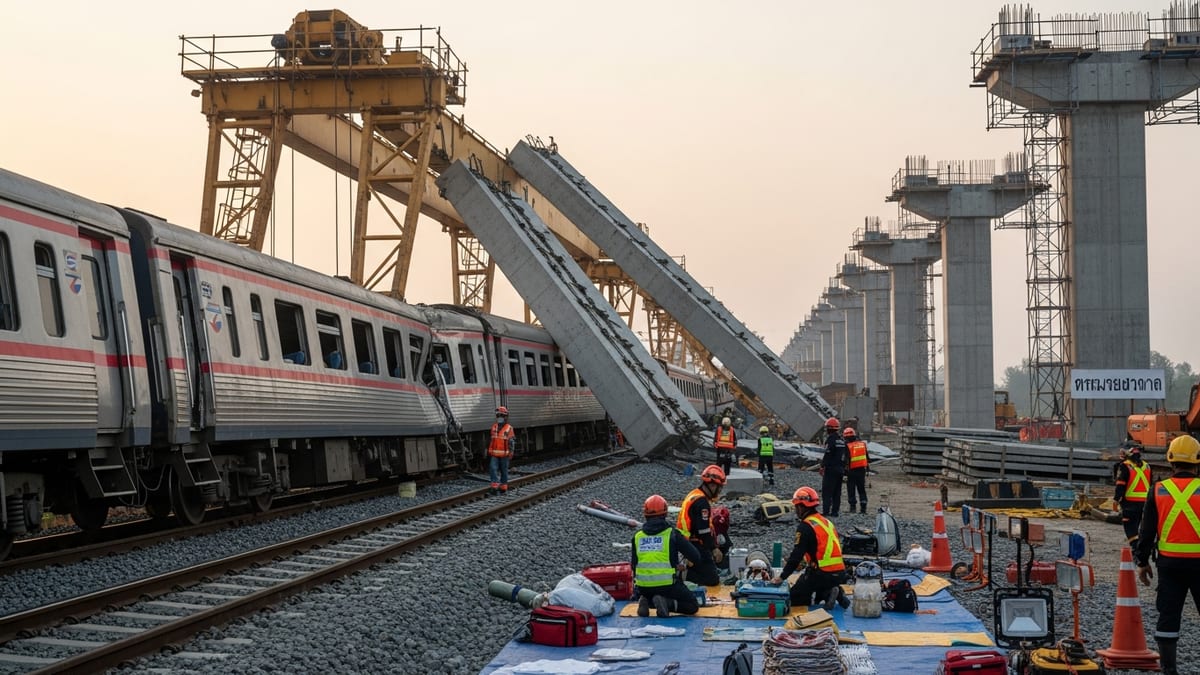
Key corridor restored after days of disruption
Publicly available information indicates that rail crews and contractors have completed enough repairs to reopen the roadway at the Laurens-Greenwood county line where a freight train left the tracks earlier this week. The incident occurred along a mixed-use corridor that carries both local traffic and through-travel between the two counties, creating congestion on smaller rural routes while the scene remained closed.
Early reports describe several rail cars leaving the tracks near a road crossing, blocking vehicle access and limiting movements for nearby homes, farms, and small businesses. While full details of the sequence of events remain under review, images and descriptions from the scene suggest damage to both the rails and the adjacent pavement.
Transportation updates shared with the public confirm that the road has now reopened to regular traffic, with crews having cleared derailed cars from the crossing and completed interim surface repairs. Drivers are being advised to expect periodic lane shifts and short-term stoppages as final work continues along the right-of-way.
The reopening restores a critical connector between Laurens and Greenwood counties, where residents often rely on a limited number of main roads to reach schools, workplaces, and regional medical facilities. During the closure, many travelers were forced onto narrow, unfamiliar backroads that are not designed for sustained heavy traffic.
Detours, delays and impact on local travel
During the closure, detours funneled drivers onto alternative routes that were already busy with summer traffic. Commuters traveling between communities on either side of the county line reported slower journeys and frequent stops as intersections and two-lane rural roads absorbed far more vehicles than usual.
Commercial drivers and delivery services also faced schedule disruptions. Several secondary corridors in the area include tight curves, limited shoulders, and low-speed zones passing schools and residential areas, making them less suitable for tractor-trailers redirected from a primary route. Logistics firms operating in the Upstate region adjusted timetables and, in some cases, shifted to earlier or later departures to avoid peak congestion.
Residents near the detour routes experienced a noticeable increase in traffic volumes and noise, particularly during the morning and late-afternoon commute windows. Local coverage indicates that some neighborhoods saw steady truck traffic where they are more accustomed to light local use, raising concerns about wear on pavement and visibility at rural driveways and farm entrances.
With the main roadway now back in service, traffic patterns are beginning to normalize. Transportation updates suggest that travel times across the county line are returning to typical levels, though drivers are still encouraged to allow extra time while residual congestion clears and motorists readjust to pre-incident routes.
Rail operations resume with monitoring and repairs
According to published coverage, rail operations through the Laurens-Greenwood corridor have resumed on a controlled basis following inspection and initial track restoration. Freight movements were temporarily halted during the response and cleanup while damaged cars were removed, ballast was reconstructed, and signal and communications systems were checked.
Standard post-incident procedures typically involve inspections of rails, ties, and crossing equipment, as well as verification of train-control and warning systems at nearby road crossings. In similar derailments in other parts of the country, rail lines have reopened in phases, with slower speeds imposed through the affected area while engineers monitor for any additional settlement or alignment issues.
In this case, reports from the region suggest that trains are again operating on the line that crosses the reopened roadway, although travelers may notice slower-moving freight traffic and occasional pauses as crews perform follow-up inspections. Drivers are being reminded to use caution and obey signals at all rail crossings in the vicinity while normal timetables are restored.
The incident near the Laurens-Greenwood line adds to a series of derailments nationwide that have temporarily disrupted local transportation networks. Safety advocates continue to highlight the importance of maintaining both track infrastructure and grade-crossing protections in communities where major rail corridors intersect with key rural and small-town roadways.
Traveler guidance for those driving through the area
With the roadway back open, travelers heading between Laurens and Greenwood counties are being encouraged to check current traffic conditions before departure and to watch for any remaining work zones. Even after a formal reopening, crews often remain on scene to complete shoulder repairs, drainage work, and cosmetic restoration around the crossing.
Motorists using navigation apps may still see older closure information until mapping data fully updates. Drivers approaching the county line are advised to follow posted signs and pay particular attention to temporary speed limits or lane markings, which may differ from pre-derailment conditions.
Travelers unfamiliar with the area should be prepared for brief slowdowns near the incident site and should avoid abrupt lane changes around the crossing. Commercial operators and recreational travelers towing trailers are advised to allow additional following distance and to be alert for vehicles braking suddenly as they adjust to the repaired road surface.
For those who shifted to alternate backroads during the closure, returning to the primary corridor is likely to provide shorter, safer journeys. Local planning documents and previous transportation updates emphasize that the reopened route is designed to handle far more traffic than the smaller roads that served as temporary workarounds during the disruption.
Regional context for rail and road reliability
The Laurens-Greenwood county line incident has drawn renewed attention to the close relationship between rail infrastructure and rural road networks in the Carolinas. Many communities in this part of the state depend on a small number of crossings where highways and freight lines intersect, making any disruption at a single location acutely felt across a wide area.
Recent derailments in other regions have led to extended rail stoppages, temporary evacuations, and lengthy road closures while hazardous-materials teams and structural engineers assessed damage. By comparison, the relatively swift reopening at the Laurens-Greenwood line represents a quicker return to normal travel, though formal investigations and detailed engineering evaluations are expected to continue beyond the initial cleanup.
Transportation planners and local leaders across the Southeast continue to weigh investments in crossing upgrades, improved drainage, and track maintenance aimed at reducing the risk of future incidents. In parallel, emergency managers have been refining detour plans and communication strategies so that drivers receive timely, accurate information when a major corridor is suddenly shut.
For travelers, the reopening serves as a reminder of how quickly a routine drive can be affected by events on the rail network. Keeping fuel tanks adequately filled, allowing extra time on long trips, and staying alert to changing conditions remain practical steps for anyone driving through rural corridors where rail and road infrastructure intersect.