


More news on this day
A freight train derailment in downtown Richmond, Virginia, sent multiple grain cars off elevated tracks and into the city’s canal on Friday afternoon, disrupting a key rail and road corridor at the height of the summer travel season.
Get the latest news straight to your inbox!
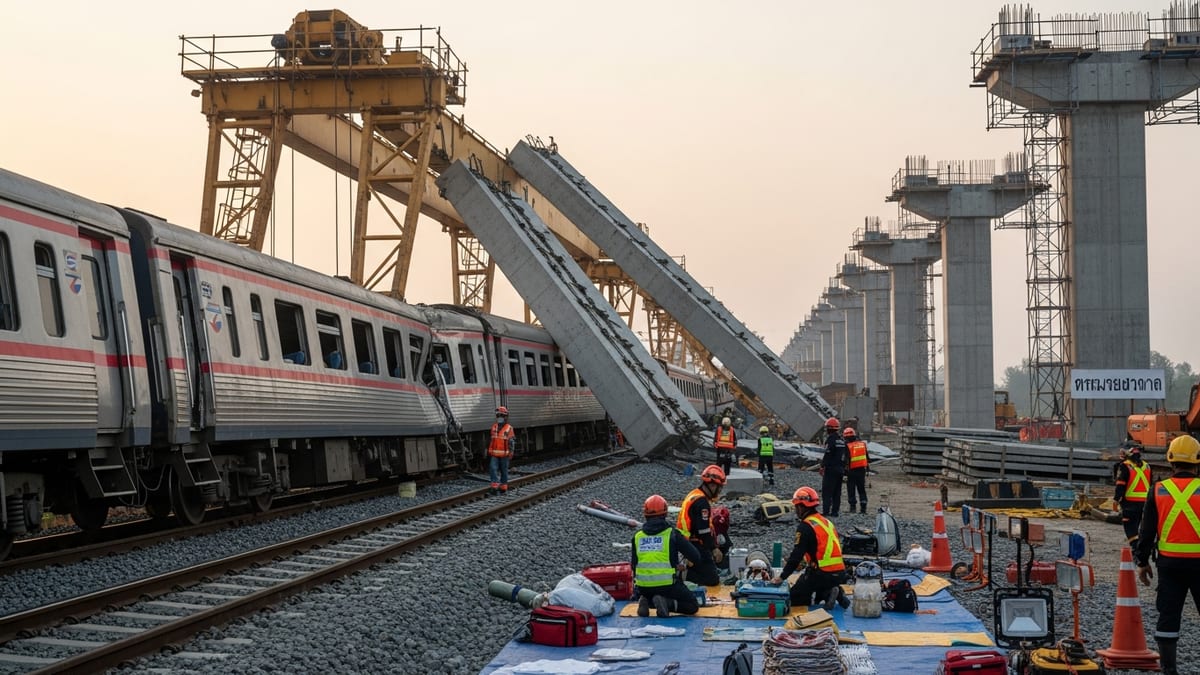
Grain train leaves tracks above canal walk
Publicly available information from local outlets and social platforms indicates that the derailment occurred late Friday afternoon near Dock and 20th streets, in the Shockoe Bottom area just east of downtown Richmond. The incident involved a long freight consist traveling over an elevated trestle that carries rail traffic above the Kanawha Canal and close to the popular Canal Walk and James River corridor.
Images circulated by local media show at least three covered hopper cars in the canal, one lying partly submerged while others rest at sharp angles along the bridge structure. Additional cars remained on the rails but were reported to be unstable as crews worked to secure the consist and assess the extent of the damage.
Reports indicate that the affected train was hauling grain, creating dramatic scenes of spilled cargo along the bridge and in the water below but avoiding the more serious environmental and public health dangers associated with hazardous materials. Early information available on Friday evening and Saturday morning pointed to no immediate reports of injuries.
The location of the derailment above an established walking route and near residential and entertainment districts drew swift attention from residents and visitors, many of whom had converged on the riverfront for the holiday weekend.
Closures and detours reshape movement through downtown
In the hours after the derailment, publicly available traffic updates showed Dock Street closed between roughly 18th and 22nd streets, cutting off a key east west connection that parallels the canal and often serves as an alternative to nearby interstate ramps and one way city streets. Drivers reported significant detours as they navigated toward the riverfront, Shockoe Slip, and Church Hill.
The closure also affected access to stretches of the Canal Walk and adjacent green spaces that attract joggers, cyclists, and out of town visitors. Travel focused observers flagged that cordons and emergency vehicles reduced room for pedestrians, and local guidance circulating online urged people to avoid the immediate area both for safety and to allow crews to work.
With the derailment coinciding with a busy holiday period, travelers arriving for long weekend stays encountered heavier than usual congestion in parts of downtown Richmond. Ride hail drivers and hotel staff in the riverfront area reported routing guests along unfamiliar back streets and encouraging extra time for trips between lodging, dining districts, and riverfront attractions.
Virginia’s statewide travel information channels continued to focus on planned construction and holiday volumes, but the unexpected loss of a local artery near the canal added a layer of complexity for anyone relying on real time navigation apps, which at times lagged behind on road closure information.
Limited impact on passenger rail but heightened scrutiny
Early indications on Saturday suggested that intercity passenger rail operations through the Richmond region remained mostly intact, with some trains experiencing delays as dispatchers worked around the blocked freight corridor. Informal reports from rail tracking platforms showed certain services running behind schedule, while others appeared to move through the area close to planned times.
Passenger rail in Virginia often shares or intersects freight infrastructure, and the Richmond canal trestle is part of a broader network that facilitates both long distance and regional travel along the East Coast. The sight of freight cars in the water only a short distance from routes used by passenger trains prompted renewed public discussion about the resilience of shared corridors.
Commentary on rail focused forums pointed to recent derailments in other parts of the United States that have temporarily severed passenger links, suggesting that even a seemingly contained incident involving grain can ripple out to affect timetable reliability. Travelers planning rail journeys through Virginia over the coming days are being encouraged by rail information sites to monitor status alerts closely and to remain flexible about connections.
For now, publicly available information points to freight operators bearing the brunt of the disruption, with crews working to clear the damaged cars, inspect the bridge, and restore normal movements along a strategically important route.
Safety questions along a popular urban corridor
The Richmond derailment has drawn attention not only because of its dramatic visuals but also because of where it happened: above a canal side path marketed as a centerpiece of the city’s riverfront revival. The raised tracks run parallel to sections of the Canal Walk, where visitors typically stroll beneath the trestle en route to murals, historic markers, and outdoor dining terraces.
Social media discussions in the hours after the incident highlighted concerns about the proximity of heavy freight traffic to public gathering spaces. Commenters compared the event to higher profile derailments elsewhere in North America, arguing that a similar incident involving hazardous materials or passenger coaches could have had far more serious consequences.
Travel commentators observing the situation noted that the Richmond event fits into a wider pattern of rail infrastructure intersecting with revitalized waterfronts and greenways. As cities convert former industrial zones into mixed use neighborhoods, long existing rail lines increasingly run over or next to promenades, parks, and entertainment districts that host large numbers of people, particularly during holidays.
The canal derailment is likely to add urgency to ongoing discussions about inspection regimes, train length, and speed restrictions on elevated segments above public spaces. While formal investigations will take time, the immediate public reaction already reflects a desire to better understand how such a derailment occurred on a calm summer afternoon with clear weather.
What travelers to Richmond should know now
For visitors currently in Richmond, the most visible short term impact is localized disruption near Dock Street and the Canal Walk between 18th and 22nd streets. Travelers heading to riverfront hotels, breweries, and restaurants should anticipate detours, possible delays when using ride services, and crowding on alternative routes, especially through the July 4 holiday period.
Those arriving by car from Interstate 95 or Interstate 64 may find it helpful to plan exit choices in advance and to check for updated traffic information before committing to downtown ramps. Parking garages slightly farther from the riverfront may provide more reliable access than lots closest to the canal, which could be affected by temporary closures and equipment staging.
Rail passengers with tickets through Richmond over the coming days are advised to build in extra time for transfers and to monitor real time tracking tools for evolving conditions. While available data on Saturday morning suggested that longer distance passenger services continue to operate, any extended work on the affected freight bridge could prompt schedule adjustments.
For future visitors, the derailment serves as a reminder that Richmond’s most scenic transport corridors are also working freight routes. The same elevated line that offers industrial backdrops for photos and runs beside riverfront trails carries long, heavy trains. As the city works through recovery and potential infrastructure reviews, travelers can expect ongoing conversations about how to keep this distinctive landscape both accessible and safe.