


King Khalid International Airport in Riyadh is the main gateway for many first-time visitors to Saudi Arabia. Whether you are arriving for Umrah, business in the financial district, or to visit family, understanding how Riyadh’s airport works will make your first hours in the Kingdom far smoother. This guide brings together the latest on terminals, the Riyadh Metro, taxis and ride-hailing, airport buses, nearby hotels and what to expect at immigration and customs.
Get the latest updates straight to your inbox!
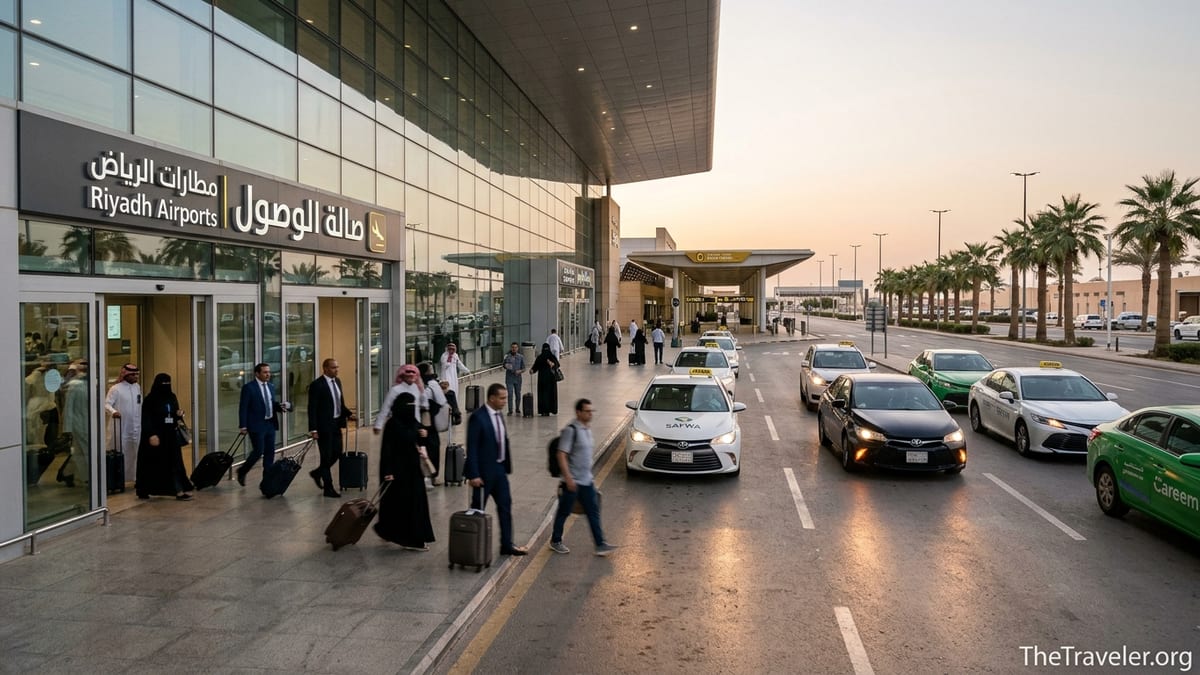
Getting Oriented: Understanding Riyadh’s King Khalid International Airport
King Khalid International Airport (IATA: RUH) sits about 35 kilometers north of central Riyadh and is the capital’s primary international gateway. The airport has grown quickly in recent years and now handles tens of millions of passengers annually on more than 40 international airlines. That growth, and an ongoing modernization program, means the airport you arrive at in 2026 may look and feel quite different from descriptions written only a few years ago.
The airport currently operates five passenger terminals: Terminal 1, Terminal 2, Terminal 3, Terminal 4 and Terminal 5. Terminals 1, 3 and 4 handle most international flights, including many Saudia, Flynas, and foreign carriers, while Terminal 2 is in phased use and Terminal 5 is primarily domestic with some foreign carriers depending on seasonal scheduling. Because Saudi authorities have been gradually reshuffling which airlines use which terminal, always double-check your booking or airline app a day or two before departure so you know exactly where you will arrive.
For a first-time visitor, the most important thing to know is that all terminals are along the same spine of “Airport Road” and are connected by free internal shuttles and the new Riyadh Metro. If, for example, you fly into Terminal 1 from London and connect to a domestic Saudia or Flynas flight in Terminal 5, you will not be leaving the wider airport area; you will simply transfer between terminals using the shuttle or metro. Signage across the airport is in both Arabic and English, and announcements are typically bilingual, which reduces stress for travelers who do not speak Arabic.
Because of active construction and a long-term plan to transition King Khalid International Airport into part of the future King Salman International Airport complex, you may encounter temporary walkways, relocated check-in islands, or new security lanes. Build in a little extra time, especially if you are transiting between terminals, and follow temporary signs and staff directions even if they differ from what an online map or an older blog post suggests.
Terminals and Transfers: How to Move Around RUH
When you land in Riyadh, your first point of contact will be the arrival terminal. For example, a typical scenario in 2026 is that a traveler arriving from Istanbul with a major Gulf or Turkish carrier might land at Terminal 1 or Terminal 3, while a domestic connection from Jeddah often uses Terminal 5. Once you clear immigration and customs, you will emerge into the public arrivals hall of that terminal where you will find ATMs, currency exchange, SIM card kiosks and transport options.
Transfers between terminals are supported by a combination of free shuttle buses and, for some pairs of terminals, direct metro links or covered walkways. Official airport information notes that free shuttle buses run roughly every 10 minutes outside all terminals; in practice, travelers report typical waits of 5 to 15 minutes depending on time of day. An example: if you have a 2-hour connection from an international flight in Terminal 4 to a domestic flight in Terminal 5, you would follow the “Airport Shuttle / Inter-Terminal Transfer” signs after exiting customs, step outside to the shuttle stop, and board the next bus heading toward Terminal 5. The ride itself usually takes under 10 minutes.
There is also a dedicated “Metro Link” project connecting Terminals 1 and 2 via an internal people-mover system, designed to shorten walking distances and improve access to the Riyadh Metro for those terminals. In practical terms, if you arrive into Terminal 1 on a busy evening and need to get to Terminal 2 for a regional connection, you can simply follow signs for the Metro Link and avoid going outdoors or waiting for a shuttle bus. This is particularly helpful in the summer months when daytime temperatures can be extremely high.
For tight connections, it is worth requesting assistance from your airline ground staff. Saudia and several foreign carriers can sometimes arrange airside transfer routes or prioritize passengers with short connections. That said, first-time visitors should try to avoid layovers shorter than 90 minutes when changing terminals, especially during peak evening waves, to avoid unnecessary stress.
Riyadh Metro: The New Backbone From Airport to City
The Riyadh Metro opened to paying passengers in late 2024, and by 2026 three lines are in operation, including the Yellow Line that serves the airport corridor. Line 4, often referred to as the Yellow Line or “Airport Road” line, runs from King Khalid International Airport towards King Abdullah Financial District, one of the city’s main business and hotel zones. This has fundamentally changed airport access, offering a fast, fixed-price alternative to traffic-dependent taxis.
The airport is served by multiple metro stations that collectively cover Terminals 1 through 5. Terminals 1 and 2 typically share a metro stop, Terminals 3 and 4 share another, and Terminal 5 has its own dedicated station. After exiting customs, you follow the purple or yellow metro signs through the arrivals area to reach the station concourse. The walk is similar in length to walking from arrivals to parking in a large European or Asian hub; most travelers with normal mobility and hand luggage find it manageable in 5 to 10 minutes.
Fares are structured to be affordable for everyday commuters and visitors. A one-way ride from the airport into central stops such as King Abdullah Financial District or Olaya typically costs the equivalent of only a few US dollars, paid via contactless card, local transit card, or the official Riyadh bus and metro app. Travel time from the airport to KAFD is generally around 30 to 40 minutes depending on the specific train and time of day, which is competitive with a taxi off-peak and often faster during rush hour.
One distinctive feature of the Riyadh Metro is its compartment system. Trains are usually divided into sections for single men, women and families, and sometimes a premium “Gold” class. As a first-time visitor, pay attention to platform markings and carriage signs indicating the appropriate section. For instance, a married couple traveling together from Terminal 3 to a hotel near KAFD would enter a “Family” compartment, while a solo male traveler would choose the “Men” carriage. Station staff are present and typically happy to direct confused passengers politely.
Taxis, Uber and Careem: Choosing the Right Ride
For many first-time visitors, especially those arriving late at night or with heavy luggage, taxis or ride-hailing remain the most convenient option between the airport and the city. King Khalid International Airport has an official taxi concession operated under the SAFWA brand, with vehicles waiting outside the arrivals halls of all terminals. These taxis use meters and have regulated fares. As a rough guide in 2026, a standard taxi ride from the airport to the popular Olaya or King Fahd Road business district often runs in the range of 90 to 130 Saudi riyals depending on traffic and exact destination.
Ride-hailing apps are widely used in Riyadh and fully available at RUH. Uber and local giant Careem both operate 24 hours a day from all five terminals, with clearly marked pickup zones signposted in English. In practical terms, a traveler arriving in Terminal 5 might collect their luggage, step outside following “Ride-Hailing / Uber / Careem” signs, and stand by the numbered pillar indicated in the app, such as “Column 6” for Terminal 5 or “Column 33–34” for Terminal 3 or 4. Prices are dynamic, but real-world reports suggest that a ride from the airport to central districts like Olaya or Malaz can cost around 50 to 80 riyals in normal traffic, sometimes less late at night.
To avoid hassles, it is important not to accept offers from unofficial drivers inside the terminal building. Both Uber and Careem emphasize in their airport guidance that passengers should only meet drivers through the app at the designated pickup areas. A typical scam scenario might involve someone approaching you in the arrivals hall offering a “cheap taxi” to downtown; these rides can turn out far more expensive than an official taxi or ride-hail. Instead, buy a local SIM or ensure you have roaming enabled, request a car through Uber or Careem, check the license plate and driver details in the app, and only then get into the vehicle.
If you are traveling with a family or a lot of luggage, choose larger vehicle categories in the app, such as UberXL or Careem’s “Go Plus” or similar options, which are commonly available around the airport. Business travelers heading straight to meetings in the King Abdullah Financial District often opt for these or for “Business” or “Premium” categories to ensure extra comfort and better trunk space. Some upscale hotels also offer pre-arranged car services; for example, a five-star property in KAFD might quote 250 to 300 riyals for a private Mercedes transfer. This can be worth it after a red-eye flight, but budget-conscious travelers will usually find Uber or Careem perfectly adequate.
Airport Buses and Other Ground Transport Options
While taxis and the metro handle most journeys, there are also bus services that link the airport to parts of Riyadh. The Riyadh public bus network has gradually expanded, and in some cases you can connect from the airport metro stations to city buses for onward travel. The bus system is app-based, with tickets purchased digitally; signs in English help visitors find the correct stops. However, in practice, buses mainly run along major arterial roads and often do not drop you directly at a neighborhood address or smaller hotel.
For instance, a traveler on a tight budget might take the Yellow Line metro from Terminal 3 to a central interchange station, then transfer to a city bus serving King Abdullah Road or Old Riyadh. The combined fare can still be significantly lower than a taxi, but it does add complexity, especially if you have large suitcases or are arriving in peak afternoon heat. Because of these practical limitations, first-time visitors who are not yet familiar with the city usually find the metro plus taxi or ride-hail combination more realistic for their arrival journey.
Car rental is another option, with several international and local agencies operating desks in the arrivals halls. Renting a car can make sense if you plan to explore beyond Riyadh, such as driving toward AlUla or heading to industrial zones on the city’s outskirts. That said, Riyadh’s traffic can be intense, road layouts are complex, and driving norms may feel aggressive to visitors from quieter cities. If you have just stepped off a long intercontinental flight, it is often safer to let a local driver handle your first journey into town and only rent a car later once you are rested.
One more rail option is worth knowing about, though it does not serve the terminals directly for most passengers. Riyadh North railway station, on Al Thumamah Road near the airport, is the southern terminus of the Riyadh to Qurayyat line that connects the capital with the Saudi Jordanian border. Travelers arriving by air and connecting to this long-distance train would typically need a short taxi or ride-hail ride from the terminal to the rail station. This combination is relevant if you are continuing overland to the north of the Kingdom or toward Jordan.
Hotels at and Near Riyadh Airport
If you are arriving late at night, have an early morning departure, or face a long layover, staying near the airport can be a smart choice. While King Khalid International Airport does not yet have the same dense cluster of airside transit hotels as some Gulf hubs, there are several convenient landside options. Properties at the time of writing include an airport-branded Marriott located next to the terminals and a number of four and five star hotels within a 10 to 20 minute drive along Airport Road or the Northern Ring Road.
As an example, the Riyadh Airport Marriott typically markets itself directly to transit passengers and airline crews and often offers shuttle services to the terminals. Room rates can fluctuate widely depending on conferences and high season, but midweek prices in the range of 200 to 250 US dollars per night for standard rooms are common. Slightly further away, business hotels such as Crowne Plaza Riyadh RDC or various Rotana and Hilton properties around the Northern Ring Road may offer more competitive rates or loyalty benefits while still keeping you within a 20 to 25 minute taxi ride of the airport in off-peak traffic.
For budget-conscious travelers, mid-range local brands and independent hotels in districts like Hittin, Al Murooj or King Abdullah Road can represent good value, with typical nightly rates in the range of 100 to 180 US dollars. In that case, it often makes more sense to take the metro to a central station and then a short taxi ride to your hotel, rather than paying for a single long taxi journey from the airport. For example, you might ride Line 4 from the Terminal 5 station to King Abdullah Financial District, then take a 10-minute Careem ride to a mid-range hotel in Al Murooj.
Within the terminals, you will find prayer rooms, comfortable seating, and, in some cases, pay-per-use lounges that accept major lounge programs. If you have a daytime layover of five or six hours and prefer not to leave the airport, accessing a lounge in your arrival or departure terminal may be more convenient than transferring to a hotel. However, overnight rest is generally more comfortable in a hotel, especially if you want a proper shower and sleep before continuing to destinations like Jeddah, Dammam or Red Sea coastal resorts.
Arrivals, Immigration and First-Time Saudi Entry Tips
For first-time travelers to Saudi Arabia, the arrival process can feel unfamiliar but is usually well organized. After disembarking, you will follow signs for “Arrivals” and “Passport Control.” There are typically separate queues for Saudi citizens, GCC nationals and foreign passport holders. If you are holding an e-visa printout or visa-on-arrival eligibility proof, have it ready along with your passport, printed hotel booking and return or onward ticket. Electronic visa systems now cover many nationalities, including tourists and certain business visitors, which makes the process faster than in the past, but queues can still form during busy evening banked arrivals.
Immigration officers may ask about the purpose of your visit, where you will stay and how long you plan to remain in the Kingdom. Answer calmly and clearly. For example, you might say, “I am here for a five-day business trip, staying at a hotel in King Abdullah Financial District, and then I will return to London.” Dress modestly, especially if you are arriving from a more casual destination. While there is no strict dress code for foreigners at the airport, men in very short shorts and women in revealing clothing may feel conspicuous. Many female travelers choose to wear loose trousers and a long-sleeved top or abaya-style overgarment for comfort and cultural sensitivity.
After passport control, you collect your baggage and pass through customs. Saudi customs officers may screen luggage via X-ray and can ask questions about items such as large quantities of electronic equipment, camera gear or professional tools. Alcohol, pork products and certain religious materials are prohibited; do not bring them into the country. Prescription medications should be kept in original packaging with a doctor’s letter if possible. Random bag checks do occur, but many passengers simply walk through after the X-ray belt if there is nothing unusual detected.
Once in the arrivals hall, you will see options to buy a local SIM card from Saudi telecom providers, withdraw cash from ATMs and exchange currency. For instance, a first-time visitor arriving from New York might buy a 7 or 15 day tourist data package from a major carrier at the kiosk, then immediately use that data to order an Uber or Careem. Wi-Fi is available in the terminals, but having your own connection makes life easier once you leave the building. Before stepping outside, take a moment to check the terminal number on overhead signs so you can correctly direct a taxi or rideshare later if you return to the airport from the city.
Cultural, Practical and Safety Tips for First-Time Visitors
Beyond the formalities, your first impressions of Saudi Arabia will be shaped by small details at the airport. Temperature-controlled interiors contrast strongly with the desert heat outside, especially from May to September when afternoon highs can surpass 45 degrees Celsius. If you smoke, note that smoking is not permitted inside the terminal; designated smoking areas are outdoors, and you may need to walk some distance from the exits. Plan to stay hydrated, and consider changing into lighter clothing in the terminal restrooms before stepping outside, particularly if you are wearing heavy winter clothes from a cold departure city.
Security presence is noticeable but usually unobtrusive. You will see uniformed officers and sometimes military personnel, particularly at checkpoints on Airport Road and near entrances. These are routine security measures, and most travelers experience no delays beyond brief visual checks. Keep your passport and visa copy accessible but secure, as you may need to show identification to hotel staff or at certain security checkpoints in the city.
Saudi Arabia is in the midst of rapid social and economic change, and Riyadh’s airport reflects that. You will find women working in ground staff roles, families traveling for leisure, and groups of foreign workers headed to job sites across the country. Lines for “Families” at security and immigration are generally respected, and staff will often prioritize parents with small children. If you are traveling with kids, do not hesitate to ask an officer politely if there is a family lane you can use; in many cases there is, which can significantly reduce waiting time.
Finally, remember that local customs around privacy and photography are conservative. While it is generally acceptable to take photos of architectural features inside the terminal or of your travel group, avoid photographing security staff, other passengers without their consent, and especially women you do not know. When in doubt, ask or refrain from taking the photo. This respectful approach will set the tone for a positive visit from your first moments in the country.
FAQ
Q1. Which terminal will I arrive at in Riyadh and how can I check?
Airline allocations at King Khalid International Airport can change, but in general Terminals 1, 3 and 4 handle most international flights and Terminal 5 handles many domestic services. The most reliable way to know your exact arrival terminal is to check your e-ticket or airline app 24 to 48 hours before travel, when final gate and terminal information is usually confirmed.
Q2. How long does it take to reach central Riyadh from the airport?
By metro on the Yellow Line, the journey to hubs such as King Abdullah Financial District typically takes around 30 to 40 minutes once you board the train. By taxi or Uber or Careem, travel time to central districts like Olaya or King Fahd Road can range from 30 minutes in light traffic to over an hour during peak rush-hour or if there are roadworks along Airport Road.
Q3. Is it better to use Uber or a regular airport taxi?
Both options are safe and regulated, and the best choice depends on your priorities. Official airport taxis under the SAFWA brand are easy to use if you do not have mobile data or prefer to pay cash, while Uber and Careem often provide slightly lower prices and clear upfront fare estimates in the app. Many frequent travelers choose ride-hailing because they can see the route and driver details, but if your phone is not working on arrival, a metered airport taxi is a straightforward alternative.
Q4. Can I rely on the Riyadh Metro for my first arrival, or should I use a car?
The Riyadh Metro is a modern, air-conditioned system and is perfectly usable for first-time visitors who are comfortable navigating public transport. If you are traveling light, arriving in daytime, and your hotel is near a central station, the metro is a cost-effective and predictable option. However, if you have heavy luggage, young children, or a late-night arrival, many travelers find a direct taxi or ride-hail more convenient for their first journey into the city.
Q5. How much cash do I need on arrival at RUH?
Many services at the airport and in Riyadh accept cards and mobile payments, so you do not need large amounts of cash. That said, carrying the equivalent of 200 to 300 Saudi riyals can be useful for small purchases, tipping porters, or as a backup if a card machine is offline. ATMs are available in the arrivals halls, and exchanging a modest amount of currency before leaving the terminal is often enough to cover your initial needs.
Q6. Are there any special rules I should know about airport dress and behavior?
There is no strict dress code for foreign visitors at the airport, but modest clothing is strongly recommended. Men are more comfortable in trousers and shirts rather than sleeveless tops, and women typically wear long trousers or skirts with shoulders and chest covered. Public displays of affection should be avoided, and be mindful of local norms when using phones or cameras around families and security staff.
Q7. What is the best way to get a SIM card at Riyadh airport?
Several major Saudi telecom providers operate kiosks in the arrivals halls of the main terminals. After collecting your luggage, you can approach one of these counters with your passport, choose a tourist or short-stay package that suits your data and call needs, and have the staff activate it on the spot. Many first-time visitors purchase a data-focused package immediately so they can order Uber or Careem and use navigation apps as soon as they leave the terminal.
Q8. How early should I arrive at the airport for my departure from Riyadh?
For international flights, arriving at least three hours before scheduled departure is advisable, especially at peak evening times when many long-haul services leave. For domestic flights, 90 minutes to two hours is usually sufficient. Factor in additional time if you are returning a rental car, traveling with a large group, or transferring between terminals before checking in.
Q9. Are there prayer facilities and family amenities in the terminals?
Yes, all terminals at King Khalid International Airport provide prayer rooms, usually separated for men and women, and they are well signposted in both Arabic and English. You will also find family-friendly amenities such as baby changing rooms, accessible restrooms, and, in some terminals, play areas or child-friendly seating zones, making transit with young children much easier.
Q10. Is it safe to arrive in Riyadh late at night?
Arriving in Riyadh late at night is generally safe, and the airport operates around the clock. Taxis, Uber and Careem all run 24 hours a day, and major roads between the airport and central districts remain active even at off-peak times. As in any large city, stick to official transport options, keep your belongings close, and avoid accepting unsolicited rides from individuals inside the terminal.