


More news on this day
Flights at Riyadh’s King Khalid International Airport (RUH) faced a wave of delays and cancellations over the weekend of September 19 to September 20, 2026, as air traffic schedules shifted amid reports of smoke and flames near the airport area and broader regional security concerns.
Get the latest news straight to your inbox!
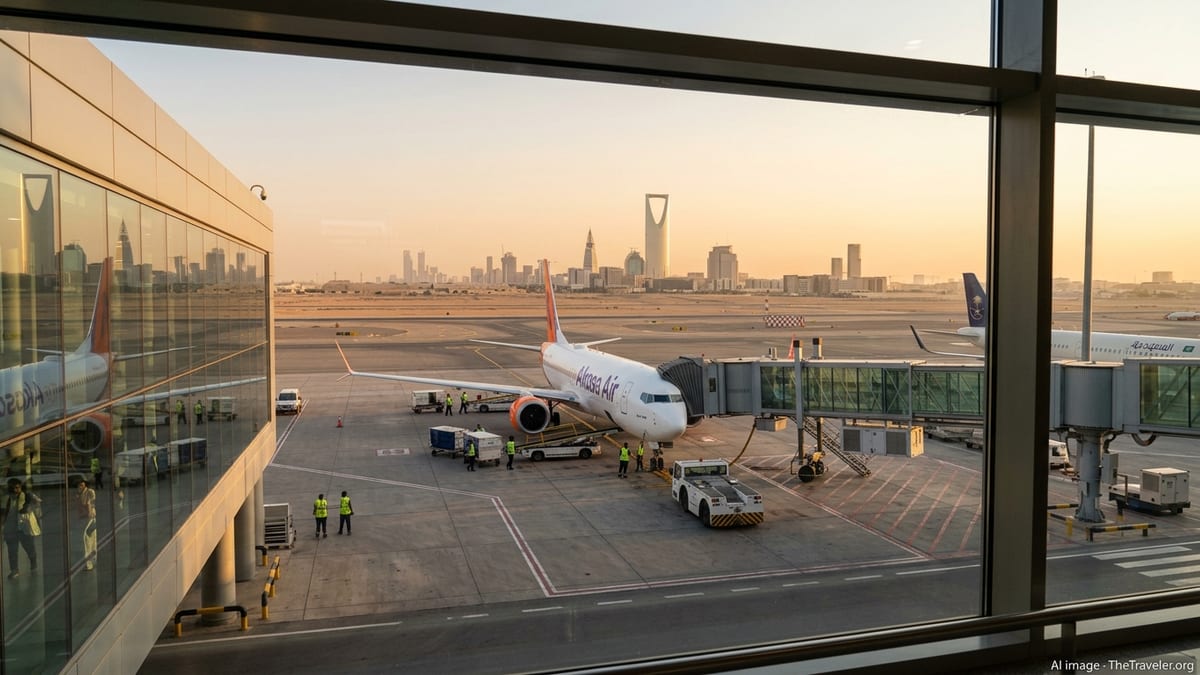
What happened near RUH and why it mattered for schedules
Published coverage on September 19 described a large plume of black smoke visible near Riyadh’s main airport, with imagery placing the smoke behind what appeared to be fuel tanks in the airport area. The disruption quickly translated into uneven airline operations, including late departures, late arrivals, and a smaller number of cancellations as aircraft and crews were repositioned.
International reporting also connected the timing to heightened security alerts around Riyadh overnight into Saturday. Separate reporting described claims of missile and drone activity targeting “sensitive” sites in the capital, while other coverage described Saudi alerts that were later followed by an all-clear message. For travelers, the practical impact was less about the cause and more about the knock-on effect: aircraft rotations slip, gates change, and missed connections can cascade across the day’s schedule when a hub’s rhythm breaks.
By Sunday, September 20, the public information available still reflected uncertainty about the exact origin of the smoke event near the airport area. That uncertainty can make it harder for passengers to predict whether the next day will be fully normal, particularly when airlines choose to delay flights while waiting for operational stability, rather than cancel early.
How widespread were delays and cancellations?
Flight-tracking data showed RUH experiencing notable disruption on September 19. Flightradar24’s disruption framework, which ranks airports on a 0.0 to 5.0 scale, was used by multiple outlets to flag “major problems” at Riyadh during the incident window, indicating an elevated mix of delayed flights, average delay time, and cancellations.
Other public trackers that compile airport-level disruption also pointed to measurable cancellations earlier in September, with one frequently cited figure showing 10 cancellations logged so far in September 2026 at RUH (split between departures and arrivals), alongside generally high on-time performance on the days tracked. The same dataset characterized the numbers as indicative rather than an official record, but it helps contextualize the weekend disruption as a spike rather than an everyday norm.
For passengers, it is important to separate airport-level “disruption” from individual flight reality. A single late-arriving aircraft from a prior sector can delay the next flight even if conditions at RUH appear calm, while a short ground stop can result in widespread delays even if only a few flights are ultimately canceled.
What travelers should do before heading to the airport
Because airline schedules can change multiple times in a day during a disruption, travelers departing from RUH or connecting through Riyadh should check their flight status directly with the operating carrier, not only with a booking confirmation or third-party itinerary snapshot. In disruptions tied to irregular operations, the “marketed” flight number on a codeshare may not update as quickly as the operating airline’s own system.
Allow extra time at the terminal even if your flight is still listed as “on time.” When delayed flights bunch together, check-in and bag-drop lines can surge, security queues can lengthen, and gate assignments can shift to accommodate aircraft parking and turnaround needs. This is especially relevant at hubs that juggle dense domestic shuttle flights alongside long-haul international departures.
If you are self-connecting in Riyadh on separate tickets, treat your onward flight as a separate trip and monitor it independently. During operational instability, travelers can end up with an inbound delay and an onward flight that departs closer to schedule, shrinking the buffer that normally makes a connection workable.
Rebooking, refunds, and compensation basics
For cancellations, the most time-sensitive step is to secure a confirmed rebooking option, since alternative seats can disappear quickly once disruption spreads across a hub. In many cases, airlines will offer re-accommodation on later flights or reroutes via other cities; however, availability depends on the carrier, cabin class, and whether partner airlines are involved.
Compensation rules vary widely by itinerary. For example, if your disrupted flight departs from the European Union or is operated by an EU airline, EU261 rules may apply depending on the circumstances. For itineraries involving the United Kingdom, UK261 can apply on eligible routes. For flights wholly outside those jurisdictions, passenger rights may rely more heavily on the airline’s contract of carriage and local regulations, which can differ from EU-style frameworks.
Travelers should also be cautious about lookalike “help” pages circulating online during disruptions. When flight changes are happening fast, the safest path is to use official airline apps, airline call centers, and the airport’s own flight information channels for status updates and rebooking pathways.
What to watch over the next 24 to 48 hours
After a disruption linked to a localized incident near an airport, the rebound period can extend beyond the initial all-clear. Aircraft may be out of position, crews may time out, and late-arriving long-haul flights can reshape gate plans and baggage delivery timelines. That means travelers flying on Monday, September 21, 2026, could still see residual delays, even if Sunday’s operations look calmer.
Passengers should keep an eye on early-morning departure banks, when a hub tries to “reset” the schedule. If the first wave is late, the delays can compound through the afternoon and evening. Travelers with tight connections should consider proactively requesting earlier flights, if available, or choosing routings with longer connection windows until the operation stabilizes.