


More news on this day
The U.S. State Department has renewed broad guidance urging Americans in the Middle East to exercise heightened caution, warning that the region’s security environment can shift quickly and escalate with little notice, a message that has gained urgency amid fresh reports of attacks and intensifying cross-border risks.
Get the latest news straight to your inbox!
What the US alert says and why it matters for travelers
Publicly available State Department guidance in 2026 has repeatedly emphasized that tensions in the Middle East can create fast-changing conditions, including disruptions to travel, heightened security postures, and risks in locations associated with the United States. The department’s messaging has included both region-specific updates and broader global caution notices tied to Middle East volatility.
One widely circulated State Department security alert issued on July 22, 2026, described a complex security environment with potential for unforeseen escalation, and pointed to the possibility of threats not only in the region but also at locations abroad associated with U.S. interests. The alert also directed Americans to monitor official updates and use channels such as embassy notices, WhatsApp, and the department’s TravelGov communications.
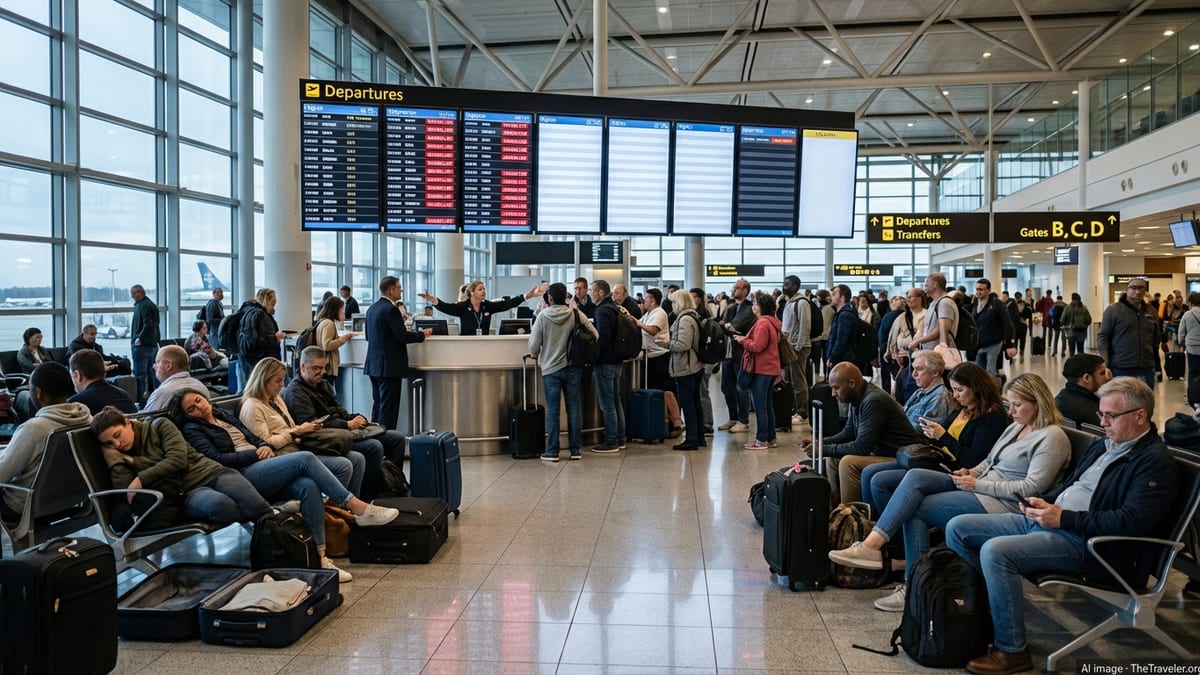
For practical travel planning, the warning matters because it can coincide with tighter screening at airports, changes to airline routings, and short-notice limitations around government facility access and consular operations. Travelers can also face sudden changes in local security measures, including restrictions around public gatherings, areas near critical infrastructure, and zones adjacent to conflict borders.
How the warning connects to current regional flashpoints
Recent coverage has described heightened regional strain involving Iran-linked actors and conflict spillover risks, alongside renewed concerns about drones and missile attacks in parts of the Arabian Peninsula and Red Sea corridor. In multiple advisories and country pages, the State Department has flagged risks that include terrorism, civil unrest, armed conflict, and aviation concerns in and around the Persian Gulf and Gulf of Oman.
In Saudi Arabia, the State Department’s travel advisory issued September 15, 2026, highlighted an ongoing threat environment following the onset of hostilities between the United States and Iran on February 28, 2026, and referenced the risk of drone and missile activity. The advisory also includes a long-standing restriction for U.S. government employees prohibiting travel within 20 miles of the Yemen border, underscoring persistent cross-border risk considerations.
Separately, published reporting in recent days has described escalating dynamics involving the Houthis and Saudi Arabia, including attacks that reach deeper into Saudi territory, which can elevate concerns about flight disruptions, local security measures, and heightened scrutiny in transportation hubs. While specific operational impacts can vary by city and day, the overall pattern supports the State Department’s warning that conditions can change rapidly.
What the travel advisory levels show right now
The State Department’s Travel Advisories page shows a layered risk picture across the Middle East. As of late August and mid-September 2026 updates reflected on the advisory listings, several destinations commonly used for business and transit in the region are categorized at Level 3, meaning travelers are advised to reconsider travel due to serious risks.
Those Level 3 advisories include Bahrain (dated August 27, 2026), Israel, the West Bank and Gaza (dated August 26, 2026), Jordan (dated August 29, 2026), Kuwait (dated August 28, 2026), Oman (dated August 30, 2026), Qatar (dated August 28, 2026), and Saudi Arabia (dated September 15, 2026). The advisory summaries vary by country, but collectively point to security-related concerns such as terrorism, unrest, and other regional risk factors.
Higher-risk destinations in the region continue to appear under Level 4 advisories on State Department pages, which generally indicate circumstances where the U.S. government may have limited ability to provide assistance and where risks can include armed conflict, terrorism, kidnapping, and wrongful detention. Examples highlighted on country pages include Iraq, and separate advisory pages indicate Level 4 designations for places such as Lebanon, among others.
Steps travelers can take before and during a trip
State Department guidance for Americans in the Middle East points to practical preparedness steps that can be completed before departure and updated while in-country. The department’s Middle East consular information page advises travelers to follow guidance from the nearest U.S. embassy or consulate and to use official channels to receive security updates.
A key recommendation is enrolling in the Smart Traveler Enrollment Program (STEP) to receive location-specific messages from U.S. diplomatic missions. For travelers making multi-country itineraries, STEP enrollment can help ensure that alerts match the exact country and city where a traveler is present, rather than relying on general news or social media summaries.
Travelers often also benefit from planning around the realistic possibility of disruptions. That can include having multiple flight options identified, confirming passport validity and entry requirements, storing emergency contacts offline, and monitoring local advisories about demonstrations or restricted zones. In higher-risk environments, travelers may also consider reducing predictable routines and minimizing time in venues publicly associated with the United States.
What to watch next for air routes and regional mobility
For travelers, the most immediate consequence of escalating tensions is often transportation uncertainty. In past periods of heightened regional risk, airlines and governments have sometimes adjusted routings, issued airspace restrictions, or increased checks that lengthen airport processing times. Monitoring carrier notifications and official advisory updates can be more actionable than relying on rumor-driven reports.
Recent reporting has also underscored the importance of maritime chokepoints and nearby air corridors, particularly around the Red Sea and Bab al-Mandeb Strait, where security concerns can shape commercial activity and regional posture. Even travelers not planning sea travel can be affected if disruptions ripple into flight schedules, cargo operations, and airport staffing or security protocols.
For Americans currently in the region, the State Department’s repeated emphasis across 2026 alerts has been to assume that the security environment can shift quickly and to plan accordingly. That includes monitoring embassy security alerts, staying aware of local conditions in real time, and being prepared for short-notice changes that could affect everything from airport access to cross-border ground travel.