


Planning a trip to Russia in 2026 means navigating a visa system, digital pre-registration tools, and on-the-ground rules that have changed noticeably in recent years. While the country remains open to many types of visitors, enforcement of migration rules is tighter and procedures are more digital than before. This guide walks you through the essential entry requirements and practical details you need to understand before booking flights to Moscow, Saint Petersburg, Vladivostok or beyond.
Get the latest updates straight to your inbox!
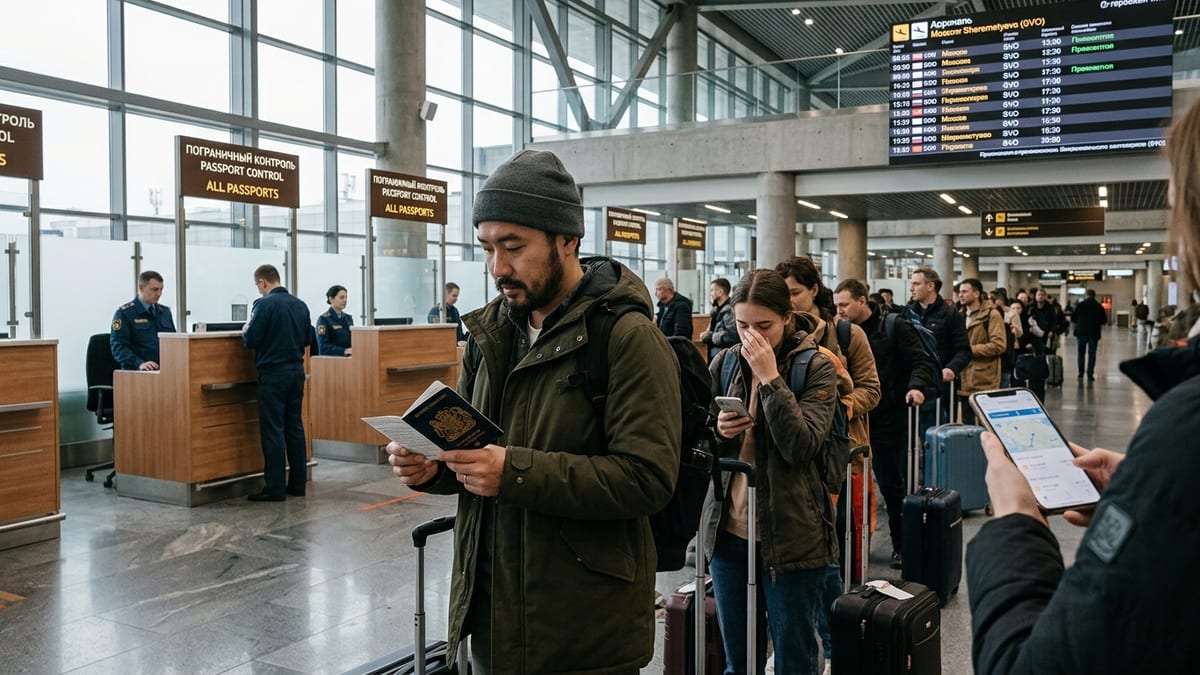
Current Entry Landscape: What Has Changed for 2026
Russia’s entry framework in 2026 combines traditional visa rules with new digital tools and biometric checks. For many travelers, the basic logic is familiar: you either need a visa issued in advance, or you can use a visa-free or electronic authorization regime if your nationality qualifies. On top of this, authorities have tightened migration controls and are gradually replacing paper-based systems with smartphone apps and biometric data collection at major airports and land borders.
From 1 January 2025, foreign visitors who can enter Russia without a visa generally face a cap of around 90 days of stay within one calendar year, unless a specific bilateral treaty gives more generous terms. In practical terms, that means a traveler from a visa-free country who comes to Saint Petersburg for 30 days in March and then returns for 60 days in September will likely have used their full annual allowance. Trying to “reset” this clock by briefly exiting to a neighboring state and re-entering is no longer a reliable strategy.
Another visible change in 2026 is the shift toward biometric controls. At major airports serving Moscow and Saint Petersburg, foreign nationals are increasingly asked to provide fingerprints and facial images at dedicated booths when entering the country. Travelers report that this can add 10 to 30 minutes to border formalities compared with pre-2020 experiences, but that it is usually straightforward if documents are in order.
Finally, Russia’s internal registration rules for foreigners are being enforced more consistently than in the past. Short hotel stays are usually handled automatically, but independent travelers staying in apartments, hostels or with friends are more likely to be asked to show up-to-date registration slips during random checks in train stations or on long-distance trains. Understanding how this works is just as important as securing your visa.
Visas, Visa-Free Entry and New Digital Authorizations
Most travelers still need a visa to enter Russia, obtained from a consulate or visa center before departure. A typical single-entry tourist visa for a U.S. or EU passport holder might be valid for up to 30 days of stay, tied to the dates on your hotel confirmations or tour voucher. Processing usually takes around 10 business days, with faster options for an additional fee. In practice, many visitors use commercial visa agencies that bundle consular fees with service charges and courier costs.
There is, however, a long list of nationalities that can visit Russia visa-free for short periods. Travelers from some Latin American countries, a number of ex-Soviet states, parts of the Balkans and a handful of Asian countries can typically stay without a visa for anywhere from 14 to 90 days. For example, a tourist from a visa-free country might land in Moscow, explore the Golden Ring for two weeks, then fly onward to Central Asia without ever visiting a Russian consulate. Even in those cases, though, the visitor still receives a migration card on arrival and must respect registration rules if staying more than a few days in one place.
On top of classic visas and visa-free regimes, Russia has been rolling out electronic and app-based systems for certain categories of visitors. The most important development for 2026 is a digital pre-registration tool, commonly referred to by travelers as the RuID app, which is tied to biometric controls at border posts. From mid-2025 onward, foreigners entering Russia using visa-free arrangements are expected to pre-register their trip in this app, upload basic personal details, and then confirm their identity through biometric checks at the border.
In practice, a traveler from a visa-free country might be asked by their airline at check-in whether they have completed RuID registration. If not, they could be instructed to download the app, enter passport details and travel dates, and agree to biometric processing. While the system is still evolving and enforcement can vary, failing to comply may lead to longer queues at passport control or, in the worst case, refusal of boarding if the airline believes Russian border guards will not admit you.
Special Regimes and Bilateral Exceptions
Russia maintains a patchwork of bilateral agreements that create important exceptions to the general rules. A prominent example in 2026 is the temporary visa-free regime for citizens of China traveling to Russia for tourism, business and certain events. A visitor from Beijing can, in principle, arrive in Moscow or Vladivostok with a standard Chinese passport and stay up to 30 days without arranging a Russian visa in advance, as long as they respect the conditions and deadlines set by that agreement.
Another significant arrangement is the deep integration with neighboring Belarus. The two countries have gradually simplified cross-border movement not only for their own nationals but, under certain conditions, for third-country citizens who already hold a Russian or Belarusian visa or residence permit. In practice, this means some travelers can enter Russia through Minsk and then continue onward by train to Smolensk or Moscow without a new Russian visa sticker, relying on shared migration databases and a common migration card.
There are also restrictions and more complex procedures for certain nationalities and routes, especially where political tensions are high. Entry bans or tighter checks can be introduced or lifted with little notice. For instance, Ukrainian nationals transiting through third countries have faced additional scrutiny and route restrictions in recent years. If your nationality is often mentioned in regional news in connection with sanctions or security disputes, it is wise to double-check consular instructions just before travel and avoid itineraries that depend on last-minute policy leniency.
For cruise and ferry passengers, special shore-visit regimes have historically allowed short visa-free stays in port cities like Saint Petersburg when arriving as part of an organized tour. While some of these arrangements have been scaled back due to reduced cruise traffic and political frictions, it is still worth asking your cruise line whether any group-based visa exemptions or streamlined procedures apply to your itinerary in 2026.
Migration Cards, Registration and Day-to-Day Legal Stay
Once you actually cross the border, two concepts determine whether your stay in Russia is legally clean: the migration card and registration at the place of stay. The migration card is usually a small paper slip or digital record issued by border control that shows your declared purpose of visit and the maximum period you are allowed to remain. If you fly into Moscow Sheremetyevo from Europe, for example, the migration card may be created electronically when your passport is scanned, with a reference number printed on your entry stamp. If you arrive by train from a neighboring country, you may be handed a paper form to fill out manually.
Registration is a separate requirement that kicks in after arrival. Foreigners are expected to be registered at the address where they are actually staying if they remain in a city or town longer than a short grace period, which in many regions is around seven working days. In practice, this means that if you spend two nights in a Moscow hotel, the hotel will normally register you automatically within 24 hours, issue or email you a confirmation slip, and you can leave the city without any extra paperwork. But if you then stay with friends for three weeks in a suburban apartment, your host is legally responsible for notifying the local migration office of your presence.
Travelers frequently underestimate the administrative burden this can create for private hosts. To register a guest, a Russian citizen might need to visit a multifunctional service center or Interior Ministry office, present their internal passport, property documents, a copy of the guest’s passport and migration card, and complete a detailed form. People staying in shared apartments often report spending an afternoon queueing and filling in paperwork simply to regularize the stay of a visiting relative or partner.
Authorities do not systematically check registration at airports on departure, but spot checks are common in long-distance trains, around major events, or in random identity control operations on city streets. If you are asked for documents and cannot produce a recent registration slip matching your current location, you could face an on-the-spot fine or a summons to an administrative hearing. For example, overland travelers riding the night train from Moscow to Kazan often describe police officers boarding carriages shortly after departure and asking foreign passengers to show passports, visas, migration cards and registration receipts.
Biometrics, RuID and Border Procedures
Biometric controls for foreign visitors are becoming a routine part of the Russian entry process. At large international airports, dedicated lanes with cameras and fingerprint scanners are set up next to standard passport booths. After the officer scans your passport, you may be asked to place your fingers on a glass pad and briefly look into a camera. The system then cross-checks your details against internal databases and, if you used a pre-arrival app, verifies that your digital profile matches your physical identity.
For travelers subject to the RuID pre-registration regime, the journey often starts before reaching the airport. In the weeks leading up to the trip, you download the app, create a profile, and enter your passport details and planned dates of stay. Some airline check-in counters are already configured to ask for confirmation that this step has been completed. Imagine a traveler from a visa-free country checking in for a Moscow-bound flight in Istanbul: at the counter, the agent may ask them to show the QR code generated by the app, similar to how health declarations were once checked during the pandemic.
On arrival, officials can scan that QR code or look up your profile directly using your passport number. If everything matches and your biometric data are successfully captured, the process can be relatively quick. Travelers who arrive without pre-registration or who encounter technical problems report longer interviews at passport control, where officers manually enter personal details into their systems and may ask additional questions about itineraries and accommodation.
As with any relatively new digital system, implementation is uneven. Some smaller regional airports and land crossings still rely heavily on paper forms and manual data entry, and not all carriers are strict about checking app registrations at departure. However, the general trend is clear: foreign visitors should expect more digital, biometric and pre-arrival steps to become the norm, and plan extra time in their travel schedules accordingly.
Insurance, Money and Practical Travel Essentials
While Russia does not universally require proof of travel insurance for all tourists on arrival, carrying comprehensive medical coverage is strongly recommended, and can be mandatory for certain visa types or nationalities. A common requirement for travelers whose visas mention “tourism” is a policy that covers emergency medical expenses and repatriation for the entire period of stay. Many visitors purchase such coverage from international insurers or specialized Russia-focused agencies at a cost of roughly the price of a modest hotel night for a 2 to 3 week trip.
The Russian ruble has seen significant fluctuations in recent years, which directly affects day-to-day travel costs. Large cities such as Moscow and Saint Petersburg are still cheaper for many Western visitors than major capitals in Western Europe, but prices have risen for some imported goods and services. As of 2026, a metro ride in Moscow typically costs the equivalent of a couple of U.S. dollars or less when using a transport card, while a mid-range meal in a central café might run to the price of a simple lunch in a mid-tier European city. Cash remains widely used outside big urban centers, and foreign-issued cards may not function with all banks due to sanctions and network restrictions.
Because many major Western card networks have exited or restricted operations in Russia, travelers increasingly rely on a mix of cash brought from abroad and local payment solutions arranged through intermediaries. A common pattern involves exchanging a moderate amount of hard currency at official exchange points upon arrival and using it for most everyday transactions, while reserving foreign cards for occasional use at international hotel chains or foreign-owned airlines that process payments outside Russia. Visitors who underestimate this issue can find themselves searching for ATMs that accept their cards late at night in unfamiliar neighborhoods.
Communication and connectivity are another essential. Buying a local SIM card from a Russian mobile operator at the airport or in a city shopping mall is usually straightforward, but you may be asked to show your passport and migration card. Prepaid packages with a few dozen gigabytes of data and domestic calls are typically affordable, often comparable to or cheaper than similar packages in Central Europe. This local data connection can be vital, not just for navigation and messaging, but also for using any state-backed apps that support foreign visitors, including digital registration services and transport tools.
Internal Travel, Restricted Areas and Security Climate
Once inside Russia, foreign visitors are generally allowed to move freely between most cities and regions, but certain border zones, military areas and sensitive sites remain off-limits without special permits. This can affect adventurous itineraries that aim to reach remote Arctic settlements, closed industrial towns or sections of the southern borderlands. For example, a traveler hoping to drive a rented car along little-used coastal roads near strategic naval bases in the north could be stopped at security checkpoints and turned back if they lack the required local authorization.
For mainstream routes such as Moscow to Saint Petersburg, the Trans-Siberian line between Moscow and Vladivostok, or flights to popular destinations like Sochi and Kazan, the main security experience is routine document checks. On overnight trains, it is common for conductors to collect passports and tickets at boarding to compile passenger lists, and for transport police to board at some point in the journey to verify identities. Foreigners are expected to produce their passport, visa (if applicable), migration card and registration receipt on request.
The overall security climate in major Russian cities is mixed from a visitor’s perspective. Violent crime against tourists remains relatively rare in central districts patrolled by visible police, and locals often comment that walking around central Moscow late at night can feel safer than in some Western cities. At the same time, geopolitical tensions and domestic security concerns mean that demonstrations, political rallies and sensitive anniversaries can draw a heavy police presence and a low tolerance for perceived infractions. Travelers are generally advised to avoid political gatherings, not to photograph law-enforcement operations, and to keep commentary about domestic politics low-key in public spaces.
Because regulations and enforcement priorities can shift quickly in response to international developments, it is sensible to check your home country’s latest travel advisories shortly before departure, and again during your stay if major news breaks. These advisories often include practical tips on exit routes, consular support availability, and potential disruptions to air travel that might not yet be reflected in booking systems.
The Takeaway
Traveling to Russia in 2026 is still entirely possible for many nationalities, but it requires more advance planning and more attention to formalities than in the past. The key concepts to master are your visa or visa-free entitlement, the use of newer digital tools such as RuID where applicable, and the nuts and bolts of migration cards and registration at your place of stay. If you understand these elements, the experience on the ground tends to be straightforward, and you can focus your energy on the culture, architecture and landscapes that motivated your trip in the first place.
For a typical visitor, the practical checklist looks like this in real life: confirm that your passport is valid for at least six months beyond your intended stay; secure the correct visa or verify that you fall under a visa-free regime and any associated digital pre-registration; purchase travel insurance that clearly covers Russia; plan how you will access local currency and pay for everyday expenses; and book accommodation that can reliably register your stay if you are in the country more than a few days. Travelers who follow these steps and keep a close eye on official updates in the weeks before departure generally report smooth entries and exits, even amid a more complex geopolitical environment.
Above all, remain flexible. Airline routes can change, banks can alter which cards they accept, and local migration offices can update procedures with little advance notice. Build some margin into your schedule, keep both paper and digital copies of your key documents, and treat every interaction with border and migration officials as something that deserves time and attention. With that mindset, Russia’s entry rules become navigable, and the country opens up once again as a rewarding, if administratively demanding, destination.
FAQ
Q1. Do I need a visa to visit Russia as a tourist in 2026?
Most travelers still need a visa obtained in advance from a Russian consulate or visa center, although some nationalities can enter visa-free for short stays under bilateral agreements.
Q2. What is the RuID app people mention, and do I have to use it?
RuID is a Russian state-backed digital system used to pre-register some visa-free arrivals and link them to biometric checks at the border; if your nationality falls under the visa-free plus biometrics regime, you are expected to register through it before travel.
Q3. How long can I stay in Russia without a visa?
The answer depends on your nationality and the specific treaty your country has with Russia, but many visa-free visitors are limited to about 90 days of stay in a calendar year.
Q4. What exactly is a migration card, and do I still receive one?
A migration card is a record created when you enter Russia that shows your personal details and permitted stay; it may be paper or electronic, but you should always know its number and keep any printout safely.
Q5. How does registration work if I stay in a hotel versus an apartment?
Hotels normally register you automatically within 24 hours and issue a confirmation slip, while if you stay in a private apartment or with friends, your host is usually responsible for registering you at the local migration office.
Q6. Are there COVID-19 related entry rules still in place?
Most pandemic-specific entry measures, such as mandatory questionnaires or testing for tourists, have been phased out, though Russia can reintroduce health checks in response to new outbreaks.
Q7. Is travel insurance mandatory for visiting Russia?
Comprehensive medical insurance is strongly recommended and may be effectively mandatory for certain visa categories or nationalities, as consulates often ask for proof of coverage during visa issuance.
Q8. Can I pay with foreign bank cards in Russia in 2026?
Because of sanctions and payment network restrictions, many foreign cards do not work reliably in Russia, so visitors commonly rely on cash and limited card use through specific banks or international chains.
Q9. Are there areas of Russia that foreigners cannot visit?
Yes, some border regions, closed towns and military or strategic zones require special permits, so you should research local restrictions before planning trips to very remote or sensitive areas.
Q10. How strictly are migration rules enforced on ordinary tourists?
Enforcement varies by region, but in major cities and on intercity trains, police do conduct document checks, and tourists without valid registration or with overstays can face fines or more serious administrative consequences.